प्रतीक्षा करें
Summoning entity profiles from the Grimoire…
प्रतीक्षा करें
Summoning entity profiles from the Grimoire…
LokKatha · Entity Guide
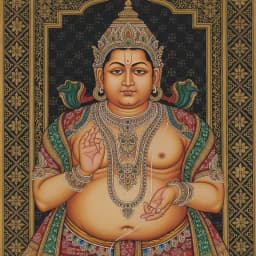
The Yaksha is one of the most ancient classes of supernatural being in Indian tradition — predating the Puranic pantheon, appearing in the Rigveda and the Buddhist canon alike. This guide classifies the six main types documented across literary and oral sources.
The canonical Yaksha — a spirit guardian of hidden treasures and sacred forests. Typically depicted as stout, powerfully built, adorned with jewels, and carrying a mace or vessel of wealth. Temperament ranges from benevolent to unpredictable depending on whether their territory has been trespassed.
The female counterpart — associated with fertility, abundance, and the power of vegetation. Yakshinis appear on the toranas (gateways) of Buddhist stupas at Sanchi and Bharhut, arms raised, embracing flowering trees. In folk tradition they are more dangerous and more seductive than their male counterparts.
The class of Yakshas who serve Kubera, the lord of wealth and king of the Yakshas, at his palace Alaka in the Himalayas. These are the stewards of underground treasure, keepers of precious metals and gems hidden in mountain roots. They carry a mongoose (nakula) that spits jewels — a symbol of their treasury function.
A rougher, more territorial class documented in oral traditions across peninsular India and the northeastern hill states. These entities are not attendants to any lord — they are bound to specific groves, trees, or forest crossings. Accounts describe them as darker in complexion, less adorned, and far less patient with intruders.
Associated with river confluences, sacred tanks, and mountain springs. The Yaksha of Kalidasa's Meghaduta is of this class — exiled to the Vindhya plateau, longing for his Yakshini in the Himalayas. Water Yakshas are described as calmer than forest varieties but intensely territorial around water sources, which they regard as their sovereign domain.
A specific mythological role: the Yaksha who tests the righteousness of a hero through a series of questions (prashna). The most famous instance is the Yaksha Prashna in the Mahabharata, where a lake-spirit questions Yudhishthira. This class is not geographically bound — they appear wherever the dharmic test is required.
| Attribute | Yaksha | Rakshasa |
|---|---|---|
| Nature | Nature spirit / treasury guardian | Demon / shape-shifting predator |
| Moral alignment | Morally neutral to benevolent | Generally malevolent |
| Primary domain | Forests, hidden wealth, water | Battlefields, cremation grounds |
| Relationship to humans | Protective if respected | Actively predatory |
| Physical form | Stout, jewelled, powerful | Shape-shifting, fanged, massive |
| Scripture role | Kubera's attendants, dharma testers | Enemies of gods and humans |
| Canonical text | Vedas, Mahabharata, Kalidasa | Ramayana (Ravana), Puranas |
See also: Full three-way comparison of Rakshasa, Yaksha, and Pishacha →
Hindu texts and folk tradition distinguish at least six categories: the canonical male Yaksha, the female Yakshini, Kubera's treasury attendants, forest-bound territorial spirits, water-associated lake and river Yakshas, and the test-giver role (as in the Yaksha Prashna). Regional oral traditions add further sub-classifications based on landscape and function.
Yaksha refers to the male form; Yakshini (or Yakshi) to the female. Yakshinis are associated more strongly with vegetation, fertility, and seduction in both the literary and folk traditions. In Buddhist iconography, Yakshinis appear as tree-spirits (vrikshadevatas) on stupa gateways, while male Yakshas appear as treasury guardians.
Yakshas are morally ambiguous. In Vedic and Puranic literature they are broadly benevolent — nature spirits and guardians of wealth who serve Kubera. In folk tradition they become more unpredictable: dangerous when their territory is trespassed, capable of possessing humans, but equally capable of bestowing boons on those who treat them with respect.
The Yaksha Prashna is an episode in the Mahabharata's Vana Parva in which a lake-spirit (Yaksha) kills the Pandava brothers one by one as they drink from his lake, then restores them all to life after Yudhishthira answers eighteen philosophical questions about dharma correctly. It is considered one of the earliest systematic treatments of ethical philosophy in Sanskrit literature.