प्रतीक्षा करें
Illuminating the manuscript…
प्रतीक्षा करें
Illuminating the manuscript…
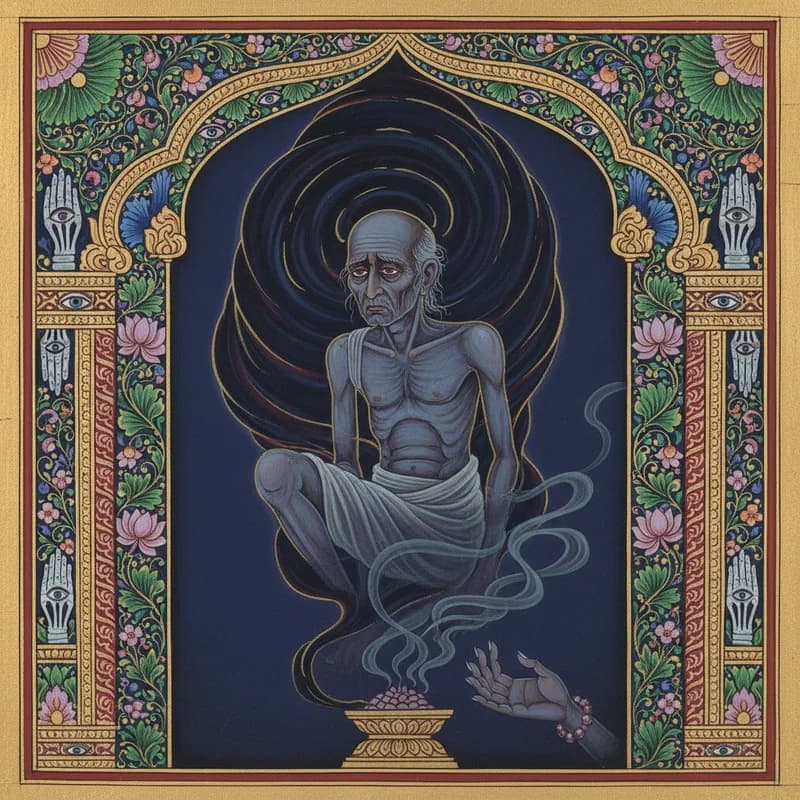

Nishi
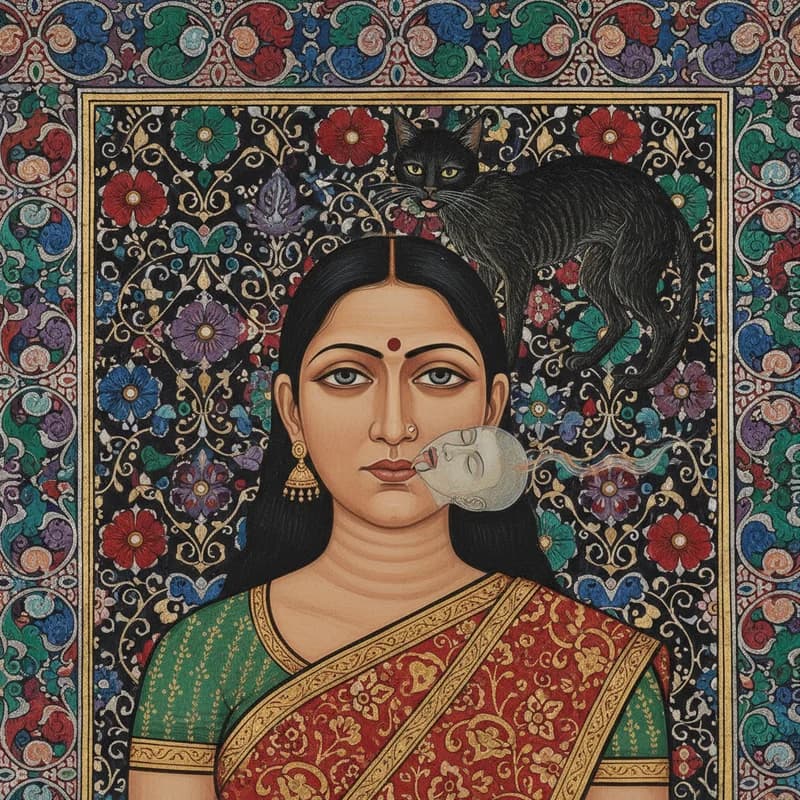
It calls only once, and only at night. The voice it borrows is always familiar — a father returned from the fields, a sister who moved to Kolkata, a neighbor whose name you have known since childhood — coming from just past the courtyard wall, just beyond where the kerosene lamp throws its light. Across the Rarh plateau and the low jute-country of the Brahmaputra floodplain, the prohibition survives every generation intact: do not answer a voice in the dark that you cannot put a face to. Those who step outside to answer are sometimes found wandering at dawn, silent and directionless. Others are not found at all.
What draws the Nishi to a particular threshold is a matter the accounts cannot settle. Certain Santali communities near the Damodar river hold that it carries no malice — that it is the soul of someone who died mid-word, the incomplete sentence still pressing against its throat, seeking only to finish what it began. Other accounts, collected in the delta districts south of Murshidabad, describe it as ancient and purposeless, drawn to households where grief is already present the way heat draws toward an open door. No ritual has proven consistently effective against it. Salt lines, iron thresholds, knotted thread — these appear in isolated accounts but contradict each other too often to trust. The single defence the folklore record holds in common is simple refusal: bolt the door, keep the lamp burning, and let the voice outside exhaust itself against the coming of morning.
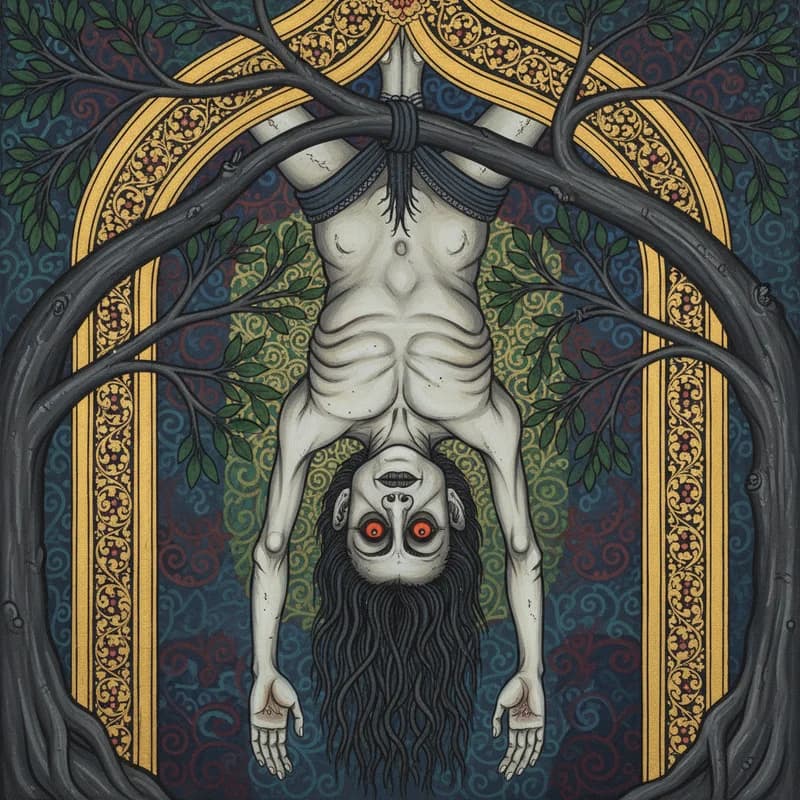
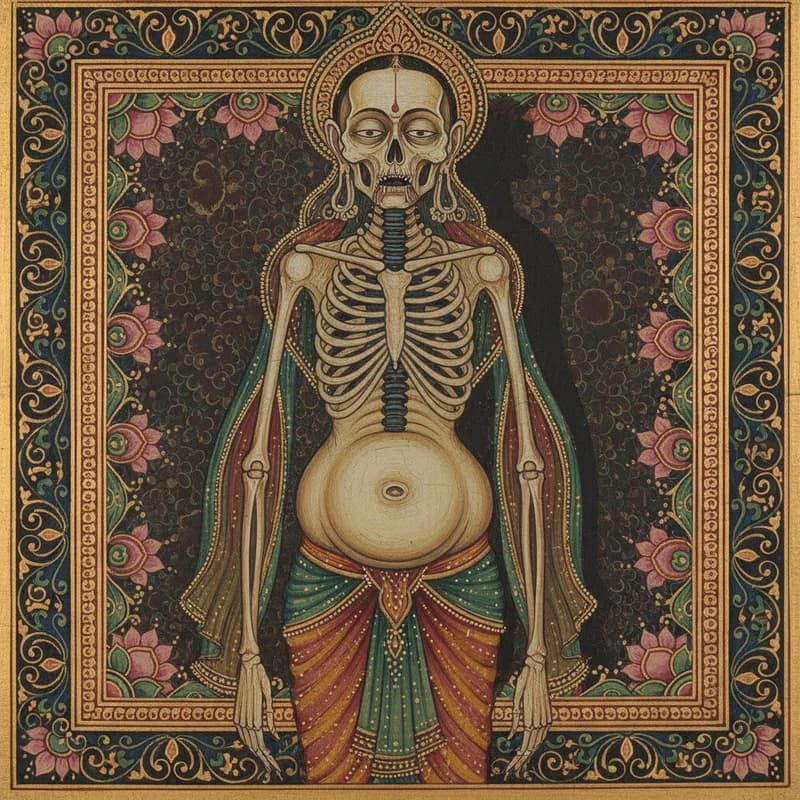
The Nishi has no fixed form. This is not vagueness in the accounts — witnesses who have survived a sighting (those who looked without answering) describe only an absence where the sound originates: a darkness slightly denser than the surrounding dark, a pressure in the air that does not resolve into shape. A district collector's report from Murshidabad, 1932, describes "a pillar of nothing, like the space where a person had just been standing and had not quite left. " Where a form is described, it takes the shape of whoever the listener most grieves — not the beloved in health, but in illness, in the last days. A widow in the Khulna records saw her husband as he looked dying, not as he looked living. This precision — the grief-form — appears consistently enough to be significant.
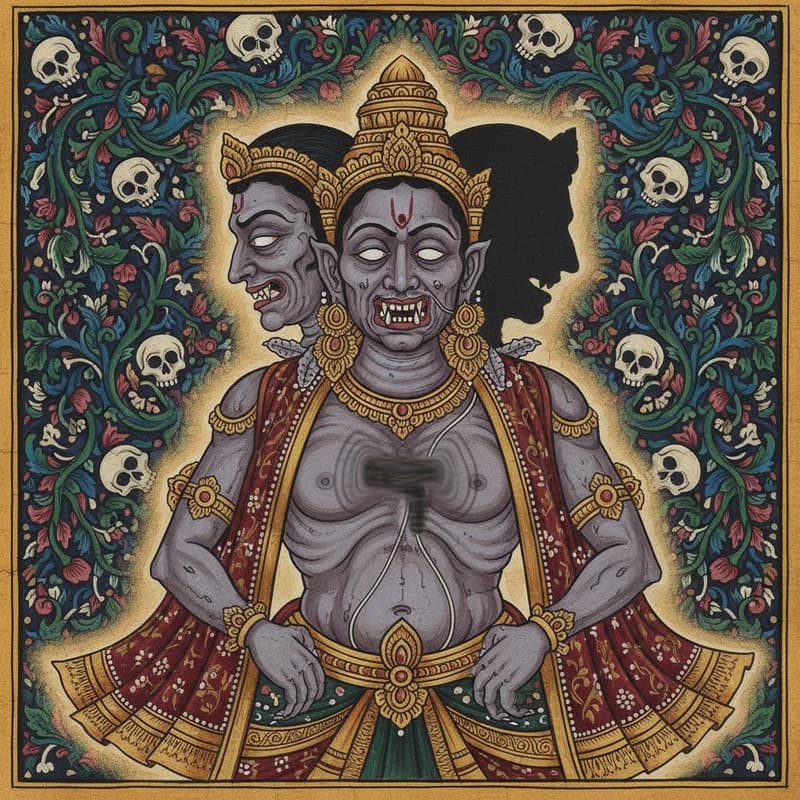
The Nishi does not take a visible form — its deception operates entirely through sound, borrowing the voice of someone the target loves with a precision that goes beyond mimicry. It reproduces not just timbre and accent but the specific textures of speech: the way a particular person clips the last syllable of a name, the exact cadence they use when calling from across a courtyard at dusk. That specificity is the tell, if the listener is still enough to catch it. No living person, standing outside a darkened house on the Birbhum plains at two in the morning, would know to replicate those small, private patterns. The second tell is silence between calls — the Nishi pauses too long, as though calculating, where a real person would simply call again.
First Documented
The Nishi appears most concretely in Bengali oral tradition, with documented accounts clustering in the nineteenth century, though village elders along the Padma and Brahmaputra deltas insist the warnings predate any written record. Dineshchandra Sen's collections of East Bengali folklore provide some of the earliest textual anchoring for this nocturnal caller.
Last Recorded
Accounts of the Nishi persist with striking consistency across Bengal's rural districts — collectors working the villages along the Damodar and Rupnarayan rivers as recently as the 2010s documented fresh testimonies from farmers and fisherfolk who claimed to have heard their names called in the dark by voices not their own.
Source Language
Bengali
Origin
The Nishi appears in Dinesh Chandra Sen's Mymensingh Gitika collections and in William Crooke's field notes from the 1890s, but the oral tradition of the Rarh region does not credit the written record with its origin. In village accounts, the Nishi simply is — not made by a curse or a specific death, but a permanent feature of the Indian night, as old as darkness itself. The Baul tradition of West Bengal offers a different reading. In their account, the Nishi is the accumulated voice of everyone who died mid-sentence — who had something urgent to say and did not finish saying it. The call is not predatory but desperate: it is attempting to complete its last words using whatever voice will carry. This interpretation has not displaced the dominant predatory reading, but it persists in communities along the Kopai River and among certain Baul lineages of Birbhum, where the Nishi is propitiated rather than warded against.
Frequently Asked
The Nishi is a deceptive night-spirit from Bengal that calls out in the voice of someone the listener loves — a parent, a sibling, a neighbor — to lure them outside after dark. It operates entirely through sound, borrowing not just a voice but its precise cadences and private patterns of speech. Those who answer and step outside are sometimes found wandering at dawn; others are not found at all.
The Nishi calls only once, and answering is understood across the Rarh plateau and the delta districts south of Murshidabad as the act that surrenders you to it. The single consistent protection in the folklore record is refusal — bolt the door, keep the lamp burning, and do not step toward a voice you cannot put a face to. No ritual ward has proven reliable enough to substitute for that silence.
Two tells appear consistently in collected accounts: the Nishi replicates speech patterns with an uncanny precision no living person standing outside a darkened house could reasonably possess, and it pauses too long between calls, as though calculating, where a real person would simply call again. The voice is exact — the clipped syllable, the particular dusk-cadence — but the silence between repetitions carries the weight of something inhuman.
The Nishi has no fixed form; witnesses who have survived a sighting describe only a density of darkness where the sound originates, a pressure in the air that does not resolve into shape. A Murshidabad district collector's report from 1932 recorded it as 'a pillar of nothing, like the space where a person had just been standing and had not quite left.' Where a visible form does appear, it takes the shape of whoever the listener most grieves — not in health, but in their last days of illness.
The dominant reading across Bengal treats the Nishi as predatory, but the Baul tradition of Birbhum — particularly communities along the Kopai River — holds a different account: the Nishi is the accumulated voice of everyone who died mid-sentence, still pressing an unfinished word against its throat. In this reading the call is desperate rather than malicious, and certain Santali communities near the Damodar river propitiate it rather than ward against it.
The Nishi appears in Dinesh Chandra Sen's Mymensingh Gitika collections and in William Crooke's field notes from the 1890s, though the oral tradition of the Rarh region does not credit the written record with its origin. Village accounts treat it as a permanent feature of the Indian night — not made by a specific curse or death, but as old as darkness itself. The written sources document the belief; they did not create it.
The Nishi cannot cross a threshold where a lamp burns outward, and its call loses power if the listener addresses it by the true name of the person whose voice it has borrowed. Tulsi planted at the threshold is said to repel its approach, and in the Rarh district tradition iron nails driven into the threshold offer protection. The Nishi also refuses to sound after the first crow calls at dawn — waiting out the night is, in itself, a form of survival.
Unlike the Pishacha, which inhabits corpses and operates through physical possession, or the Mohini, whose deception is visual, the Nishi's entire power is acoustic — it travels as sound alone and leaves no footprint. This makes it unusual among Indian supernatural entities in that no sighting is required for the encounter to be fatal. The closest parallel in the broader tradition may be the Aleya of the Bengal marshes, which lures travelers with light rather than voice, but the Nishi's use of intimate, grief-specific mimicry has no precise equivalent in the recorded folklore.
संबंधित लोकगाथाएं
Related Lore
Algorithmic Inference
आपको यह भी पसंद आ सकता है
You May Also Like
Community Discussion
Comments are reviewed by AI before appearing publicly. Unsafe, unrelated, or uncertain comments go to human review.
Sign in to join the discussion.
0 comments
No public comments yet.