The Vetala (वेताल) is a spirit of considerable antiquity, described across the *Vetālapañcaviṃśati* and various Shaiva tantric texts as a being that inhabits and animates corpses, dwelling in the *śmaśāna* where the boundary between the living and the dead grows thin as smoke. In Maharashtra, the tradition is rooted in specific geography — the cremation grounds along the Godavari's banks near Nashik, where the river runs shallow in the dry months of Chaitra and the smell of sandalwood ash drifts into the scrub forests of the Sahyadri foothills. Neither fully malevolent nor benevolent, the Vetala occupies a philosophically complex position: it possesses extraordinary knowledge of past, present, and future, and in the celebrated Vikramaditya cycle, one such spirit engages the king in riddles of profound moral and metaphysical weight, suggesting an intelligence that transcends mere predation. Oral accounts collected from the Mahadeo Koli communities of the Western Ghats describe the Vetala's laughter as indistinguishable from the bark of a jackal — close enough to fool you, different enough to freeze the blood.
Regional tradition in Maharashtra grants the Vetala a peculiarly domestic menace. Unlike the abstract demons of Sanskrit cosmology, this one is remembered in village accounts as arriving during the month of Ashwin, when the rains have just broken and the air carries the sweetness of wet laterite. Tantric practitioners — *sādhakas* working within the Nath tradition that spread through the Deccan — have historically sought to bind these entities at crossroads where three paths meet in open country, a practice that echoes procedures documented in the *Atharvaveda's* later accretions. The binding required specific materials: black sesame, iron nails, and an oil lamp kept burning through three consecutive moonless nights. Fail on the third night, and the accounts agree on what follows, though they differ on the details.
Those who encounter a Vetala at the margins — the burning ghats outside Jejuri after midnight, the old crossroads near Trimbakeshwar where pilgrims no longer walk after dark — are advised to maintain absolute silence and to walk without turning back. The spirit's intentions, like its philosophical riddles, rarely resolve into simple answers. What distinguishes the Vetala from cruder supernatural threats is precisely this ambiguity: it does not merely frighten, it interrogates. The possessed body it inhabits moves with an uncanny deliberateness, eyes open but unfocused, the head tilted as though listening to something just beyond the range of human hearing. Several accounts from the Ahmednagar district describe a peculiar detail — the Vetala's host always smells faintly of marigolds, the same flowers heaped on the bier before burning.
First Reference —circa 11th century CE
Last Recorded —Present
Appearance
स्वरूप
Natural Form
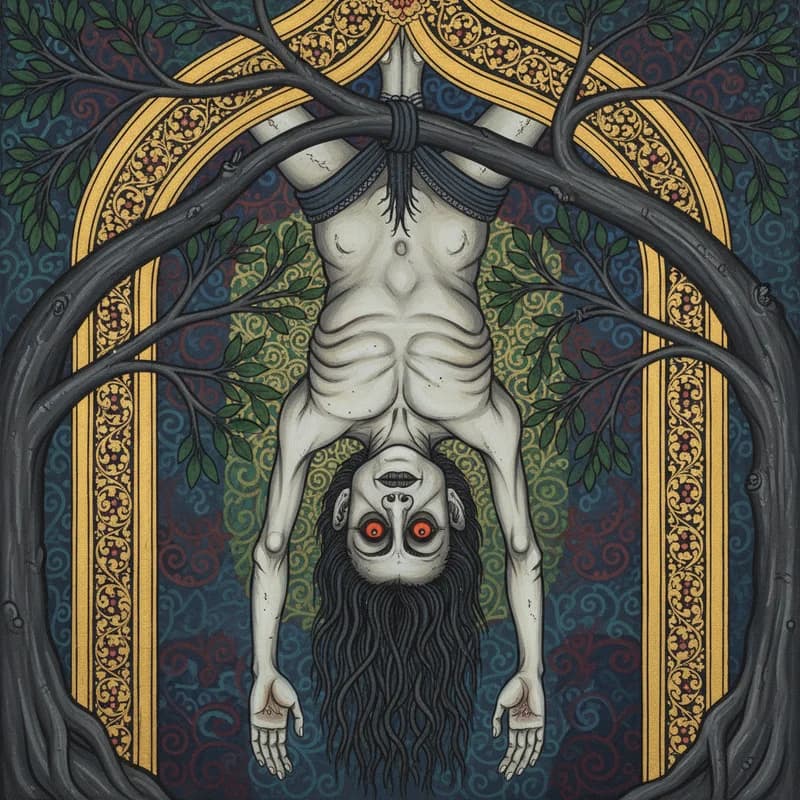
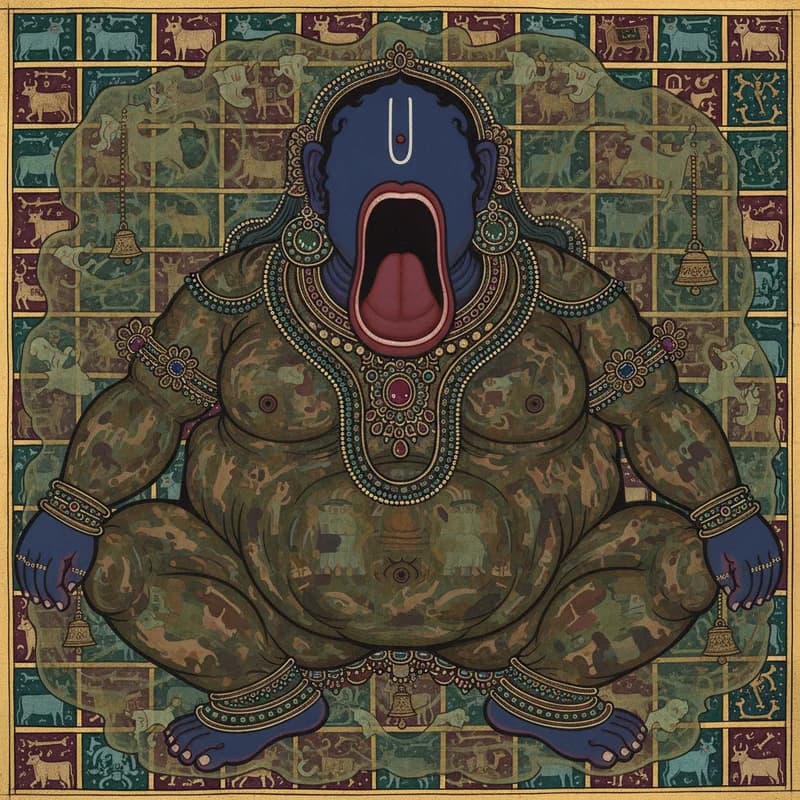
The Vetala manifests as a cadaverous figure suspended upside-down from the branches of śmaśāna trees, its ashen flesh cold and bloated with the particular pallor of the long-dead, limbs hanging loose as though the sinews have forgotten their purpose. Its eyes burn with an unsettling luminescence in the darkness of the cremation ground — open, aware, and deeply intelligent where a corpse's should be vacant — while matted hair trails downward toward the earth like roots seeking soil. The body it inhabits bears the unmistakable marks of death: sunken cheeks, darkened lips, and the faint smell of ash and decay that clings to it even when it speaks with unnerving eloquence.
Alternate Forms
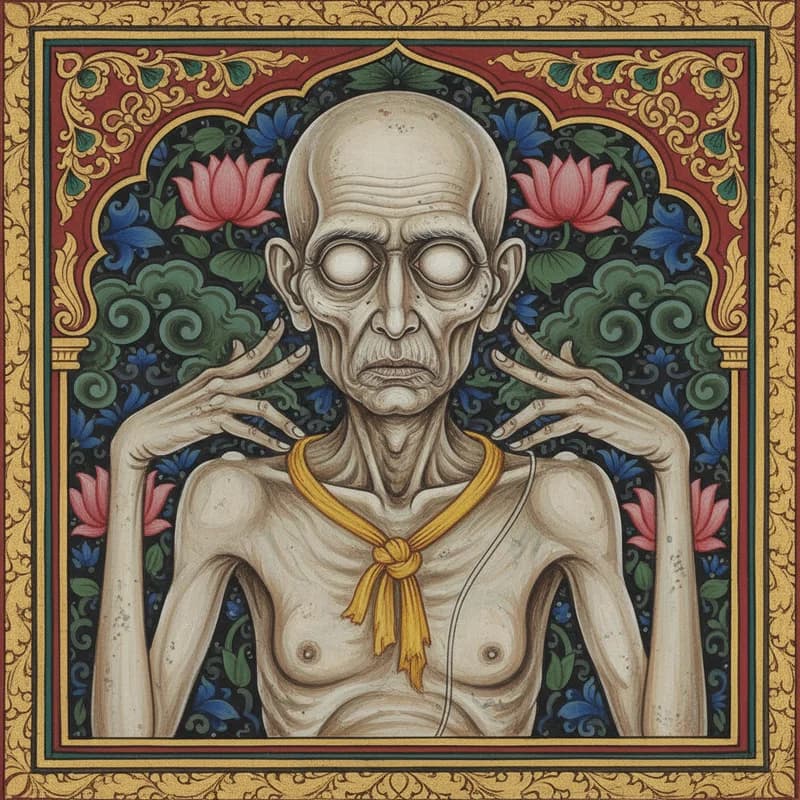
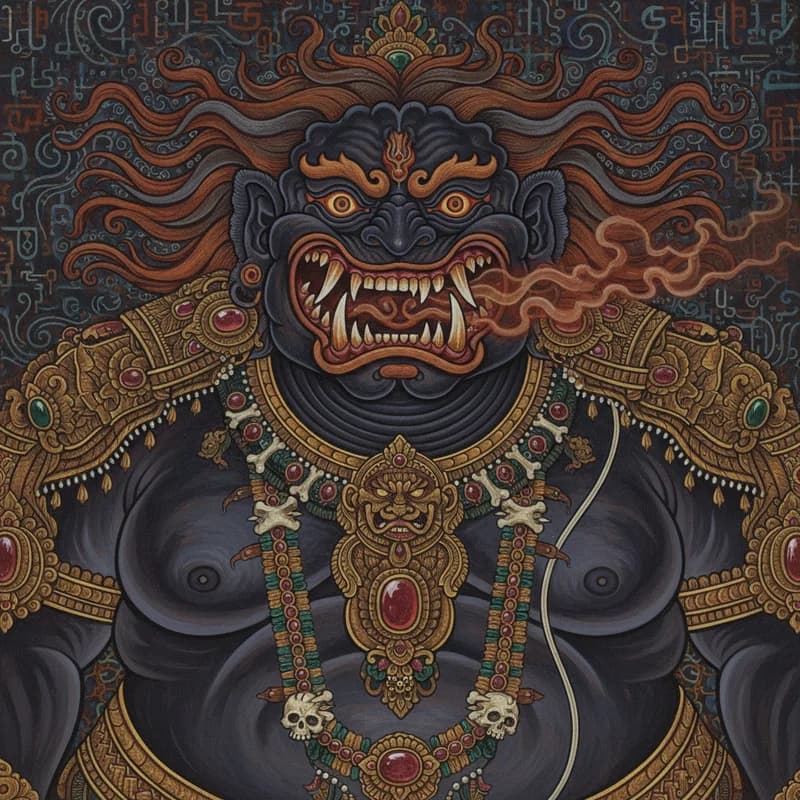
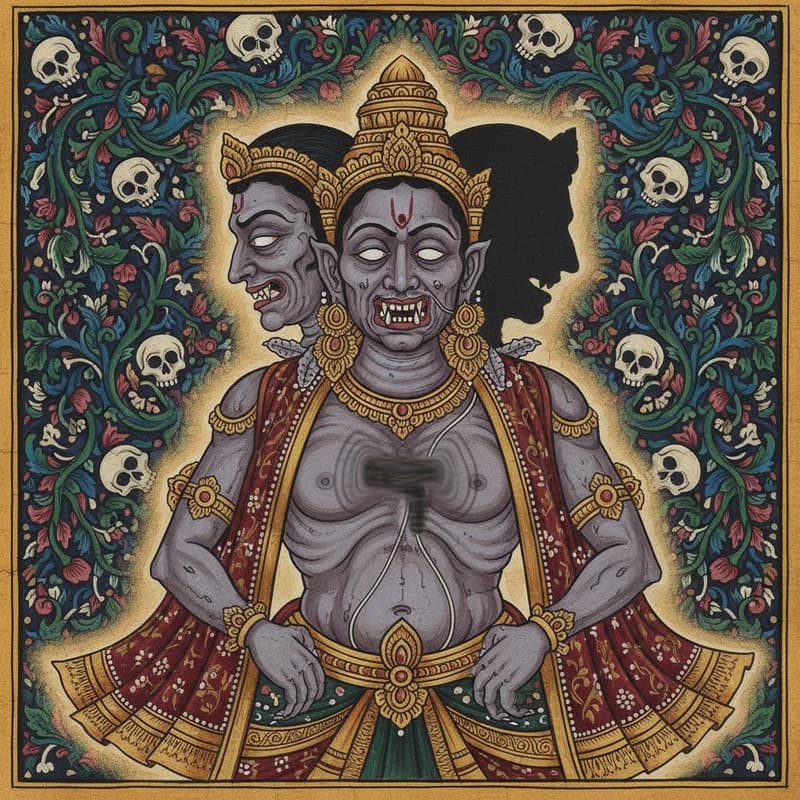
The Vetala is documented across Sanskrit sources including the *Vetālapañcaviṃśati* as a spirit capable of animating and vacating corpses at will, wearing the dead like a garment and speaking through their decaying lips with uncanny eloquence. Regional traditions from Maharashtra and Karnataka further describe the Vetala assuming the form of a great bat or an owl perched at cremation ground boundaries, its eyes retaining the unsettling luminescence of the possessing spirit even within the animal host. In certain oral traditions of Rajasthan, the Vetala is said to walk among the living as a wandering ascetic or a traveler whose shadow falls in the wrong direction, betraying the absent warmth of a soul that does not truly inhabit the flesh it borrows.
Powers & Weaknesses
शक्ति और दुर्बलता
Known Powers
◆Inhabits and reanimates human corpses
◆Possesses knowledge of past present future
◆Confounds travelers with disorienting illusions
◆Speaks riddles that bind the unwary
◆Drains vitality through prolonged proximity
◆Resists all attempts at ritual banishment
Known Weaknesses
◆Sunlight dissolves its corpse-bound tether
◆Sacred ash smeared across threshold repels entry
◆Recitation of Atharva Veda verses compels retreat
◆Salt circles sever its link to the body
◆Cremation ground boundaries confine its nocturnal wandering
Known Locations
ज्ञात स्थान
Cremation grounds of Nashik, Maharashtra
Banyan groves of coastal Konkan
Crossroads shrines of Vidarbha plateau
Burning ghats along Godavari, Telangana
Dense jungles of Dandakaranya, Chhattisgarh
Ancient temple ruins of Karnataka
River confluences near Varanasi, Uttar Pradesh
Deserted village borders of Rajasthan
Historical Record
ऐतिहासिक अभिलेख
First Documented
circa 11th century CE
Last Recorded
Present
Source Language
Sanskrit
Origin
In the *Vetālapañcaviṃśati* and the older current from which Somadeva drew when composing the *Kathāsaritsāgara*, the vetāla arises from a specific failure of ritual — not merely death, but death incompletely mourned, the *antyeṣṭi* broken off before the fire has consumed what it must. The *prāṇa* cannot ascend toward Pitṛloka under Yama's accounting because the door was never properly opened; it circles back instead, like water finding no channel, and settles into whatever vessel the śmaśāna offers. Śiva presides over this condition not as its cause but as its sovereign — Mahādeva whose own grief at Satī's death at Dakṣa's yajña first demonstrated that violated rite could unseat the cosmic order itself, that sorrow powerful enough could make the dead refuse their proper dissolution. The *Atharvaveda's* hymns against the piśāca and the undead — particularly the incantations of the fifth and seventh *kāṇḍas* — suggest that this understanding predates the Purāṇic architecture entirely, belonging to a layer of belief older than the formalized geography of heaven and hell, when the boundary between the quick and the dead was understood as permeable in ways that systematic theology would later try to seal shut.
What the Shaiva tantric tradition added to this archaic substrate was a theology of the threshold. The śmaśāna is not merely where the vetāla is found — it is the condition the vetāla embodies. Abhinavagupta's *Tantrāloka*, working within the Kashmir Shaiva framework, describes the cremation ground as the site where *sṛṣṭi* and *pralaya* are simultaneously present, where creation has not yet resolved its argument with dissolution. The vetāla inhabits precisely this irresolution. Oral traditions preserved among the Mahadeo Koli communities of the Sahyadri foothills frame this differently but arrive at the same place: the spirit is not evil so much as *unfinished*, a consciousness still holding the shape of its last breath, unable to release what it knew in life. That knowledge — of past, present, and future — is not a power the vetāla acquires after death. It is what remains when everything else the living carry has been stripped away, the way burning reveals the iron inside the wood.
It is in this sense that the *Vikramaditya* cycle's riddle-telling vetāla is not a literary invention but a theological statement. The spirit suspended upside-down from the śiṃśapā tree on the burning ground outside Ujjayinī — that old city on the Kshipra, whose ghats have smelled of ash and champak since before the *Mahābhārata* named it — is not testing the king for sport. Each riddle poses the question the vetāla itself cannot answer: when does a soul's obligation to the living end, and who has the right to determine it? Between the extinguished pyre and the unfinished mantra, the vetāla waits not for permission to leave but for someone capable of understanding why it stayed.
Frequently Asked
Questions About Vetala
A Vetala is a corpse-dwelling spirit described in the Vetālapañcaviṃśati and Shaiva tantric texts as a consciousness that animates dead bodies when the funeral rites — the antyeṣṭi — have been left incomplete. Unable to pass into Pitṛloka under Yama's accounting, it circles back and inhabits whatever vessel the cremation ground offers. Unlike simple ghosts, the Vetala retains full awareness of past, present, and future, and engages the living with a disturbing, interrogative intelligence.
The Vetala's most celebrated appearance is in the Vetālapañcaviṃśati, the cycle of twenty-five riddle-tales embedded in Somadeva's eleventh-century Kathāsaritsāgara, where a spirit suspended from a śiṃśapā tree on the burning grounds outside Ujjayinī on the Kshipra river poses moral riddles to King Vikramaditya. Older references appear in the Atharvaveda's fifth and seventh kāṇḍas, in incantations against the piśāca and the undead that predate the Purāṇic cosmological framework entirely. Abhinavagupta's Tantrāloka, working within Kashmir Shaiva philosophy, further theorizes the cremation ground as the site the Vetala embodies — where creation and dissolution have not yet resolved their argument.
Accounts consistently describe the Vetala as a cadaverous figure hanging upside-down from trees at the śmaśāna's edge, its ashen flesh bloated and cold, matted hair trailing downward like roots. The body it inhabits carries the unmistakable signs of death — sunken cheeks, darkened lips, the smell of ash — yet its eyes burn with an unsettling luminescence, open and deeply aware where a corpse's should be vacant. Oral traditions from the Mahadeo Koli communities of the Sahyadri foothills add one detail that recurs across accounts: the possessed body always smells faintly of marigolds, the same flowers heaped on the bier before burning.
The Vetala occupies a philosophically ambiguous position that resists simple classification as evil. Shaiva tantric tradition frames it as unfinished rather than malevolent — a consciousness still holding the shape of its last breath, stripped of everything the living carry except knowledge, which is what remains when the fire has done its work. The riddle-telling Vetala of the Vikramaditya cycle is not testing the king for sport; each riddle poses the question the spirit itself cannot answer about when a soul's obligation to the living finally ends.
The Vetala can inhabit and vacate human corpses at will, wearing the dead like a garment and speaking through decaying lips with unnerving eloquence. Beyond physical possession, it holds knowledge of past, present, and future — not as a power acquired after death, but as what remains once everything else has been stripped away. Prolonged proximity drains vitality from the living, and the spirit can confound travelers with disorienting illusions, particularly at crossroads and cremation ground boundaries after dark.
Maharashtra's Vetala tradition is rooted in specific geography — the cremation grounds along the Godavari near Nashik, the crossroads outside Trimbakeshwar where pilgrims no longer walk after dark, the burning ghats at Jejuri. The spirit is remembered in village accounts as arriving during Ashwin, when the rains break and wet laterite sweetens the air, giving it a peculiarly seasonal, domestic menace absent from the more abstract Sanskrit cosmological treatments. In Rajasthan, by contrast, the Vetala is said to walk among the living as a wandering ascetic whose shadow falls in the wrong direction — a subtler, more urban disguise than the corpse-hanging figure of the Deccan tradition.
Tantric practitioners within the Nath tradition that spread through the Deccan historically sought to bind the Vetala at crossroads where three paths meet, using black sesame, iron nails, and an oil lamp kept burning through three consecutive moonless nights — a procedure echoing the Atharvaveda's later accretions. Sacred ash smeared across a threshold repels entry, and recitation of specific Atharva Veda verses compels the spirit to retreat. Sunlight dissolves its corpse-bound tether entirely, which is why all accounts of Vetala encounters are fixed firmly in the hours between midnight and the first grey light.
Both the Vetala and the Piśāca are associated with cremation grounds and the consumption or possession of the dead, and the Atharvaveda's incantations address them in proximity, suggesting an ancient conceptual kinship. The Vetala, however, is distinguished by its intelligence and its origin in incomplete ritual — it is a specific consciousness tethered to the living world by unfinished rites, not a generalized demon of flesh. The Piśāca is typically described as predatory and mindless in its hunger, while the Vetala interrogates, reasons, and in the Vikramaditya cycle, demonstrates a moral seriousness that places it in a category of its own.
A fragmentary oral account of uncertain provenance, preserved through successive retellings whose geographic and temporal anchors have been lost to transmission — a not uncommon fate for testimonies originating in isolated rural communities or itinerant traditions. The informant's account describes an encounter with an unidentified presence whose attributes resist easy classification within established taxonomies of yakṣa, bhūta, or devayoni. This record is retained in the archive as a liminal document, awaiting corroborating accounts that might illuminate the nature of the entity and restore the contextual threads that oral migration has frayed.
Source: Oral account collected by Sudhir Chakravarti during field survey, Birbhum District, West Bengal, 1976; transcribed from testimony of Haripada Mondal, village headman, Hetampur vicinity.
A persistent oral tradition circulating among the *doms* and cremation attendants of Manikarnika Ghat describes repeated nocturnal encounters with a figure suspended inverted from a *śiṃśapā* tree at the ghat's northern margin — a detail strikingly consonant with the classical *Vetālapañcaviṃśatikā* accounts of the vetāla's characteristic posture. Witnesses across successive generations report the entity speaking in riddles or demanding answers to unanswerable questions before releasing those who address it correctly, a behavioral signature that aligns closely with the Kashmiri Sanskrit recension preserved in Somadeva's *Kathāsaritsāgara*. The sighting cluster is considered among the more textually coherent in the archive, given Varanasi's status as a *mahāśmaśāna* — a site of perpetual cremation fire — which classical sources consistently identify as the vetāla's preferred habitation.
Source: Oral account collected by Pt. Shivnarayan Chaturvedi from a cremation ground attendant (dom), Manikarnika Ghat, Varanasi, Uttar Pradesh, 1958; archived in the personal field notes of Dr. Agehananda Bharati, Department of Anthropology, Banaras Hindu University, Case File VII.
A village headman from the Ratnagiri coast reported encountering a motionless figure perched inverted upon the sacred pipal at the boundary of the Vetoba shrine, its eyes described as luminous and unblinking in the manner consistent with vetāla possession of an abandoned corpse. The witness, a literate man of the Pathare Prabhु community, maintained that the entity neither threatened nor retreated but observed the passing funeral procession with an unsettling fixity, consistent with the vetāla's traditional role as a liminal guardian straddling the territories of the living and the śmaśāna. This account is notable for its convergence with the Kathāsaritsāgara's characterization of the vetāla as a creature of watchful stillness rather than active malevolence, and for the regional Konkani practice of propitiating Vetobā precisely to prevent such boundary violations during inauspicious processions.
Source: Regional Folklore (Konkan), Cultural Practice (Vetoba Worship), Oral Testimonies