She comes from a bad death — a woman who died in childbirth, or in the forty days of ritual vulnerability that follow it, or in the unclean time of menstruation, before the proper rites could seal her passage. Across the plains of Uttar Pradesh, through the mango groves of Awadh, and into the Deccan accounts collected from Marathwada, the identifying detail remains consistent: her feet face backwards. She walks toward you while her heels point the way she came. In the hot months, when the neem trees along village boundaries drop their bitter flowers and the air carries the smell of standing water, sightings concentrate near cremation grounds and the edges of fields where labour has no witness.
The Churel does not hunt strangers. She returns for her own — the husband who neglected her, the mother-in-law who withheld care, the household that performed her last rites carelessly or not at all. She appears young and beautiful to men who knew her, drawing them away from the lamp-lit courtyard into the dark beyond the well, and she ages them. Accounts from the Chambal basin describe men found at dawn, hair gone white, unable to speak of where they had been. Women in the household know her by the sound she does not make: the Churel arrives without the jangle of glass bangles that every living woman carries.
Protective measures run deep in the folk practice of the northern plains. Thorny babul branches are laid across thresholds in the days after a woman dies in difficult circumstances. Iron, salt, and the Hanuman Chalisa recited at the doorway before dark are documented in accounts from Gorakhpur to Bhopal. But the Churel cannot be permanently repelled — only held at the boundary. Until the grievance that created her is named and addressed, she waits at the edge of the courtyard, where the lamplight runs out.
First Reference —circa 16th century CE
Last Recorded —Present
Appearance
स्वरूप
Natural Form
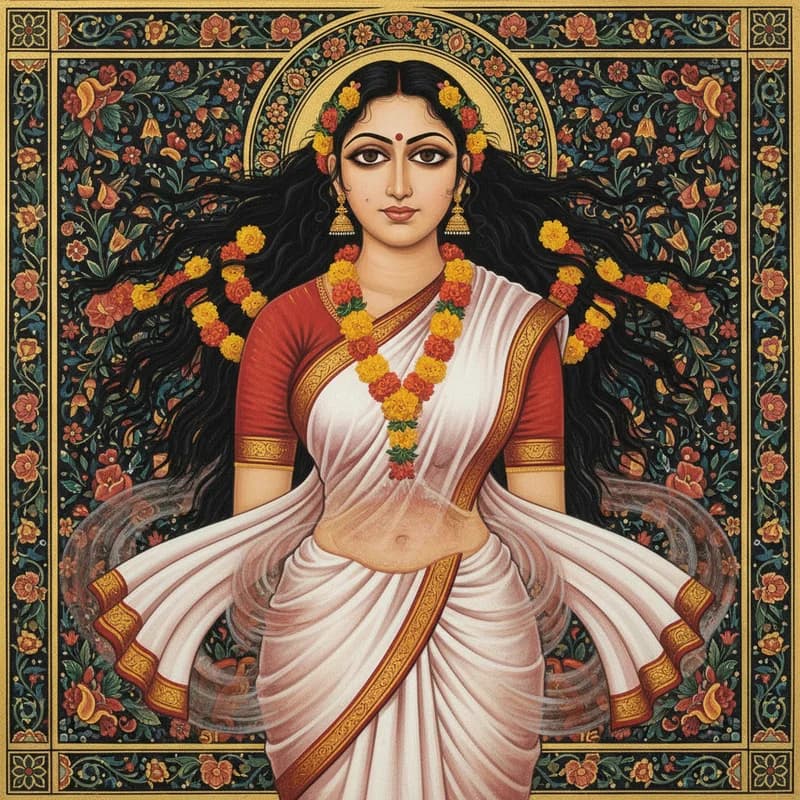
The Churel is most often described as a woman in the middle of her beauty — not old, not a girl, but precisely at that age when a young wife would be most visible at the well or in the fields. This is the first wrongness: she appears too complete, too still, the way a painting of a person is still rather than the way a person is still. Accounts from the Terai villages along the Gandak river describe her sari as clean in a way that registers as obscene after dark, the white or red cotton unmarked by the mud that catches at everyone else's hem. Look lower, the old women will tell you. Her feet face backward. The heels point forward, the toes trail behind her as she walks, and yet she walks without stumbling — this reversal, this confident inversion, is the detail no account omits.
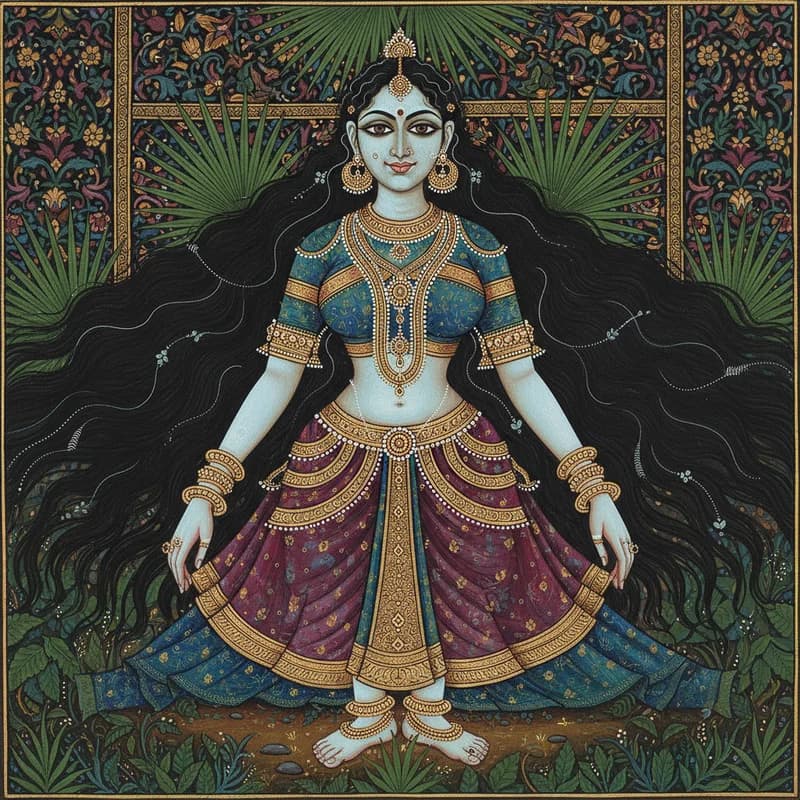
The smell arrives before she does. It is the smell of the forty days after childbirth — the iron-and-milk smell of the postpartum room, but gone wrong, fermented into something that sits at the back of the throat. In the Bundelkhand accounts she carries the faint sweetness of marigold garlands, the kind laid at the feet of a new bride or a new corpse, and witnesses report difficulty separating the two associations. Her hair is loose, always — the unbound hair of a woman in mourning or a woman in labour, never the oiled and plaited hair of a woman at peace. When she moves through standing crops in the harvest month of Kartik, the stalks do not bend. She passes through the physical world the way a rumour passes through a village — present everywhere, touching nothing you can prove.
Her voice is the primary weapon. Witnesses who have seen her and kept distance report a secondary unease: the sound of a woman calling from the direction of the well or the tree-line, a voice using a name it should not know. The Awadhi accounts are specific — she calls in the voice of the dead woman she once was, or in the voice of whichever woman the listener has most recently lost. What marks her finally as something other than human is the quality of her attention. A woman glances, looks away, is distracted by the world. The Churel does not glance. She watches the way the river watches — without preference, without blinking, with the absolute patience of something that has already arrived where it intended to go.
Alternate Forms
The Churel's most documented form is that of a young woman who died in childbirth or during the forty days following — and she returns wearing that same identity, slightly adjusted. In the villages along the Gomti river in eastern Uttar Pradesh, she appears at dusk near the fields where mustard is harvested, dressed in the clothes she was buried in, which look freshly washed. She approaches men she recognizes, calling them by name, asking after children, after the harvest. Nothing in her manner suggests distress. That is precisely the problem.
The tells are physical and, once you know them, irreversible knowledge. Her feet are reversed — heels forward, toes pointing back — which she conceals by approaching only through long grass or standing water, or by staying just far enough away that the angle is wrong. Her hair hangs loose and uncombed, which in itself means nothing, but it does not move. Not in wind, not when she turns her head. Accounts from the Bundelkhand plateau note a second detail: she casts no shadow at the hour she appears, which is always the hour between the cattle coming home and the lamps being lit, when shadows are long and obvious and their absence is not.
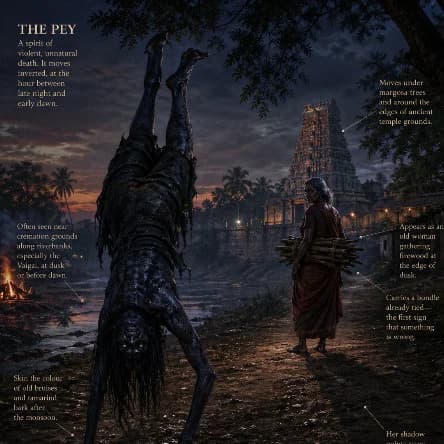
She also takes the form of an old woman at well-heads and cremation ground boundaries — the kind of figure so common in rural life that the eye slides past her. Here she is harder to identify. The one consistent tell from accounts collected near the ghats of Chitrakoot is the smell: something between turmeric and rot, the specific smell of a room where a woman has recently given birth and something has gone wrong. Villagers who have encountered her in this form describe recognizing the smell before they registered anything else, the body knowing before the mind did.
Powers & Weaknesses
शक्ति और दुर्बलता
Known Powers
◆Reverses her feet to mislead trackers
◆Drains youth through sustained eye contact alone
◆Appears first as the smell of jasmine
◆Targets men who crossed a woman's dying wish
◆Cannot pass where neem branches bar the door
◆Lures toward wells during the month of Kartik
Known Weaknesses
◆Reversed feet betray her before she speaks
◆Neem leaves tied above the doorway at dusk
◆Iron nails driven into the birthing room threshold
◆Salt line drawn at every entrance on Amavasya nights
◆Red thread knotted seven times around the wrist
◆Reciting the names of living male children aloud
◆Cannot cross ground where mustard seeds have been scattered
Known Locations
ज्ञात स्थान
Sugarcane-harvest nights along the Gomti floodplains of Sultanpur district, Uttar Pradesh
Childbirth-death cremation grounds outside Lahore-gate settlements of old Lucknow, Uttar Pradesh
Dry-season well-paths of Thar scrubland near Barmer at dusk, Rajasthan
Postpartum funeral pyres beside the Beas river at Amritsar's rural margins, Punjab
Monsoon-swollen neem groves of Hoshangabad district along the Narmada bank, Madhya Pradesh
Crossroads of Kutch salt flats during the moonless nights of Shravan, Gujarat
New-widow mourning roads near the Chambal ravines of Morena district, Madhya Pradesh
Harvest-festival nights in the sal forests of Surguja district, Chhattisgarh
Historical Record
ऐतिहासिक अभिलेख
First Documented
circa 16th century CE
Last Recorded
Present
Source Language
Hindi
Origin
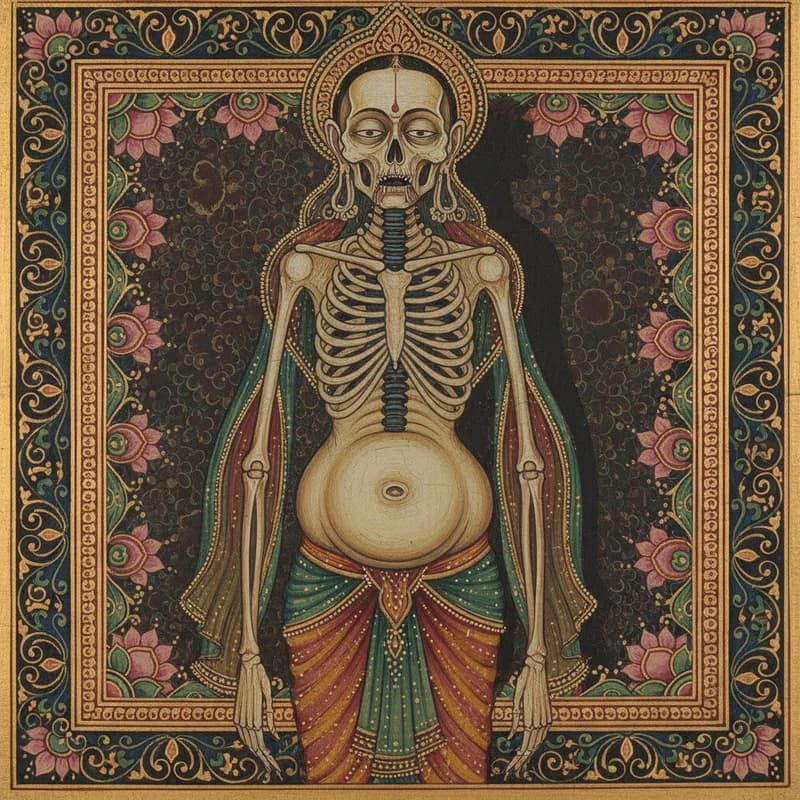
The Churel enters the written record obliquely. No single Puranic text establishes her origin with the authority that the Skanda Purana lends to the Brahmarakshas; instead, she accumulates across marginal passages — in the Devi Bhagavata Purana's lists of inauspicious female spirits, in the Atharva Veda's references to the Rakshasi who haunts thresholds and birth-chambers, in the regional Sthalapuranas of Rajasthan and the Gangetic plain. The theological logic, however, is consistent across these dispersed sources: she is a woman who died in the liminal condition of pregnancy, childbirth, or the postpartum period — states the classical tradition regards as simultaneously sacred and ritually dangerous. Death during this crossing does not allow proper departure. The soul is caught between two obligations it could not complete: the act of living and the act of bringing life forward. What remains is not a ghost in the ordinary sense but something structurally incomplete, denied the rites that would release it because the crisis of her dying disrupted the very domestic order that produces those rites.
The oral tradition of the Gangetic plain, particularly among communities along the Ghaghra and Gomti rivers in Awadh, extends this logic in ways the written texts do not. Village accounts from the Faizabad and Barabanki districts describe the Churel as specifically generated by neglect — not simply by the fact of dying in childbirth, but by dying unattended, or being buried rather than cremated in a family's haste or shame. The inverted feet that mark her in nearly every regional account carry a precise symbolic weight in these traditions: she moves toward the world of the dead while facing the world of the living, permanently oriented in the wrong direction. Oral accounts from the Bundelkhand region and the forests of the Vindhya foothills complicate the dominant image further, describing her not as uniformly malevolent but as fixated — returning specifically to the household that failed her, or to men of her bloodline, enacting a demand for recognition that was denied in her dying. The bhopa communities of eastern Rajasthan propitiate rather than merely ward her, leaving offerings at the neem trees near cremation grounds in the month of Bhadrapada, when the boundary between living and dead is understood to thin.
Where the oral and textual traditions diverge most sharply is on the question of her appearance. The Sanskrit sources describe her within a general category of Rakshasi or Pishachi, granting her no stable form. The village tradition is far more specific and, in its specificity, more disturbing: she is beautiful. This is not incidental. The oral accounts of Punjab and western Uttar Pradesh, documented in partial form in William Crooke's North-Western Provinces field notes from the 1890s, describe her beauty as the mechanism of her predation — she draws men toward her before the reversed feet and the disheveled hair of the unclean dead become visible. The Devi Bhagavata's inauspicious spirits are forces to be catalogued and avoided; the Churel of living oral tradition is a woman with a specific grievance and a specific form of address. That distinction — between cosmic category and individual wrong — is where the folk tradition has always done its most serious work.
Frequently Asked
Questions About Churel
A Churel is the ghost of a woman who died during childbirth, the forty days of postpartum vulnerability, or menstruation — states the classical tradition regards as ritually dangerous — before proper funeral rites could release her. She is not a ghost in the ordinary sense but something structurally incomplete, caught between the obligation of living and the obligation of bringing life forward. Accounts concentrate across the Gangetic plain, particularly in Awadh and the Bundelkhand plateau, where her presence is documented from the Ghaghra river villages to the forests of the Vindhya foothills.
The single detail no regional account omits is her reversed feet — heels pointing forward, toes trailing behind — which she conceals by approaching through long grass, standing water, or at the ambiguous hour between cattle coming home and lamps being lit. Her hair hangs loose and does not move, not in wind, not when she turns her head. The smell arrives before she does: the iron-and-milk smell of the postpartum room gone wrong, which witnesses from Bundelkhand describe as registering in the body before the mind has caught up.
The Churel does not hunt strangers. She returns specifically for the household that failed her — the husband who neglected her, the mother-in-law who withheld care, the family that performed her last rites carelessly or buried her in haste and shame. Accounts from the Chambal basin describe men found at dawn with hair gone white, unable to account for where they had been, after she drew them beyond the lamp-lit courtyard into the dark near the well.
The Sanskrit sources of the Devi Bhagavata Purana and the Atharva Veda place both within a general category of inauspicious female spirits — forces to be catalogued and avoided — granting neither a stable individual form. The Churel of living oral tradition, however, is something more specific: a woman with a named grievance and a precise form of address, beautiful enough to draw men toward her before the reversed feet become visible. That distinction between cosmic category and individual wrong is where the folk tradition of the northern plains has always done its most serious work.
Thorny babul branches laid across the threshold, iron nails driven into the birthing room floor, and salt lines drawn at every entrance on Amavasya nights are the most consistently documented protections across accounts from Gorakhpur to Bhopal. Neem leaves tied above the doorway at dusk and mustard seeds scattered on the ground are specific to the Awadhi and Bundelkhand traditions. Reciting the Hanuman Chalisa at the doorway before dark, or speaking aloud the names of living male children, is reported to hold her at the boundary — though no account suggests she can be permanently repelled until the grievance that created her is named.
She enters the written record obliquely rather than through a single authoritative source: the Devi Bhagavata Purana lists her among inauspicious female spirits, the Atharva Veda references a Rakshasi haunting thresholds and birth-chambers, and the regional Sthalapuranas of Rajasthan and the Gangetic plain carry marginal passages consistent with her logic. No Puranic text establishes her origin with the authority the Skanda Purana lends to the Brahmarakshas. The oral tradition of the Ghaghra and Gomti river villages has always carried more of her specific character than the Sanskrit sources.
In the oral traditions of Faizabad and Barabanki districts along the Gomti river, the reversed feet carry precise symbolic weight: she moves toward the world of the dead while facing the world of the living, permanently oriented in the wrong direction because her dying disrupted the domestic order that produces proper rites. She is not walking away from death — she is walking toward the living while unable to leave the dead behind. This inversion is the physical record of an incomplete crossing.
The Mohini is a spirit of seduction without a specific domestic grievance — her predation is general, her beauty a trap set for any man who wanders near water after dark. The Churel's beauty is a mechanism aimed at particular men she knew in life, and her return is structured around a specific wrong that must be acknowledged before she will withdraw. Where the bhopa communities of eastern Rajasthan propitiate her with offerings at neem trees near cremation grounds during Bhadrapada, no comparable tradition of propitiation exists for the Mohini — the Churel is understood to have a claim, not merely an appetite.
Vindhya Forest, Madhya PradeshNight of Amavasya, Bhadrapada month, 1961
Ramkhelawan Dubey, a canal irrigation clerk posted at the Phulpur sub-division office, reported that the figure standing at the Chandmari embankment road called him by his childhood name — a name known only to his deceased mother and no living person in the district. The soles of her feet were visible from the front, heels forward, toes pointing behind her into the dark. He did not cross the road that night, nor for the eleven nights that followed.
Source: Field notes of Dr. Priya Iyer, Department of Anthropology, Banaras Hindu University, collected August–September 1961; corroborated by tehsildar office register, Phulpur, entry dated 4 September 1961