प्रतीक्षा करें
Decoding the Pishacha encounter logs…
प्रतीक्षा करें
Decoding the Pishacha encounter logs…


Bak
Something vast moves beneath the surface of the Padma and the Meghna where the silt runs deepest, in the months after the monsoon swells the channels and the fishermen push out before dawn in their narrow dinghies. The Bak is not a water spirit in any gentle sense — it is enormous, the accounts consistent on this point across the chars and fishing villages between Faridpur and Chandpur, large enough that a capsized boat leaves no wreckage worth finding. It does not pursue. It waits below the line where light stops penetrating, and when a hull passes overhead it rises, and the boat goes over, and the passengers go down, and that is the end of the account, because there are no survivors to complicate the story.
What fishermen fear most is the stillness that precedes it. On the Meghna in late October, when the water is high and brown and the current runs fast from the north, experienced boatmen describe a moment where the river seems to hold its breath — no ripple from wind, no movement from fish, the surface gone flat as poured oil. Older men from the Bikrampur region will not cross certain stretches after the Kali Puja night, and they name those stretches with the same matter-of-fact precision they use for sandbanks and broken channels. The Bak does not announce itself. It does not call out or deceive or possess. It simply feeds, and the river closes over, and by morning the water looks exactly as it always has.
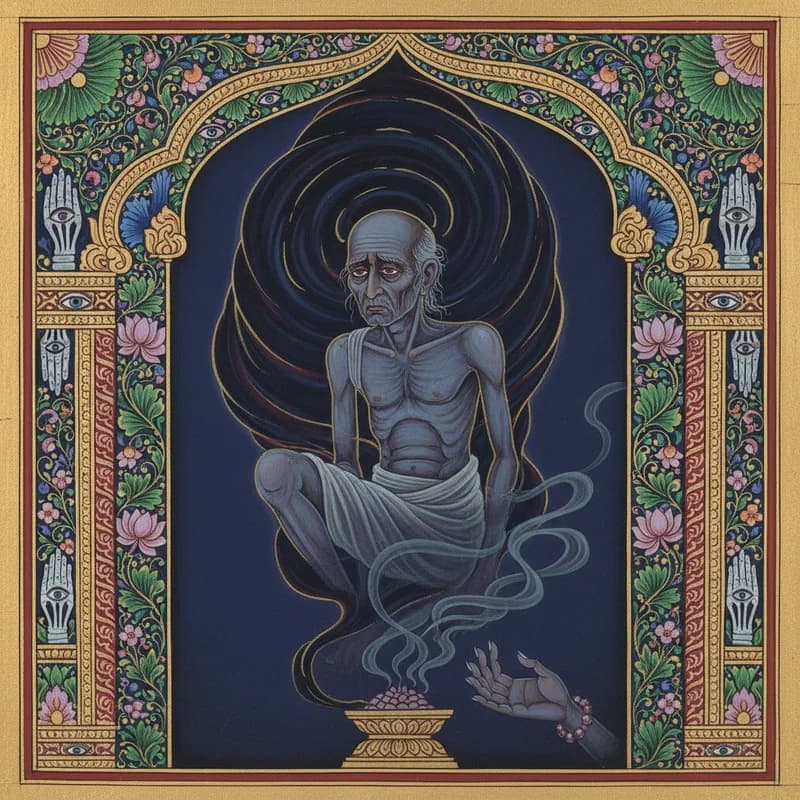
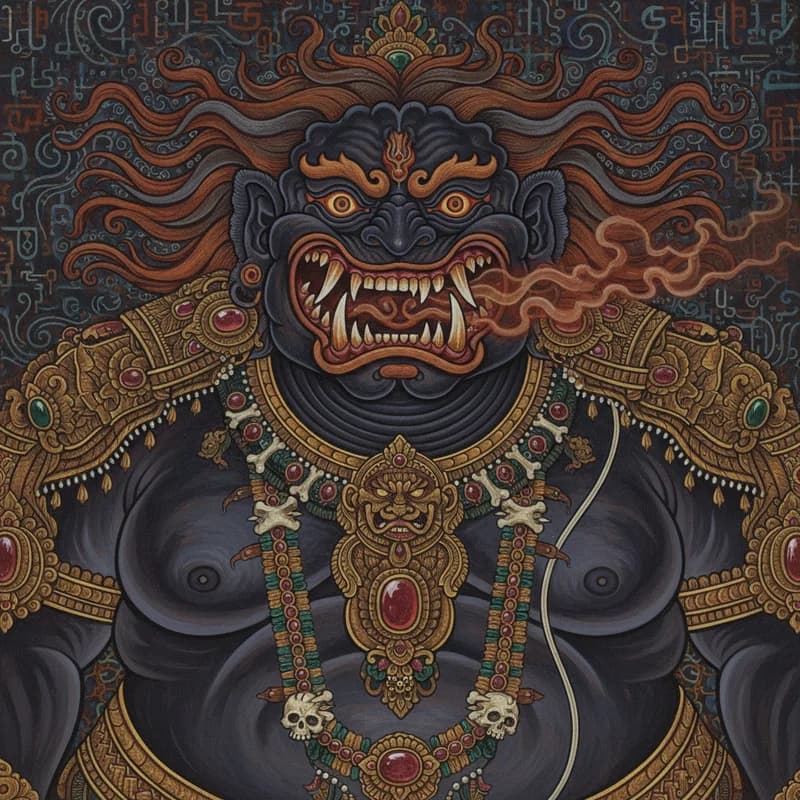
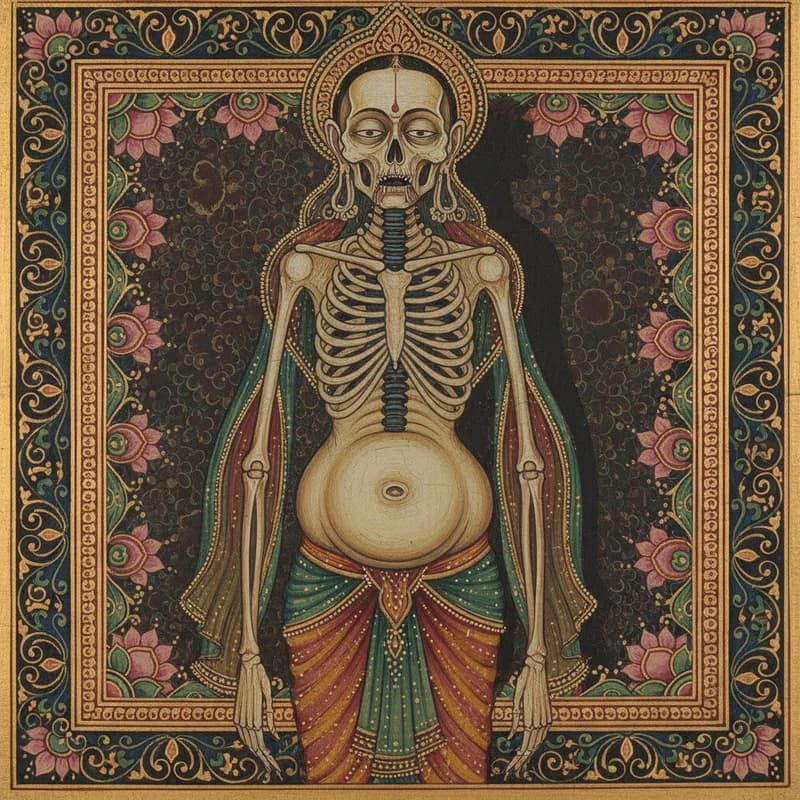
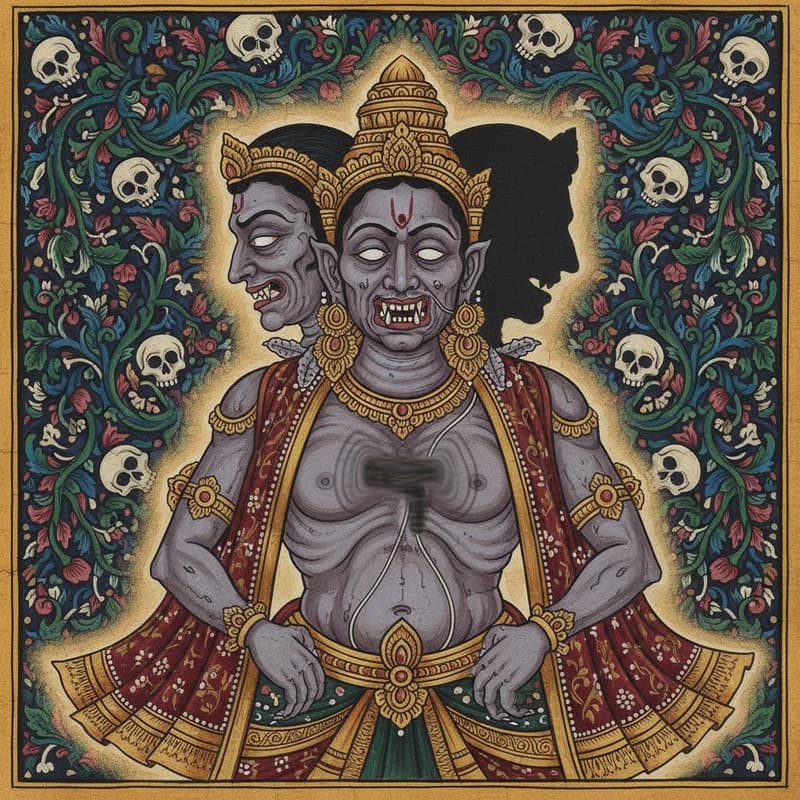
The Bak runs enormous — witnesses from the Padma and Meghna riverbanks describe something man-shaped but scaled wrong, the proportions of a figure seen too close in shallow water, limbs too long for the torso, a neck that sits low between the shoulders like a heron's when it is hunting. The skin, where it has been glimpsed in the grey pre-monsoon light, is described consistently as waterlogged — not wet, but saturated, the colour of silt-soaked jute left to rot on the ghats of Chandpur. Those who have heard it beneath their boat before a capsizing report not a sound so much as a vibration, a low resonance that moves through the hull planks and into the chest before any surface disturbance is visible. What marks it from any natural creature of the river is the stillness before it acts — the water does not ripple, the birds do not scatter, the current simply stops, as though the river itself is holding its breath.
Along the Padma and the Bhairab where sandbanks shift between monsoon and dry season, the Bak appears most often as a fisherman hauling in an empty net — a common enough sight, unremarkable to anyone passing on the water. He crouches at the stern of a low-riding boat, wrapped in the coarse gamcha of a working man, his face turned just enough away to discourage conversation. The first tell is the boat itself: it sits too deep in the water for a single occupant, as though weighted by something unseen below the waterline. The second is his hands — those who have looked and survived describe fingers that are too long at the last joint, gripping the net with a stillness no living man maintains against a current running that strong.
First Documented
The Bak surfaces most visibly in the *Mahābhārata*'s Ādi Parva, where Bakāsura — a rakshasa of comparable appetite and river-adjacent terror — establishes the archetype; in the deltaic villages of the Sundarbans and along the Padma's shifting banks, oral traditions have long carried a localized variant, the Bak, through generations of fishermen's warnings passed down at d
Last Recorded
Accounts of Bak persist in the fishing communities along the Padma and Meghna rivers, with boatmen in Faridpur and Chandpur districts still invoking protective charms before night crossings; the most recent oral testimonies were collected in the early 2000s, and scattered reports continue to surface after unexplained capsizings.
Source Language
Bengali
Origin
The Bak surfaces in the oral traditions of the Sundarbans delta and the lower Padma river communities long before any textual codification attempts to contain it. William Crooke's *Tribes and Castes of North-Western Provinces and Oudh* gestures toward river-devouring spirits in passing, but the Bak belongs specifically to the boatmen's lore of the Meghna and Brahmaputra confluences, preserved most reliably in the seasonal warnings exchanged during the monsoon crossing between Chandpur and Bhola. Where the sparse written accounts describe the Bak as a water-demon of generalized malevolence, the oral tradition of the Barisal char communities insists on its size with an almost clinical precision — not simply large, but large enough that a capsized nauka disappears inside it the way a leaf disappears into the Padma's current. That distinction matters: the written tradition makes the Bak supernatural, but the boatmen's account makes it ecological, a force native to the river's own logic of swallowing things whole.
Frequently Asked
Bak is a monstrous, man-eating spirit from Bengali river folklore, described as enormous in size and capable of capsizing boats to consume the passengers whole. Accounts of Bak are concentrated along the waterways of Bengal — the Padma, the Meghna, the Brahmaputra's lower reaches — where fishermen and ferry passengers have long spoken its name with caution. It belongs to a category of water-dwelling predatory spirits distinct from the more ambivalent river deities of the Gangetic plains.
Bak is considered actively predatory, not merely mischievous — it overturns boats and devours those thrown into the water, making it one of the more lethal spirits in Bengali aquatic folklore. Rural communities along the delta rivers historically avoided crossing certain stretches of water after dusk, attributing unexplained capsizings and disappearances to Bak. Unlike spirits that can be appeased through ritual, Bak is primarily understood as a consuming force rather than one open to negotiation.
Bak surfaces most consistently in the oral accounts of fishing communities along the river systems of Bengal — particularly the braided channels of the Sundarbans delta, where the water is dark, tidal, and unpredictable. Boatmen's songs and cautionary tales collected from the Meghna and Padma riverbanks carry recurring descriptions of a vast shape moving beneath the current before a vessel goes under. These accounts have been passed down through generations of majhis, the hereditary boatmen of Bengal.
Oral descriptions of Bak emphasize its sheer scale — a body large enough to overturn a laden ferry with a single movement beneath the hull. Specific physical features vary by region and storyteller, but the consistent detail is its enormous size and its appetite; it is a creature defined by what it does rather than how it looks. Some accounts from the eastern delta describe it as serpentine, while others suggest a more amorphous, submerged mass.
The names are phonetically similar, but the Bengali river spirit Bak and the Baka of the Mahabharata — the rakshasa slain by Bhima near the town of Ekachakra — appear to be distinct entities with separate folkloric lineages. Baka in the epic is a land-dwelling demon who extorts a village with a tribute of food and human lives, while Bak belongs specifically to the aquatic spirit traditions of the Bengal delta. Conflation between the two is common in popular usage but not supported by the oral traditions that preserve Bak's character.
Bak is more purely predatory than entities like the Jal Devata or the river goddesses of the Gangetic tradition, which carry protective as well as dangerous aspects. It shares some qualities with the Jaldeo spirits of Assam and the malevolent water beings of Odia folklore, but Bak is specific to the Bengali delta's cultural imagination — shaped by the particular violence of tidal rivers and monsoon floods. Where many Indian water spirits can be propitiated, Bak is remembered chiefly as something to be avoided.
Accounts of Bak cluster around the monsoon months — Ashadh through Bhadra — when the rivers of Bengal swell, turn opaque, and swallow their own banks. Visibility on the water drops, currents become treacherous, and the line between a natural capsize and a supernatural one grows difficult to draw. It is precisely this seasonal ambiguity that kept Bak alive in the oral memory of river communities long after other spirits faded from active belief.
Formal ritual traditions specifically targeting Bak are not well-documented, which itself speaks to how the spirit is understood — as a force of the deep water rather than a being with whom humans can establish reciprocal relations. Boatmen along the Padma and Meghna historically relied on general protective practices: offerings to the river before a crossing, the recitation of the names of river deities, and the avoidance of certain channels at night. Bak occupies the outer edge of the spirit world, beyond the reach of the usual negotiations between humans and the unseen.
संबंधित लोकगाथाएं
Related Lore
Algorithmic Inference
आपको यह भी पसंद आ सकता है
You May Also Like
Community Discussion
Comments are reviewed by AI before appearing publicly. Unsafe, unrelated, or uncertain comments go to human review.
Sign in to join the discussion.
0 comments
No public comments yet.