प्रतीक्षा करें
Summoning entity profiles from the Grimoire…
प्रतीक्षा करें
Summoning entity profiles from the Grimoire…

Bhutnath
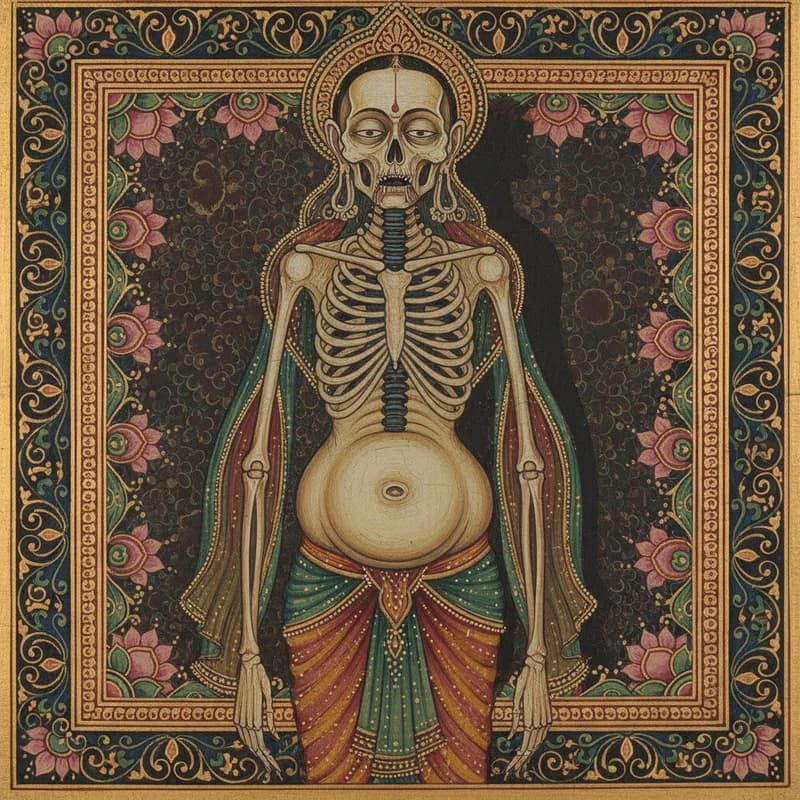
He appears most often at the edge of things — the last field before the tree line, the ghat step where the water turns dark, the hour between the oil lamp and full dark. Across the Hindi heartland, from the ghats of Varanasi to the scrubland shrines of Bundelkhand, the name Bhutnath carries a meaning that is not simply "lord of ghosts" but something closer to a governing presence, a spirit that does not merely haunt but oversees. Accounts collected from Mirzapur and the villages along the Son river describe him as large, still, and watchful — not malevolent in the way a hungry ghost is malevolent, but capable of harm the way a river in spate is capable of harm: without particular intention, and without apology.
The caution he demands is specific. Travelers who mock the small cairn shrines where he is said to rest, or who relieve themselves near the peepal groves consecrated to him on the moonless nights of Ashadh, report a peculiar misfortune — not violence, but a systematic unravelling of small things. Livestock that will not settle. Children who wake screaming and cannot name what they saw. A sense, repeated in account after account, of being watched from slightly behind. Propitiation is simple and consistent across regions: a handful of sesame, an unlit diya left at the threshold, and the spoken acknowledgement that the ground you walk on belongs to someone older than your name for it.
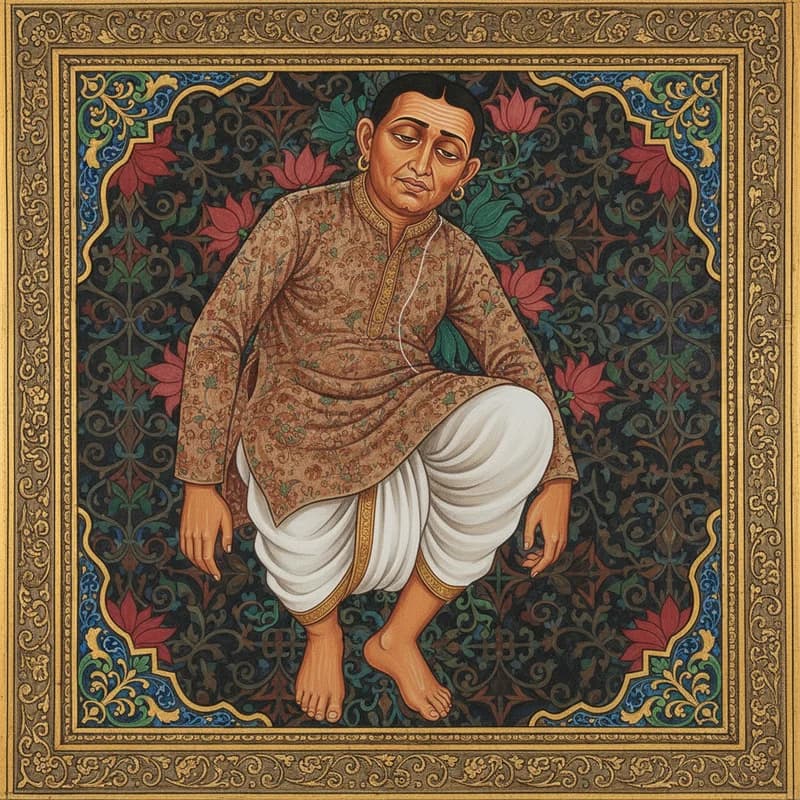
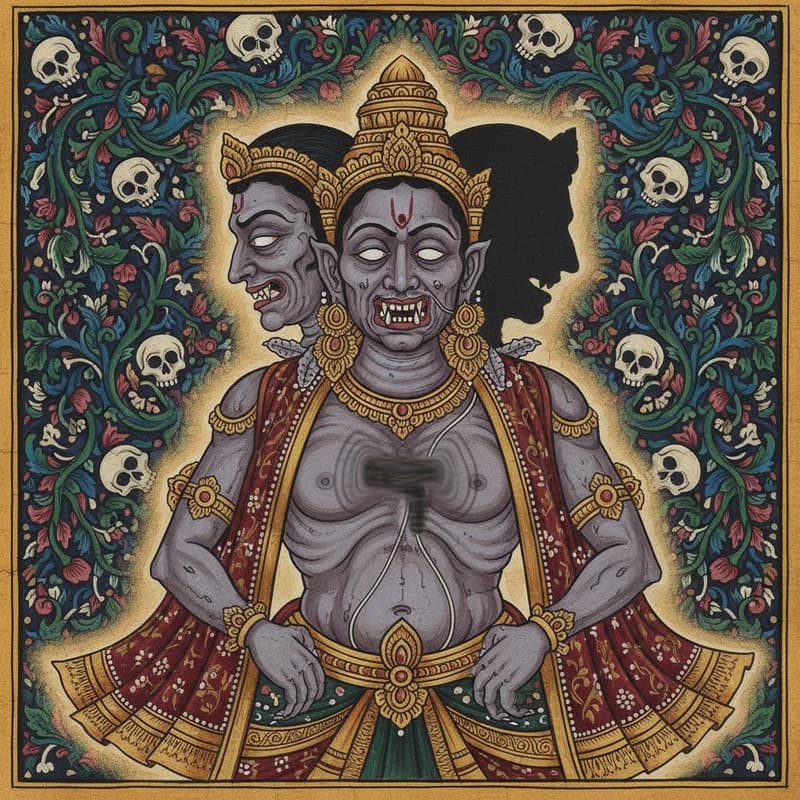
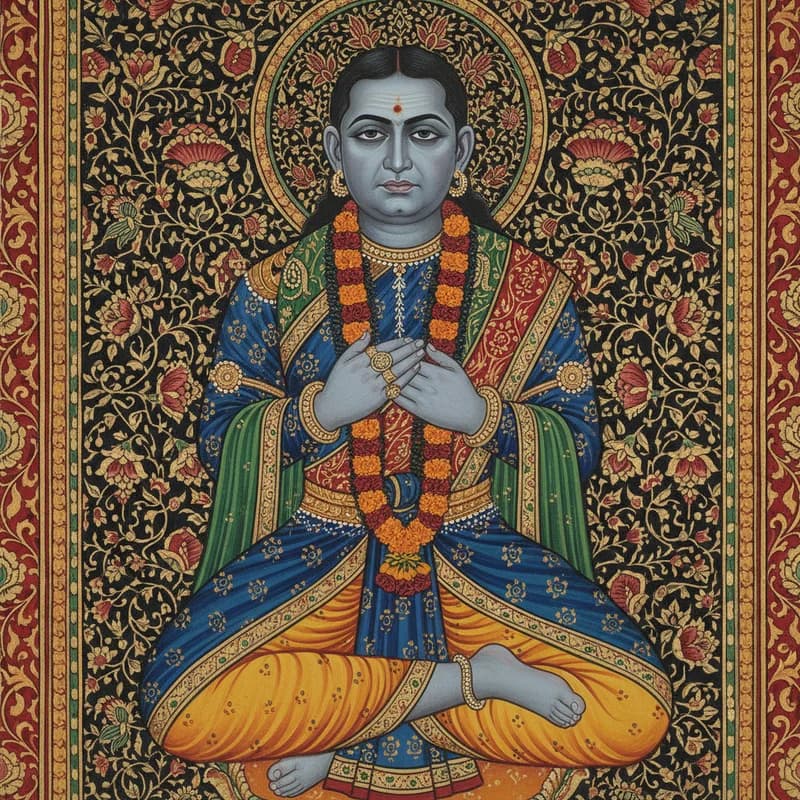
Bhutnath appears as a man of indeterminate middle age, the kind of face you would forget on a train platform — unremarkable until the moment it is too close. The skin carries the blue-grey undertone of a body pulled from still water, not violent but simply wrong, the colour of the Yamuna at Prayagraj in the dry months before the monsoon fills it back to life. He smells of wet earth and marigold stems left too long in a brass pot, the specific sweetness of temple offerings gone stale. Witnesses from the Vindhya foothills consistently note that his feet, when visible, are turned heel-forward — not monstrous, almost casual, as though he simply arrived from the opposite direction.
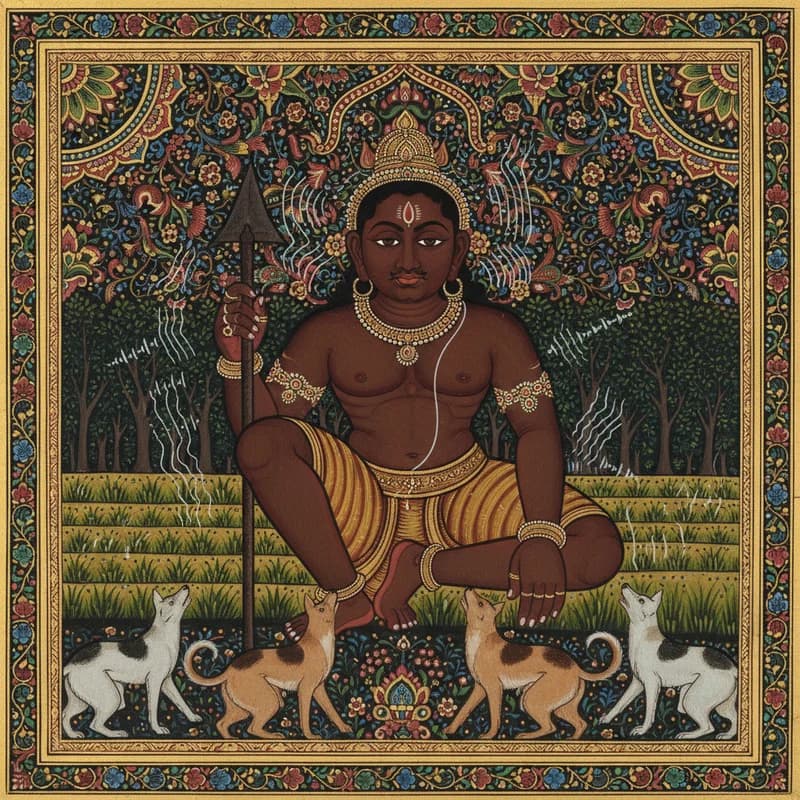
Bhutnath moves through the margins of weekly haats and cremation ground paths in the form of an old sadhu — ash-smeared, matted hair wound high, the kind of figure so common at the ghats of Haridwar or along the Narmada's northern bank that the eye slides past him without registering. He carries a small dhuni's worth of embers in a clay pot, which is unremarkable in itself. The first tell is that the embers do not diminish — an hour of walking, no wood added, and the coals remain identically bright. The second is more disturbing: dogs, which will approach any genuine sadhu for scraps, will not come within twenty feet of him, and those that catch his scent turn and press their bodies low to the ground, moving away in silence rather than barking.
First Documented
Bhutnath, as a title of Shiva in his role as lord of spirits and ghosts, appears in Sanskrit literature as early as the Shiva Purana and the Linga Purana, where he presides over the cremation grounds of Kashi. Oral traditions from the Kumaon hills carry the name into village shrine lore independently of these texts.
Last Recorded
Accounts of Bhutnath persist into the present day, with oral testimonies collected as recently as the 2010s from villages along the Narmada's eastern tributaries, where farmers still report encountering a restless male spirit at dusk near cremation grounds and abandoned wells.
Source Language
Hindi
Origin
The name Bhutnath appears in the Shiva Sahasranama traditions as an epithet rather than a discrete entity — one of the thousand names of Shiva in his capacity as lord of the bhuts, the restless dead who congregate at cremation grounds like those along the Manikarnika Ghat in Varanasi. The theological text positions Bhutnath as a title of sovereignty: Shiva rules the spirits because he inhabits the margins of existence, smeared in ash at Smashan grounds where the living do not linger. Folk tradition across the Gangetic plain, particularly in the oral accounts collected from villages between Mirzapur and Allahabad, does something the written record does not — it separates the name from the deity entirely. In these accounts, Bhutnath is not Shiva but a specific spirit, the first ghost, the one who refused to cross over and thereby became the model for every haunting that followed. That divergence is significant: it suggests the folk tradition is not borrowing divine authority but inverting it, transforming the lord of the dead into the first of the dead —
Frequently Asked
Bhutnath is a spirit-lord recognized across northern and central India, his name translating literally to 'Lord of Ghosts' — a title that in certain traditions is applied to Shiva himself in his fearsome, cremation-ground aspect. In folk belief, however, Bhutnath refers to a presiding spirit who commands lesser bhuts and roams liminal spaces: crossroads, abandoned wells, the margins of cremation grounds along rivers like the Shipra and the Ganga. His nature sits between deity and ghost, commanding reverence rather than simple fear.
The overlap is real but not complete. Shiva bears the epithet Bhutnath in texts like the Shiva Purana, where he is described as the master of all wandering spirits and the lord who absorbs the dead into his retinue. In village worship from Rajasthan to the Vindhya foothills, however, Bhutnath is often a distinct local spirit — a powerful ghost elevated through ritual — who borrows the name and some of Shiva's authority without being fully identified with him.
Bhutnath is believed to command the movement of bhuts and pretas, able to direct or restrain them at will. He is associated with sudden illness, particularly fevers that arrive without warning during the monsoon months, and with the disorientation that overtakes travelers who lose their way near cremation grounds after dark. Propitiated correctly — with offerings of raw grain, mustard oil lamps, and sometimes liquor left at a crossroads — he can also protect a household from the very spirits he governs.
Shrines to Bhutnath are typically rough and unadorned: a smeared stone, a trident planted in the earth, sometimes a crude face daubed in red ochre at the base of a peepal tree. These markers appear most often at the edges of villages, near old cremation grounds, or beside tanks and wells that have fallen into disuse. The peepal itself is significant — in folk belief across the Gangetic plain, the tree is considered a dwelling of spirits, and Bhutnath's presence is often inferred when the leaves tremble on a still night.
The threat level is one of caution rather than outright malevolence. Bhutnath is dangerous when ignored or accidentally offended — passing his shrine without acknowledgment, urinating near a peepal at dusk, or speaking his name carelessly after sunset are all considered provocations. Approached with proper ritual, particularly during the dark fortnight of Ashwin when the boundary between the living and the dead grows thin, he is understood as a protector who keeps more chaotic spirits in check.
A bhut is typically the ghost of a specific individual — someone who died violently, without proper rites, or with unresolved attachments — and its power is local and personal. Bhutnath is a category above this: a governing spirit whose authority over bhuts is structural, not incidental. Think of the difference between a wandering soldier and a general; the bhut haunts, while Bhutnath presides.
The Shiva Purana and the Linga Purana both use Bhutnath as a formal epithet for Shiva, particularly in passages describing his dance at Smashan Bhumi, the cremation ground, surrounded by his gana attendants. The Skanda Purana elaborates on his role as lord of wandering spirits in the context of Shiva's cosmic household. At the folk level, the entity appears in oral traditions and vrat kathas collected from Madhya Pradesh, Uttar Pradesh, and the Chhattisgarh region, where the scriptural and the vernacular blur into a single living tradition.
In the Malwa plateau and along the Narmada valley, Bhutnath is primarily a village guardian spirit, propitiated by the community before agricultural seasons begin. Further east, in the cremation-ground culture of Varanasi and along the Ganga's ghats, the name collapses almost entirely into Shiva's identity, and the distinction between god and ghost dissolves. In tribal communities of the Satpura range, the entity takes on a wilder character — less a lord than a force, associated with the deep forest rather than the village edge.
संबंधित लोकगाथाएं
Related Lore
Algorithmic Inference
आपको यह भी पसंद आ सकता है
You May Also Like
Community Discussion
Comments are reviewed by AI before appearing publicly. Unsafe, unrelated, or uncertain comments go to human review.
Sign in to join the discussion.
0 comments
No public comments yet.