प्रतीक्षा करें
Illuminating the manuscript…
प्रतीक्षा करें
Illuminating the manuscript…

Daayan
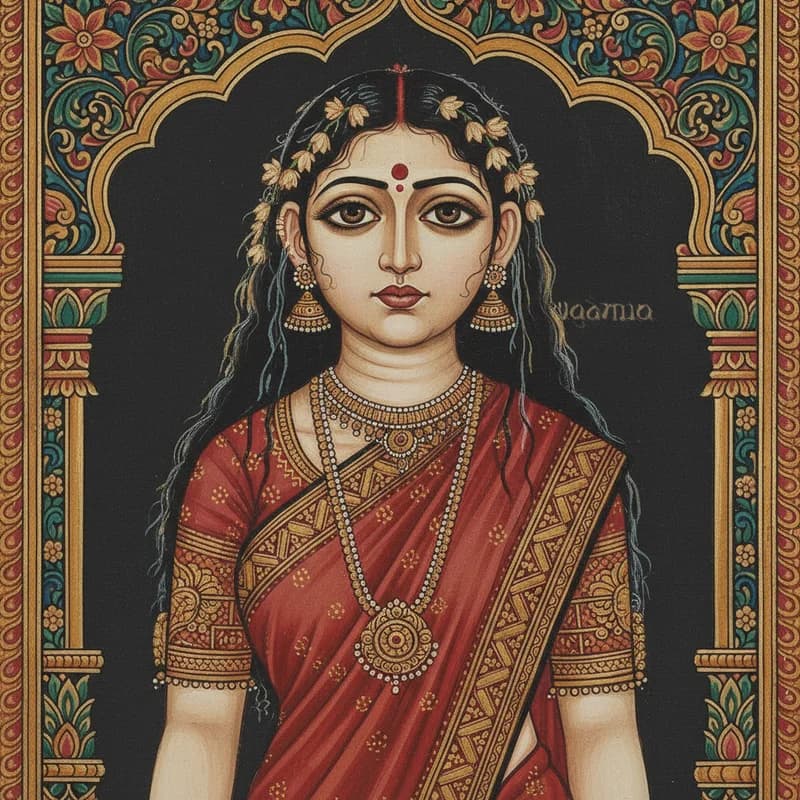
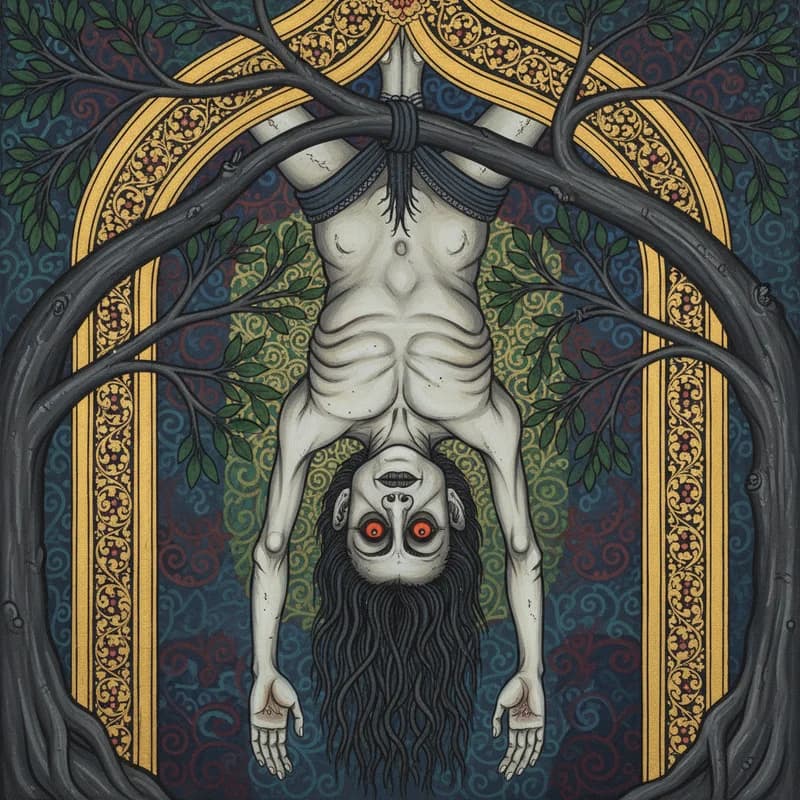
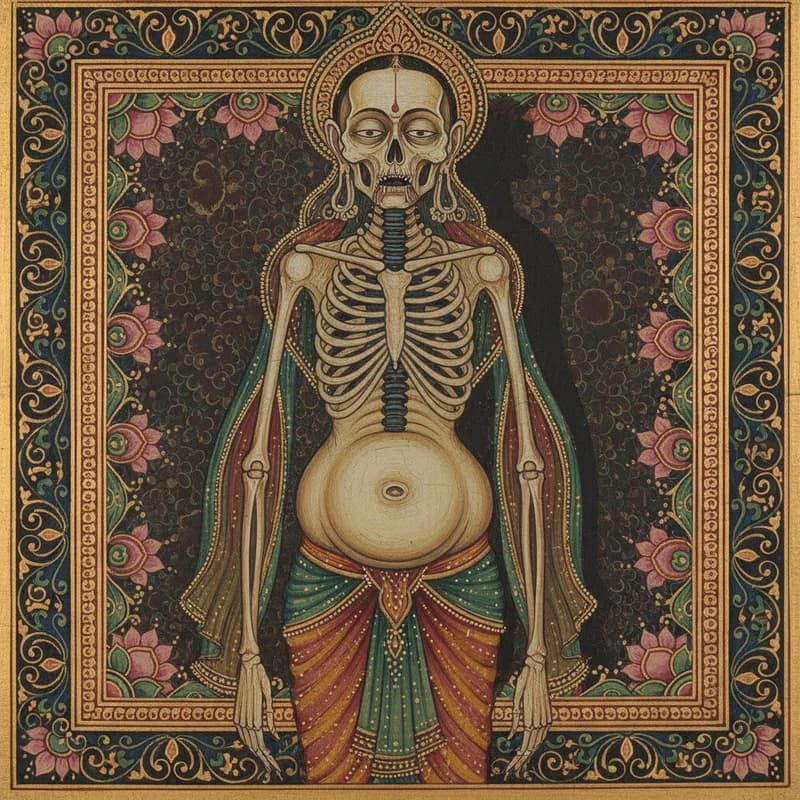
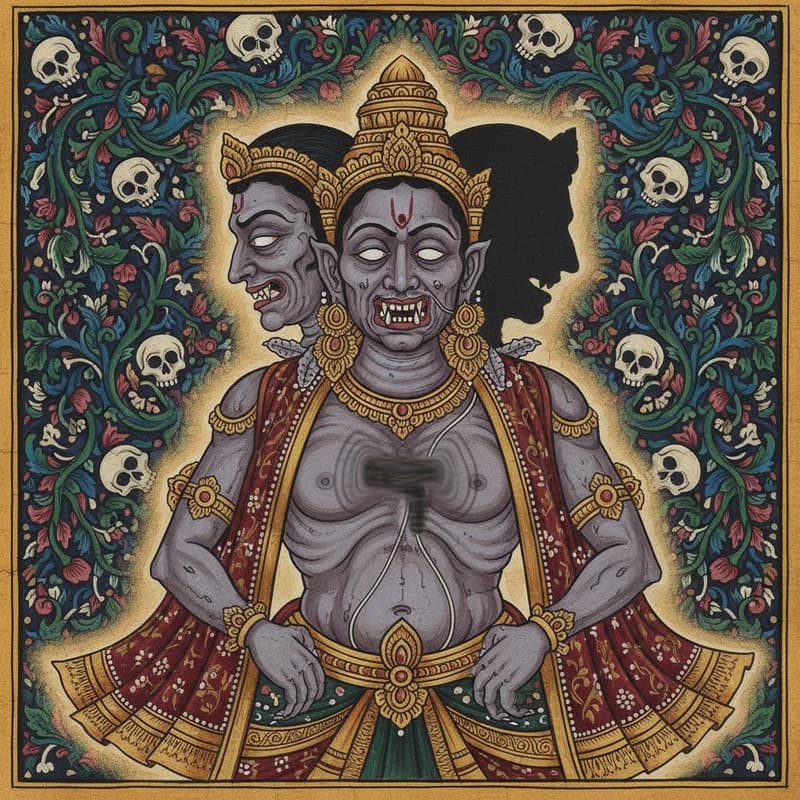
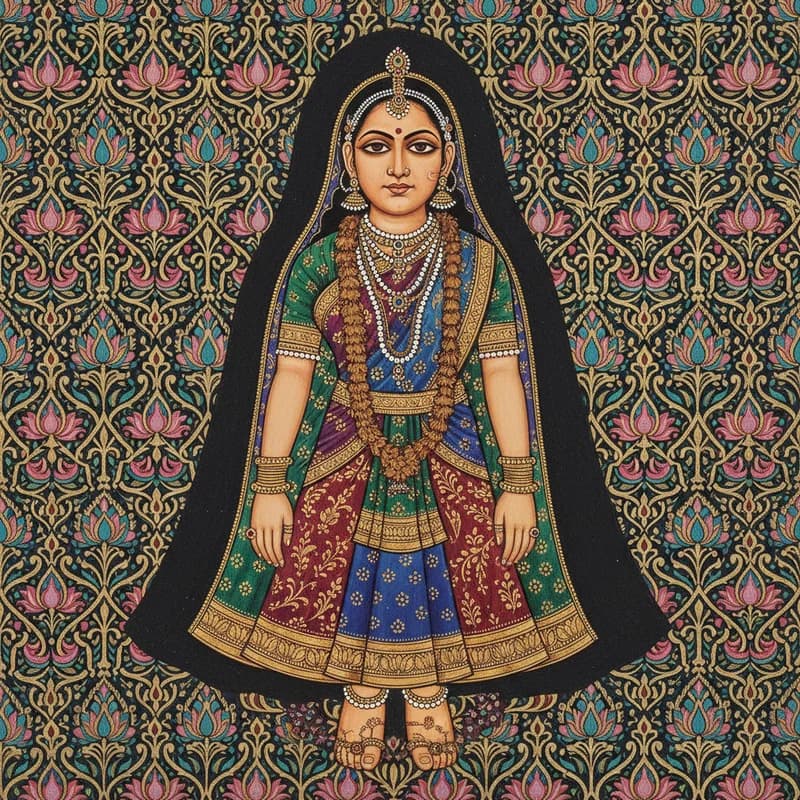
She arrives in the shape of a neighbor. That is what makes her dangerous — not claws or fire or the obvious grammar of monsters, but the fact that she has already borrowed your salt, already sat with you through a fever, already knows which child you love most. Accounts from the Chambal basin to the red-soil villages of Chhattisgarh describe her as a woman who has acquired — through grief, through deliberate practice, or through inheritance passed down a female line like a curse mistaken for a gift — the capacity to consume life force from the living. She does not kill cleanly. She takes in increments: the child who stops growing, the husband who thins through three harvests, the buffalo whose milk turns without cause. The Bhil communities of southern Rajasthan name her by the direction she enters — from the west at dusk, which is the direction of things that should have ended.
Identification is the crux of the folklore, and the crux of the danger. In the villages around the Mahanadi's upper tributaries, a woman accused carries that accusation the rest of her life regardless of evidence, and the archive contains as many accounts of wrongful branding as of genuine belief. The Daayan tradition does not map cleanly onto the supernatural — it maps onto the social. Widows, childless women, the eccentric, the successful: these are the profiles that recur. Whatever the Daayan is in the spiritual sense, in the human record she is most often a woman that a frightened community needed to name. The only point of agreement across regions is this: once the name attaches, it does not let go.
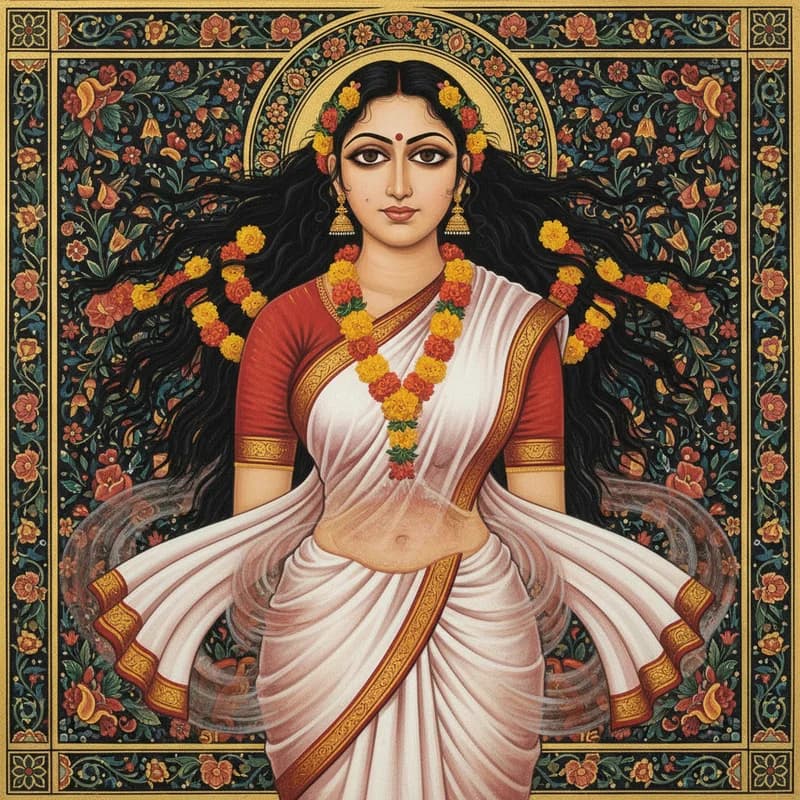
The Daayan is most often described as a woman of unremarkable appearance — the face of someone you have seen before but cannot place, a neighbor's wife, a woman at the well in the blue hour before sunrise. What disrupts the ordinary is the feet: reversed, heels forward, toes pointing back toward wherever she has come from, so that her tracks in the wet mud of the Chambal basin lead toward you when she is walking away. Accounts from the forests east of Udaipur note a smell that precedes her — not rot, but something close to it, the sweetness of marigold garlands left three days on a corpse. Her shadow, when cast at all, falls in the wrong direction, indifferent to the position of the sun.
The Daayan moves most freely in the weeks after a difficult childbirth, when a village is already watchful and already grieving, and she arrives as a middle-aged woman offering to help — a distant relative, a known face from a neighboring settlement, someone whose exact connection no one can quite place. She carries a brass lota and smells of turmeric paste, both details that read as care. The tells are this: she will not cross the threshold of a house where neem branches have been hung above the door, and she will pause at it, adjusting her sari, looking briefly at nothing, in a way that takes perhaps two seconds too long. The second tell, noted consistently in accounts from the Chambal basin and the dry margins of eastern Rajasthan, is that dogs do not bark at her arrival — they go silent instead, and stay that way.
First Documented
The figure of the Daayan surfaces in early Sanskrit texts like the *Atharvaveda*, where malevolent female spirits capable of consuming life-force are catalogued among nocturnal threats. Oral traditions across Rajasthan and Uttar Pradesh have preserved her presence continuously, passed through generations of village healers and exorcists long before any written record fixed her form.
Last Recorded
Accounts of the Daayan persist without interruption into the present day — field interviews conducted as recently as 2019 in the villages of eastern Rajasthan and the Chhattisgarh interior still yield fresh testimonies, often tied to unexplained illness or the death of livestock, with no sign of the tradition fading.
Source Language
Hindi
Origin
The Daayan appears in the Atharvaveda's eighth and tenth mandalas under the category of Yatu and Yatudhani — malevolent female practitioners of harmful magic — though the term itself crystallizes into its modern form through the Rajasthani and Chhattisgarhi oral traditions rather than through any single textual moment. The Puranic and legal literature, including the Manusmriti's scattered references to Kritya-wielding women, treats the Daayan as a category of criminal or sorcerer, a woman who has chosen to traffic with hostile forces. Folk accounts from the villages along the Chambal ravines and the Satpura foothills insist on something the texts do not: the Daayan did not choose. She was made — by hunger, by a difficult birth, by the death of a child she could not protect — and the power entered her because grief opened a door she did not know was there. That divergence is not trivial. Where the textual tradition assigns agency and therefore guilt, the oral tradition assigns tragedy, which is why in parts of Malwa and eastern Rajasthan
Frequently Asked
A Daayan is a malevolent female spirit found across the folk traditions of North and Central India, believed to be either a witch who has acquired dark powers or the restless ghost of a woman who died under violent or unjust circumstances. Accounts collected from villages along the Chambal valley and the forests of Chhattisgarh describe her as a living woman possessed by a consuming supernatural force, capable of causing illness, death, and misfortune. She occupies a space between the human and the supernatural — neither fully ghost nor fully mortal.
A Daayan is said to drain the life force of children and young men, cause unexplained wasting sicknesses, and move invisibly through villages after dark. In oral accounts from Rajasthan and the Bundelkhand region, she is credited with the ability to shapeshift — appearing as a known neighbor by day and something far less recognizable by night. Some traditions hold that she can reverse her feet, leaving tracks that point backward, a detail that recurs with striking consistency across unconnected communities.
Rural communities in Madhya Pradesh and Bihar have historically identified a Daayan through the testimony of an ojha or local exorcist, who may use rice grains, oil lamps, or the behavior of a flame to confirm suspicion. Physical signs attributed to her include an unblinking gaze, an aversion to turmeric and iron, and the habit of appearing at crossroads or near cremation grounds after the month of Ashwin. Tragically, such identifications have led to real-world violence against women, a fact that any honest account of Daayan folklore cannot ignore.
The two are related but distinct. A Chudail is specifically the spirit of a woman who died during childbirth or the postpartum period, her identity fixed at the moment of death, while a Daayan is typically understood as a living woman who has chosen or been cursed into practicing dark arts. Where the Chudail haunts the margins of forests and the banks of rivers like the Ganga near Haridwar, the Daayan operates within the social fabric of the village itself, making her, in many ways, the more unsettling figure.
Across Uttar Pradesh and the tribal belts of Jharkhand, oral tradition holds that a Daayan feeds on the prana — the vital breath — of infants and the livers of the recently dead. Some accounts specify that she must consume human flesh or blood to maintain her powers, particularly during the dark fortnight of Kartik. The hunger attributed to her is not merely physical but metaphysical, a bottomless need that drives her to prey on the most vulnerable members of a household.
The Daayan does not appear prominently in Sanskrit canonical texts like the Puranas, but she surfaces in vernacular literature, regional Tantric manuals, and the vast body of oral poetry collected from Rajasthan and the Gangetic plains. The Atharva Veda contains hymns against witches and sorcerers — the Yatu and Yatudhani — which many scholars consider the earliest textual ancestors of the Daayan concept. Her true archive is spoken, not written: the warning songs sung by women at the ghats of the Betwa river before dusk.
Protective measures vary by region but share common logic: iron nails driven into the threshold, neem branches hung above doorways, and the burning of mustard seeds are widely reported from villages in Haryana and eastern Rajasthan. Invoking Hanuman or placing a red sindoor mark on the lintel is considered effective in many Hindu communities, while tribal traditions in Bastar rely on specific root medicines and the counsel of a baiga healer. The consistency of iron and neem across these geographies suggests a very old, shared substrate of belief.
Accusations of being a Daayan have historically targeted widows, childless women, healers, and those who live outside conventional social structures — women whose independence or misfortune made them legible as threats in communities under stress. When a child died unexpectedly near the Mahanadi basin or a crop failed in the dry months before the monsoon broke, grief and fear required an explanation, and the Daayan provided one. Understanding the mythology means holding both things at once: the genuine antiquity of the belief and the very real harm it has caused to living women across centuries.
संबंधित लोकगाथाएं
Related Lore
Algorithmic Inference
आपको यह भी पसंद आ सकता है
You May Also Like
Community Discussion
Comments are reviewed by AI before appearing publicly. Unsafe, unrelated, or uncertain comments go to human review.
Sign in to join the discussion.
0 comments
No public comments yet.