प्रतीक्षा करें
Tracing the Vetala’s last known location…
प्रतीक्षा करें
Tracing the Vetala’s last known location…
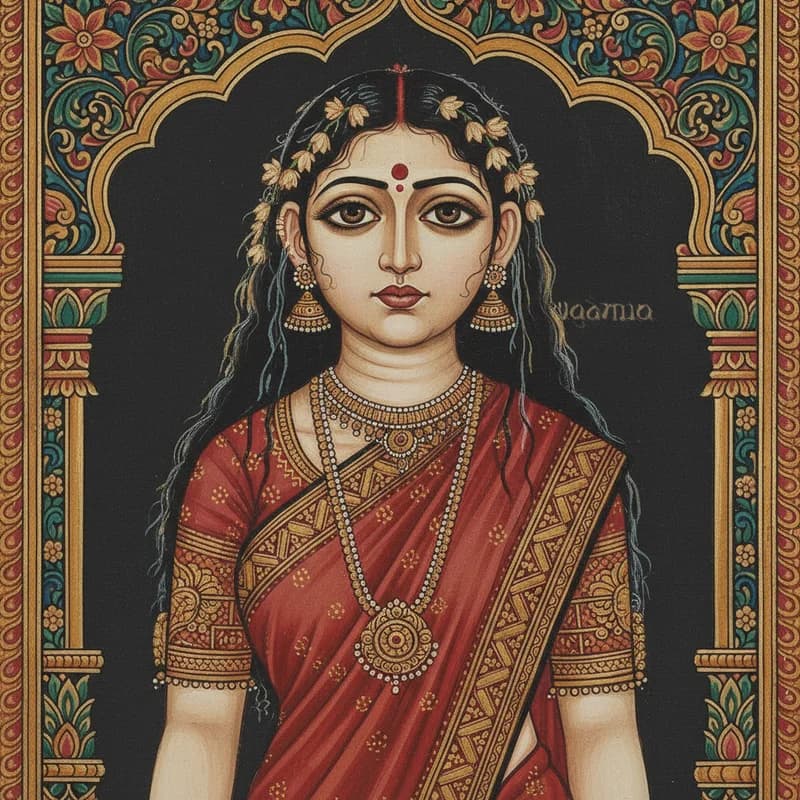

Stree
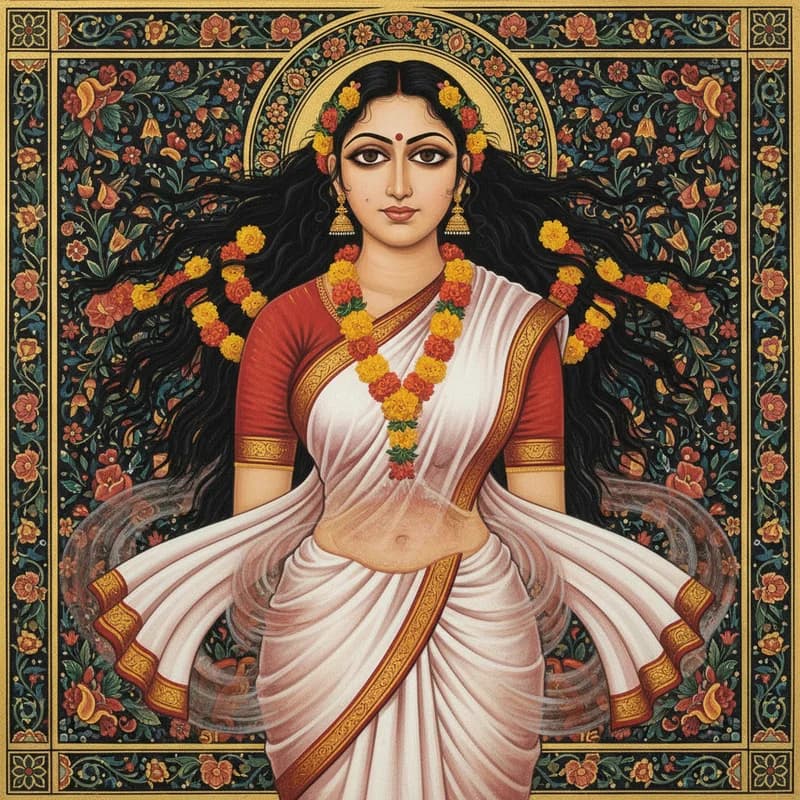
She appears only to men travelling alone after dark, and the accounts are consistent enough across Maharashtra, Karnataka, and the dusty highways of Rajasthan to suggest something older than regional variation. Truck drivers on the NH48 between Pune and Bengaluru have described her standing at the road's edge — beautiful, unhurried, her feet turned backwards at the ankle, that last detail visible only when a man has already stopped. The backwards feet appear in accounts from the Deccan plateau, from the ghats above Kolhapur, from the mango groves outside Nagpur in the hot months before the monsoon breaks. She does not chase. She waits, which is worse.
What she was before she became this is the question the oral accounts circle without answering. Some say she died abandoned — a bride rejected, a woman left on a road much like the one where she now stands. Others, particularly in the accounts collected from dhaba workers along the Rajasthan-Gujarat border, say she has no origin story because she predates the need for one. Protective measures in the folklore record are practical and humiliating in equal measure: writing her name on a wall in reverse will hold her until dawn, since she must stop to read it, reading being a compulsion she cannot override. Salt lines work in some accounts and fail in others. The one consistent warning across all collected testimony is this — do not look back after you have walked away. She does not follow a man who refuses to turn around.
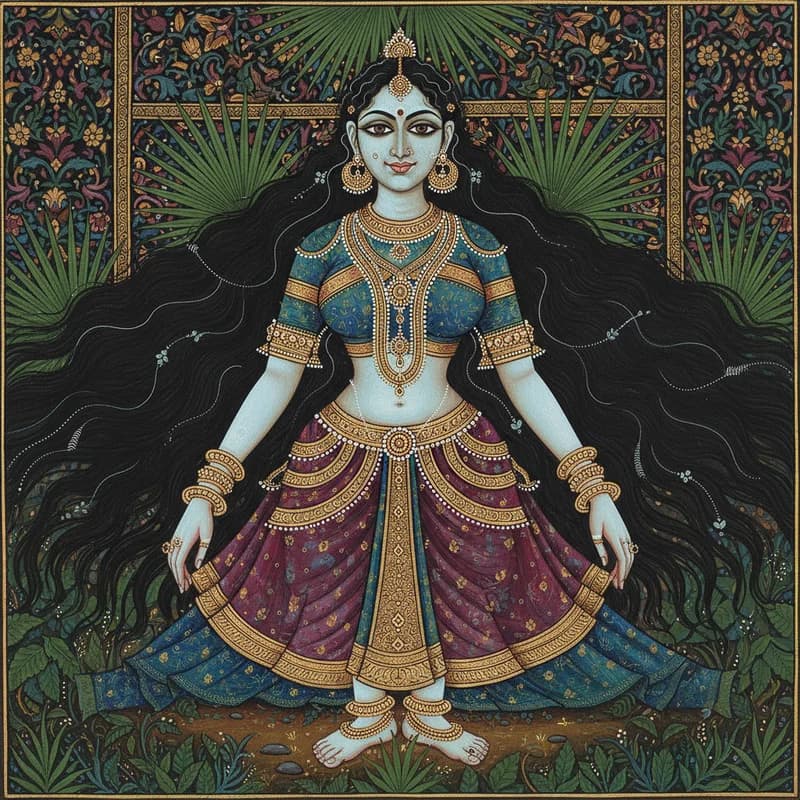
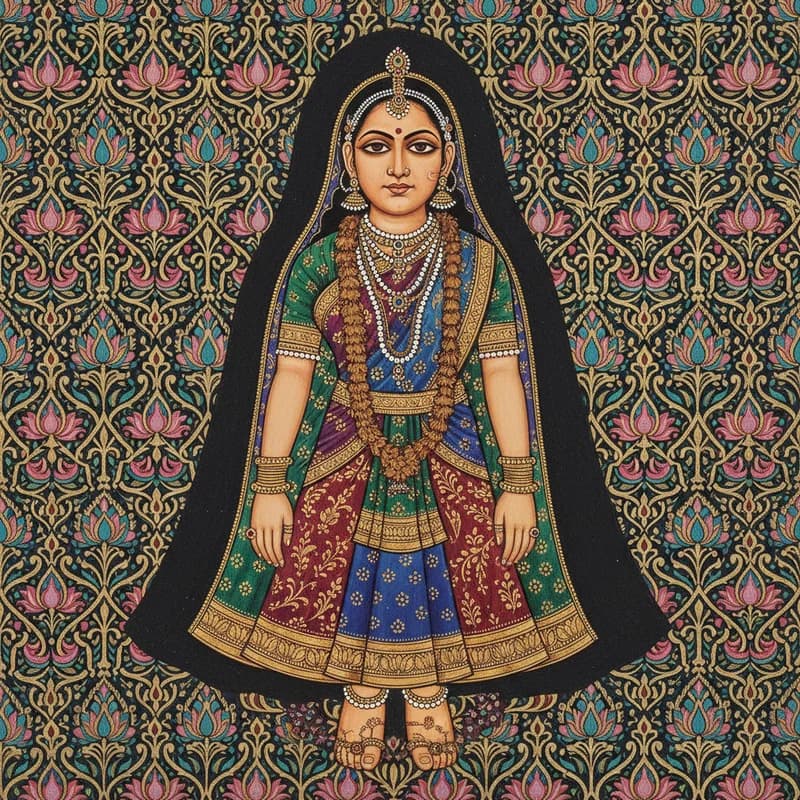
The Stree appears as a woman of unusual beauty — not the softness of a new bride but something older, more deliberate, like a face that has been composed rather than born. She is always seen from behind first: the long unbound hair reaching past the waist, the white or deep-red sari unwrinkled despite the hour, the bare feet that make no sound on packed earth or stone. When she turns, witnesses from the chowks of Pune to the sugarcane roads outside Gorakhpur report the same arrest — a face that is almost right, almost someone known, but calibrated slightly past recognition. The smell arrives before the turning: jasmine oil gone sour, the kind that clings to hair unwashed for days. The single mark that breaks the illusion is the name written backward across her back — accounts from the Konkan coast to the Deccan plateau agree on this — legible only when she is already close enough to touch.
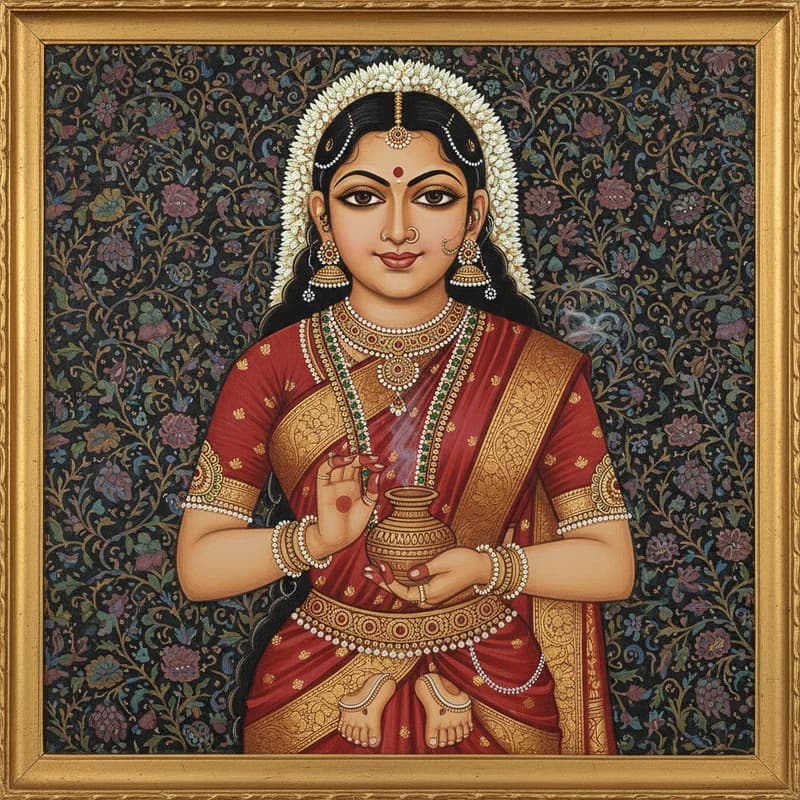
Stree appears most often as a woman standing at the edge of a village road after the lamps have been lit — dressed in the plain cotton sari of a domestic worker, head covered, posture suggesting she is waiting for someone who has not come. The disguise is entirely unremarkable in the dusk light of any small town between Rajasthan and Madhya Pradesh, where women do stand and wait. Two details betray her. Her sindoor, the mark of a married woman, sits not in the parting of her hair but slightly off-center, as though applied in a mirror by someone who has forgotten which direction mirrors reverse. And she is always facing away — always — even when she is clearly aware of your approach, even when she speaks.
First Documented
The figure of the predatory female spirit who haunts crossroads and calls men by name appears in Sanskrit texts as early as the *Atharvaveda*, where she is catalogued among nocturnal afflictions, and persists through the *Bhuta Damara Tantra*, which prescribes specific rites against her.
Last Recorded
Accounts of Stree persist with striking consistency from colonial-era district gazetteers through to present-day testimonies collected near the highway dhabas of Rajasthan and the sugarcane fields outside Meerut. Truck drivers and night-shift laborers still report encounters, making her one of the few female spirits whose oral record has never gone cold.
Source Language
Hindi
Origin
The Stree — the woman who died before her time, most often a bride before consummation or a mother before her child was weaned — appears in scattered Puranic references to apretas, spirits bound to the world by incomplete life-transactions, but the living tradition is not Puranic in character. It belongs to the oral inheritance of western Maharashtra, coastal Karnataka, and the villages along the Narmada's middle course, where her presence is reported near crossroads and pipal trees at the cusp of the monsoon's arrival, when the air thickens and the light goes strange in the late afternoon. Textual sources, including certain passages in the Garuda Purana's discussion of premature death, emphasize the husband's ritual obligation to release her — her condition is his remediation. The folk accounts from Konkan fishing villages reverse this entirely: the Stree is not waiting for a man's intervention but actively preventing her own erasure, claiming space that marriage, then death, denied her. That divergence is not incidental. It marks the boundary between a literate tradition's management of female grief and a subaltern one's refusal to let it be
Frequently Asked
Stree is a vengeful feminine ghost from the folk traditions of Rajasthan, western Maharashtra, and coastal Karnataka — a spirit believed to be the restless soul of a woman who died before her life was complete, most often a bride before consummation or a mother before her child was weaned. She appears only to men travelling alone after dark, always facing away, her feet turned backwards at the ankle. Scattered references in the Garuda Purana's discussion of premature death connect her to the broader category of apretas, spirits bound to the living world by incomplete life-transactions.
The backwards feet are the definitive mark, but they are only visible once a man has already stopped — which is the trap. Two earlier signs appear in consistent accounts: the smell of jasmine oil gone sour arriving before she turns, and her sindoor sitting slightly off-center in the parting of her hair, as though applied in a mirror by someone who has forgotten which direction mirrors reverse.
Stree calls out to men walking alone after dusk along village roads and highways, and her voice carries the quality of someone almost recognized. She leaves no shadow under the full Kartik moon, turns iron nails in doorframes cold before she appears, and is said to write her own name backward above doorways in the hours before dawn. She does not chase — she waits, which witnesses across the Rajasthan-Gujarat border consistently describe as the more disturbing quality.
The single consistent protection across all collected testimony is this: do not look back after you have walked away. Stree does not follow a man who refuses to turn around. Secondary measures include writing her name on a wall in reverse — a compulsion to read it will hold her until dawn — and strewing neem leaves across the road behind you as you walk.
Certain passages in the Garuda Purana address apretas — spirits of those who died prematurely — and the husband's ritual obligation to perform rites that release them, a framework that loosely accommodates the Stree. The living tradition, however, is not Puranic in character and belongs to the oral inheritance of villages along the Narmada's middle course and the Konkan fishing communities, where the folk accounts actively diverge from the textual tradition: the Stree is not waiting for a man's ritual intervention but preventing her own erasure.
Both the Stree and the Churel are spirits of women who died in circumstances of incompletion — childbirth, abandonment, the threshold between marriage and its consummation — and both are identified by backwards feet. The Churel, more widely documented across Uttar Pradesh and Punjab, is explicitly associated with the pollution of childbirth death and is often described as actively seductive in a predatory sense; the Stree, as recorded in Rajasthan and the Deccan accounts, is more precisely a presence that claims space, standing and waiting rather than pursuing.
The oral accounts do not offer a single explanation, but the pattern is too consistent across the chowks of Pune and the sugarcane roads outside Gorakhpur to be incidental. The most common interpretation collected from dhaba workers along the Rajasthan-Gujarat border is that she is still waiting — still oriented toward the person who did not come — and that turning to face a stranger is the moment she becomes dangerous. Her name written backward across her shoulder blades, legible only when she is already close enough to touch, suggests the turning itself is the threshold.
The 2018 film Stree, set in a small Madhya Pradesh town during the Navaratri festival, draws on the core folk motifs — the backwards feet, the compulsion to write her name, the targeting of men who walk alone at night — with reasonable fidelity to the oral tradition. The film's framing of her as a wronged woman who died before her time aligns with the subaltern accounts collected from the Konkan coast and the Narmada villages, though the comedic register softens what the field accounts describe as a genuinely disorienting encounter.
संबंधित लोकगाथाएं
Related Lore
Algorithmic Inference
आपको यह भी पसंद आ सकता है
You May Also Like
Community Discussion
Comments are reviewed by AI before appearing publicly. Unsafe, unrelated, or uncertain comments go to human review.
Sign in to join the discussion.
0 comments
No public comments yet.