प्रतीक्षा करें
Parsing the Naga lineage records…
प्रतीक्षा करें
Parsing the Naga lineage records…
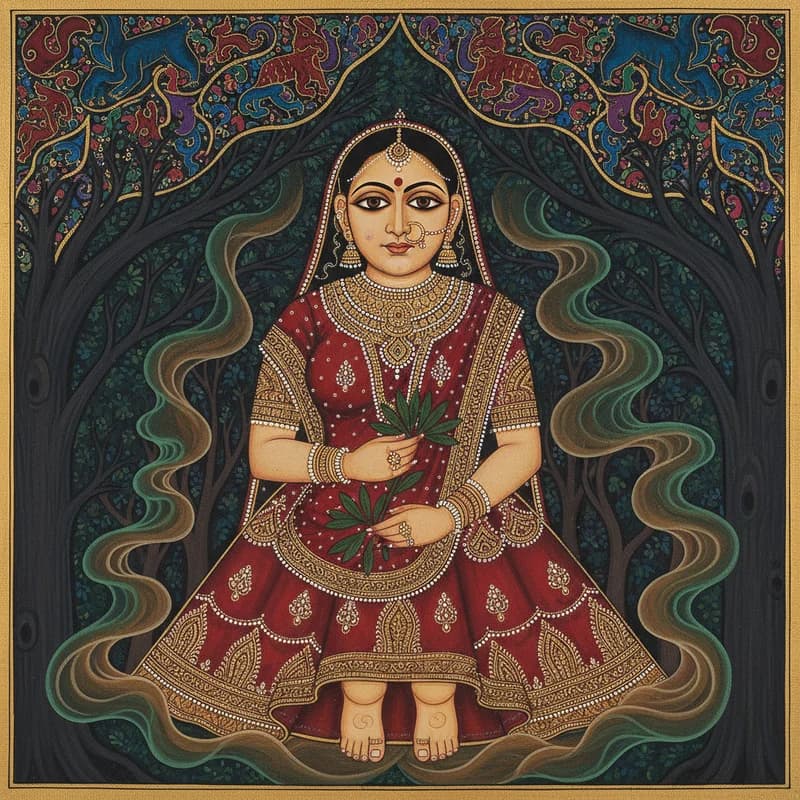

Jakhini
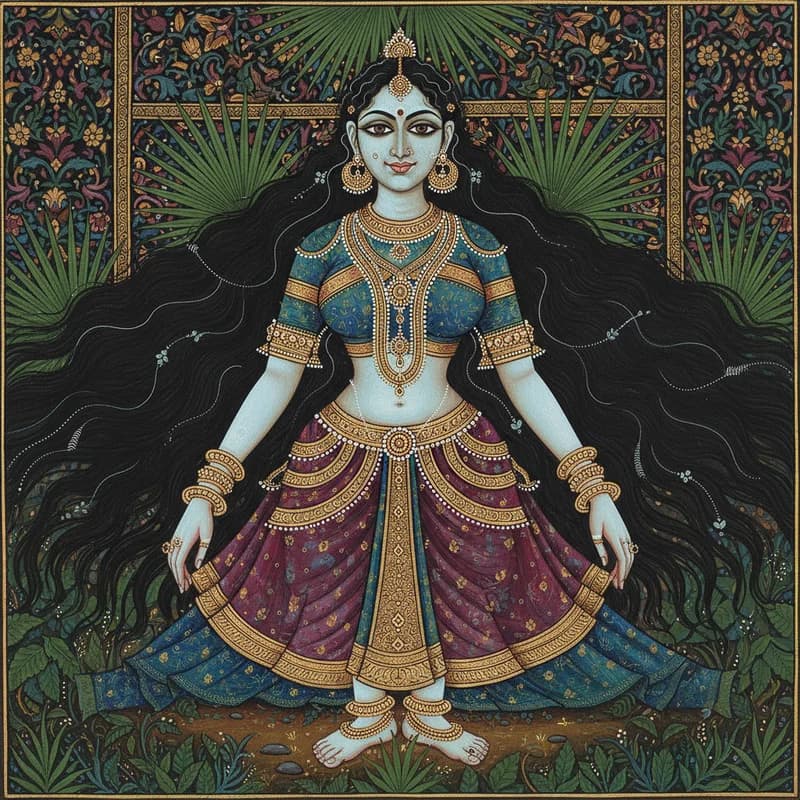
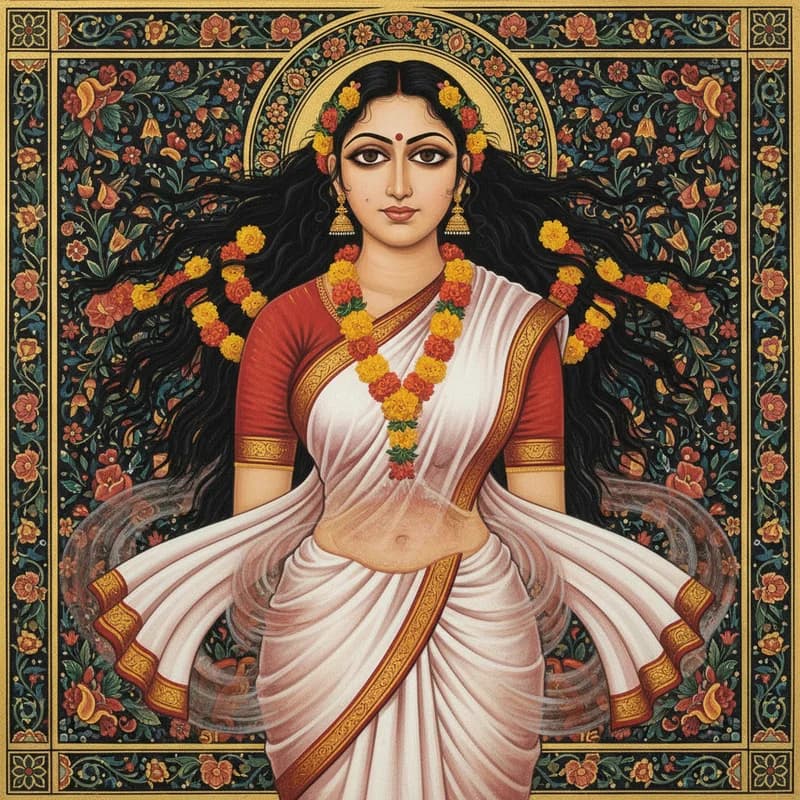
She appears at the edge of the treeline, always at dusk, always beautiful, always alone. Accounts from the Pindar valley and the forested slopes above Lansdowne describe the same figure: a woman in white standing where the path bends out of sight, her face turned just slightly away, beckoning without urgency. Shepherds who have traveled these routes for decades say she carries no lantern, casts no shadow in the failing light, and that the smell of deodar resin sharpens unnaturally in the air around her. Those who follow her report waking at dawn on the wrong side of a ridge, miles from any trail they know, with no memory of the hours between.
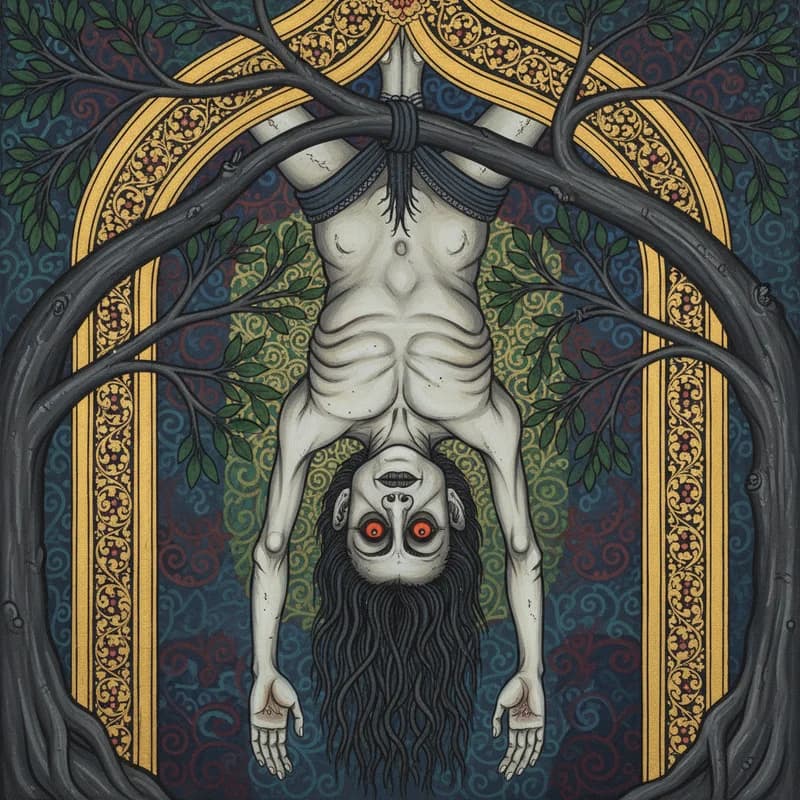
The Jakhini belongs to the yaksha lineage, but the Garhwali oral record draws a careful distinction — she is not malicious in the way a predator is malicious. She draws travelers off the path because the path itself seems, in her presence, to lead somewhere better. Accounts collected near the Kedarnath approach and from the oak forests above Almora suggest that she targets solitary men at the monsoon's end, when the high trails are wet and the mist comes down fast enough to disorient anyone. Some village traditions in the Chamoli district hold that she was once human — a woman who died on a mountain path without anyone knowing where to look — and that she leads others into the same lostness that claimed her, not out of cruelty, but out of a compulsion she cannot name. The standard precaution is simple and widely agreed upon: do not follow a woman you cannot account for, and do not leave the trail after the fourth hour of afternoon.
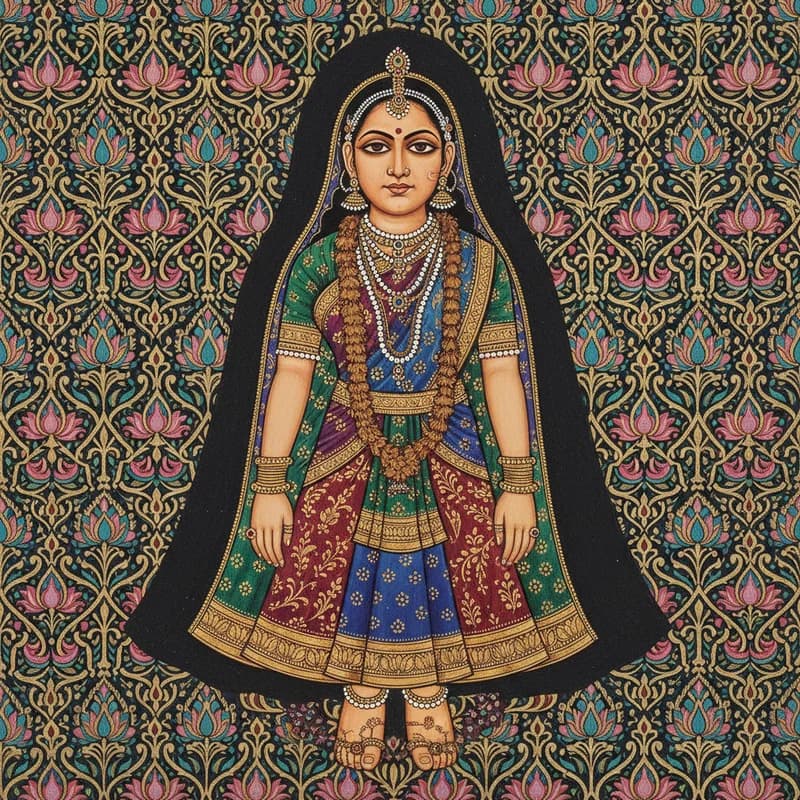
The Jakhini appears as a young woman at the edge of treeline — composed, unhurried, dressed in the manner of a hill village bride, though no wedding is near. Her features are too symmetrical, the kind of symmetry that registers as wrong before the mind finds words for it. Accounts collected from the Pindar Valley and along the Mandakini's upper reaches agree on one detail above all others: her feet, when visible, are reversed, heels forward, toes pointing behind her toward whatever she has come from. The smell that precedes her arrival is of wet deodar bark and something sweeter underneath it, like fermenting rhododendron — pleasant at first, then insistent. She does not blink at the rate of the living.
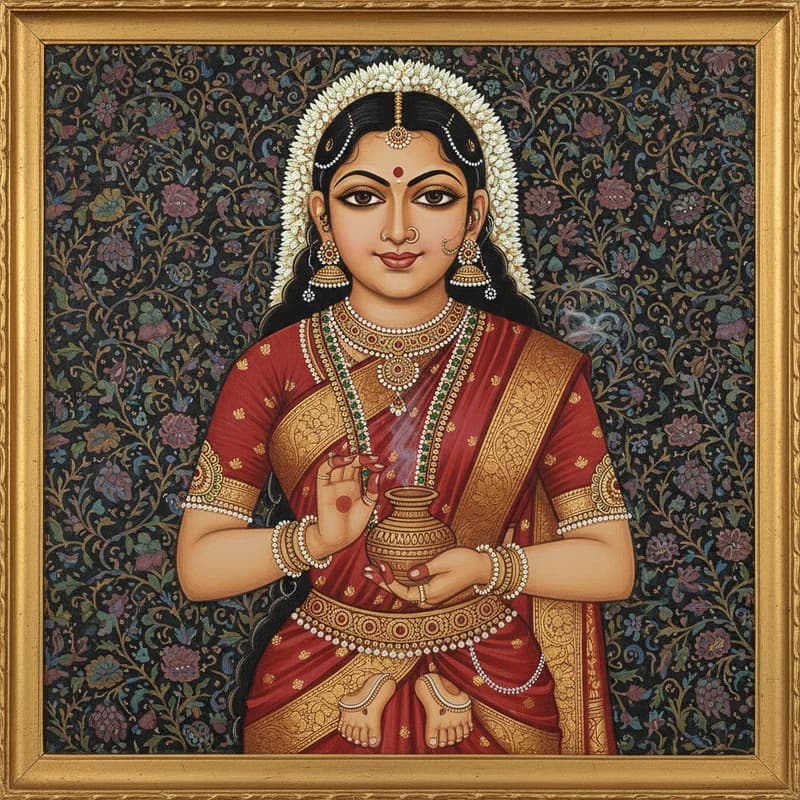
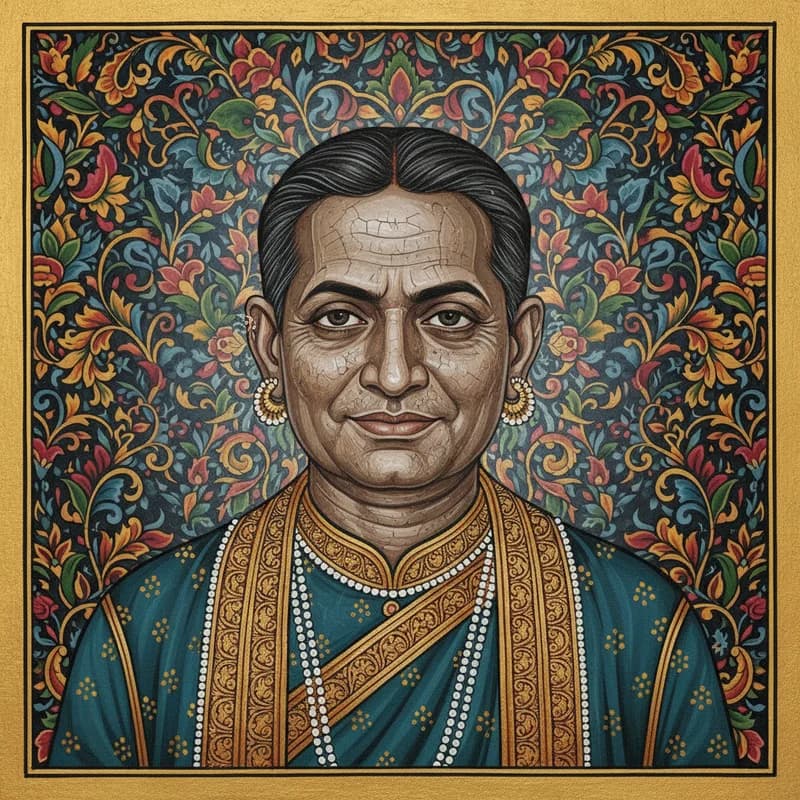
In the deodar forests above Kedarnath, where the trail to Gaurikund narrows and the mist comes down before noon, the Jakhini appears as a local woman returning from the forest with a bundle of firewood or grass — the kind of figure a Garhwali traveler passes a dozen times in a season without a second glance. Her clothes are right: the woolen pattoo of the hills, the nose-ring, the worn chappals of someone who has walked these slopes since childhood. The tells are two, and both require stillness to catch. Her bundle of cut grass stays perfectly dry even after she has moved through the wet undergrowth where the Mandakini's mist settles each morning. And when she turns to gesture you toward a path, her fingers point inward — toward her own palm, not outward — as though the direction she offers is one she means to keep.
First Documented
The Jakhini surfaces most clearly in the oral traditions of the Garhwal and Kumaon hills, where her name appears as a feminine derivative of *yaksha* — a lineage traceable to the Atharva Veda's catalogues of forest spirits — though her distinct mountain character was shaped by generations of shepherd and trader accounts along the Alaknanda valley routes.
Last Recorded
Accounts of Jakhini persist into the present, with sightings reported as recently as the early 2000s along the forested trails between Pauri and Lansdowne, where truck drivers and seasonal laborers still warn one another against accepting directions from solitary women encountered after dusk near the Khoh River crossings.
Source Language
Garhwali
Origin
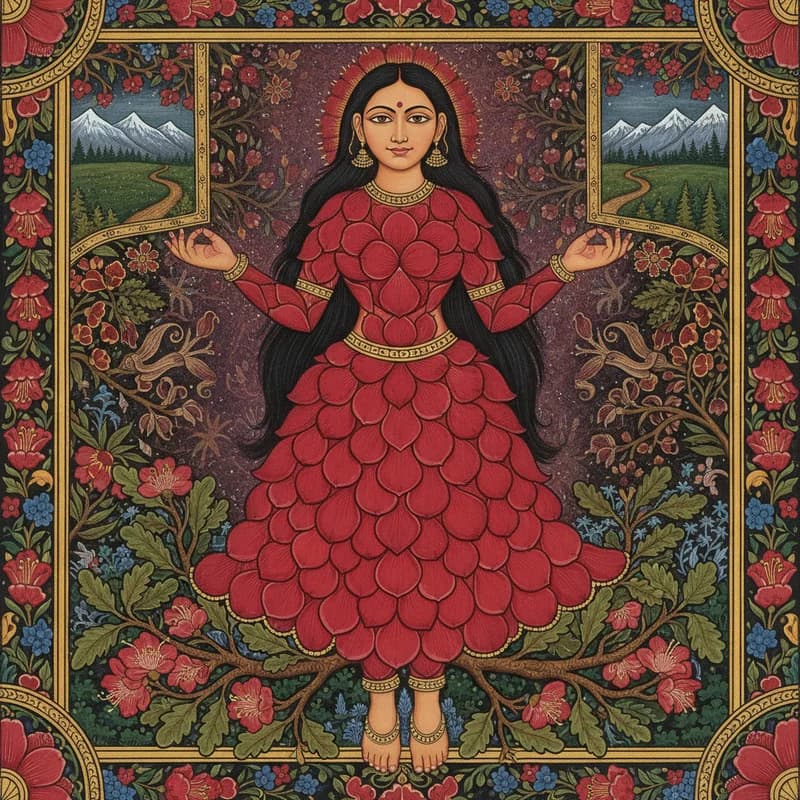
The Jakhini enters documented record through the Yaksha classification in the Vishnu Purana and Harivamsa, where female Yakshas are named attendants of Kubera, guardians of mountain treasure. The Garhwali oral tradition of the Tons and Mandakini river valleys, however, has never been comfortable with that genealogy. In the hill accounts, the Jakhini is not Kubera's servant but a sovereign of the Himalayan banj oak and rhododendron forests — she holds no allegiance, guards no treasury, and answers to no male authority. Where the textual sources describe her as benevolent or at worst neutral, the oral tradition collected in villages above Tehri and in the Pindari glacier approaches records a figure who leads travelers off the trail not out of malice but out of a possessiveness toward the forest itself — the outsider is not killed so much as absorbed. That distinction matters: it shifts the Jakhini from a demon of predation to something closer to a territorial intelligence, the forest's own refusal to be passed through without consequence.
Frequently Asked
Jakhini (जाखिनी) is a female yaksha spirit from the Garhwali and Kumaoni traditions of the Uttarakhand Himalayas, believed to inhabit dense forests and mountain passes. She belongs to the broader yaksha class of supernatural beings but carries a distinctly regional character shaped by the oral traditions of the Garhwal and Kumaon hills. Accounts of her appear consistently in the folklore collected from villages along the upper Alaknanda and Pindar river valleys.
She is said to appear as a strikingly beautiful woman, often encountered alone on forest paths or near streams in the oak and rhododendron forests above 2,000 metres. Some accounts from Pauri Garhwal describe her feet as turned backwards — a common marker across South Asian folklore for spirits who are not quite human. The beauty is the warning; it is the lure.
Jakhini is classified as a spirit requiring caution rather than outright terror — she misleads more than she destroys. Travelers who follow her into the forest lose their way, sometimes for hours, sometimes for days, emerging far from where they intended to go. In rarer accounts collected from the Kedarnath corridor, prolonged exposure to her presence is said to cause madness or a wasting illness.
Yakshini is the pan-Indian Sanskrit term for female yaksha spirits, appearing in texts like the Atharva Veda and the Mahabharata as supernatural beings associated with nature, fertility, and hidden wealth. Jakhini is the localized Garhwali-Kumaoni form of that same class, shaped by the specific geography of the Himalayan foothills and carrying folk attributes — the reversed feet, the forest misdirection — that do not appear in classical Sanskrit sources. The relationship is one of regional folk tradition crystallizing around an older textual category.
She is associated with the thick banj oak forests and alpine meadows of Uttarakhand, particularly in the districts of Chamoli, Rudraprayag, and Almora. Specific sites of reported encounters cluster near forest trails used by pilgrims heading toward Badrinath and Kedarnath, where the tree cover is dense and paths are poorly marked. The liminal hours of dusk and early morning are when she is most frequently said to appear.
Folk practice across the Garhwal hills advises travelers never to whistle or call out in the forest after dark, as such sounds are believed to attract her attention. Carrying iron — a knife, a sickle — is considered a reliable ward, consistent with iron's protective role against spirits throughout South Asian tradition. Local accounts also suggest that reciting the name of Golu Devata, a regional deity widely worshipped in Kumaon, offers protection on mountain paths.
She does not appear by this specific name in canonical Sanskrit texts such as the Puranas or the two great epics. Her roots lie in the oral tradition of the Kumaoni and Garhwali hill communities, transmitted through songs, cautionary tales, and the accounts of shepherds and pilgrims. The broader yaksha class she belongs to is well-documented in the Atharva Veda and in Buddhist Pali literature, but Jakhini herself is a creature of the mountains, not the manuscripts.
The pattern of a beautiful female forest spirit who lures travelers astray appears across the subcontinent under different names — the Mohini of Kerala, the Churel of the North Indian plains, the Vandevata traditions of the Chhattisgarh forests. What distinguishes Jakhini is her specific Himalayan context: the high-altitude forests, the pilgrimage routes, and the Garhwali-Kumaoni cultural framework that gives her a character distinct from her lowland counterparts. Each tradition has shaped its spirit to fit its own landscape.
संबंधित लोकगाथाएं
Related Lore
Algorithmic Inference
आपको यह भी पसंद आ सकता है
You May Also Like
Community Discussion
Comments are reviewed by AI before appearing publicly. Unsafe, unrelated, or uncertain comments go to human review.
Sign in to join the discussion.
0 comments
No public comments yet.