प्रतीक्षा करें
Parsing the Naga lineage records…
प्रतीक्षा करें
Parsing the Naga lineage records…

Jinn
They arrive in the hot months, when the air above the Thar sits still and the mirages over the salt flats of the Rann begin to move with purpose. Across Rajasthan, Gujarat, and the Muslim communities of the Deccan plateau, accounts of the jinn share a structural consistency that decades of oral collection rarely produce: they are not malevolent by nature, but they are not indifferent either. They occupy the spaces between — old wells, the threshold of ruined mosques at Fatehpur Sikri, the banyan groves outside Hyderabad where no one builds. The Quran names them explicitly, gives them the same moral stakes as humans, and this theological grounding shapes how rural communities understand encounters. A jinn can believe or disbelieve, act with honour or with cruelty. That ambiguity is precisely what makes them dangerous.
Encounters documented in the Marwar region and along the ghats of the Gomti at Lucknow follow patterns the informants themselves recognise. Unusual strength in a person, sudden illness without fever, a child who speaks in an adult's cadence and then forgets having done so — all fall under the broad attribution of jinn possession, which local practitioners distinguish carefully from madness. Certain jinn are said to form attachments to specific families across generations, appearing at births and deaths with no apparent hostility, only presence. Others are territorial in the way old landowners are territorial: not aggressive until disturbed. The protective protocols — recitation of specific Quranic verses, iron at the doorway, refusing to pour hot water on bare ground after dark — persist across communities that otherwise share almost nothing. That convergence is its own kind of evidence.
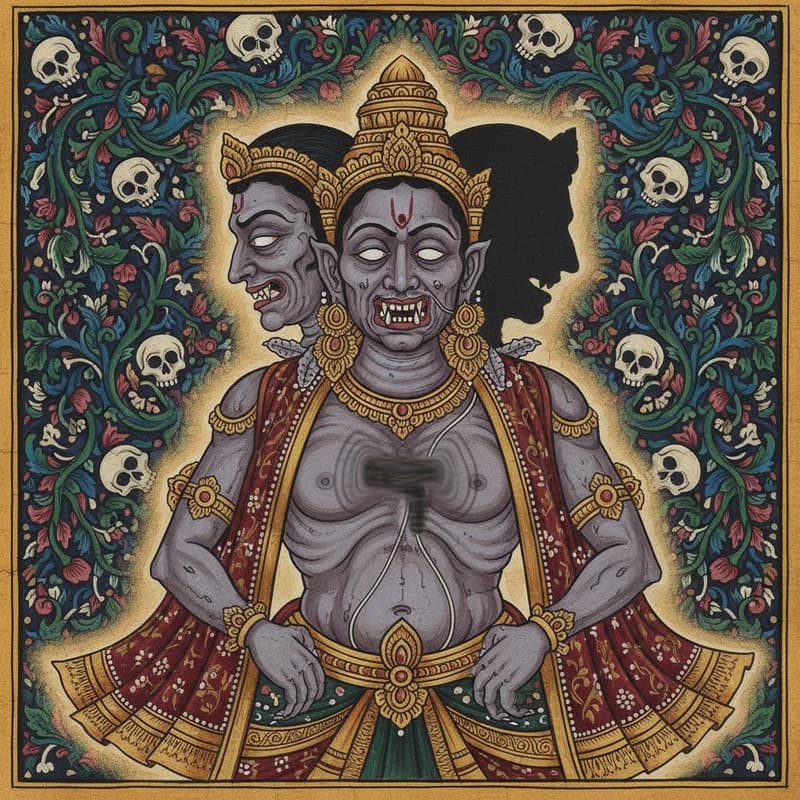
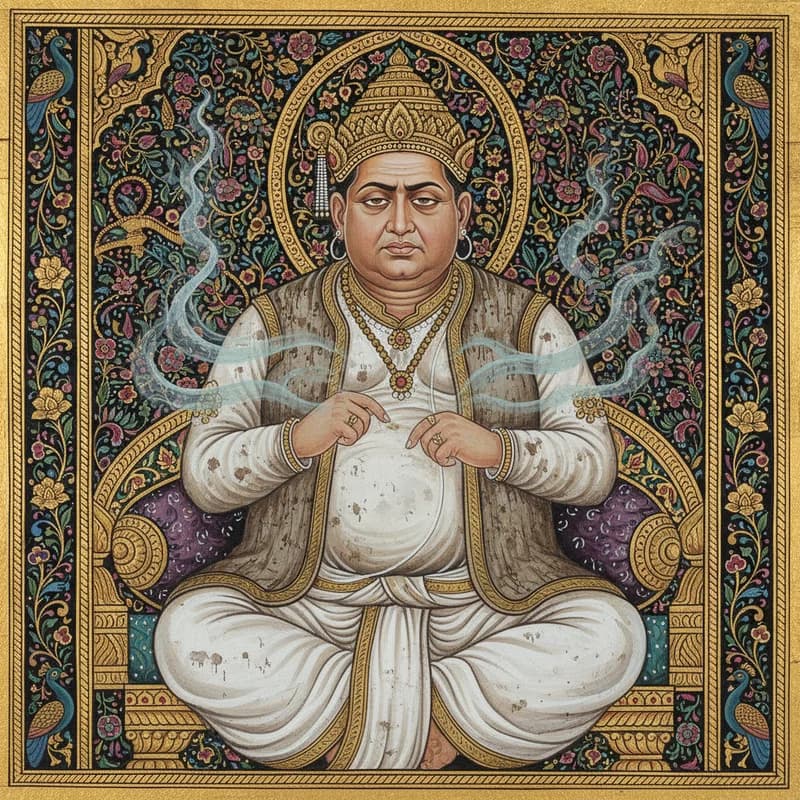
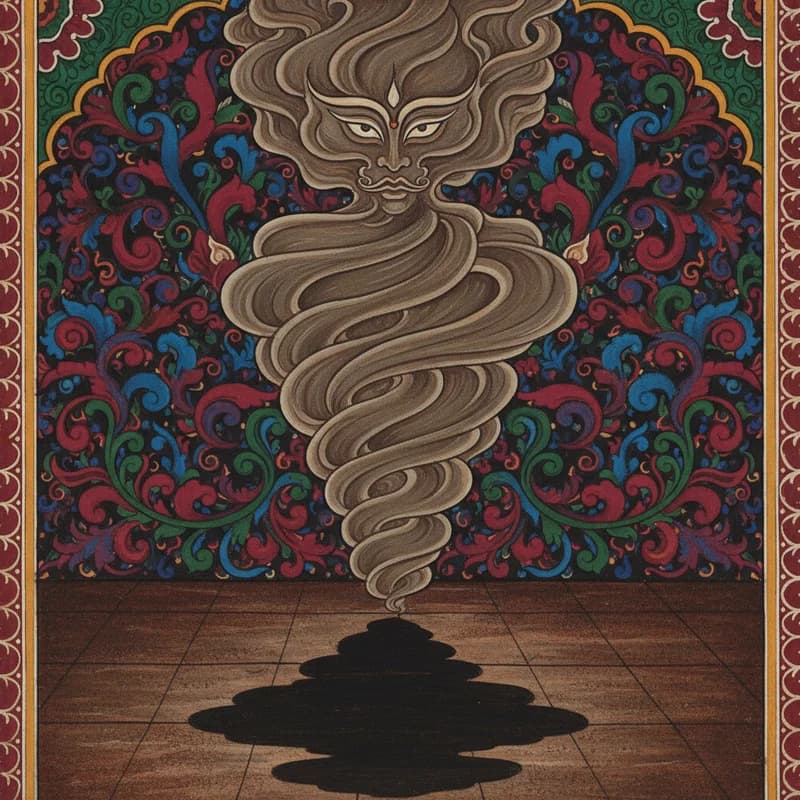
The Jinn of the northwestern plains — the accounts cluster around the scrublands of Rajasthan and the older qasbahs along the Yamuna's upper reaches — presents no single body, but the majority of testimonies agree on smoke: not the smoke of burning, but the smoke of something that has just been extinguished, a column of grey-brown air that holds a shape the way water holds a stone's impression, briefly, before releasing it. Where a face appears, it is always slightly too large for the body beneath it, the proportions of a fever-dream. The smell witnesses report is specific — wet iron and cardamom, the interior of a brass urn left in rain. The one detail that does not vary across decades of collected accounts is the shadow: the Jinn casts one when there is no light source to justify it.
In the Deccan accounts and along the Rann of Kutch's salt flats, the Jinn most reliably appears as a wandering fakir — staff in hand, saffron-smeared forehead, the whole convincing architecture of a mendicant — approaching a village at the hour between Maghrib and Isha prayers when the light is uncertain and hospitality is expected. The first tell is the staff: it leaves no impression in soft ground, neither mud nor sand yielding to its weight. The second is subtler, noted consistently by older women in the Saurashtra accounts — the fakir's breath produces no visible vapor on cold December mornings near the Sabarmati's winter banks, when every living creature's exhalation should show.
First Documented
The Jinn enter Indian consciousness largely through the Arabic *Alf Layla wa-Layla* and its Persian intermediaries, absorbed into Urdu literary culture by the eighteenth century; Mir Amman's *Bagh-o-Bahar* (1801), composed in Delhi under East India Company patronage, gives them their most vivid early Hindustani literary form.
Last Recorded
The Jinn appears in living oral tradition across Rajasthan's Thar Desert communities and along the Malabar Coast, with accounts collected as recently as the 2010s near Ajmer's dargah precincts. Sightings and possession narratives continue to be reported to this day, particularly during the moonless nights of Shaban.
Source Language
Arabic
Origin
The Jinn enters Indian record through two distinct channels that have never fully merged. The Quran's Surah Al-Jinn provides the theological architecture — beings of smokeless fire, possessed of will and moral accountability — but this text arrived in the subcontinent layered over an older pre-Islamic Arabic tradition that the early Arab traders carried into the port towns of Malabar and the Konkan coast before the eighth century. Collectors working the Dakhani-speaking communities of Hyderabad's old city and the Muslim fishing villages near Beypore in Kerala find a folk tradition that diverges sharply at one point: the textual Jinn is cosmologically separate from humanity, a parallel creation, while the oral account insists that certain Jinn are specifically Indian — born from particular places, the Tungabhadra riverbanks, the tamarind groves outside Bidar — tied to soil rather than to smokeless origin. This rooting of the Jinn in landscape rather than in primordial substance reveals the older animist logic beneath the imported theological frame: in the folk understanding, what a being is matters less than where it belongs.
Frequently Asked
In Indian mythology, particularly across Rajasthan and the Deccan, a Jinn is a spirit born of smokeless fire — a being with moral will and the capacity for both belief and cruelty. The Quran's Surah Al-Jinn provides the theological foundation, but folk tradition in communities along the Tungabhadra and near the tamarind groves outside Bidar insists these spirits are also rooted in specific Indian landscapes, tied to soil as much as to sacred origin. That tension between cosmological text and local earth is what gives the Indian Jinn its particular character.
Jinn occupy a morally ambiguous position in Rajasthani folklore — they are not malevolent by nature, but they are not indifferent either. Like humans under Quranic theology, a Jinn can act with honour or with cruelty, and certain ones documented in the Marwar region are known to form protective attachments to specific families across generations, appearing at births and deaths without hostility. Others are territorial in the manner of old landowners: patient until disturbed.
Across decades of collected accounts from the scrublands of Rajasthan and the older qasbahs along the Yamuna's upper reaches, the Jinn most consistently appears as a column of grey-brown smoke — not the smoke of burning, but of something just extinguished — holding a shape the way water briefly holds a stone's impression. Where a face manifests, witnesses describe proportions slightly too large for the body beneath, and the smell reported is specific: wet iron and cardamom, the interior of a brass urn left in rain. The one detail that does not vary is the shadow — the Jinn casts one when no light source exists to justify it.
In Deccan accounts and along the salt flats of the Rann of Kutch, the Jinn most reliably takes the form of a wandering fakir — staff in hand, saffron-smeared forehead — approaching a village between Maghrib and Isha prayers when hospitality is expected and light is uncertain. The first tell is the staff, which leaves no impression in mud or sand; the second, noted consistently by older women in Saurashtra, is that the fakir's breath produces no visible vapor on cold December mornings near the Sabarmati's winter banks, when every living creature's exhalation should show.
Practitioners in the Marwar region and along the ghats of the Gomti at Lucknow distinguish Jinn possession carefully from madness, identifying it through specific patterns: unusual strength in a person, sudden illness without fever, or a child who speaks in an adult's cadence and then forgets having done so. Local healers are careful to note that these signs must cluster together — no single symptom is sufficient. The distinction matters because the remedies differ entirely.
Protective protocols against the Jinn persist across communities that otherwise share almost nothing, which is itself significant. Iron — specifically a horseshoe nailed above the doorframe at dusk — and black mustard oil smeared across a threshold are among the most widely documented barriers, while recitation of the Ayat al-Kursi spoken continuously is said to break a Jinn's hold entirely. Running water from the Yamuna and the smoke of loban resin burned at the four corners of a room appear in accounts from both Rajasthan and the Dakhani-speaking communities of Hyderabad's old city.
The Quranic Jinn, as described in Surah Al-Jinn, is a cosmologically separate creation from humanity — a being of smokeless fire with moral accountability but no particular attachment to place. Indian folk tradition, especially in communities near the Tungabhadra riverbanks and the Muslim fishing villages of Beypore in Kerala, diverges sharply: here, certain Jinn are understood to be specifically Indian, born from particular landscapes and bound to soil rather than to primordial substance. This rooting of the Jinn in geography rather than in sacred origin reveals the older animist logic that persists beneath the imported theological frame.
Surah Al-Jinn in the Quran is the primary textual source, establishing that Jinn are beings of will and moral stakes — capable of faith or transgression — and this theological grounding directly shapes how rural communities across Rajasthan and the Deccan understand encounters with them. Because the text grants Jinn the same moral framework as humans, folk belief does not default to simple fear; instead, it produces a careful ethics of encounter, including specific hospitality protocols and the recitation of Quranic verses as both protection and acknowledgment. Collectors working Dakhani-speaking communities in Hyderabad's old city find that the oral tradition treats the text not as doctrine but as field guide.
संबंधित लोकगाथाएं
Related Lore
Algorithmic Inference
आपको यह भी पसंद आ सकता है
You May Also Like
Community Discussion
Comments are reviewed by AI before appearing publicly. Unsafe, unrelated, or uncertain comments go to human review.
Sign in to join the discussion.
0 comments
No public comments yet.