प्रतीक्षा करें
Summoning entity profiles from the Grimoire…
प्रतीक्षा करें
Summoning entity profiles from the Grimoire…
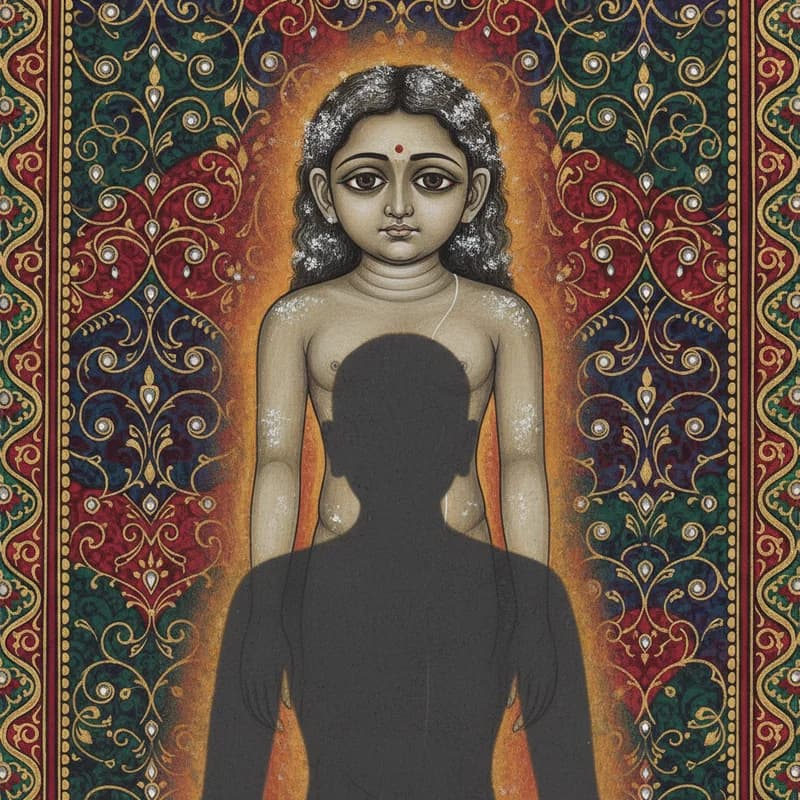

Masan
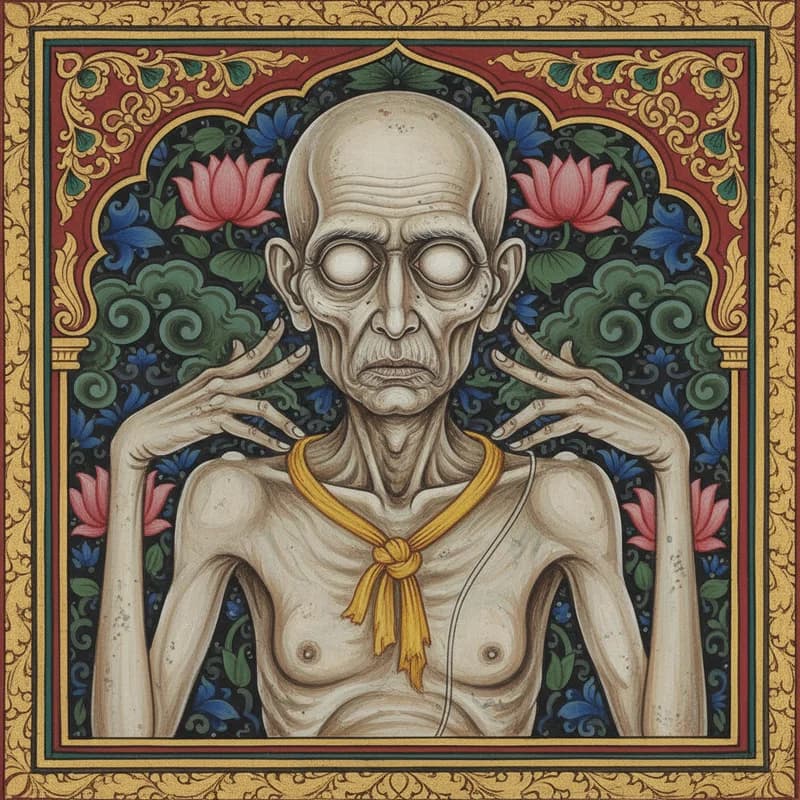
Cremation grounds breed their own logic. At the burning ghats of Varanasi, where the pyres run through the night and the Ganga carries ash into the dark, the Masan occupies a specific ecological niche in the folklore of death — not the dead themselves, but something that feeds on the residue of dying. Accounts from Bihar, eastern Uttar Pradesh, and the Bundelkhand plateau describe it consistently: a figure that takes shape from the smoke and the half-burnt wood, that inhabits the space between a body's end and its full dissolution. Children are its primary target. The belief, repeated by dhobis and cremation workers and village midwives alike, holds that the Masan can enter a child through the shadow — that crossing the shadow of a funeral procession, or playing near a shmashana after dusk, opens something in a child that the Masan recognises and enters.
The symptoms it causes are not dramatic. Slow wasting, refusal of food, a fever that breaks and returns on no predictable schedule — the kind of illness that defies the village vaid and the district hospital both. Ojhas in the Bhojpur region diagnose Masan possession through a specific test involving mustard seeds and a lamp flame, the details of which vary by practitioner. Protective measures tend toward the preventive: iron bangles on infants, a smear of ash from the domestic hearth — not the cremation ground — on the child's forehead, and the strict prohibition against letting children's shadows fall across the funeral path. The Masan does not pursue. It waits for the careless, the uninstructed, the family that moved from the village and forgot what the village knew.
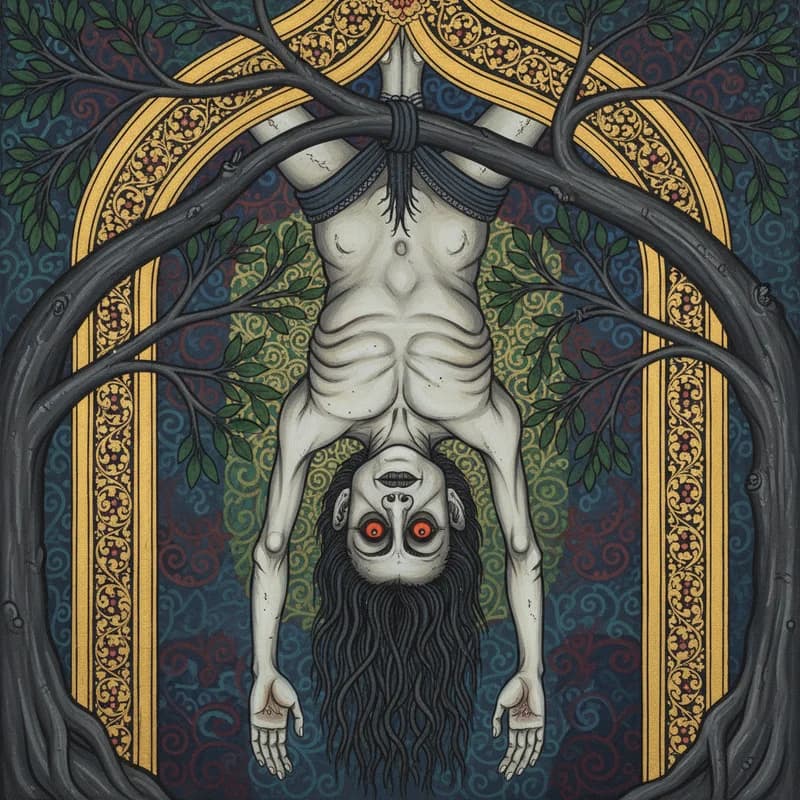
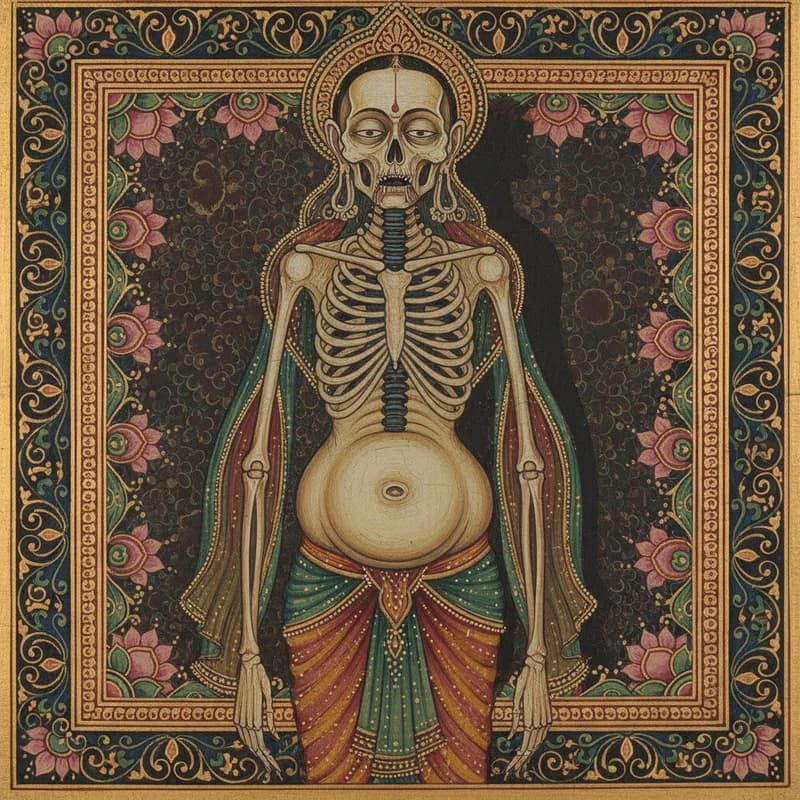
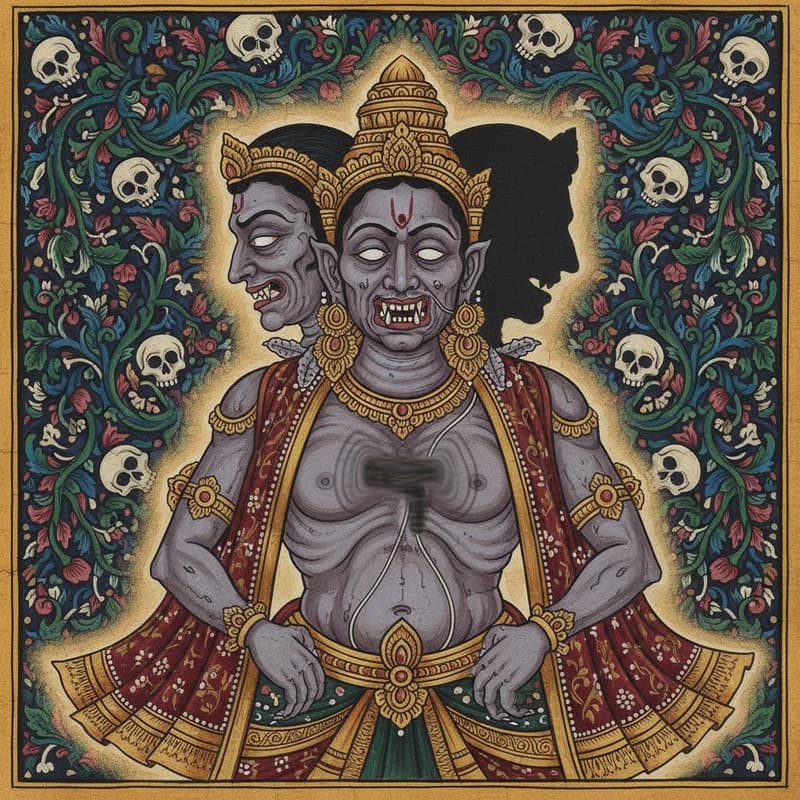
The Masan is a child's shape that has stayed a child's shape too long. Accounts from the burning ghats of Haridwar and the cremation grounds along the Betwa describe a figure the height of a seven-year-old, ash-grey in complexion, with limbs that are correct in proportion but wrong in density — too light when glimpsed against firelight, as though the body displaces nothing. The hair is matted with cremation ash, and witnesses who have stood near enough report the smell of scorched cotton and wet char, the specific odour of a pyre doused with river water before it has finished its work. What marks it beyond the merely strange is the shadow: on nights when the Masan is present, the shadow it casts belongs to an adult, long and broad-shouldered, pointing in a direction the body does not face.
Masan is most reliably documented appearing as a cremation-ground attendant — a dom worker, ash-streaked and unremarkable, moving between the burning ghats of Varanasi or the riverside pyres along the Karnali tributaries in the hours before the first light call from the mosque. The disguise is chosen with intelligence: no one looks closely at a dom, and the smell of burning wood explains everything. Two details betray it, noted independently across accounts from Banaras to the terai villages of eastern Uttar Pradesh. The ash on its arms is always dry, never damp, even on monsoon nights when the river breathes humidity into everything — real dom workers are perpetually damp by the water's edge. The second tell is the children: any child under seven who sees this figure will begin crying without being able to say why, and will not stop until it has passed entirely from sight.
First Documented
Masan appears in the cremation-ground lore of the Gangetic plains, with early references surfacing in medieval Hindi and Awadhi oral traditions tied to the burning ghats of Varanasi and Allahabad. Tantric texts from the Nath sampradaya, particularly those circulating in eastern Uttar Pradesh, invoke Masan as a spirit haunting smashana grounds.
Last Recorded
Accounts of Masan persist well into the present day, with cremation ground attendants near the ghats of Varanasi and along the Shipra River in Ujjain still reporting encounters as recently as the early 2000s. The spirit has never truly receded from living memory.
Source Language
Hindi
Origin
The Masan appears in the Garuda Purana's taxonomy of cremation-ground spirits, catalogued alongside the Preta and Pishacha as entities born from improper last rites, but the oral tradition of the Varanasi ghats and the riverine villages of the Ganga-Yamuna doab treats the Masan as something older and more specific than a Puranic category. In the textual account, the Masan is a consequence — the residue of a child who died before the sacred thread ceremony, before any ritual identity was established, leaving a soul with no formal name the gods could recognise. The folk tradition of the Manikarnika ghat area disagrees sharply: here the Masan is not a child's spirit but the spirit of the cremation ground itself, made conscious by accumulated grief, and it afflicts children precisely because they are unguarded, not because they share its condition. Dom communities who maintain the Manikarnika pyres do not speak of the Masan as a victim transformed but as something that was always present in fire and ash. That divergence matters — it separates a theology of
Frequently Asked
A Masan is a cremation ground spirit found across northern and central Indian folklore, believed to inhabit the ash and embers of funeral pyres. The name itself derives from the Sanskrit 'masana,' meaning cremation ground, and these entities are understood to be the restless dead who have not completed their passage. Along the burning ghats of Varanasi and the smashanas of rural Uttar Pradesh and Bihar, the Masan is spoken of with a particular wariness that distinguishes it from ordinary ghost lore.
Masan spirits are classified as entities of caution rather than outright malevolence — they are opportunistic rather than predatory. They are said to attach themselves most readily to children, the grieving, and those who linger near cremation grounds after dusk, drawing vitality from the living. In many oral accounts collected from villages along the Ganga plain, a Masan's harm manifests as wasting illness, unexplained fever, or a child's sudden failure to thrive.
Folk diagnosticians across Bihar and eastern Uttar Pradesh describe Masan affliction as a cluster of signs: persistent low fever that worsens at night, a child who stops eating and grows hollow-eyed, and an inexplicable smell of ash or burning cloth around the affected person. Local ojhas — spirit healers — often confirm the presence of a Masan by observing whether symptoms intensify near fire or during the month of Kartik, when the boundary between the living and the dead is considered thinnest. The afflicted person may also flinch or weep without cause near cremation smoke.
A Preta is a soul trapped in a liminal state due to improper funeral rites, a concept codified in texts like the Garuda Purana, while a Masan is more specifically a cremation ground entity — territorial, place-bound, and not necessarily the spirit of a single individual. The Preta seeks resolution through ritual; the Masan, by contrast, is understood in folk tradition as something older and more elemental, born from the accumulated grief and ash of many deaths in one place. Where Preta lore is largely textual and Brahminic, Masan belief is overwhelmingly oral and rooted in the lived experience of communities who live near burning grounds.
The Masan does not appear by name in the major Sanskrit canonical texts, but the concept of smashana-dwelling spirits is woven through Tantric literature, particularly texts associated with the Kapalika and Aghora traditions. Shiva himself is described in the Shiva Purana as the lord of the smashana, and his attendant ganas include categories of ash-dwelling spirits that regional tradition has long identified with the Masan. The entity lives primarily in oral scripture — in the warnings of grandmothers in Bhojpuri-speaking villages and the chants of cremation ground priests.
Masan belief is most densely documented across the Ganga-Yamuna doab — particularly in Uttar Pradesh, Bihar, and Jharkhand — where cremation grounds along river banks have been active for centuries. In Chhattisgarh and parts of Madhya Pradesh, the Masan appears in tribal oral traditions under variant names, sometimes conflated with forest spirits who guard the bones of the dead. The burning ghats of Varanasi, Haridwar, and Allahabad are considered the Masan's most potent territories, and local boatmen on the Ganga still observe prohibitions against calling out names after dark near the pyres.
Protection against a Masan typically involves the ojha or local healer performing a ritual at the threshold of the home, using mustard seeds, iron nails, and sometimes a small fire of neem wood — smoke that is believed to repel cremation ground spirits. Offerings of sesame and black gram, foods associated with the dead in Hindu ritual, are left at the edge of the smashana to appease a Masan that has already attached itself to a household. In some communities of eastern Bihar, a red thread tied around a child's wrist after a visit near a burning ground is considered sufficient preventive protection.
All three belong to the broader category of malevolent or troublesome spirits in Indian folk belief, but each has a distinct character and territory. A Bhoot is a general ghost of the unquiet dead, a Chudail is specifically the spirit of a woman who died in childbirth or during pregnancy, while the Masan is defined entirely by its association with the cremation ground itself — it is a spirit of place as much as a spirit of the dead. Confusing them matters practically: the rituals used to pacify a Chudail will not work on a Masan, and village healers are careful to diagnose correctly before prescribing any remedy.
संबंधित लोकगाथाएं
Related Lore
Algorithmic Inference
आपको यह भी पसंद आ सकता है
You May Also Like
Community Discussion
Comments are reviewed by AI before appearing publicly. Unsafe, unrelated, or uncertain comments go to human review.
Sign in to join the discussion.
0 comments
No public comments yet.