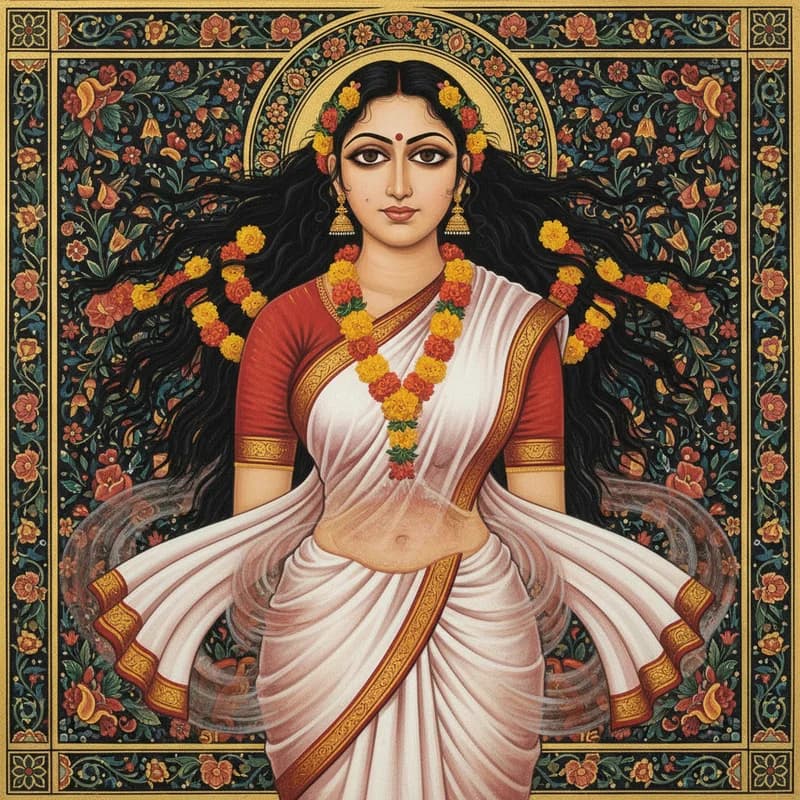
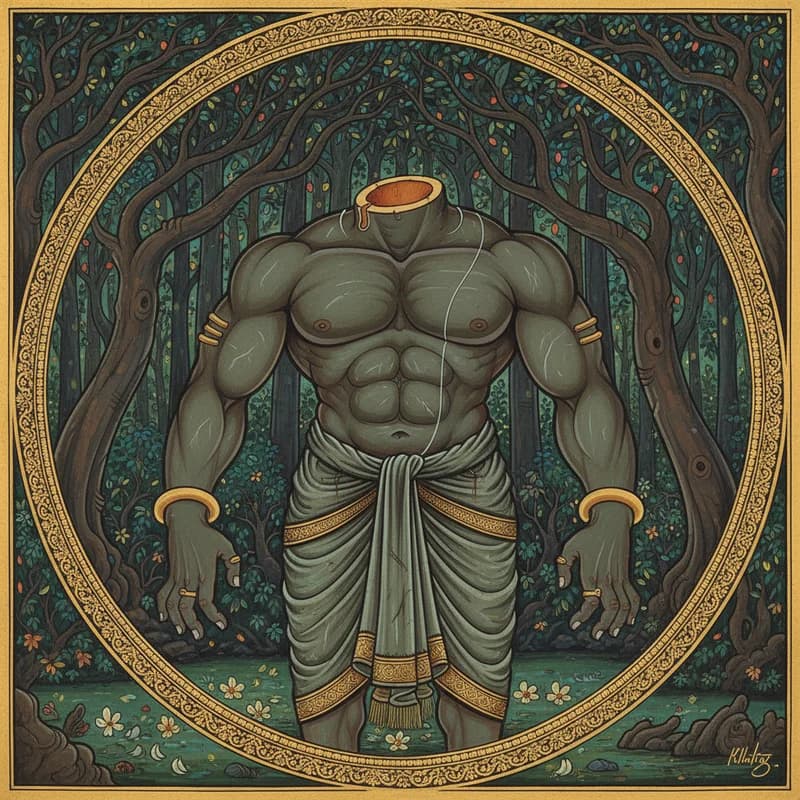
The Brahmarakshasa is the ghost of a Brahmin who hoarded sacred knowledge — who learned Sanskrit grammar and the Puranic commentaries and the precise intonations of Vedic recitation and then refused to transmit them, dying with the debt unpaid. That refusal is the wound that will not close. Unlike the bhoot, which is grief or accident made ambulatory, or the preta, which is appetite, the Brahmarakshasa carries the specific damnation of the intellectual miser: he knows what he withheld, remembers each student he turned away from the paathshala, each question he answered with silence or contempt. The Skanda Purana and certain commentarial traditions preserved in the Sanskrit colleges of Varanasi identify him as a distinct category of vetala — not the corpse-haunting trickster of the Baital Pachisi stories, but something older and more formal, a being whose unfinished dharmic obligation has calcified into a kind of permanent, furious vigil.
Accounts cluster along the old pilgrimage roads of eastern Uttar Pradesh — the dust tracks running between Ayodhya and Chitrakoot, the mango-shaded paths skirting the Yamuna near Banda — and place him beneath peepal trees at the crossing of two roads, most often in the weeks before the monsoon breaks over the Vindhya escarpment, when the air thickens and the crows go silent over the fields. He takes the form of a tall man with inverted feet and a scholar's bearing — composed, unhurried, capable of discourse. Villagers in the Bundelkhand region describe approaching such a figure on the road to Orchha and receiving, instead of a greeting, a precise enumeration of their own failings. He does not threaten. He catalogues. Those who argue with him, or who linger out of pride, have been found sitting in the road at dawn, unable to account for the hours, their dhotis damp with the night's dew. Exorcism rites drawn from the Atharva Veda tradition — versions of which were still practiced in the mid-twentieth century by priests attached to the Kashi Vishwanath temple — require a Brahmin of genuine learning to complete the debt the Brahmarakshasa never paid: to teach what was withheld, without payment, until the obligation closes. Priests willing to attempt this are rare. The Brahmarakshasa, in most accounts, waits.
First Reference —Circa 1st century CE
Last Recorded —Present
Appearance
स्वरूप
Natural Form
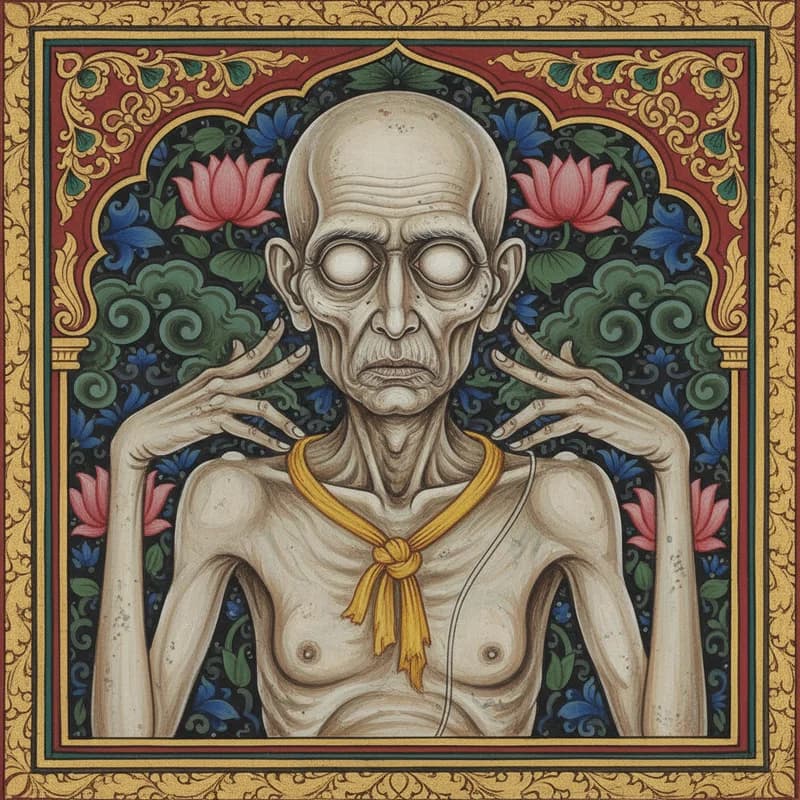
The Brahmarakshasa appears as a man of advanced age and considerable former height, now collapsed inward — shoulders drawn up around the ears as though bracing against a blow that has never stopped landing. Across the chest, the sacred janeu crosses in a state no living Brahmin would permit: yellowed, knotted at irregular intervals, carrying the smell of ghee gone rancid undercut by the particular staleness of Sanskrit manuscripts sealed too long in an unventilated storeroom. The skin holds the grey-white of cremation ash still warm, stretched drum-tight across the orbital bones and jaw. The eyes are open, clear, and entirely without surface — no reflection, no adjustment to light, the pupils neither contracting in noon sun nor widening in the dark of the tamarind groves along the Narmada's southern bank.
Alternate Forms
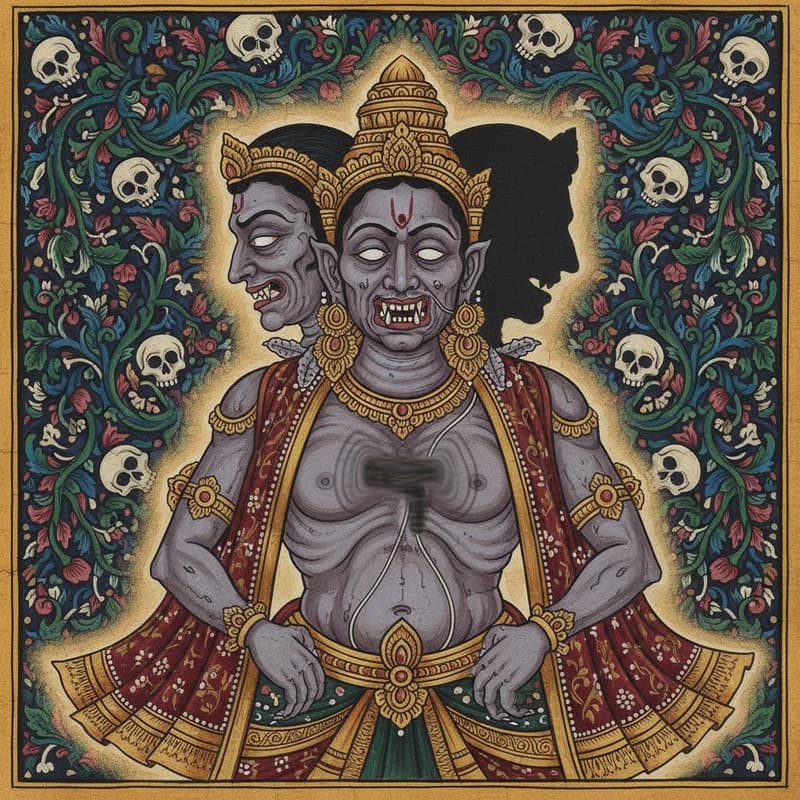
The Brahmarakshasa favors the form of an aged Brahmin scholar — dhoti pressed and white, a tilak of ash on the forehead, a bundle of palm-leaf manuscripts tucked under one arm — encountered on the roads between villages in the weeks after Pitru Paksha, when wandering ascetics are common enough to pass without suspicion. Those who have gotten close enough report that the bundle emits no rustling, no creak of dried leaf against leaf, regardless of how the figure shifts or adjusts his grip — a silence that registers wrongly before the witness can name why. Documented most consistently in accounts from the Godavari river villages of Andhra, his lips move continuously, as though reciting a text, but the sound arrives a moment after the movement, like a reflection in disturbed water.
Powers & Weaknesses
शक्ति और दुर्बलता
Known Powers
◆Recites corrupted shlokas into sleeping scholars' ears
◆Speaks a man's gotra back to him, wrongly
◆Turns ghee black inside the havan kund
◆Draws Brahmin men toward the Narmada at dusk
◆Withers the janeu on contact with its shadow
◆Causes palm-leaf manuscripts to blank before dawn
◆Cannot cross ground where cow's urine has dried
◆Stills the Betwa where a student drowned studying
◆Makes the tilak ash smell of rancid ghee
◆Locks a man's tongue mid-Gayatri recitation
Known Weaknesses
◆Gayatri Mantra recited unbroken through midnight
◆Sesame seeds circling the peepal's exposed roots
◆Completing the Brahmin's withheld Vedic recitation aloud
◆Sacred ash from Kashi Vishwanath's dhuni on forehead
◆Iron nail driven into peepal root at Kartik Purnima
◆Dried neem smoke at the threshold before dusk
◆Seven-generation gotra recitation blocks his approach
Known Locations
ज्ञात स्थान
Cremation-ground margins of Manikarnika Ghat during Kartik Amavasya, Varanasi, Uttar Pradesh
Peepal-root hollows along the old Kannauj road in post-harvest stillness, Farrukhabad district, Uttar Pradesh
Dried oxbow channels of the Gomti where it bends past abandoned ghats, Sultanpur district, Uttar Pradesh
Ruined agrahara settlements on the Vindhya escarpment in the dry month of Jyeshtha, Mirzapur district, Uttar Pradesh
Banyan-shaded well-margins of depopulated Brahmin villages during the moonless nights of Bhadrapad, Hardoi district, Uttar Pradesh
Crumbling dharamshalas on the Prayagraj-Chitrakoot pilgrim track after the Magh Mela crowds depart, Allahabad district, Uttar Pradesh
Sandbank temples half-swallowed by the Yamuna in flood season, Mathura district, Uttar Pradesh
Overgrown tank-steps of defunct maths in the sal-fringe villages east of Ayodhya, Faizabad district, Uttar Pradesh
Historical Record
ऐतिहासिक अभिलेख
First Documented
Circa 1st century CE
Last Recorded
Present
Source Language
Sanskrit
Origin
The Brahmarakshasa enters the written record in the Skanda Purana and is elaborated through Manusmriti's commentary tradition as a consequence codified with unusual precision — the Brahmin who misuses sacred knowledge is reborn neither in hell nor in a higher body, but suspended between, still carrying the weight of what he refused to give. The textual account treats the condition as a clean taxonomy, a category of punishment. Along the Betwa river and among the tank-temple complexes of Bundelkhand, the oral tradition refuses this tidiness: the Brahmarakshasa is not a category but a specific man, often named, whose local history — which texts he hoarded, which students he turned away — remains part of the telling. Where the Puranic text needs him to be a warning, the folk tradition needs him to be a person, because only a person can be bargained with, propitiated, and finally released.
Frequently Asked
Questions About Brahmarakshasa
A Brahmarakshasa is the ghost of a Brahmin scholar who hoarded sacred knowledge during his lifetime — learning Vedic recitation, Sanskrit grammar, and Puranic commentary but refusing to transmit it to students — and died with that dharmic debt unpaid. The Skanda Purana classifies him as a distinct category of vetala, suspended between death and rebirth, still carrying the precise memory of every student he turned away. Unlike the bhoot, which arises from grief or accident, the Brahmarakshasa is the specific damnation of the intellectual miser.
Accounts cluster along the old pilgrimage roads of eastern Uttar Pradesh — the dust tracks between Ayodhya and Chitrakoot, and the mango-shaded paths skirting the Yamuna near Banda — placing him beneath peepal trees at crossroads in the weeks before the monsoon breaks over the Vindhya escarpment. Bundelkhand oral traditions are particularly dense with named accounts, often identifying the specific texts the figure hoarded and the students he refused. Separate sightings have been documented in Godavari river villages of Andhra, suggesting the archetype travels further than its Puranic origin.
He appears as a tall, elderly Brahmin — dhoti pressed white, a tilak of ash on the forehead, a bundle of palm-leaf manuscripts tucked under one arm — but the bundle emits no sound regardless of how he shifts it, a silence that registers wrongly before a witness can name why. His sacred janeu is yellowed and knotted at irregular intervals, carrying the smell of rancid ghee and sealed manuscripts. The eyes are open and clear but hold no reflection, the pupils neither contracting in noon sun nor widening in darkness.
The Brahmarakshasa recites corrupted shlokas into sleeping scholars' ears and can lock a man's tongue mid-Gayatri recitation — a punishment that mirrors the silence he imposed on students during his lifetime. He speaks a man's gotra back to him, deliberately wrongly, and causes palm-leaf manuscripts to blank before dawn. Those who linger in argument with him have been found sitting in the road at first light, unable to account for the lost hours, their dhotis damp with night dew.
A preta is essentially appetite — a hungry ghost driven by unsatisfied physical or emotional craving, typically associated with improper funeral rites. The Brahmarakshasa carries a more formal damnation: not hunger but unresolved intellectual debt, the specific weight of knowledge withheld from those who deserved it. Where the preta wanders in distress, the Brahmarakshasa waits with the composed, unhurried bearing of a scholar who knows exactly what he owes and to whom.
The Brahmarakshasa enters the written record in the Skanda Purana and is elaborated through the commentary tradition surrounding the Manusmriti, which codifies the condition with unusual precision: a Brahmin who misuses sacred knowledge is reborn neither in hell nor in a higher body but suspended between the two. Exorcism rites drawn from the Atharva Veda tradition were still practiced in the mid-twentieth century by priests attached to the Kashi Vishwanath temple in Varanasi. The oral traditions of Bundelkhand, however, resist the Puranic taxonomy and insist the Brahmarakshasa is not a category but a specific, nameable man.
The Brahmarakshasa cannot cross ground where cow's urine has dried, and dried neem smoke at the threshold before dusk is considered a reliable deterrent in Bundelkhand village practice. Reciting one's seven-generation gotra aloud blocks his approach, and the Gayatri Mantra recited unbroken through midnight weakens his hold considerably. Sacred ash from the Kashi Vishwanath dhuni applied to the forehead is among the strongest protections recorded.
Release requires a Brahmin of genuine learning to complete the debt the Brahmarakshasa never paid — to teach what was withheld, without payment, until the obligation closes. The Atharva Veda exorcism tradition preserved in Varanasi's Sanskrit colleges specifies this condition precisely, and priests willing to attempt it have always been rare. In the folk tradition of the Betwa river villages, the Brahmarakshasa is understood as a person rather than a category, which means he can, in principle, be bargained with — but the bargain requires the one thing he spent his life refusing to give.
Rajnandgaon districtPitru Paksha fortnight, September 1961
Hariprasad Tiwari, a government school inspector posted to Rajnandgaon, reported that on the ninth night of Pitru Paksha he heard a voice from the interior of a disused well recite, without error, the forty-third verse of the Garuda Purana — a verse he had never spoken aloud to any living person. A second witness, the ghat's hereditary priest Ramkhelawan Das, confirmed independently that the well had been sealed with a stone slab since 1943. Tiwari did not approach the well again, and resigned his post within the month.
Source: Field notes of Dr. Priya Iyer, Department of Anthropology, Banaras Hindu University, collected September–October 1961; cross-referenced with District Gazette, Rajnandgaon, 1948, entry on 'ritual anomalies at riverine cremation sites'