प्रतीक्षा करें
Decoding the Pishacha encounter logs…
प्रतीक्षा करें
Decoding the Pishacha encounter logs…

Pey
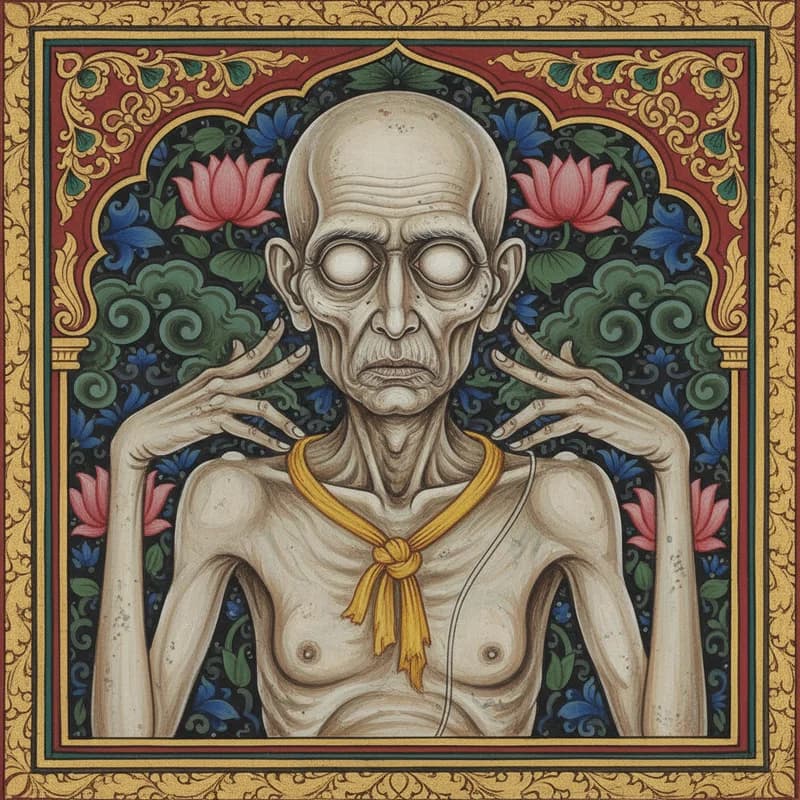
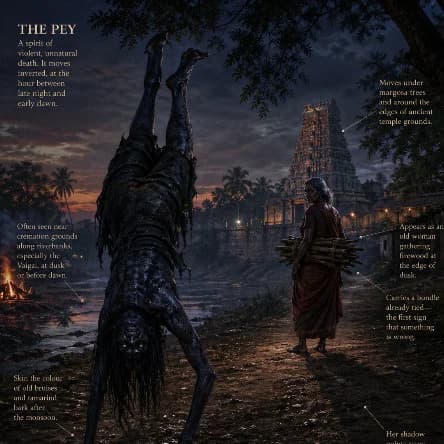
Across the Tamil-speaking districts of the Kaveri delta and the drier interior plateaus of the Deccan, people speak of this spirit with a particular carefulness — not the hushed fear reserved for the truly malevolent, but the wariness one shows toward something unpredictable. The Pey drinks blood. Ancient Sangam poetry, the Purananuru and the Akananuru, places it on battlefields at dusk, moving among the fallen, and this association with violent, unnatural death has never fully left it. Siddhar texts and later Shaiva folk traditions describe it as gaunt, dark-limbed, with eyes that catch light the wrong way — not glowing exactly, but reflecting when nothing is there to reflect. It moves at the hour between late night and early dawn, most often near cremation grounds along the Vaigai riverbank or beneath the margosa trees that line the edges of Chola-era temple complexes in Thanjavur district.
What makes the Pey complicated is that it does not exclusively prey. Certain accounts collected from Mudaliar and Vellalar communities in the Tiruchirappalli region describe it as drawn to grief rather than causing it — appearing near households in mourning, hovering at the threshold without entering. Whether this constitutes witness or appetite, the accounts do not agree. Protective practice typically involves neem leaves tied at doorways during the Karthigai month, when the spirit is said to grow more active as the nights lengthen, and the drawing of kolam patterns specifically designed to disorient — broken spirals rather than the closed forms used for auspicious occasions. Encountering one at a crossroads demands stillness. Running, every account insists, is what makes it follow.
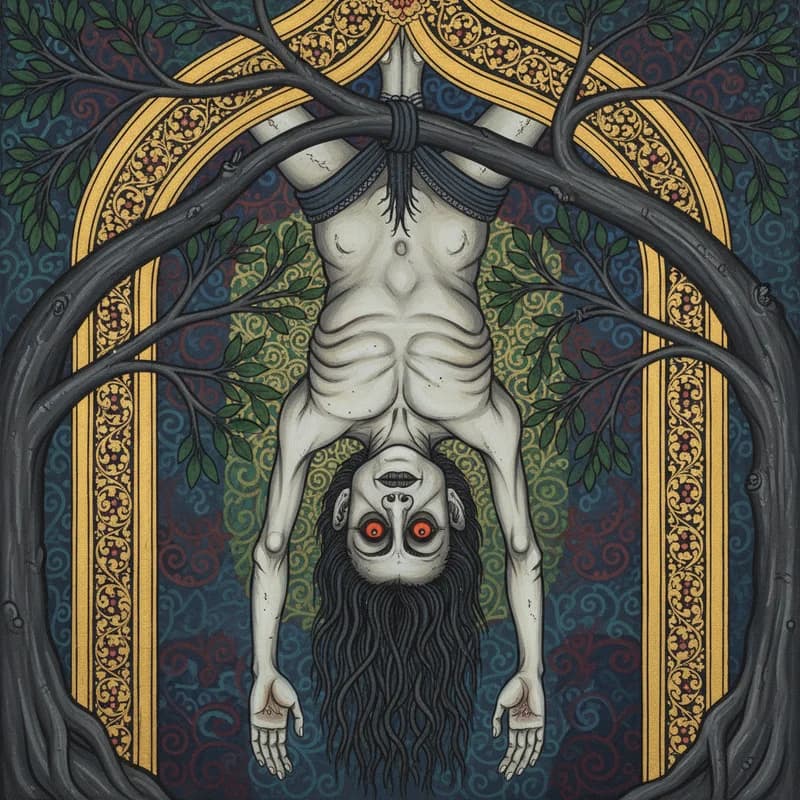
The Pey moves in a posture that collectors of Tamil oral tradition describe with remarkable consistency: inverted, feet pointing skyward, head dragging near the ground, yet covering distance at a pace no walking thing should manage. The skin carries the blue-black of a bruise at its oldest stage, the colour of tamarind bark after monsoon. Accounts gathered near the Kaveri delta and around the Chidambaram forests note a smell like iron and wet earth — specifically the smell of soil turned up around a fresh burial during the northeast monsoon, when the ground is heavy. The single detail that marks it beyond doubt is the drinking: the Pey feeds on blood from battlefield dead, and witnesses describe the sound not as feeding but as the soft, rhythmic sound of cloth being wrung.
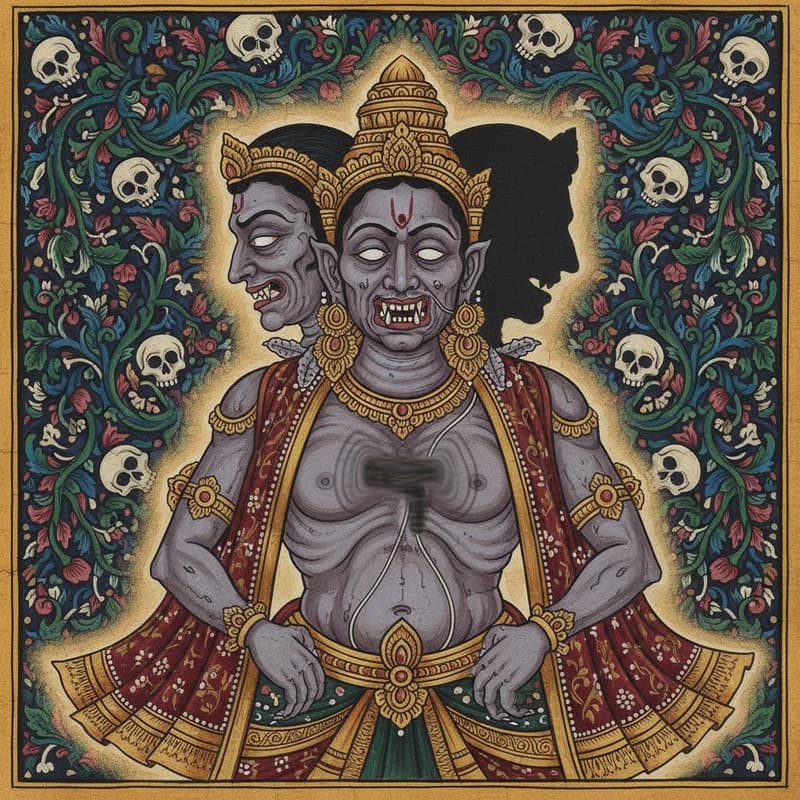
In Tamil Nadu's accounts — particularly those collected from villages along the Palar river basin and from the margins of the Vandalur forests — the Pey appears most reliably as an old woman gathering firewood at the edge of dusk, a figure so ordinary that the eye slides past her. She carries a bundle already tied, which is the first thing to notice: a woman gathering wood does not arrive with wood already gathered. The second tell is the direction of her shadow. Even when the last light falls correctly, her shadow angles away from the source — toward the body of the recently dead, witnesses insist, wherever that body lies. Those who have turned back at this sign and reached their villages safely describe her as watching them go, perfectly still, the tied bundle never shifting on her hip.
First Documented
The Pey appears in Sangam-era Tamil literature, with some of the earliest references found in the *Purananuru* and *Akananuru* anthologies, composed roughly between 300 BCE and 300 CE. Battlefield poems describe these flesh-hungry spirits haunting the *palai* wasteland tracts, feasting on the dead alongside jackals and vultures.
Last Recorded
Accounts of the Pey persist in Tamil Nadu's oral tradition through the present day, with sightings reported as recently as the early 2000s near cremation grounds outside Madurai and along the banks of the Vaigai during the dry months before the northeast monsoon breaks.
Source Language
Tamil
Origin
The Pey appears in the Sangam-era poem collection Purananuru and in the Akananuru, where it is catalogued among the spirits that haunt the paalai — the arid wasteland category of classical Tamil poetic geography — feeding on battlefield dead and moving through the smoke of funeral pyres. The textual account in the Cilappatikaram describes the Pey as plural and frenzied, dancing in groups over the slain at Kurukshetra-adjacent battlefields, their eyes lit from within, their hair loose and matted with blood. Folk tradition along the Palar River and in the dry scrub villages south of Vellore diverges sharply from this image: there, the Pey is solitary, not celebratory but grieving, a spirit that cannot leave the site of its own violent death. Where the classical texts emphasize the Pey's hunger and its chaos, the oral accounts of northern Tamil Nadu insist on its attachment — it haunts not because it feeds but because it cannot remember how to leave. That divergence is telling: the textual tradition needed battlefield spirits to explain carnage; the
Frequently Asked
A Pey is a malevolent spirit from Tamil folklore, believed to haunt cremation grounds, battlefields, and desolate crossroads after dark. The word itself appears in Sangam-era Tamil literature, making it one of the oldest documented supernatural entities in South Indian oral tradition. Unlike many spirits that carry ambiguous moral weight, the Pey is consistently portrayed as dangerous and blood-hungry.
The Pey originates from the Tamil-speaking regions of South India, with its earliest written appearances in the Sangam anthologies — particularly the Purananuru and Akananuru — where it haunts the paalai landscape, the arid wasteland terrain associated with separation and death. Accounts collected near the Kaveri delta and the forests around Tiruchirappalli describe the Pey as a fixture of the dry season, when the land cracks and the dead go unmourned. Its presence is tied to places where the boundary between the living and the dead grows thin.
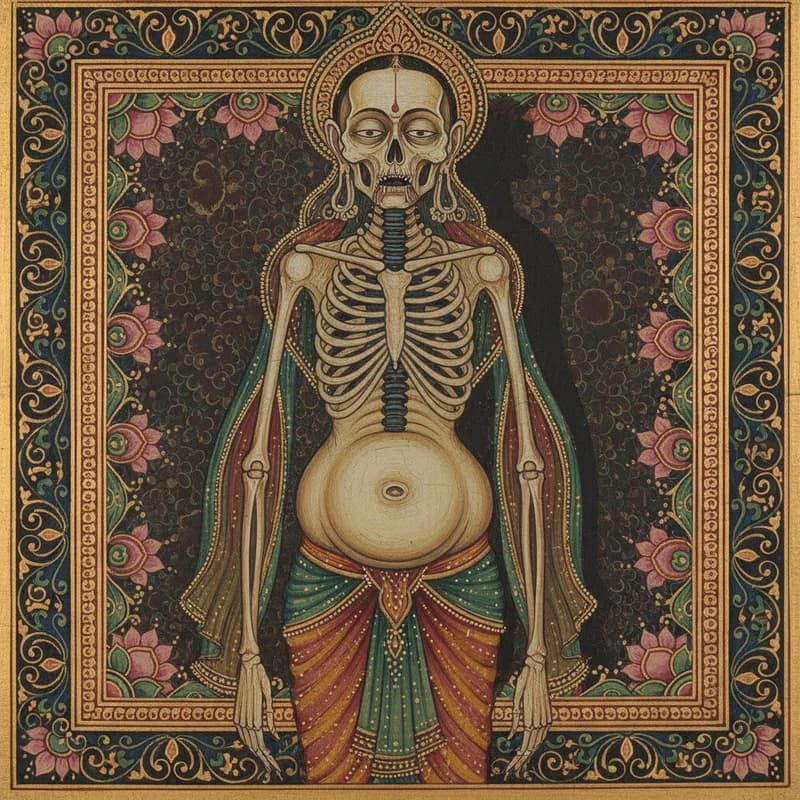
Oral accounts describe the Pey as grotesque and emaciated — a figure with wild, matted hair, sunken eyes that glow like embers, and limbs too long for its body. It is said to move in an unnatural, lurching gait and to carry a torch made from a human hand, lighting its way through cremation grounds. Some accounts from villages near Madurai add that the Pey drinks blood from the bodies of the battlefield dead.
The Pey and the Pishacha are distinct entities, though both belong to the category of flesh-haunting, blood-drinking spirits found across the Indian subcontinent. The Pishacha appears in Sanskrit texts like the Atharvaveda and is pan-Indian in distribution, while the Pey is specifically rooted in Tamil literary and oral tradition with a far older documented lineage in that region. Think of them as regional cousins — sharing behavioral traits but carrying entirely separate cultural genealogies.
The Pey is believed to cause madness in those who encounter it, a condition the Tamil tradition calls 'pey piditthal' — literally, being seized by the Pey. It can possess the living, drive them to erratic and self-destructive behavior, and is said to feed on the life-force of the weakened or grief-stricken. Exorcism rituals performed at Mariamman temples across Tamil Nadu were historically designed to expel precisely this kind of spirit possession.
A Pey is traditionally identified by its inverted feet — the heels face forward and the toes point backward, a marker shared with several South Asian spirit types and used to distinguish supernatural beings from the living. Encountering a figure walking alone near a cremation ground at midnight, particularly during the Tamil month of Aadi when the dead are believed to roam, was considered a reliable sign of Pey activity. The smell of burning flesh with no visible fire was another warning sign recorded in rural accounts from the Chettinad region.
Yes — the Pey appears explicitly in Sangam poetry, placing it among the earliest supernaturally documented entities in Tamil literary history. The Purananuru, composed roughly between 300 BCE and 300 CE, references Pey figures dancing on battlefields and feasting on the slain. Later, the Cilappatikaram, the great Tamil epic, also contains imagery consistent with Pey activity in its war and death sequences.
The Brahmarakshasa is a spirit born specifically from the death of a corrupt or fallen Brahmin, carrying a distinctly caste-coded origin story found in Sanskrit Puranic literature. The Pey carries no such origin requirement — it arises from violent or unmourned death broadly, and its tradition is Tamil rather than Sanskrit in its primary sources. Where the Brahmarakshasa is a figure of theological transgression, the Pey is a creature of the battlefield and the burning ground, older and less morally categorized.
संबंधित लोकगाथाएं
Related Lore
Algorithmic Inference
आपको यह भी पसंद आ सकता है
You May Also Like
Community Discussion
Comments are reviewed by AI before appearing publicly. Unsafe, unrelated, or uncertain comments go to human review.
Sign in to join the discussion.
0 comments
No public comments yet.