प्रतीक्षा करें
Illuminating the manuscript…
प्रतीक्षा करें
Illuminating the manuscript…
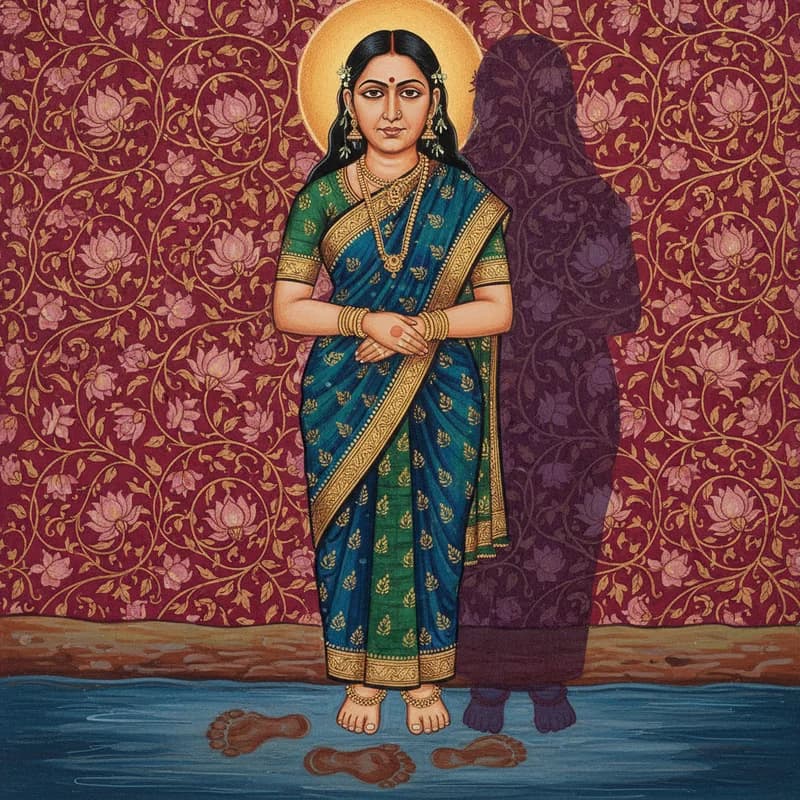

Pichal Peri
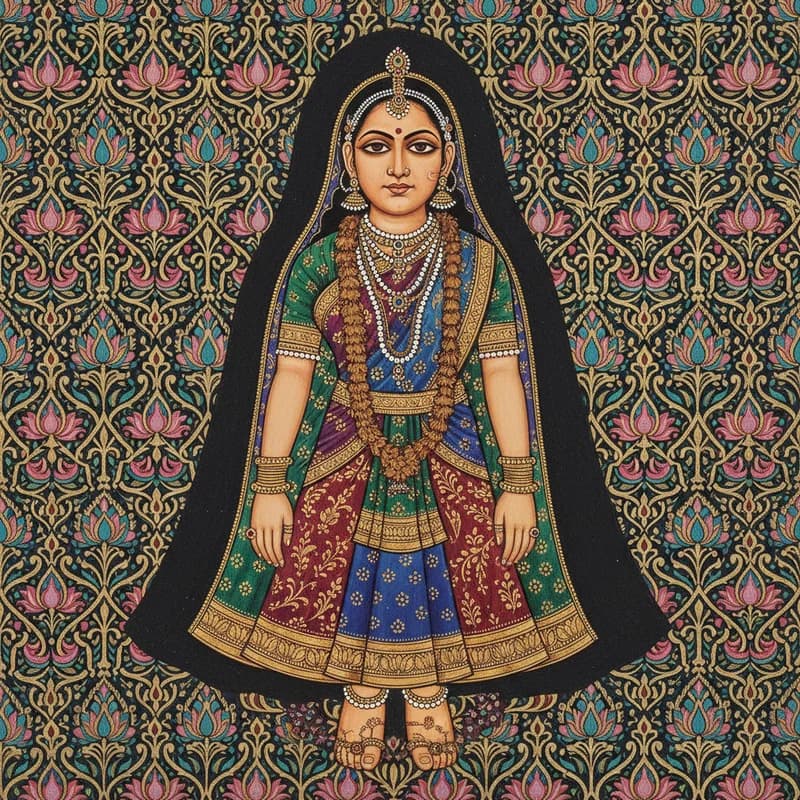
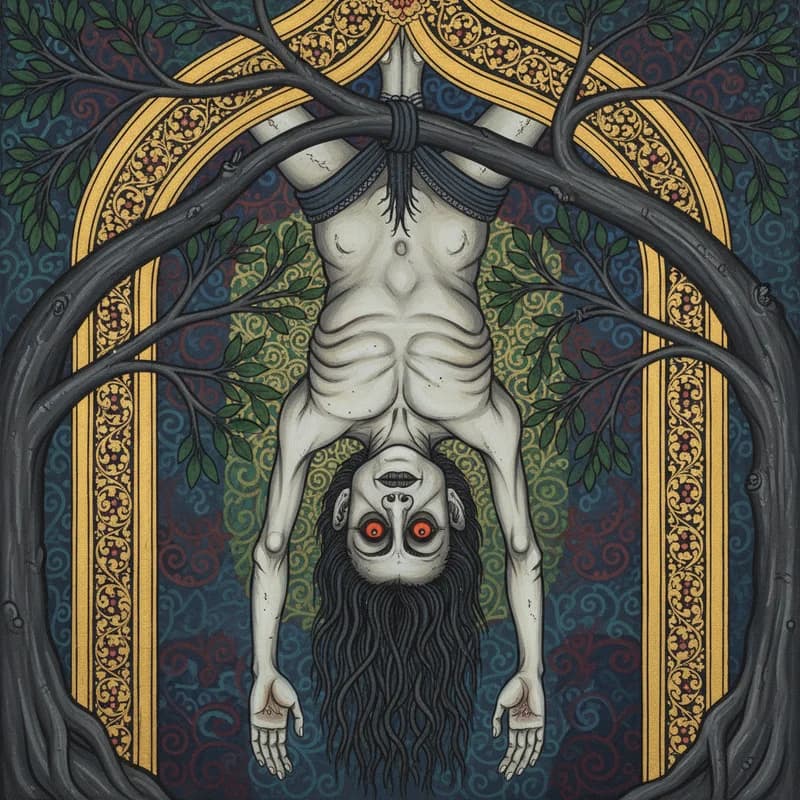
Her feet face the wrong way. That is the first thing the accounts establish — in the villages of Sindh, in the forested margins of Rajasthan's Aravalli range, in the older Punjabi settlements along the Beas river, the detail never changes. The heels point forward, the toes trail behind, and the prints she leaves in soft riverbank mud or monsoon-wet soil run in the opposite direction from where she was going. She appears most often at dusk, at the edge of cultivated land where the fields give way to scrub, or along the unpaved paths between hamlets that nobody uses after the evening azan. She looks like a woman. Sometimes she is beautiful in the specific, disorienting way that something wrong tries to look right.
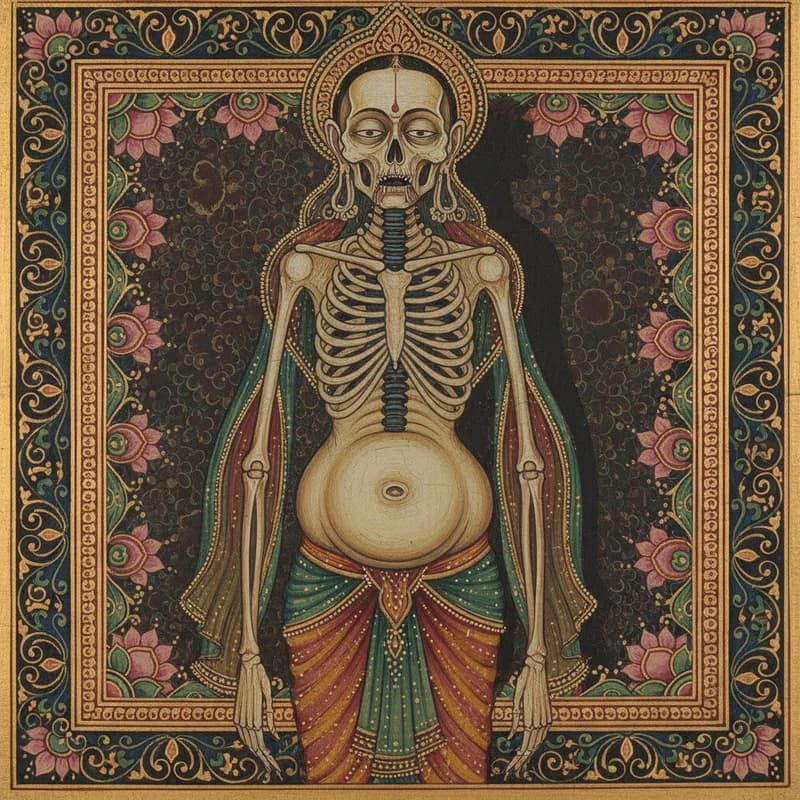
What she wants is less consistent across the record. Some accounts from the Thar borderlands treat her as predatory — a lurer of men who follow her into open ground and are found the next morning confused, drained, unable to account for the hours. Others, collected from older women in the villages west of Jodhpur, describe her with something closer to pity: a woman who died in childbirth or in abandonment, her body buried improperly or not at all, her orientation in death as confused as her orientation in life. The reversed feet in this reading are not a weapon but a wound — the mark of a soul that cannot find the direction home. Protective measures documented in the oral record include iron objects worn at the ankle, and the refusal to follow any lone woman who appears on a path without casting a shadow proportionate to the hour.
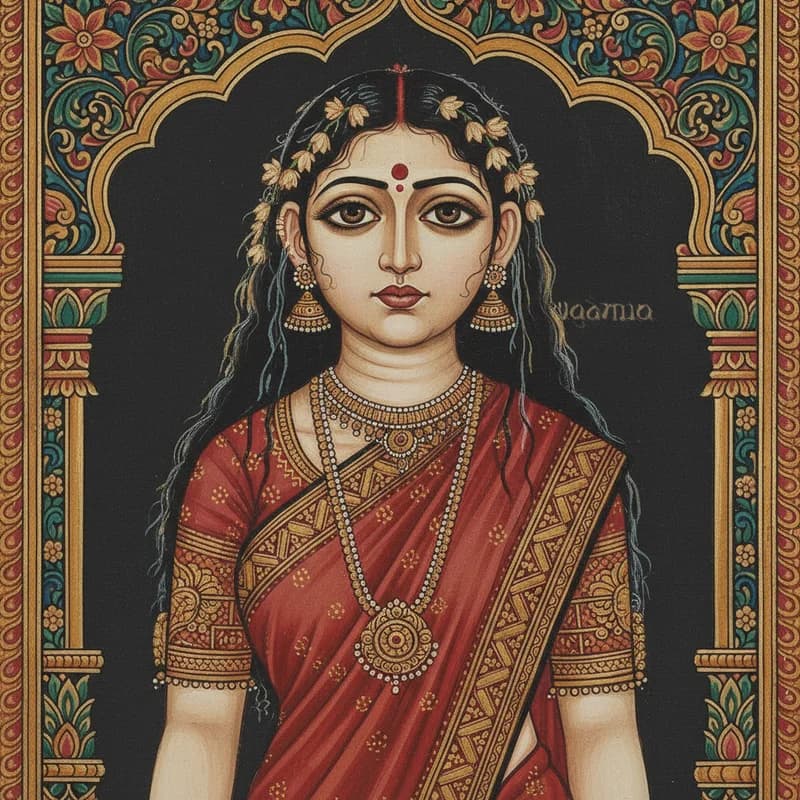
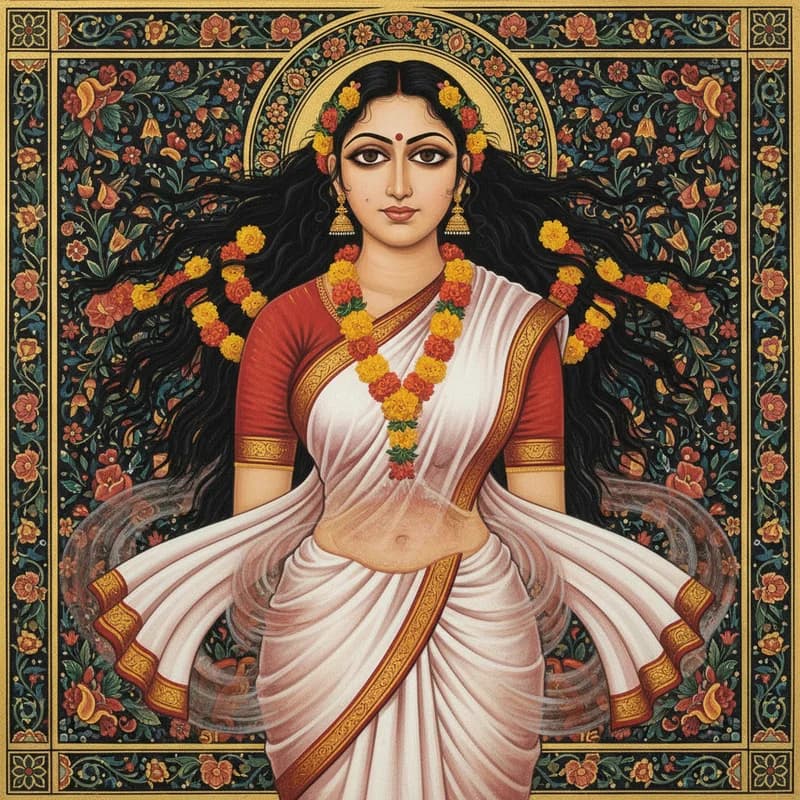
The Pichal Peri appears as a woman of indeterminate age, her proportions otherwise unremarkable — the sari correct, the hair oiled and parted, the hands folded with the patience of someone waiting at a bus stand. What undoes the impression is the feet, which are reversed: heels forward, toes pointing behind her, so that her tracks in the wet clay near the Gomti's bank lead toward you when she is walking away. Accounts from the sal forests of the Terai describe a smell that precedes her — jasmine souring into something fermented, the way marigold garlands smell on the third day of a festival. Her shadow, where it falls, falls in the wrong direction regardless of where the light is coming from.
The Pichal Peri, most commonly documented across the villages bordering the Thar's eastern edge and along the sal forests of Himachal's lower foothills, takes the form of a woman fetching water at dusk — a sight so ordinary in these regions that it registers as background. She carries a clay matka on her hip, moves toward the well or the nearest seasonal stream, and does not look up when approached. The first tell is her feet: they are reversed, heels forward, toes pointing back toward the direction she came from, a detail that registers only when a witness watches her walk away and the geometry of her footprints in the soft mud makes no sense. The second is the matka itself — after she has drawn water and lifted it, it remains dry on the outside, untouched by a single drop.
First Documented
Pichal Peri surfaces most clearly in the oral traditions of Punjab and the North-West Frontier, carried through generations in the qisse sung by wandering dhadhis, though no single founding text claims her. Colonial-era ethnographers like Richard Temple, compiling Punjabi legends in the 1880s, were among the first to record her in print.
Last Recorded
Accounts of Pichal Peri persist well into the present, with sightings reported as recently as the 2010s from villages along the Thar Desert's edge in Rajasthan and the forested margins of Khyber-adjacent communities in Pakistan-administered territories. Truck drivers on night routes through Sindh still invoke her name as warning.
Source Language
Urdu
Origin
The Pichal Peri — the spirit whose feet are reversed, heels forward and toes pointing back — surfaces most clearly in the oral traditions of Punjab, Sindh, and the hill communities of the Kangra valley, where her accounts circulate among women's gathering songs and the cautionary lore transmitted at the ghats of the Beas and Chenab rivers during the winter months. No classical Sanskrit text catalogues her with the precision given to the Vetala or the Pishacha, though the Bhuta-damara Tantra's taxonomy of female spirits provides a loose doctrinal frame that later commentators have used to place her. The distinguishing detail that separates the hill-folk accounts from this textual assimilation is significant: where the Tantra-derived reading treats reversed feet as a marker of ontological inversion — a being outside natural order — the oral tradition of Himachal Pradesh insists the reversal is a wound, not a definition. She was made, not born. Women in the Kangra accounts specify that she died mid-journey, her body unrecovered from a ravine or riverbed, and the reversal
Frequently Asked
Pichal Peri is a female spirit from the folklore of northern India and Pakistan, most commonly reported in the foothills of the Himalayas and across the Punjab plains. Her defining characteristic is that her feet are reversed — heels facing forward, toes pointing backward — which she conceals beneath long robes or a flowing ghaghra. Villagers along the Beas and Ravi river corridors have described her for centuries as a wandering figure who lures travelers away from safe paths.
The surest sign of a Pichal Peri is her backward-facing footprints in soft earth or river mud — tracks that appear to walk toward you when she is, in fact, walking away. Accounts collected from villages near the Shivalik forests describe her as unnaturally beautiful, often dressed in white, with hair loose and unbound after dark. A faint smell of marigolds or wet soil in an empty field is sometimes cited as a warning of her presence.
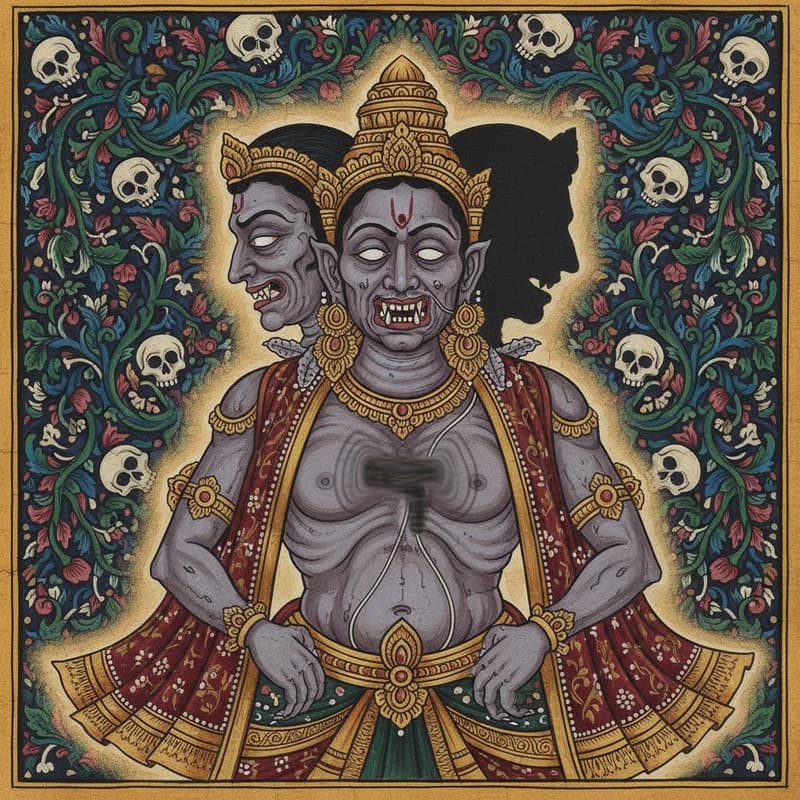
Pichal Peri carries a threat level of caution rather than outright malevolence — she is not uniformly predatory, but her encounters rarely end well for the unwary. She is most dangerous to lone men traveling at night near rivers, forests, or crossroads, whom she may lead into marshland or off cliff paths. Some oral traditions from Himachal Pradesh suggest she can also cause madness or prolonged illness in those who follow her call.
Both are female spirits associated with death and the night, but they differ in origin and temperament. A Churel is specifically the ghost of a woman who died during childbirth or the postpartum period, driven by grief and resentment toward the living — particularly male relatives. Pichal Peri is a broader category of wandering spirit defined by her reversed feet, not necessarily tied to a specific traumatic death, and her geography spans open roads and forests rather than the domestic threshold a Churel haunts.
Reports cluster most densely across the Punjab, Haryana, and the lower Himalayan foothills stretching into Himachal Pradesh and Uttarakhand. The dense sal forests near Dehradun and the sugarcane fields of western Uttar Pradesh have produced particularly persistent oral accounts. Her presence thins considerably as you move south of the Gangetic plain, where analogous spirits carry different names and attributes.
Pichal Peri does not appear in the classical Sanskrit corpus — no Purana or Upanishad names her directly. Her documentation lives almost entirely in oral tradition, regional Urdu and Punjabi folk literature, and the dastaan storytelling tradition of northern India. Nineteenth-century colonial ethnographers, including some contributors to the Punjab District Gazetteers, recorded villager accounts of reversed-footed spirits that align closely with what is now called Pichal Peri.
Folk practice in the Punjab and Haryana advises against responding to a woman calling your name from the darkness outside a village boundary, as this is considered a primary method of Pichal Peri contact. Iron objects, particularly nails or a knife kept at the threshold, are traditional deterrents across the Himalayan foothills. Some accounts from the Kangra valley suggest that reciting a specific verse from the Quran or invoking a local saint's name at a crossroads will cause her to retreat.
The reversed-feet motif appears across a wide arc of South Asian folklore under different names — the Ulta Paon in parts of Uttar Pradesh, and figures with similar traits recorded in the oral traditions of Sindh and Kashmir. Bengali folklore has the Shakchunni, a spirit of a married woman's ghost, who shares some behavioral traits but lacks the inverted feet. What unites these figures is the inversion of the human form as a marker of the supernatural — a logic that runs deep in the demonological imagination of the subcontinent.
संबंधित लोकगाथाएं
Related Lore
Algorithmic Inference
आपको यह भी पसंद आ सकता है
You May Also Like
Community Discussion
Comments are reviewed by AI before appearing publicly. Unsafe, unrelated, or uncertain comments go to human review.
Sign in to join the discussion.
0 comments
No public comments yet.