प्रतीक्षा करें
Cross-referencing the Yaksha field-notes…
प्रतीक्षा करें
Cross-referencing the Yaksha field-notes…
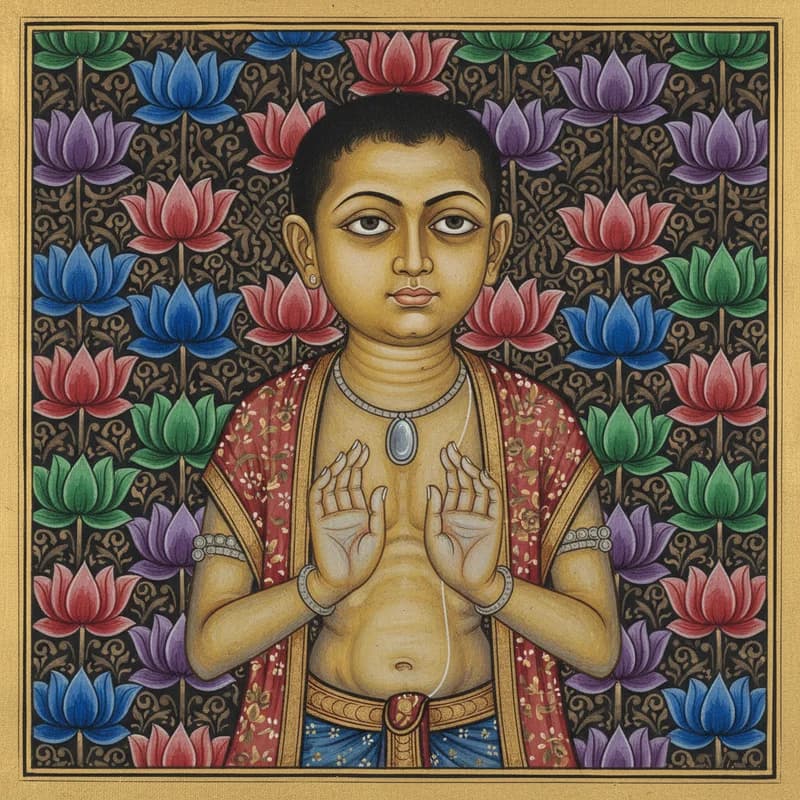

Skanda Graha
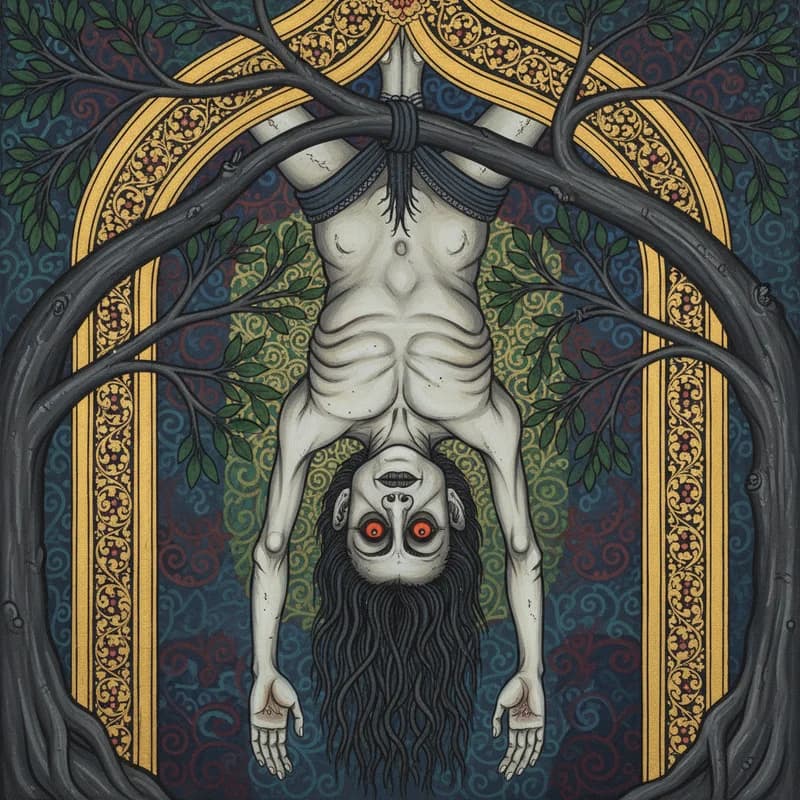
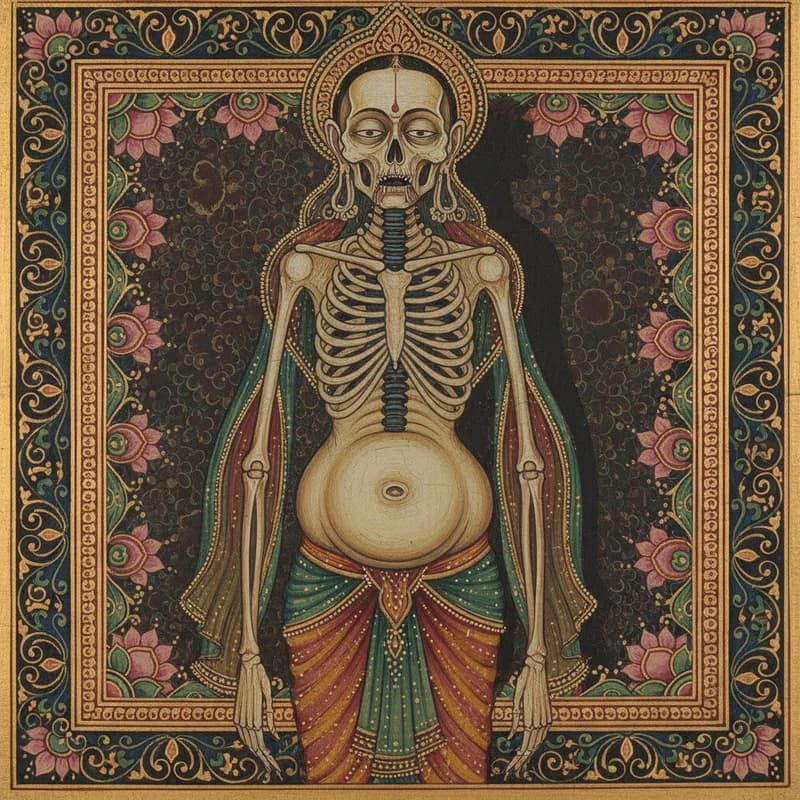
Among the graha spirits catalogued in the Kashyapa Samhita and the Sushruta Samhita, Skanda Graha occupies a particular dread — not because it destroys violently, but because it works through the body of a child who cannot yet name what is happening to it. The texts describe it as one of the nine grahas that afflict infants, and the signs it leaves are clinical in their consistency: sudden fever, arching of the back, the limbs seizing without warning, a failure to feed, a failure to grow. Mothers in the villages of the Gangetic plain have described the same progression for centuries — the child who was well at dusk and wrong by midnight, the eyes that move but do not track, the cry that comes out altered.
What the spirit wants, the tradition does not clearly say. The Kashyapa Samhita prescribes offerings of red flowers, the burning of specific resins, and the recitation of mantras near the child's sleeping place before the new moon. Midwives in parts of Rajasthan and the older temple towns along the Narmada have their own counters — amulets of copper tied at the wrist, ash from a Skanda temple pressed to the infant's forehead. The name itself is the clue: Skanda, the war god born from fire and river foam, whose own birth was violent and uncontained. This graha carries something of that origin — an energy too fierce, too sudden for the unformed body it enters. The child is not chosen. It simply has not yet grown thick enough to resist.
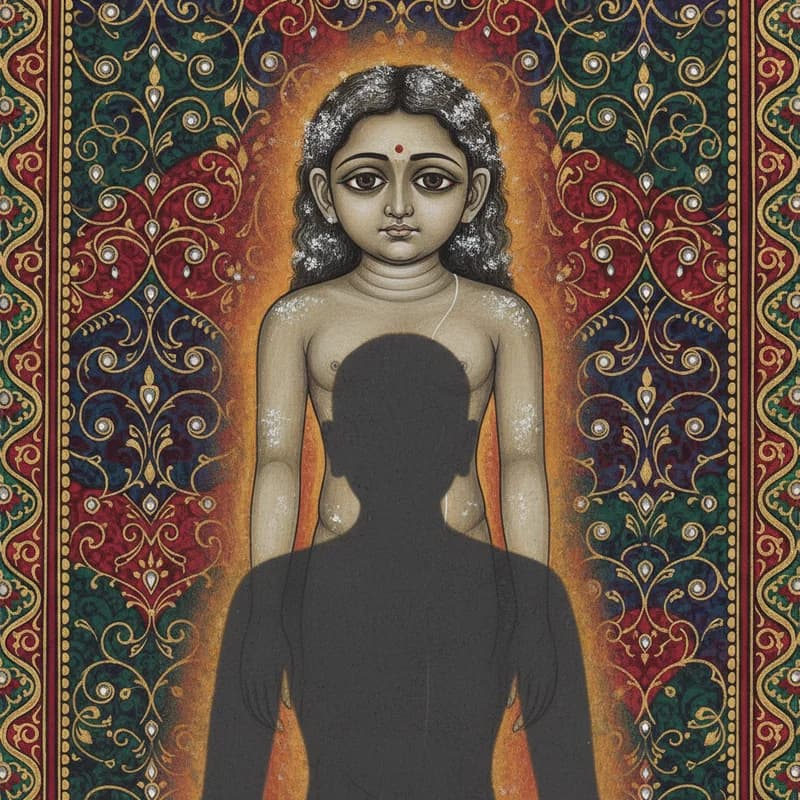
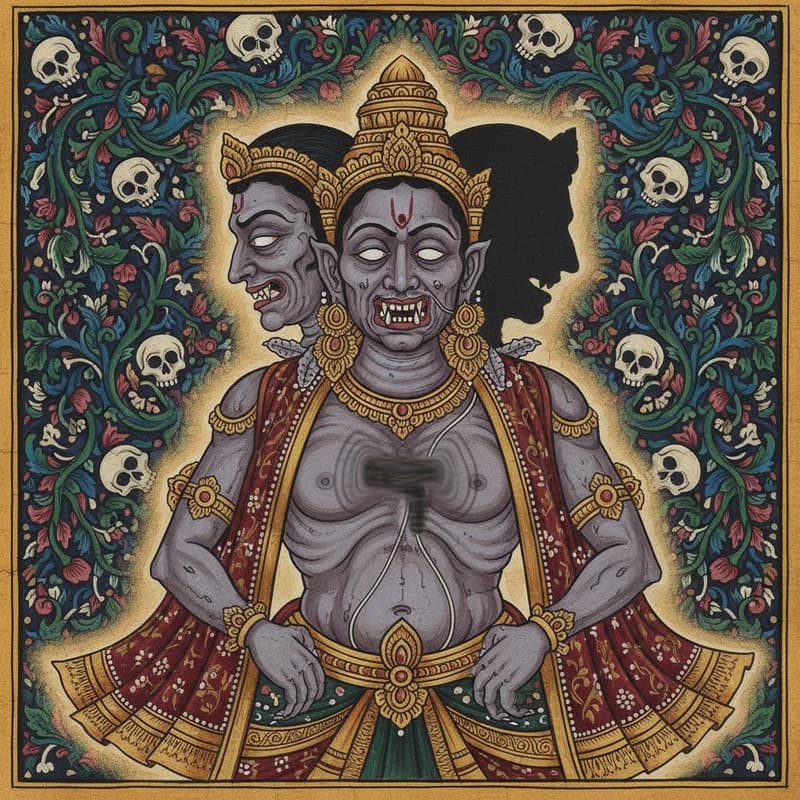
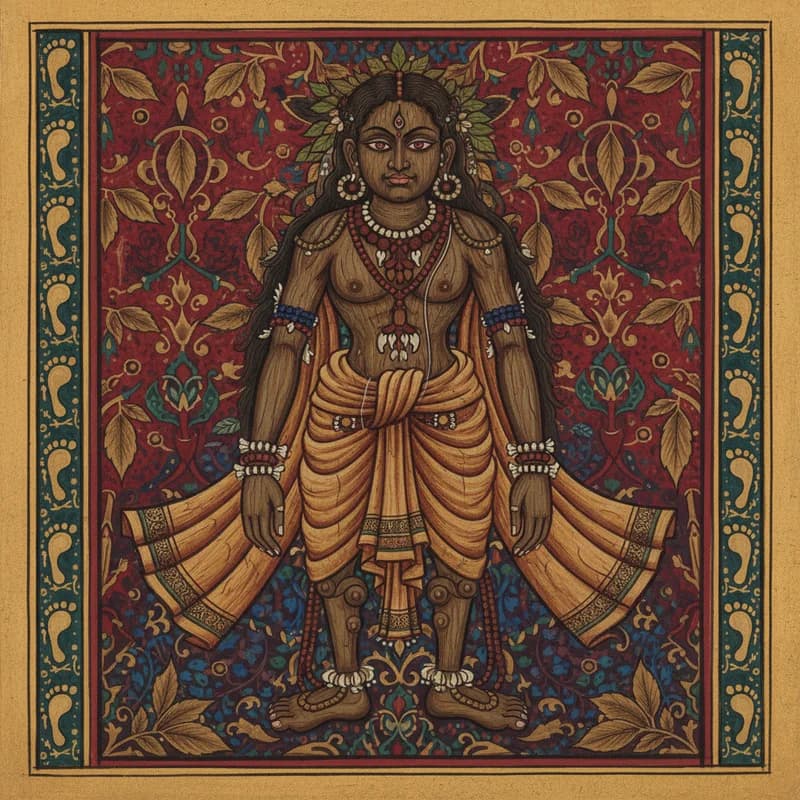
The Skanda Graha appears most often as a child itself — or something that has studied children closely enough to approximate one. Witnesses in the Sushruta-tradition accounts describe a figure the height of a seven-year-old, with limbs that hang at the wrong angles, as though the joints were assembled by someone working from a description rather than observation. The skin carries the flush of a child mid-fever, that particular reddish-yellow of a palm held before a lamp. Those who have seen it near a sickbed in the Gangetic plain villages report a smell like milk left in brass — slightly soured, slightly metallic, almost nourishing. What marks it unmistakably is the silence: in a room where an infant is seizing, no sound of movement accompanies it, no creak of floor, no displaced air — only the child's distress, and the Graha already present.
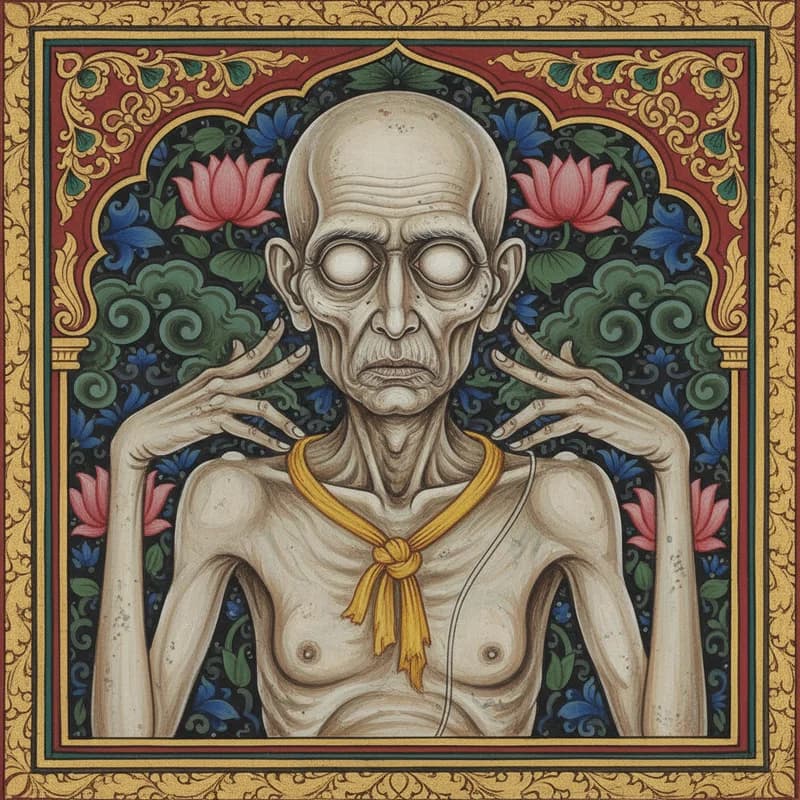
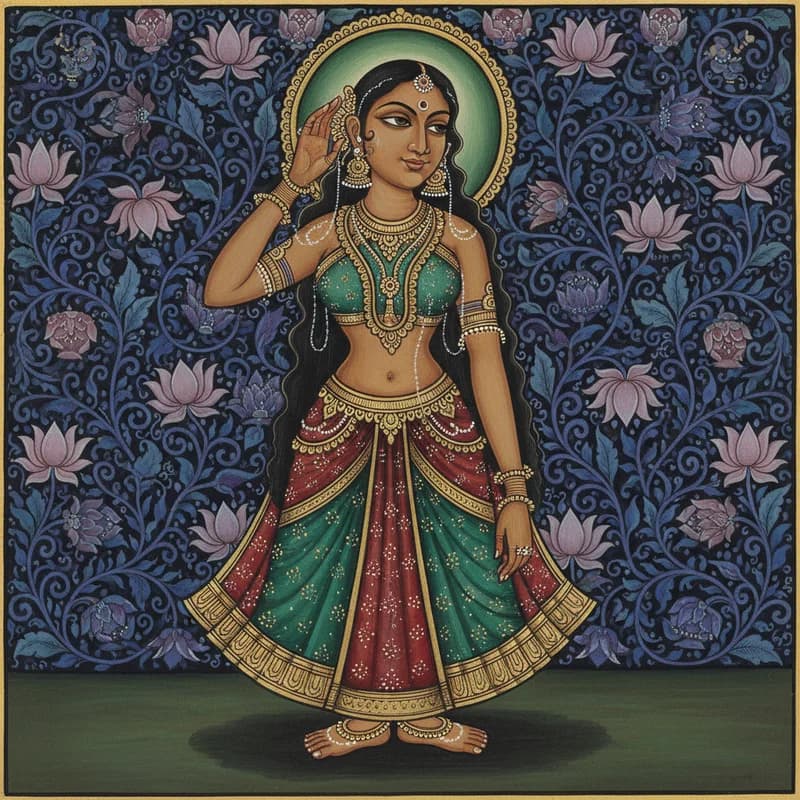
Skanda Graha moves through the lanes of a village in the form of an itinerant wet nurse — a woman of middle years, unhurried, carrying the small cloth bundle that such women bring when they travel between households. She appears most often in the weeks after a difficult birth, when a family is already exhausted and grateful for any offered help, and she presents herself at the threshold with the particular confidence of someone who has always been expected. The first tell is her hands: when she reaches for an infant, the child's breath shortens before she has made contact, a half-second of visible distress that mothers in the Deccan villages near the Bhima river describe as the baby knowing something the room does not. The second is that she cannot be seen to blink — not once, across however long she stands in the doorway light.
First Documented
Skanda Graha surfaces earliest in the *Ashtanga Hridayam* of Vagbhata (circa 7th century CE) and the *Kashyapa Samhita*, a pediatric compendium attributed to the sage Kashyapa, where it is catalogued among the eighteen grahas — malevolent spirits held responsible for seizures, wasting, and sudden fevers in newborns.
Last Recorded
Accounts of Skanda Graha persist into the present, with mothers in the villages along the Godavari delta still invoking protective rites against the spirit when infants develop unexplained fevers or convulsions. The last formally documented oral accounts were collected in the 1980s by ethnomedicine researchers working in Andhra Pradesh, though the belief has never truly lapsed.
Source Language
Sanskrit
Origin
The Skanda Graha enters the written record in the Kashyapa Samhita, the foundational Sanskrit pediatric text attributed to the sage Kashyapa, where it appears in the Graha section alongside seventeen other spirits held responsible for infant disease — seizures, high fevers, the sudden cessation of feeding, the slow wasting the texts call failure to thrive. The Ashtanga Hridayam of Vagbhata, composed around the seventh century CE, reproduces and systematizes this catalogue, placing the Skanda Graha specifically among spirits associated with the critical first year of life. Where the Sanskrit texts treat it as one entry in a diagnostic taxonomy — a cause to be identified and ritually countered — the oral traditions of the Deccan plateau and the Konkan coast, recorded in midwife lineages along the Godavari delta, describe the Skanda Graha not as an external assailant but as a presence drawn by incompleteness: a child insufficiently named, a birth ritual left unfinished, a household threshold unconsecrated at the moment of delivery. That divergence is telling. The
Frequently Asked
Skanda Graha is a child-seizing spirit described in classical Sanskrit medical literature, believed to afflict newborns and young children with seizures, high fevers, and failure to thrive. The name combines 'Skanda,' associated with the war god Kartikeya, and 'graha,' meaning a seizing or possessing force. Ancient physicians like Charaka and Sushruta catalogued Skanda Graha among a class of spirits specifically targeting infants.
The Kashyapa Samhita and Sushruta Samhita describe Skanda Graha's affliction through a recognizable cluster of signs: convulsions, uncontrolled weeping, refusal to feed, and a body that grows rigid or limp without apparent physical cause. The infant may stare blankly or arch its back, symptoms ancient physicians attributed to the spirit's grip on the child's vital force. These texts treat the condition as simultaneously medical and supernatural, prescribing both herbal remedies and ritual appeasement.
Skanda Graha is not Kartikeya himself but draws its name and character from the god's fierce, martial aspect. The connection is deliberate — Kartikeya, born of fire and raised by the Krittikas along the banks of the Ganga, was himself a child of extraordinary and dangerous power. Some texts suggest the graha acts as a shadow emanation of that divine energy, untamed and harmful when it falls upon an unprotected infant.
Skanda Graha appears in the Kashyapa Samhita, one of the oldest surviving Ayurvedic texts dedicated to pediatrics and obstetrics, where an entire section on bala grahas — spirits that seize children — lists it among nine such entities. The Sushruta Samhita and Ashtanga Hridayam of Vagbhata also reference this class of child-afflicting spirits. These are not marginal folk texts but foundational works of classical Indian medicine, studied for centuries at centers like Takshashila and Nalanda.
Treatment combined pharmacological and ritual approaches — physicians prescribed specific herbal pastes applied to the infant's body alongside recitation of protective mantras and offerings made at crossroads or near sacred fires. The Kashyapa Samhita recommends invoking Skanda's benevolent aspect to counteract the graha's hold, essentially appealing to the god to recall his own dangerous emanation. Mothers in many regions also tied iron amulets to the infant's wrist, a practice still observed in parts of Rajasthan and rural Uttar Pradesh.
In Tamil Nadu, where Murugan — the southern form of Kartikeya — commands deep devotion, child illnesses with convulsive symptoms are sometimes attributed to the god's gaze falling too intensely upon a child, a concept that parallels the Skanda Graha tradition without using the Sanskrit term. Along the Kaveri river delta, local healers perform specific rites at Murugan shrines to lift such afflictions. The underlying logic — that a god's power, even benevolent, can overwhelm a fragile infant — remains consistent across these regional expressions.
Among the nine bala grahas catalogued in classical texts, Skanda Graha is considered one of the more acute threats because its onset is sudden and its symptoms — seizures and respiratory distress — could prove fatal before treatment was administered. Other grahas in the list, such as Putana Graha, were associated with slower wasting conditions. The urgency with which Kashyapa Samhita addresses Skanda Graha reflects the very real infant mortality that ancient physicians were attempting to explain and combat.
In Sanskrit, 'graha' carries the meaning of something that seizes, grasps, or takes hold — the same root used for the planets, which were understood as forces that grip human fate. 'Skanda' refers to the god of war and also carries the sense of something that leaps or attacks suddenly. Together, Skanda Graha names a spirit that strikes fast and holds tight, an etymology that maps precisely onto the convulsive, sudden-onset symptoms it was believed to cause.
संबंधित लोकगाथाएं
Related Lore
Algorithmic Inference
आपको यह भी पसंद आ सकता है
You May Also Like
Community Discussion
Comments are reviewed by AI before appearing publicly. Unsafe, unrelated, or uncertain comments go to human review.
Sign in to join the discussion.
0 comments
No public comments yet.