प्रतीक्षा करें
Retrieving sighting coordinates from the Map…
प्रतीक्षा करें
Retrieving sighting coordinates from the Map…
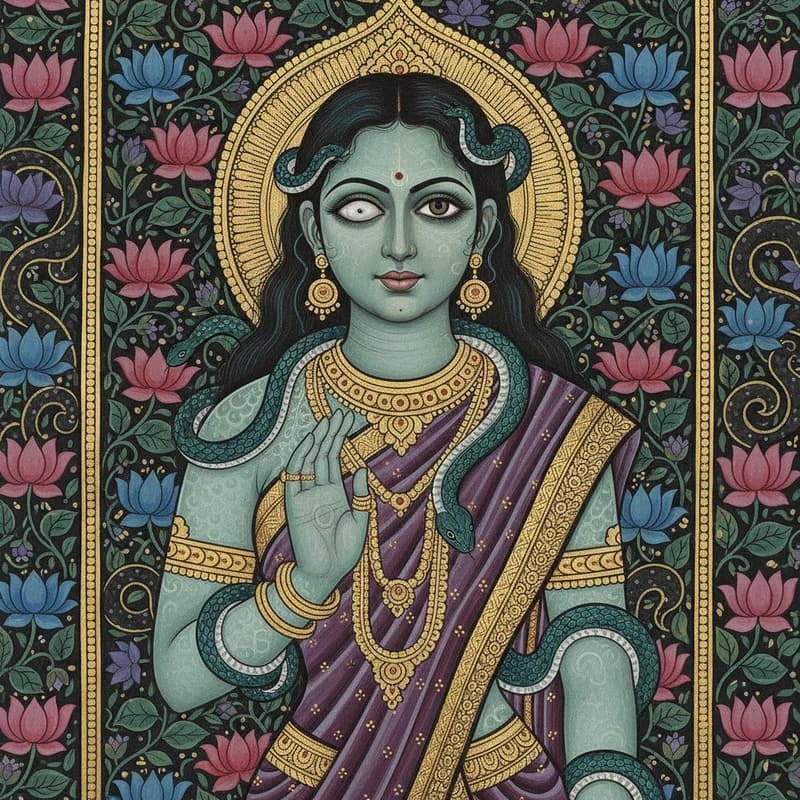

Manasa
She demands acknowledgment, not worship — and the distinction matters. Across the deltaic villages of Bengal, the Sundarbans margins, and the floodplains where the Padma and Meghna slow into silt, Manasa's power rests on a single, unyielding condition: she must be recognised first. Born from Shiva's concentrated thought, she carries the sting of illegitimacy — Parvati never accepted her, the great temples of the Gangetic plain never fully absorbed her — and this wound runs through every account of her intervention. When she withholds her protection from a household, the snakes come. Cobras in the rice stores, kraits beneath the sleeping mats, the sudden death of a young man in the field whose family had neglected the clay image beneath the tulsi plant. The Manasamangal Kavya, composed and recomposed across centuries of Bengali literary tradition, frames her entire mythology as a contest with a single merchant, Chand Sadagar, who refused to honour her. She destroyed his sons one by one. She waited. She won.
What makes her different from a malevolent spirit is that she does not conceal her terms. Her priests — often low-caste women who inherited the role through matrilineal lines in the Bardhaman and Birbhum districts — describe her as a goddess of the monsoon's cruelty rather than its abundance, present in the season when the water rises and the snakes leave the flooded earth for human shelter. Offer her the simple things: a clay lamp, a few flowers, the small pot of milk left at the edge of the field before the rains arrive. Refuse her, as Chand Sadagar refused her, and she becomes something else entirely — patient in the way that the Manasa Puja texts describe, capable of engineering grief across generations until the acknowledgment she requires finally comes.
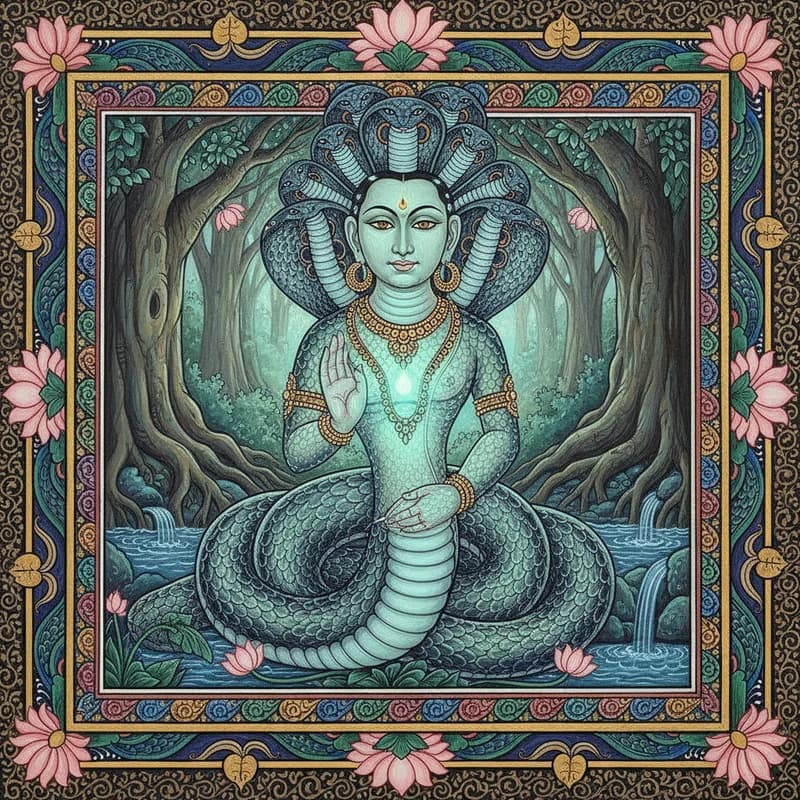
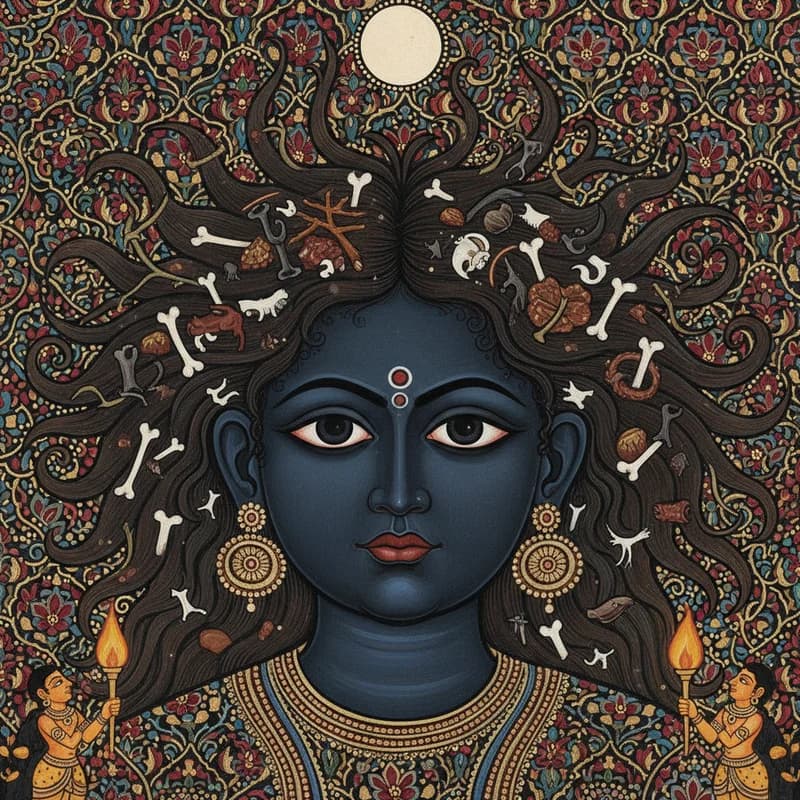
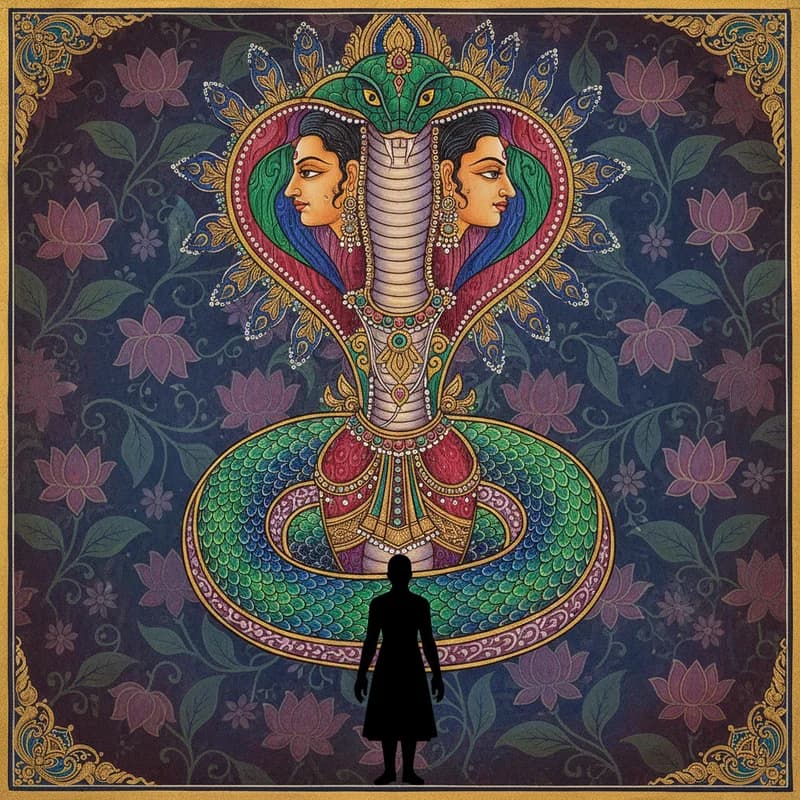
Manasa appears most often as a young woman whose left eye is blind and white as a river-pearl, the right one clear and terribly attentive — an asymmetry that witnesses from the Padma delta to the Sundarbans consistently report as the first thing they notice and the last thing they can stop seeing. Her skin carries the cool, faintly scaled texture of a water-snake's underbelly, and where she has been standing, the ground holds a chill that persists past noon. Coiled through her unbound hair and looped at her wrists are living serpents — not ornamental, not metaphorical — and they move with her breath. The smell that precedes her arrival is specific: black mud from a riverbed, green and heavy, the way the Brahmaputra's banks smell in Ashadh when the rains begin to threaten everything.
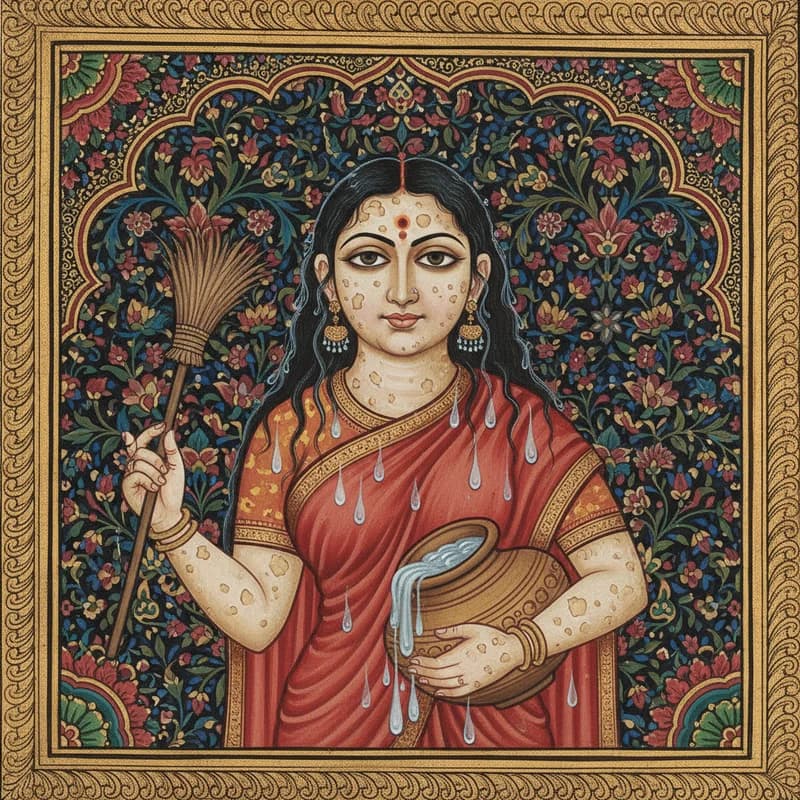
Along the embankment paths between paddy fields in the weeks before Shravan, when the rains bring snakes out of the earth and every Bengali household grows careful, Manasa appears as an ordinary village woman carrying a clay pot of water from the pond — unhurried, barefoot, her hair loosely braided with a single white flower that is not quite oleander and not quite jasmine. The disguise is unremarkable precisely because it belongs to the hour. The first tell is the pot: it never sweats. On a July afternoon in the Sundarbans, when the air itself is wet enough to drink, a clay pot of cold water will bead immediately, leaving a dark ring on the carrier's hip — hers does not. The second is subtler, noted in accounts collected near the Padma and the Ichhamati both: the snakes in the grass at the path's edge do not move away from her footsteps. They turn toward them.
First Documented
Manasa appears in written form in the medieval Bengali *Manasamangal Kavya*, composed between the thirteenth and sixteenth centuries by poets including Vijaya Gupta and Ketaka Das, though her cult almost certainly predates these texts, rooted in pre-Aryan serpent worship along the marshy deltaic channels of the Sundarbans.
Last Recorded
Accounts of Manasa persist without interruption into the present day; as recently as the 2010s, fieldworkers along the Padma and Brahmaputra river basins documented women performing Manasa Puja in July, invoking her protection against snakebite during the monsoon planting season.
Source Language
Bengali
Origin
Manasa enters the written record in the Manasā Mangalkāvya tradition — most fully in Bipradas Pipilai's fifteenth-century Bengali text and Ketaka Das Kshemananda's later recension — where she is identified as Shiva's daughter, born from his mind or from seed that fell upon a lotus in the Ganga, and positioned within the Brahmanical hierarchy as a deity who must earn her worship by defeating the merchant Chand Sadagar's resistance. The Padma Purana gives her a cosmological function as queen of the nagas, linking her to Ananta and the serpent world beneath the earth. Folk accounts from the Rarh region of West Bengal and the waterlogged chars along the Padma and Brahmaputra tell it differently: here Manasa is not a latecomer seeking legitimacy but a goddess older than the texts that tried to contain her, her worship predating the Mangalkavya by centuries among fishing and farming communities where snakebite was a seasonal certainty, not a theological abstraction. The divergence is revealing — the textual tradition
Frequently Asked
Manasa is the goddess of snakes in Bengali and eastern Indian tradition, said to have been born from Shiva's mind — her name itself derives from the Sanskrit word for mind. Her cult is among the oldest surviving goddess traditions in the Bengal delta, predating many Puranic imports and rooted in the marshy, cobra-haunted lowlands between the Padma and the Brahmaputra. She governs snakebite, fertility, and the monsoon season when serpents emerge from flooded fields.
Manasa commands all serpents and can both inflict and cure snakebite — a dual power that made her worship a matter of survival in the snake-dense wetlands of Bengal and Assam. She is also associated with rain and agricultural fertility, her influence felt most acutely between Ashadha and Bhadra when the rivers swell. Devotees who offend her may find cobras in their homes; those who honor her are said to walk through the grass at dusk without harm.
The Manasamangal Kavya, composed across several centuries by poets including Bipradas Pipilai and Ketakadas Kshemananda, tells of the merchant Chand Saudagar who refused to worship Manasa out of devotion to Shiva. She destroyed his ships and killed his sons until his daughter-in-law Behula floated her husband Lakhinder's corpse on a raft to the land of the dead and bargained for his life. Chand's eventual submission — offering worship with his left hand, a gesture of reluctant reverence — is still re-enacted in village rituals across the Bengal countryside.
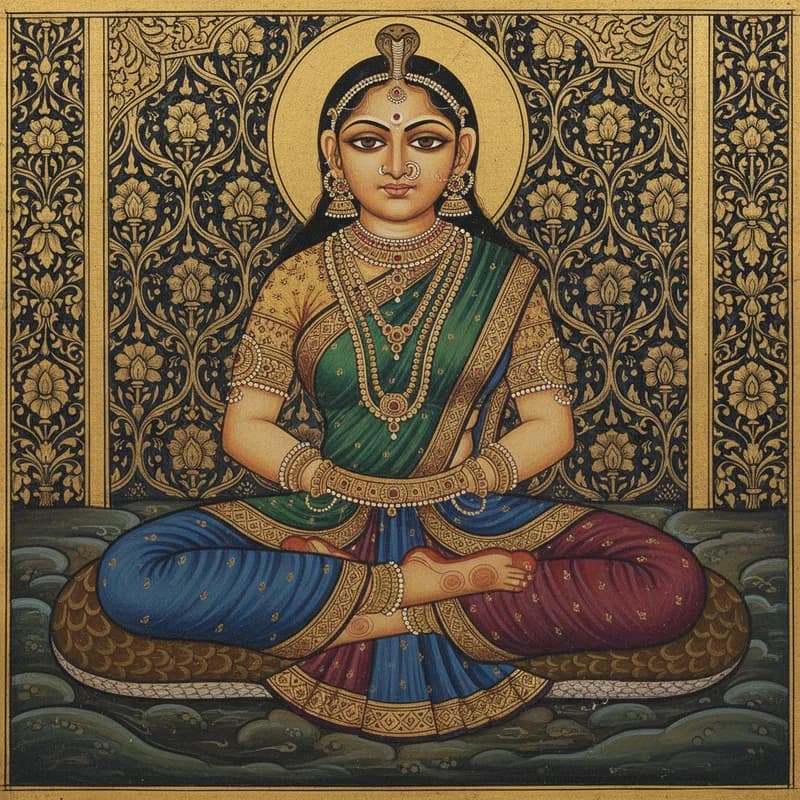
Manasa occupies an uneasy position in the Hindu pantheon — acknowledged as Shiva's daughter and a goddess of considerable power, yet long excluded from mainstream Brahminic worship because of her folk origins. The Puranas treat her with ambivalence, and her iconography reflects this: she is shown seated on a lotus, crowned and serene, but surrounded by coiled serpents and sometimes depicted with one eye blind from Shiva's neglect. Her cult was largely sustained by lower-caste communities in Bengal before Brahmin poets eventually absorbed her story into Sanskrit-adjacent literature.
Manasa Puja falls in the month of Shravana, typically in July or August, when the monsoon is at full force and snakes are most active in the paddyfields of West Bengal and Bangladesh. Earthen pots called ghats are decorated with serpent images and placed under trees or near water, and women sing mangal gaan — auspicious songs drawn from the Manasamangal tradition. In many villages along the Damodar and Rupnarayan rivers, the puja is conducted without a Brahmin priest, preserving its older, non-Sanskritic character.
Naga Devata is a broad category covering the divine serpent beings worshipped across the subcontinent — from the Naga stones of Karnataka to the serpent shrines of Kerala's kavu groves — while Manasa is a specific goddess with a defined mythology, a body of devotional literature, and a regional cult centered in Bengal and lower Assam. Naga worship is often animistic and site-specific, tied to particular trees or anthills; Manasa's tradition carries a narrative weight, a theology of conflict and submission, that sets it apart. She is, in a sense, the most fully personalized expression of serpent divinity in eastern India.
Manasa appears in the Devi Bhagavata Purana and the Brahma Vaivarta Purana, though her most sustained treatment comes from the medieval Bengali Manasamangal Kavya tradition rather than Sanskrit scripture. Her relative absence from early Vedic and classical texts suggests she emerged from pre-Aryan or tribal serpent cults in the Bengal delta before being partially absorbed into the Puranic framework. The tension between her folk origins and her Puranic legitimacy is visible in the texts themselves, which spend considerable effort justifying her divine status.
According to the Manasamangal tradition, Manasa lost the sight in one eye when Shiva, unaware she was his daughter, accidentally burned it with his gaze or, in some versions, when she was struck during a conflict with her stepmother Chandi. This disfigurement became a mark of her marginality — a goddess powerful enough to command cobras yet denied full acceptance in her own father's household. Sculptural traditions in the Bishnupur region of West Bengal sometimes render this detail explicitly, giving her iconography a pathos absent from more triumphant goddess forms.
Algorithmic Inference
आपको यह भी पसंद आ सकता है
You May Also Like
Community Discussion
Comments are reviewed by AI before appearing publicly. Unsafe, unrelated, or uncertain comments go to human review.
Sign in to join the discussion.
0 comments
No public comments yet.