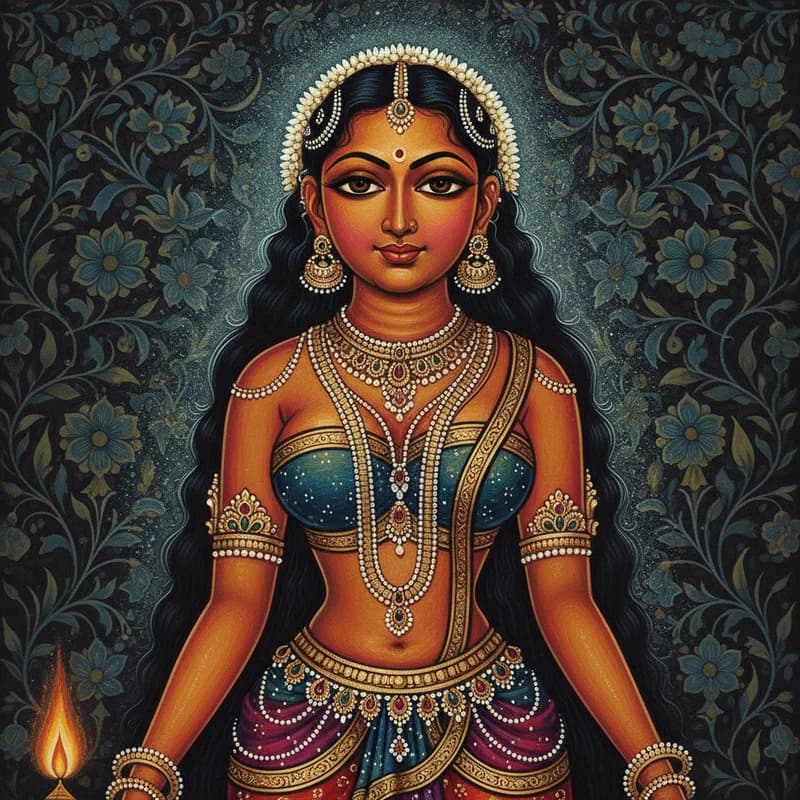
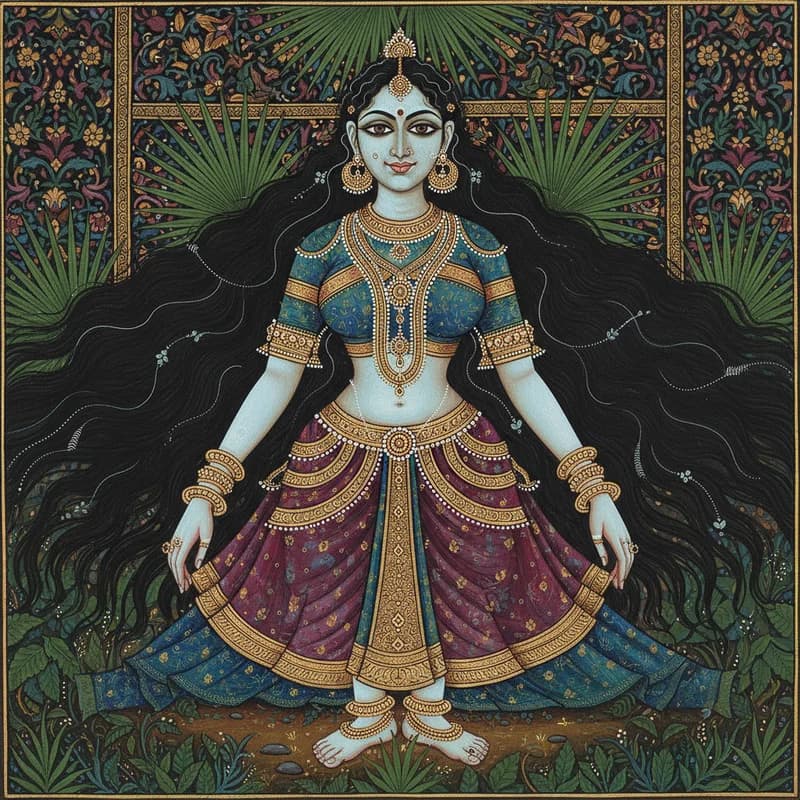
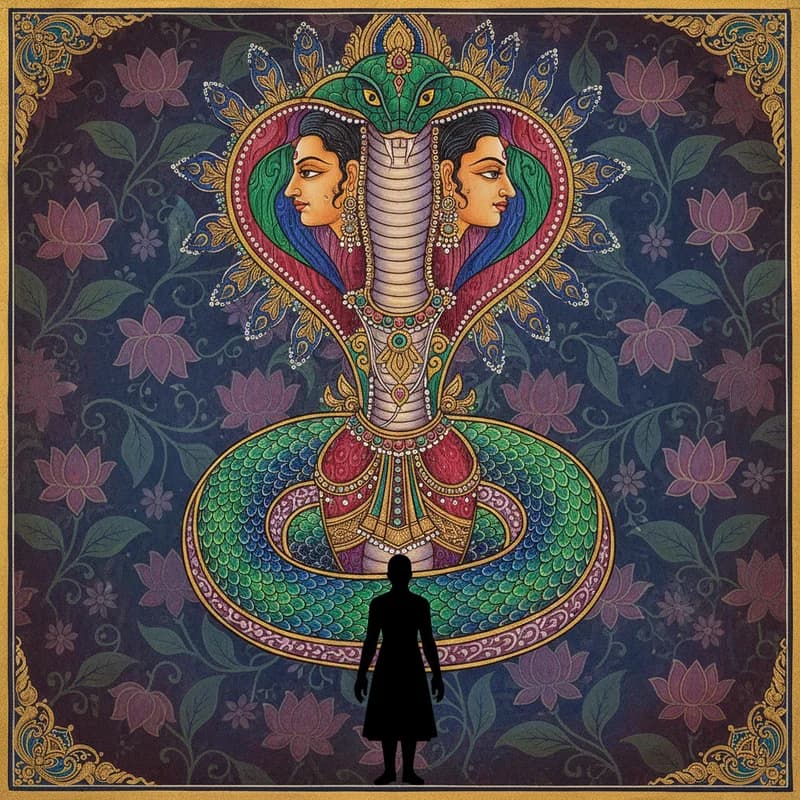
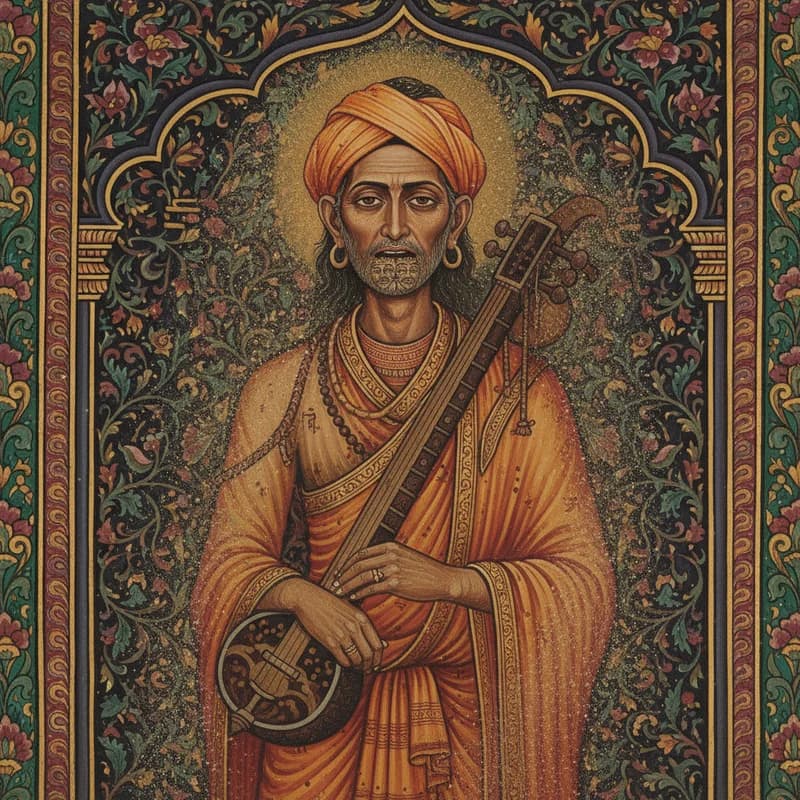
The Apsaras enter the written record at a point of cosmic crisis. In the Vishnu Purana and again in the Bhagavata Purana, they emerge from the churning of the primordial ocean — the Kshirasagara, the sea of milk — rising between the poison that nearly destroyed the gods and the nectar that preserved them. They belong to neither side. Neither god nor demon claimed them at the moment of their emergence, and so they became common to all — apsu rasah, born of the waters, belonging to no house. The Rigveda's earlier reference to Urvashi, however, complicates this origin cleanly. There, Urvashi predates the churning narrative entirely, suggesting the figure is older than the cosmological event that would later explain her kind. The Shatapatha Brahmana preserves a dialogue between Urvashi and Pururavas so tonally specific — so much like an argument overheard rather than a story composed — that scholars since Monier-Williams have suspected it was drawn from an older oral stream and inserted into the ritual literature rather than generated by it.
The oral tradition diverges sharply on the question of nature. In the Puranic texts, the Apsara's function is broadly administrative: she dances for the gods, distracts ascetics whose accumulated power threatens the balance of the three worlds, and ferries fallen warriors to Indra's hall at Svargaloka. The folk tradition of the Himalayan foothills — particularly among the Garhwali and Kumaoni communities of Uttarakhand, in the villages above the Alaknanda and Pindar rivers — knows a different creature. There she is called Pari or Apsara interchangeably, and she is not a servant of cosmic order but a force indifferent to it. She does not descend from Svargaloka; she inhabits specific pools, specific stands of deodar forest, specific hours of late afternoon light. Women in these communities do not regard her as benevolent. She takes men because she wants them, and the wanting requires no divine instruction.
This tension — between the obedient court dancer of Sanskrit cosmology and the autonomous, territorial spirit of the mountain villages — has never been resolved, and the attempt to resolve it probably misses the point. The Mahabharata alone names dozens of individual Apsaras: Menaka, Rambha, Tilottama, each with a distinct character and a specific assignment. But the nameless ones, the collective, the ones who appear in the mist above the Bhimtal lake or along the high meadows of Bedni Bugyal during the monsoon — those belong to a tradition the texts recorded only partially, and in recording, reshaped. What survives in Garhwali oral accounts, still collected by researchers working out of the G. B. Pant Institute in the 1980s and 1990s, is something the Puranas domesticated but could not quite contain: a being whose origin in water gave her no allegiance to the land, and whose beauty was not a gift offered but a condition she carried, indifferently, like weather.