प्रतीक्षा करें
Parsing the Naga lineage records…
प्रतीक्षा करें
Parsing the Naga lineage records…
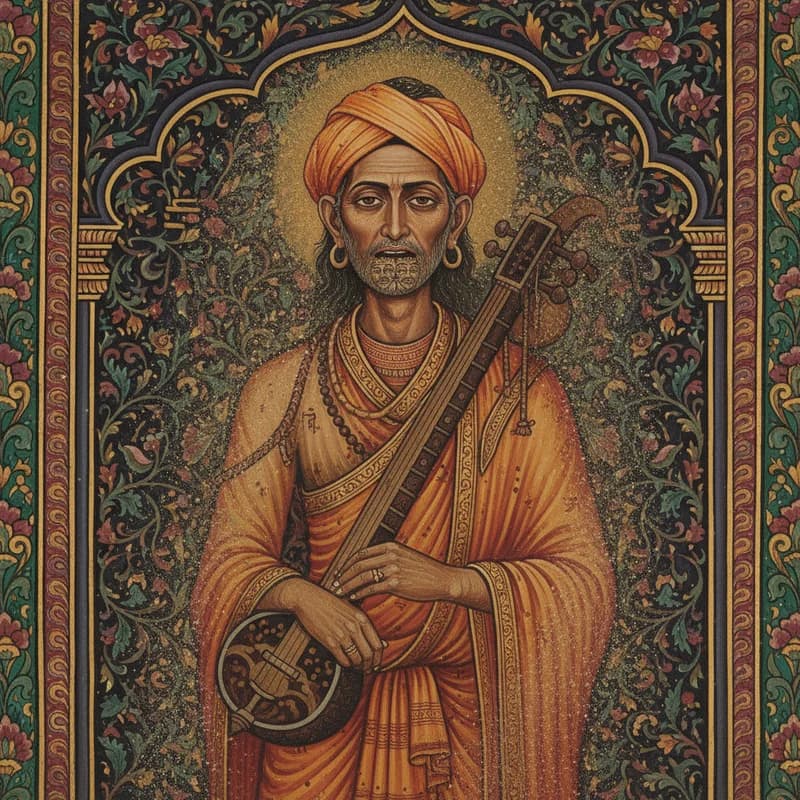

Charana
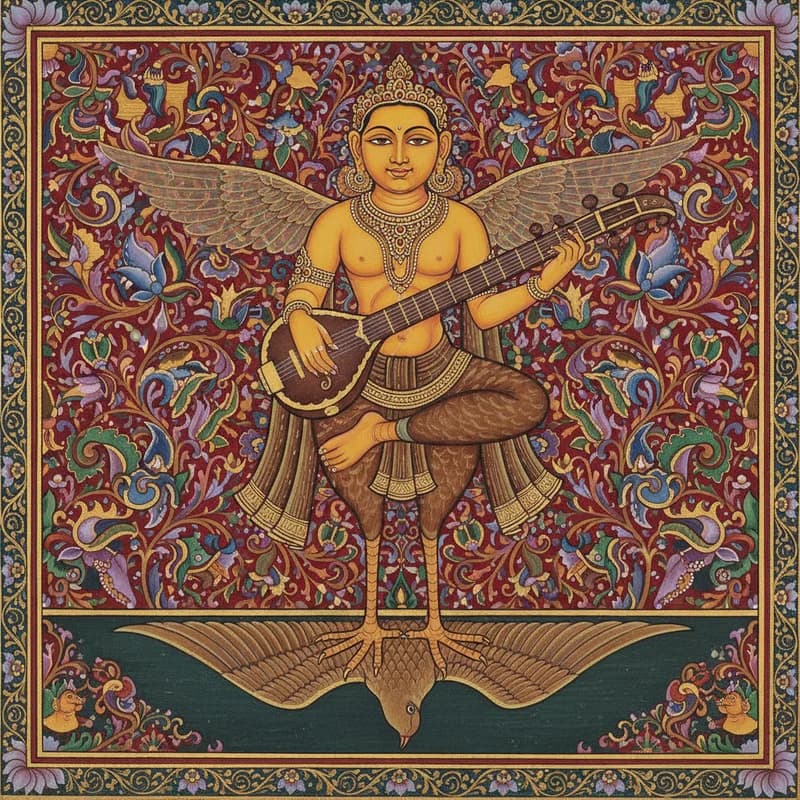
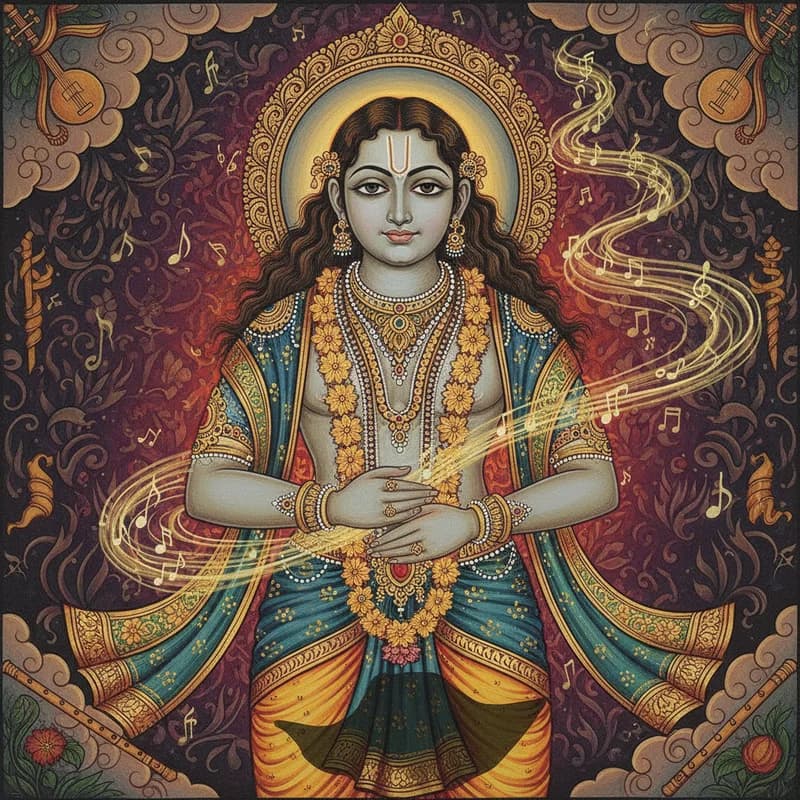
Somewhere between the human world and the celestial courts, these beings move without rest — singing. The Charanas occupy a peculiar position in Puranic cosmology: not quite deva, not quite gandharva, they are the carriers of divine genealogy and cosmic praise, tasked with memorizing and transmitting the histories of gods and heroes across the three worlds. The Vishnu Purana and the Mahabharata both place them in the sky, audible during the great sacrificial fires of the Vedic kings, their voices arriving before their forms do — a detail the hereditary bards of the Thar still invoke when explaining why you hear a song before you see the singer. Among the communities clustered along the Luni river basin, from Barmer west toward the salt flats of the Rann, the Charanas are understood as the celestial originals from whom the human caste of bardic singers descended. That lineage of transmission — stretching back through the Charani dialect's oldest dohas and into the pre-literate memory of the desert — is not treated as metaphor. It is genealogy, as literal and binding as a land deed.
To encounter one is not to be harmed, exactly, but the accounts carry a consistent undercurrent of unease. Hearing a Charana song at an unexpected hour — before the first call to prayer over the Pushkar ghats in the cold weeks after Kartik Purnima, or drifting through the khejri scrub of Shekhawati during the brutal stillness of Jyeshtha — is read as an omen of transition, not disaster. Something is ending. The protective instinct in local tradition is not to flee but to listen with full attention, because the song, people say, contains the name of whoever's fate is shifting. Accounts collected around the old caravanserai towns of Nagaur and Didwana describe the same aftermath: by the time the listener grasps what they heard, the words have already dissolved, leaving only the sensation of having been briefly, precisely, known.
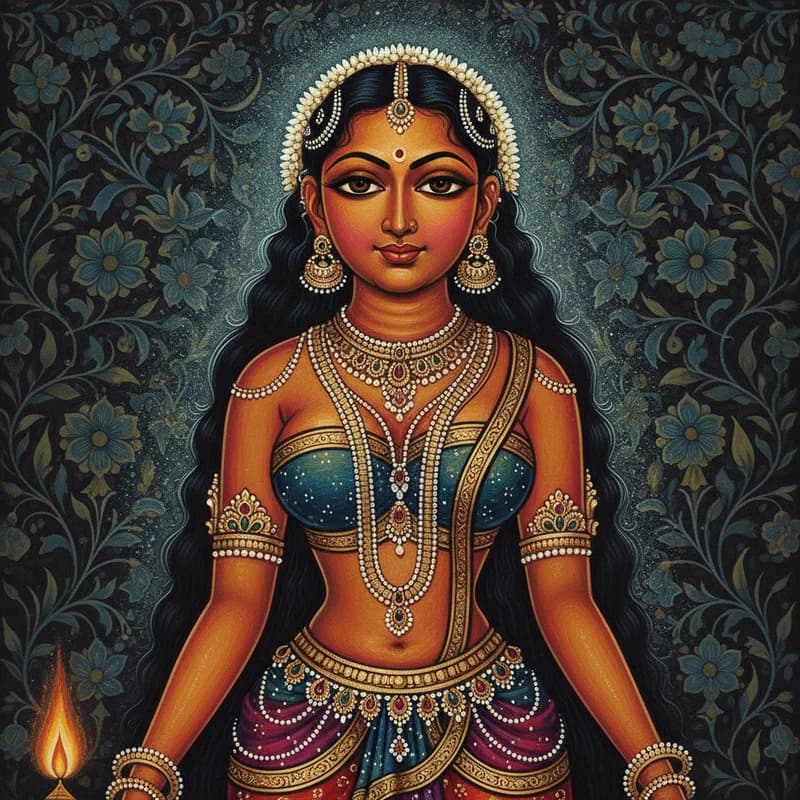
Skin the colour of dust on a Rajasthani highway in Jyeshtha, dry but never cracked, as though weather has tried and given up. Across accounts from the Thar to the Vindhyas, the smell is consistent: old sandalwood and something faintly electrical beneath it, like the air above the Ganga in monsoon just before lightning strikes. They carry an ektara worn smooth at the neck from handling, and when they play, the sound arrives a half-beat before their fingers move. What separates them from any mortal wanderer is the feet — the heel never quite lands, as though the earth is a surface they are only courteously acknowledging.
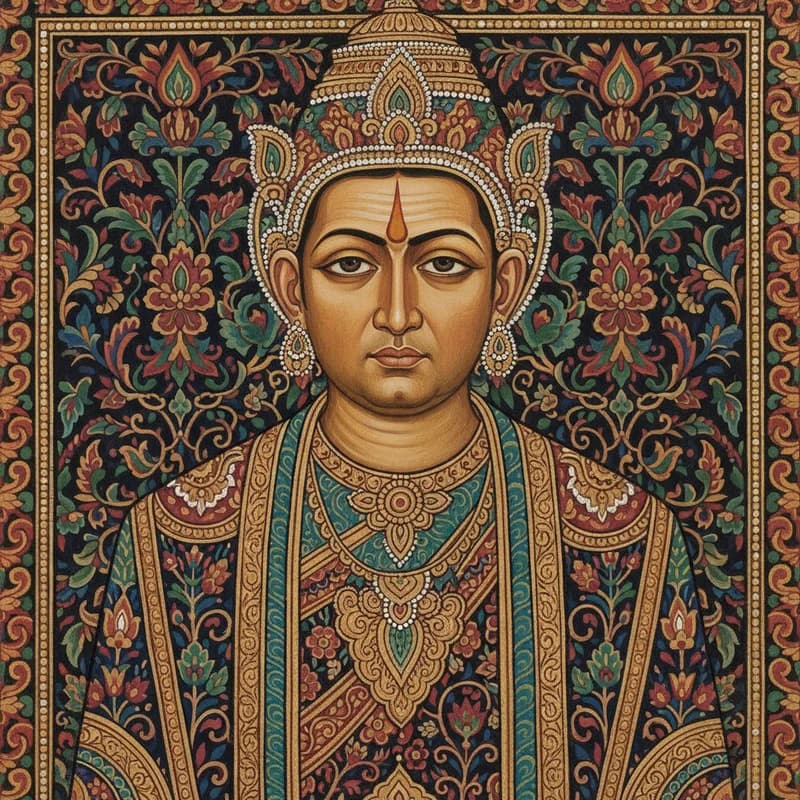
Along the pilgrimage roads between Pushkar and Nathdwara, Charana moves as an aged kathak performer — saffron robes dulled to ochre, a battered ektara slung over one shoulder, reciting genealogies in the particular Rajasthani cadence that earns coin and a night's hospitality. The disguise holds because such men still exist, still walk those roads in the weeks between monsoon and Kartik. The tell is in the verses: a Charana's recitation contains names the listener's family has not yet earned, genealogical lines extending forward into unborn generations with the same flat certainty as the past.
First Documented
The Charanas appear in the Mahabharata and several Puranas — the Vishnu Purana among them — as celestial bards who move between worlds singing the praises of gods and heroes, their earthly counterparts, the Charana caste of Rajasthan, preserving this identity through oral genealogical traditions called vamshavalīs that predate written records.
Last Recorded
Accounts of the Charana persist into the present, carried forward by the hereditary bard communities of the Thar Desert, particularly around Bikaner and Jaisalmer, where genealogists still invoke their celestial counterparts during the recitation of clan histories at weddings and death rites.
Source Language
Sanskrit
Origin
The Charana enters the written record in the Vishnu Purana's enumeration of celestial orders, where they appear alongside Siddhas and Gandharvas as sky-dwelling beings whose voices accompany yajna smoke upward — present at the great fire-sacrifices of the Vedic kings but never fully accounted for, listed rather than explained. The Mahabharata's Adiparva places them more precisely, as witnesses to Indra's court who carry the histories of gods between the three worlds, though the text does not say who made them or why they cannot stop. It is here that the oral tradition of the Thar diverges most sharply: among the hereditary bard communities of the Luni basin and in accounts collected from the kathak lineages of Nagaur district, the Charanas were not created at all but have simply always been moving — the Puranic texts, in this reading, did not record their origin but merely noticed them passing. That divergence carries weight. A made being has a maker's purpose and a maker's limit; a being that was never made can carry memory older than the gods who employ it,
Frequently Asked
Charanas are celestial wanderers in Puranic cosmology — divine bards tasked with memorizing and transmitting the genealogies of gods and heroes across the three worlds. Both the Vishnu Purana and the Mahabharata place them in the sky, audible during great Vedic sacrificial fires, their voices arriving before their forms do. They occupy a position distinct from devas and gandharvas, functioning as the cosmic keepers of sacred memory and praise.
Gandharvas are celestial musicians associated with beauty, intoxication, and the pleasures of the divine courts, whereas Charanas are specifically charged with the preservation and transmission of sacred genealogies and cosmic praise-histories. A Gandharva performs; a Charana records and carries. In the oral traditions of the Luni river basin, Charanas are understood as the celestial originals from whom Rajasthan's hereditary human bards descended — a distinction no Gandharva lineage claims.
Hearing a Charana song at an unexpected hour — before dawn at Pushkar's ghats, or in the dry scrub forests of Shekhawati in the deep weeks of summer — is read as an omen of transition, not disaster. Something is ending, or something is about to be remembered that would rather be forgotten. Local tradition holds that the song contains the name of whoever's fate is shifting, though most listeners cannot recall the words by the time they understand what they heard.
Along the pilgrimage roads between Pushkar and Nathdwara, a Charana may appear as an aged wandering bard in saffron dulled to ochre, carrying a worn ektara — convincing because such men still walk those roads between monsoon and Kartik. The first tell is in the recitation itself: a Charana's verses contain names the listener's family has not yet earned and events that have not yet occurred. The second is that the ektara sounds even when the bard's fingers are perfectly still.
The Vishnu Purana and the Mahabharata both reference Charanas as sky-dwelling beings present at the great sacrificial fires of Vedic kings. They appear alongside other celestial categories — siddhas, vidyadharas, gandharvas — in passages describing the populated heavens that witness cosmic and heroic events. Their role in these texts is consistently that of divine witnesses and transmitters rather than active participants in the events they record.
A Charana can recite a lineage that displaces the listener's own from memory, and is said to carry news of the monsoon before any cloud has gathered over the Thar. They are also known to cause ink to fade from manuscripts they pass near, and can bestow a verse that cannot be unspoken once heard. Most unsettling to those who live near cremation ghats along Rajasthan's pilgrimage routes: a Charana is said to arrive at the burning ground before the body does.
To encounter a Charana is not to be harmed in any direct sense, but accounts from across the Thar to the Vindhyas carry a consistent undercurrent of unease. The protective instinct in local tradition is not to flee but to listen carefully, because the song is said to contain the name of whoever's fate is in motion. The danger, if it can be called that, is one of knowledge — of hearing something about yourself that you cannot afterwards remember clearly enough to act on.
In the oral traditions of Rajasthan, particularly among communities clustered around the Luni river basin, the celestial Charanas are understood as the divine originals from whom the human hereditary bard caste descended. This makes the human Charana singers not merely performers but custodians of a transmission lineage stretching back before written memory. The caste's traditional role — preserving royal genealogies, composing praise-poetry, witnessing oaths — mirrors precisely what the celestial Charanas are described as doing across the three worlds in the Puranic texts.
संबंधित लोकगाथाएं
Related Lore
Algorithmic Inference
आपको यह भी पसंद आ सकता है
You May Also Like
Community Discussion
Comments are reviewed by AI before appearing publicly. Unsafe, unrelated, or uncertain comments go to human review.
Sign in to join the discussion.
0 comments
No public comments yet.