प्रतीक्षा करें
Decoding the Pishacha encounter logs…
प्रतीक्षा करें
Decoding the Pishacha encounter logs…
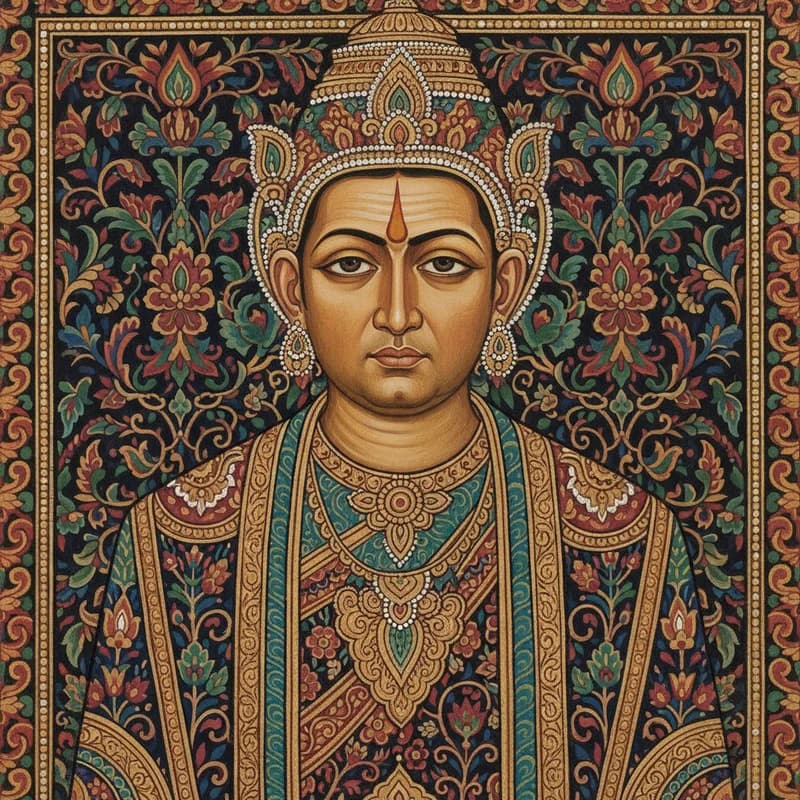

Siddha
They occupy the high passes where the Gangotri glacier calves into silence, the ridgelines above Kedarnath where the wind comes off Tibet with nothing to slow it. A Siddha is not a ghost — it has not died unfinished, does not linger from grief or hunger. Through decades or centuries of austerity, it burned away everything ordinary and arrived at something else entirely: perfected, liberated, and yet still present, still choosing to remain in the cold above the treeline when it could have dissolved into whatever lies beyond.
That choice is what makes them uncertain company. Accounts collected across the Garhwal villages and among the Kinnauri herders describe encounters that read less as attack than as test — a wandering sadhu who speaks in your language, who knows the name of your village headman, who asks you a question you cannot answer and watches your face when you fail. Some accounts from the Spiti valley suggest the Siddha grants what is genuinely sought: a cure, a direction, a single true piece of knowledge. Others warn that attention from a perfected being reshapes the recipient in ways that take years to fully surface, that the man who met one on the trail above Gangotri came back speaking less, sleeping more, and eventually left his family to sit alone on a hillside for reasons he could not explain. Caution here is not about survival. It is about knowing clearly what you want before something that can read want like a text decides to answer it.
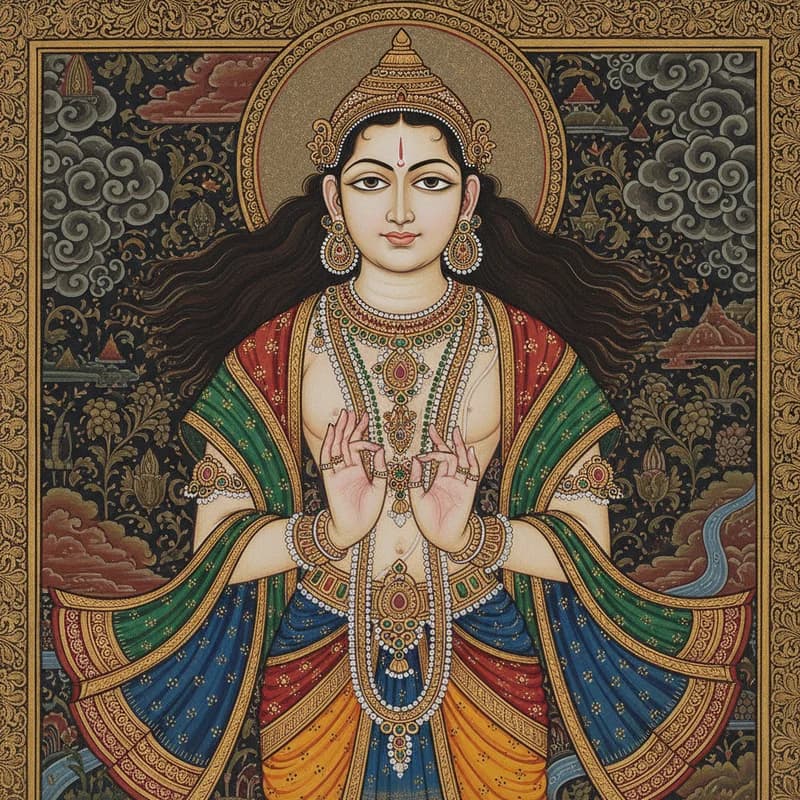
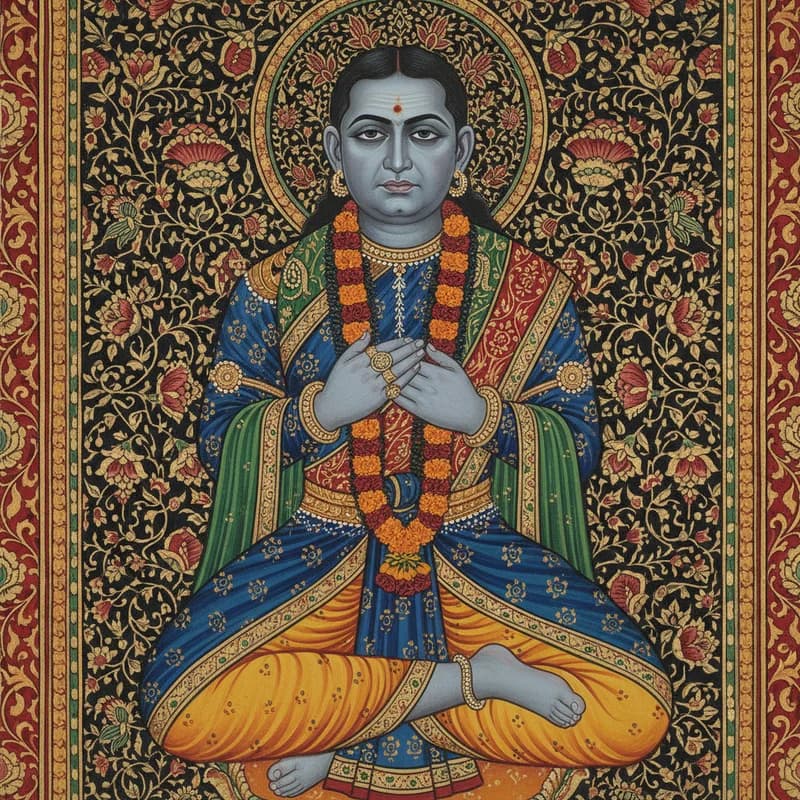
The Siddha appears as a man in late middle age, the body lean in the way of someone who has not eaten from hunger in a very long time — not gaunt, but stripped of everything unnecessary, the way a river-stone is stripped. Skin the colour of raw mustard bark, hair matted and white as the snowfields above Kedarnath, worn loose or coiled in a single rope that never quite touches the ground. What strikes witnesses most is the stillness: not the stillness of rest but of something that has forgotten the habit of involuntary movement — no blinking, no unconscious adjustment of weight, no breath visible even in the bone-cold air above the Gangotri glacier. The smell is cedar smoke and something older beneath it, mineral and clean, like water that has run a long distance through granite. The single feature that separates these accounts from those of ordinary ascetics is the shadow: it falls in the wrong direction, oriented not toward the sun but toward something else entirely.
Along the upper Gangotri trail, where the path narrows above Bhojbasa and pilgrims are still days from Gaumukh, a Siddha may appear as an aged sadhu seated in meditation beside the route — ash-smeared, matted hair, a small dhuni burning without visible fuel. The disguise is entirely plausible; such men do sit in those altitudes, and no traveller wants to disturb one. The tells require patience to notice. The dhuni casts no smoke, even in the still, cold air where smoke from a real fire would rise in a straight column visible for minutes. More reliably, witnesses from the shepherd communities of the Bhagirathi valley report that the sadhu's eyes, when they open, do not adjust to light — they are the same in full noon glare as in deep shadow, pupil and iris fixed, as though the mechanism of seeing has been replaced by something that no longer needs it.
First Documented
The Siddhas appear in the Rigveda's later hymns and are elaborated extensively in the Mahabharata, where they inhabit the sky between earth and the sun; their most sustained treatment comes in the Puranas, particularly the Vishnu Purana, which catalogs them among the eight categories of supernatural beings attending cosmic order.
Last Recorded
Accounts of Siddhas persist to the present day, with the most recent oral testimonies collected from shepherds in the Spiti Valley and near the Rohtang Pass as recently as the early 2000s, describing encounters with luminous figures moving soundlessly across snowfields at dusk.
Source Language
Tamil
Origin
The Siddha enters the written record in the Vishnu Purana and the Mahabharata's Shanti Parva, where they appear among the celestial hierarchies alongside Gandharvas and Vidyadharas — perfected beings who have burned through their karma but linger at the threshold of dissolution. The textual tradition places them at Siddhaloka, a cosmological station above the earthly plane, and treats their presence in the world as essentially administrative, a function of cosmic order. The oral tradition of Kumaon and Garhwal breaks sharply from this. In the villages around Kedarnath and along the Mandakini valley, Siddhas are not administrative presences but local ones — seen at dawn on the high snowfields above Tungnath, heard in the wind that crosses the Pindari glacier in late October. Where the Puranas explain what they are, the hill tradition insists on where they are, which is a meaningful distinction: the first account produces a theology, the second produces a geography, and it is the geography that governs how people actually behave in those mountains.
Frequently Asked
A Siddha (सिद्ध) is a perfected being who has burned away karmic debt through extreme austerity and achieved a state close to liberation, yet chooses to remain present in the world rather than dissolve into moksha. They are neither ghost nor god but something between — conscious, powerful, and deliberate in their continued existence. Texts like the Mahabharata and the Shiva Purana place them among the highest orders of supernatural beings.
Siddhas are most consistently associated with the high Himalayan peaks — the ridgelines above Kedarnath, the frozen passes near Badrinath, the cave systems of the Nanda Devi massif. Oral traditions collected from Garhwali and Kumaoni villages place them at altitudes where the air thins and ordinary human life becomes impossible. They are rarely reported in the plains.
Classical texts attribute eight primary powers, the ashta-siddhis, to these beings — including the ability to shrink to atomic size, expand to infinite form, levitate, and enter other bodies at will. Beyond these catalogued abilities, folk accounts from the Uttarakhand hills describe Siddhas appearing without warning, knowing a visitor's name and history before any word is spoken. Their power is understood as earned, not inherited.
LokKatha classifies Siddhas under caution rather than outright threat, which reflects their essential ambiguity. Approached with sincerity and proper conduct, a Siddha may offer guidance, healing, or rare knowledge; approached with arrogance or impure intent, the encounter can leave a person disoriented, ill, or permanently changed. The danger lies not in malice but in the sheer force of their accumulated spiritual energy.
A Rishi is primarily a seer — a sage whose gift is revelation, the hearing of sacred knowledge that becomes Vedic hymn or philosophical text. A Siddha has moved beyond revelation into transformation, reshaping the body and consciousness through tapas until ordinary physical laws no longer fully apply. Where Rishis are remembered as authors of texts, Siddhas are remembered as presences that persist.
The Mahabharata lists Siddhas among the celestial beings who witness the great war from the sky above Kurukshetra. The Bhagavata Purana describes their dwelling in Siddhaloka, a plane between the earthly and divine. Patanjali's Yoga Sutras treat the siddhis — the powers associated with these beings — as real attainments, cataloguing them with the same precision one might apply to medicinal plants.
Accounts from the Char Dham pilgrimage routes describe Siddhas as appearing in the form of aged ascetics — matted hair, ash-smeared skin, eyes that hold an unsettling stillness — who vanish when followed or turn a corner that leads nowhere. A consistent detail across Himachali and Uttarakhandi oral traditions is that animals, particularly dogs and horses, react with immediate submission rather than fear. The encounter typically leaves the witness with a sense that time moved differently during it.
The Himalayan Siddha tradition is the most documented, but Tamil Shaiva literature preserves an entirely distinct lineage — the Eighteen Siddhas, or Pathinenmar Siddhargal, figures like Thirumoolar and Agastya whose texts survive in the palm-leaf manuscripts of the Kaveri delta. Both traditions share the core idea of a being who has mastered the body through discipline, but the Tamil Siddhas are more explicitly connected to medicine, alchemy, and written verse.
संबंधित लोकगाथाएं
Related Lore
Algorithmic Inference
आपको यह भी पसंद आ सकता है
You May Also Like
Community Discussion
Comments are reviewed by AI before appearing publicly. Unsafe, unrelated, or uncertain comments go to human review.
Sign in to join the discussion.
0 comments
No public comments yet.