प्रतीक्षा करें
Unfolding the scroll…
प्रतीक्षा करें
Unfolding the scroll…
Chinna Masta
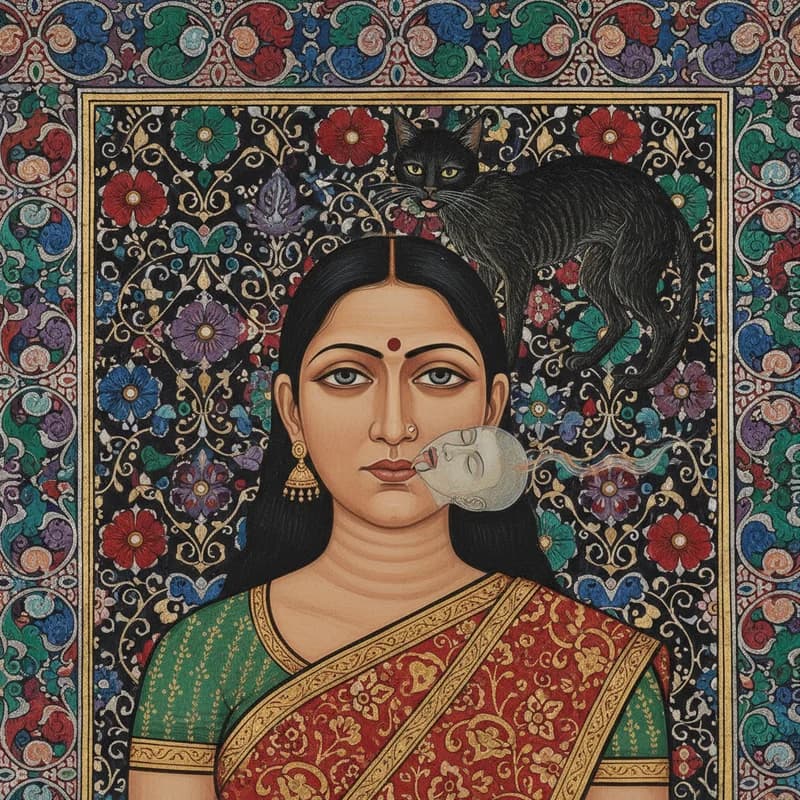
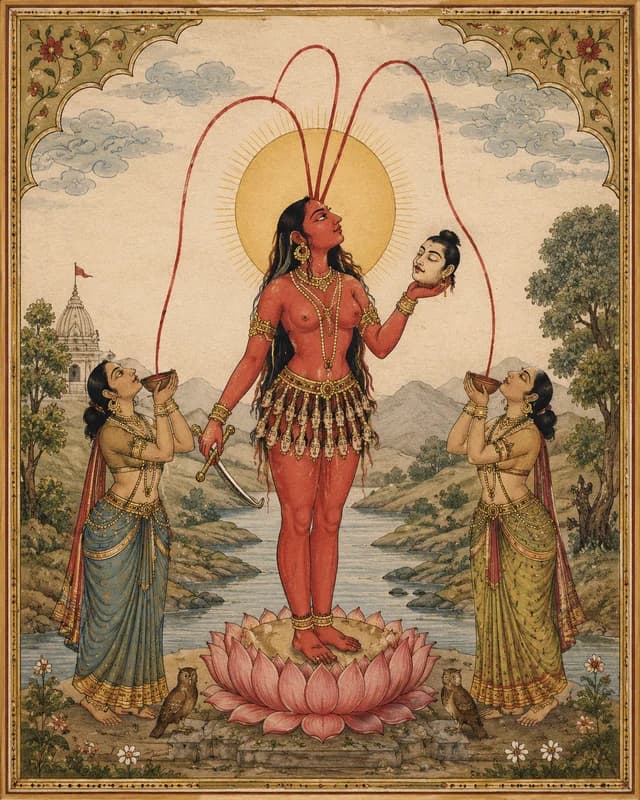
She holds her own severed head in one hand and her own blood feeds the mouths of her two attendants, Dakini and Varnini, who flank her without flinching. This is not metaphor. The iconography is exact, and the accounts collected from the Chhinnamastika temple at Rajrappa — where the Bhairavi and Damodar rivers meet in the Jharkhand hills — insist on the literalness of it. She is not a goddess of death in the way that Kali is; she does not destroy from outside. The severing is her own act, the blood her own gift, and the theology folded inside this image is one that most devotees approach sideways, through ritual and repetition, rarely looking at it directly.
What the rural accounts emphasize, particularly among the Shakta communities of the Chota Nagpur plateau and in the tantric lineages documented around Varanasi's cremation ghats, is the particular quality of her demand. She does not require your enemy. She requires you — your comfort, your self-preservation, the instinct to keep yourself whole. The two figures drinking at her neck are not parasites; they are the parts of yourself that survive only when the central self releases its claim. Encountering her in dream or in the charged atmosphere around her shrines during the Chaitra Navaratri is not considered malevolent, but the caution is consistent across accounts: she recognizes those who are still hoarding themselves, and that recognition is not comfortable.
She appears headless, though headless does not quite capture it — the neck ends in a clean horizontal cut, the kind that suggests intention rather than violence, and from it rise three distinct streams of blood, two arcing outward to the mouths of her attendants Jaya and Vijaya, the third curving inward to feed her own severed head, which she holds aloft in her left hand, still alert, still watching. The body is naked and stands on a copulating couple, her feet planted with the ease of someone who has simply found convenient ground. Witnesses near the Rajrappa temple where the Damodar and Bhairavi rivers meet describe a smell of iron and wet marigold, the precise combination of a fresh offering and old stone. The head in her hand does not blink — but the eyes track.
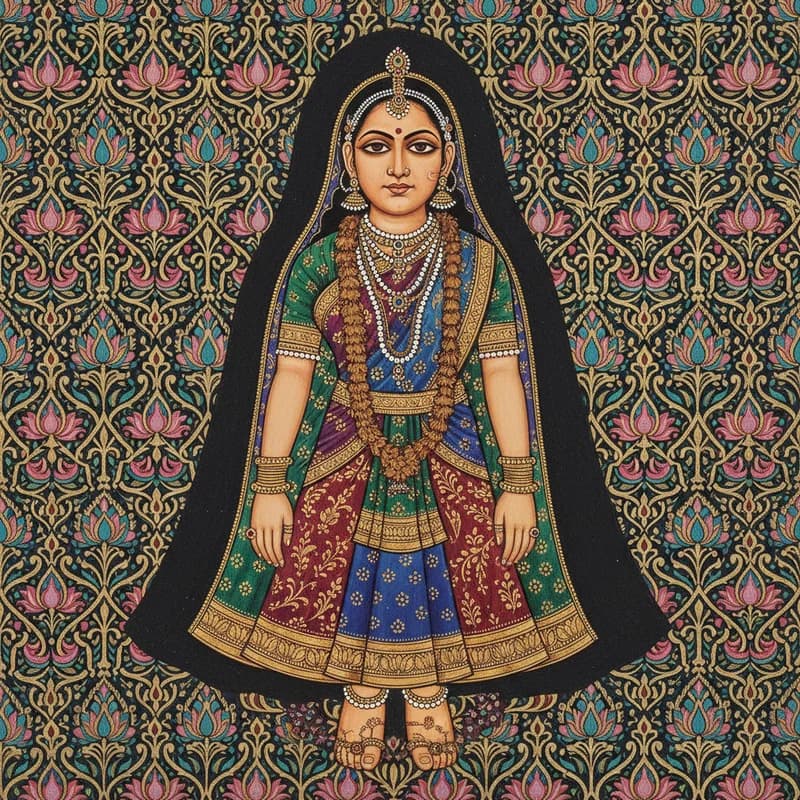
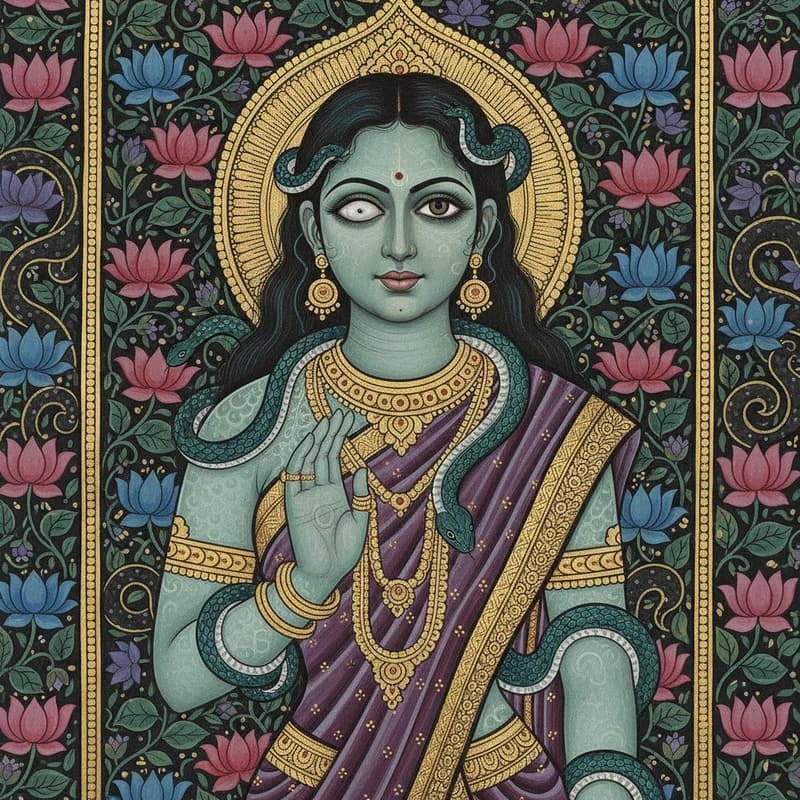
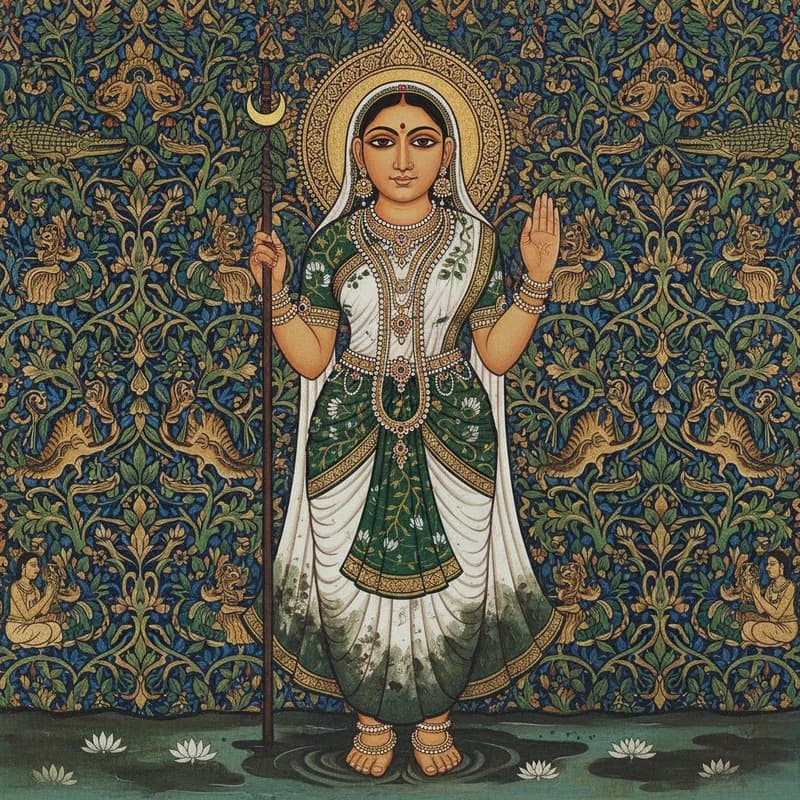
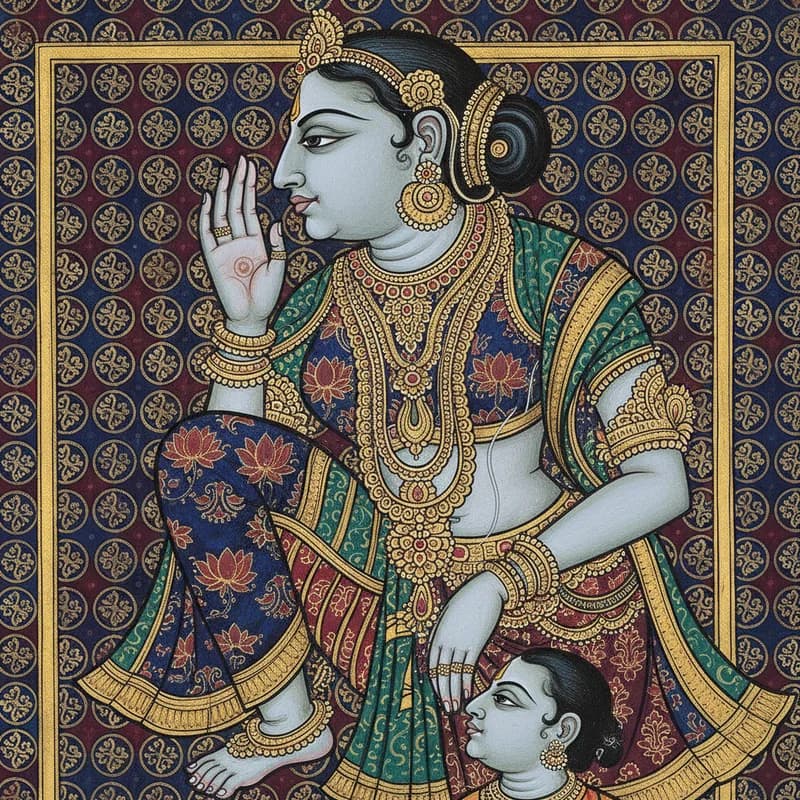
Chinna Masta moves through the living world as a nursing mother — the most unremarkable figure in any village lane, a woman with an infant at her breast, sitting at the edge of a well or beneath a neem tree in the punishing hours of midday heat when sensible people are indoors. She appears young but not conspicuously so, dressed in ordinary cotton, and the child she holds is always feeding, always quiet. The first tell is this: she does not sweat, not in the Jyeshtha heat, not beside the stone walls of Rajrappa where the Bhairavi and Damodar rivers meet and the air sits heavy as wet cloth. The second is the child itself — it never pulls away, never pauses, and those who have looked long enough report that the mother's throat moves with no swallowing, as though nothing passes through her at all.
First Documented
Chhinnamasta appears in the *Shakta Pramoda* and *Tantrasara*, Sanskrit tantric compilations likely codified between the 10th and 14th centuries CE, where she is catalogued among the Dasha Mahavidyas — the ten fierce wisdom goddesses whose iconography and ritual protocols were systematically recorded by Bengali and Kashmiri tantric scholars.
Last Recorded
Accounts of Chinna Masta persist into the present, with devotees at the Chhinnamasta temple in Rajrappa, Jharkhand — where the Bhairavi and Damodar rivers meet — continuing to report visions of the headless goddess during Navratri, her severed head still held aloft, the blood streams unceasing.
Source Language
Sanskrit
Origin
Chhinnamasta enters the written record in the Shakta Pramoda and the Mantra Mahodadhi, both late medieval compilations that position her as the sixth Mahavidya — the self-decapitated goddess standing on the copulating bodies of Rati and Kama, her own severed head held in her left hand, drinking one of three blood-streams that arc from her neck while her two attendants, Dakini and Varnini, drink the other two. The textual tradition frames this as a controlled iconographic statement about the consumption of desire: she destroys and sustains simultaneously, feeding others from her own substance. The living oral tradition of the Chota Nagpur plateau, particularly among Santali and Oraon communities near the Damodar River, carries a different emphasis — here she does not stand on desire but on hunger, and the act of self-decapitation is not symbolic but urgently practical, the act of a mother who had nothing left to give except herself. That divergence is not minor. Where the textual Tantra codifies Chhinnamasta as philosophical paradox,
Frequently Asked
Chinna Masta (छिन्नमस्ता) is the sixth of the ten Mahavidyas, a self-decapitated goddess who holds her own severed head in one hand while three streams of blood pour from her neck — two feeding her attendants Dakini and Varnini, and one flowing into her own severed mouth. She appears in Tantric texts including the Shakta Pramoda and the Chinna Masta Tantra, worshipped most intensely in cremation-ground traditions along the Ganges plain and in the hills of Jharkhand. Her form is simultaneously terrifying and redemptive, collapsing the boundary between nourisher and nourished.
Chinna Masta embodies the paradox of self-sacrifice as sustenance — she destroys herself to feed others, representing the dissolution of ego and the raw, uncontained force of Kundalini energy. In Tantric interpretation, she stands upon the copulating figures of Rati and Kama, signifying that she transcends both desire and its suppression. Practitioners in the Shakta tradition of Bengal and Bihar read her as the moment of awakening when individual consciousness is severed from attachment.
Chinna Masta carries a threat level of caution in folk traditions — her worship is considered volatile and is typically restricted to initiated Tantric practitioners, not casual devotees. Oral accounts collected in the Chotanagpur Plateau warn that improper invocation invites psychological dissolution rather than spiritual clarity. Her shrines near the Damodar River are tended by hereditary priests who observe strict ritual protocols before approaching her image.
Both Chinna Masta and Kali belong to the Mahavidya pantheon and share an association with blood, death, and transgressive power, but their iconographies diverge sharply. Kali's violence is directed outward — she slays demons and drinks their blood — while Chinna Masta's act is entirely self-directed, her blood a gift rather than a conquest. Where Kali is invoked for protection and destruction of enemies, Chinna Masta is approached for the annihilation of the self.
The primary textual sources are the Shakta Pramoda, the Chinna Masta Tantra, and passages within the Tantrasara, all of which describe her origin as an act of radical compassion. According to these accounts, the goddess Parvati, bathing in the Mandakini river with her attendants, severed her own head when her companions cried out from hunger, offering her blood as food. This narrative is also preserved in oral traditions among the Shakta communities of Rajasthan and West Bengal.
Her most significant temple is the Chhinnamastika Temple at Rajrappa in Jharkhand, situated at the confluence of the Bhairavi and Damodar rivers — a site that draws pilgrims especially during the Navratri season in autumn. Smaller shrines exist in cremation grounds across Bihar and in the Kamakhya temple complex in Assam, where the Mahavidyas are collectively venerated. Her worship is geographically concentrated in eastern India, where Tantric Shakta traditions have remained most intact.
Folk traditions in Jharkhand and Bihar credit Chinna Masta with the power to sever karmic bonds, cure intractable illness, and grant fearlessness in the face of death. Practitioners who complete her sadhana — a rigorous meditative discipline often performed at midnight — are said to attain vairagya, a state of complete detachment from worldly fear. She is also invoked in some regional traditions to protect against black magic, her self-decapitation understood as proof that she fears no force, not even death itself.
Chinna Masta is unmistakable: she is depicted nude, holding her own severed head aloft in her left hand and a scimitar in her right, while three jets of blood arc from her neck. She stands or dances upon a copulating couple, typically identified as Kama and Rati, on a lotus. Her two attendants, Dakini and Varnini, flank her and drink from the lateral streams of blood — a detail that distinguishes her from any other figure in the Mahavidya group.
संबंधित लोकगाथाएं
Related Lore
Algorithmic Inference
आपको यह भी पसंद आ सकता है
You May Also Like
Community Discussion
Comments are reviewed by AI before appearing publicly. Unsafe, unrelated, or uncertain comments go to human review.
Sign in to join the discussion.
0 comments
No public comments yet.