प्रतीक्षा करें
Transcribing the Sutradhaar’s field report…
प्रतीक्षा करें
Transcribing the Sutradhaar’s field report…

Danava
They predate the gods. The Danavas emerge from the oldest cosmological layer of the Puranic texts — born of the sage Kashyapa and his wife Danu, whose name some scholars trace to the Sanskrit root for water, for the great flowing thing that cannot be held. The Rigveda knows them already, adversaries in a conflict that began before the Devas had fully consolidated their authority over the three worlds. Unlike the Rakshasas, who haunt cremation grounds and jungle margins, the Danavas occupy a more troubling position: they were never simply monstrous. Many held sovereignty over kingdoms. Some mastered knowledge the gods themselves coveted.
Across oral traditions gathered from the Narmada valley to the foothills of the Vindhyas, the Danava is not a creature you encounter but a force you inherit. Old accounts from communities near Maheshwar describe family misfortunes attributed not to a wandering spirit but to an ancient compact with Danava powers — an ancestor who bargained, who received, and who never settled the account. The threat they represent is rarely immediate violence. Disturbance is their mode: the well that turns brackish without reason, the harvest that fails in a single field while neighbors prosper, the child who speaks in a register too old for his age. Protective rites recorded in the Shaktipeetha traditions suggest offerings made at the confluence of two rivers before the monsoon breaks, when the boundary between what was and what is grows briefly thin.
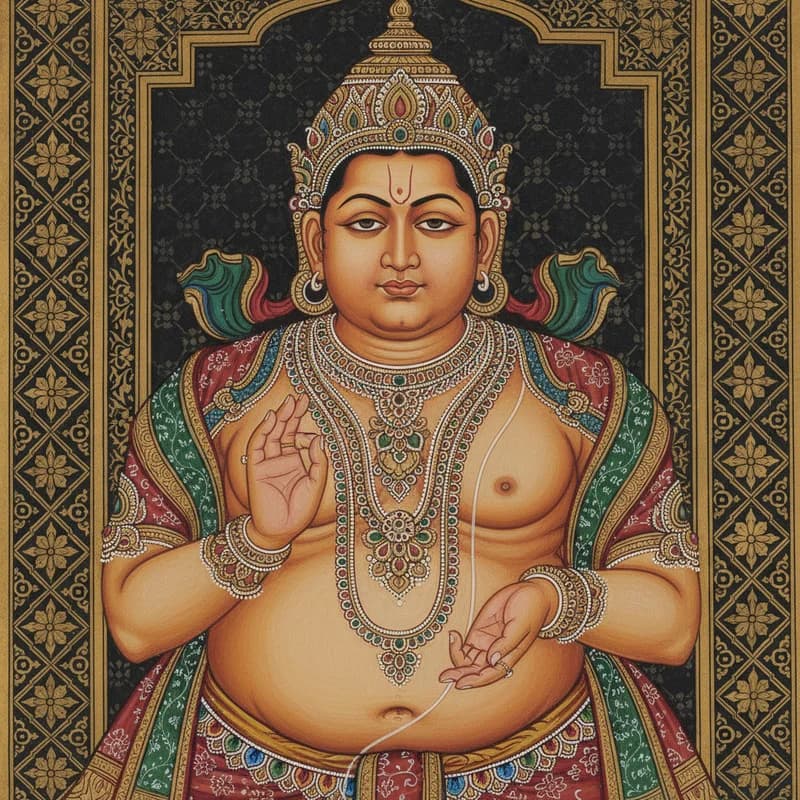
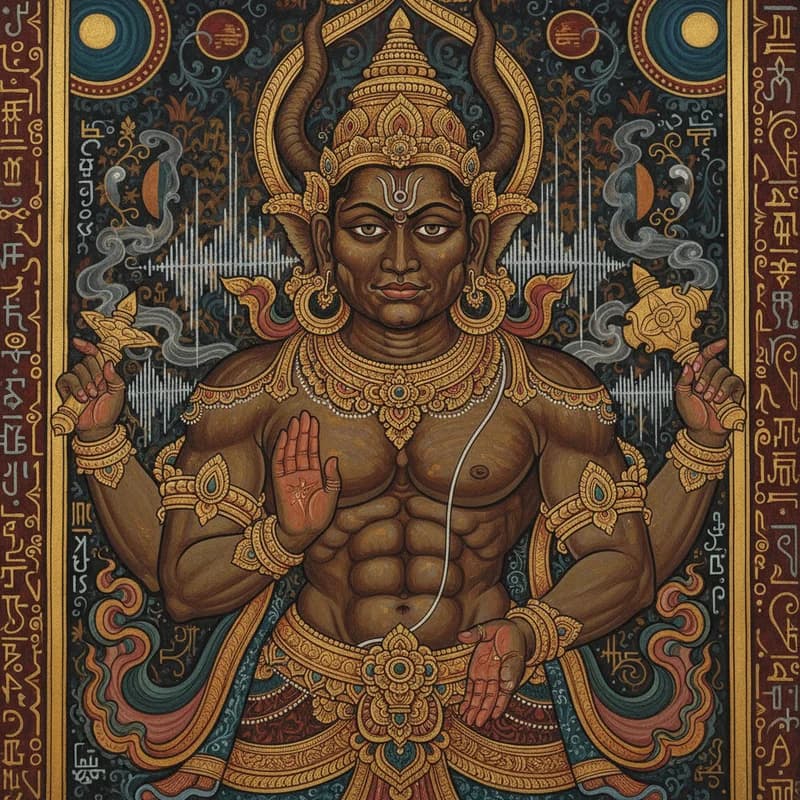
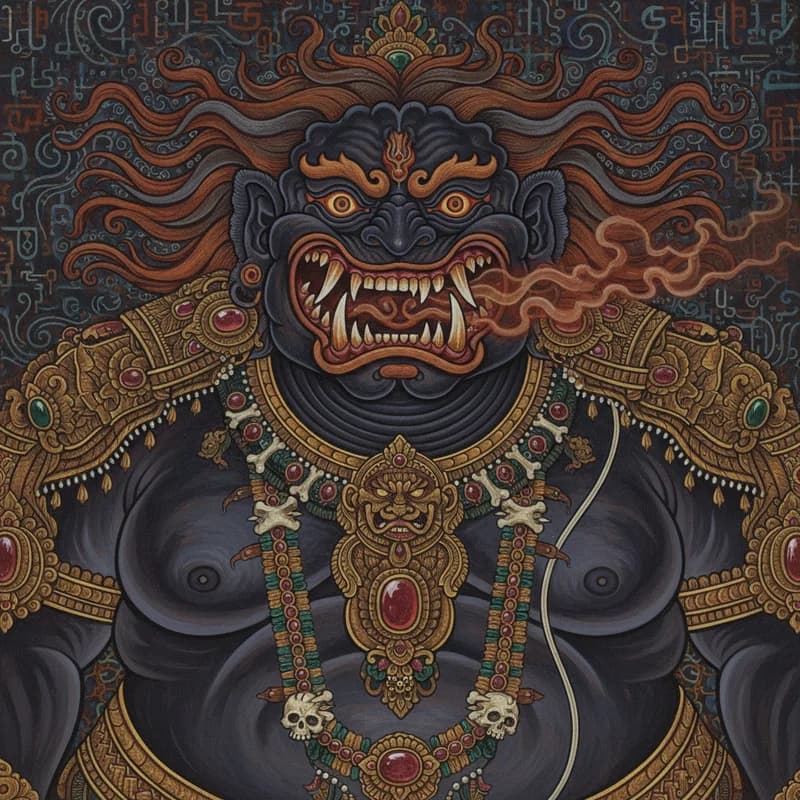
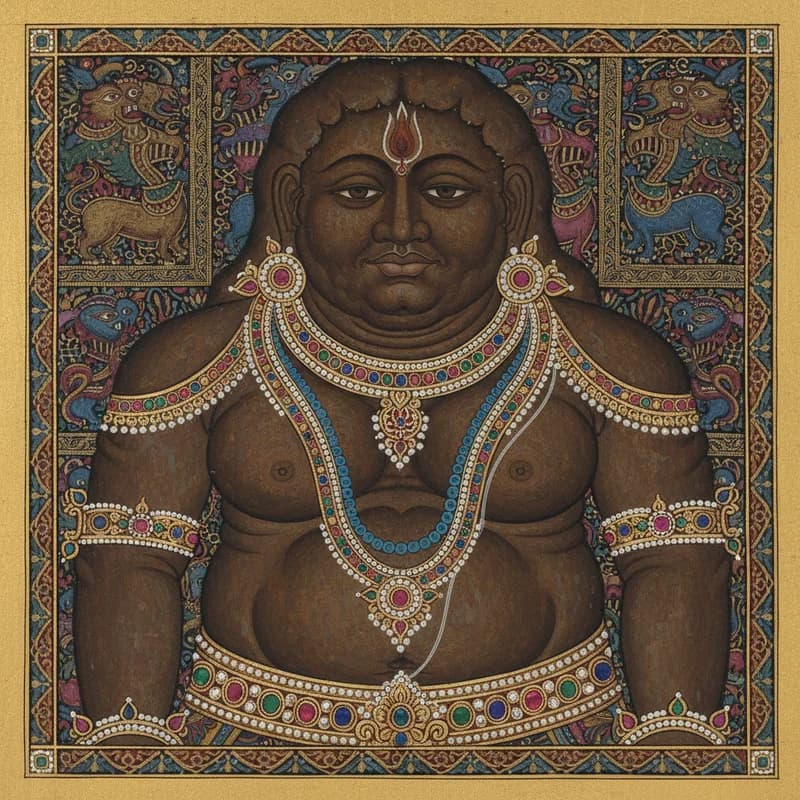
The Danava does not appear small. Accounts from the Vindhya foothills and along the Narmada's northern bank describe a figure of considerable mass — not fat, but dense, as though the body were packed with something heavier than muscle, the shoulders set wide and low like a river-boulder that has grown accustomed to bearing current. The skin runs dark, the colour of iron left in monsoon rain, and the face carries an expression that witnesses struggle to name: not rage, not hunger, but a very old impatience, the look of something that has been waiting since before the Mahabharata's wars were even a rumour. When one draws close — and the accounts that survive are from those who came close without being seen — there is a sound beneath the silence, a low sub-audible pressure
The Danava, in the accounts gathered from the Vindhya foothills and the older tank-irrigated villages of the Deccan plateau, most commonly appears as a wandering sadhu — ash-smeared, carrying a danda, arriving at the edge of a settlement just before the monsoon breaks, when strangers are expected and charity is considered auspicious. The disguise is patient and well-constructed. What gives it away, according to the Gondi-speaking communities near the Satpura range, is the behavior of cattle: even tethered animals will not face the direction from which the figure approached, and will stand with their hindquarters turned toward it regardless of where their feed is placed. The second tell is subtler and more consistent across accounts — the sadhu's sacred thread, if visible, runs over the wrong shoulder
First Documented
The Danavas appear as early as the Rigveda, where they are named as the offspring of the primordial sage Kashyapa and his wife Danu — a lineage later elaborated in the Shatapatha Brahmana and the Mahabharata's Adi Parva, which catalogs their conflicts with the Devas across the cosmic waters.
Last Recorded
Accounts of the Danava persist in the oral traditions of the Aravalli foothills, with village elders near Pushkar and along the Luni river basin still invoking the name during drought seasons. Collectors working the region as recently as the 2010s documented active ritual warnings tied to the entity.
Source Language
Sanskrit
Origin
The Danava enters the written record in the Rigveda's Vritra-slaying passages, where Indra's enemies are catalogued by name, and receives genealogical treatment in the Vishnu Purana, which systematizes them as anti-gods driven beneath the oceans or into Patala after losing sovereignty over the three worlds. Oral accounts from Gondi-speaking communities in Mandla district, however, preserve a reading the Sanskrit texts suppress — one in which the defeat was not absolute but negotiated, the Danavas withdrawing under terms that bound certain human lineages to them across generations. It is this version that explains what the Puranic record cannot: why the Danava's presence is felt not as invasion but as inheritance.
Frequently Asked
Danavas are cosmic demon-titans born of the sage Kashyapa and his wife Danu, whose name traces to the Sanskrit root for water. They appear in the Rigveda as adversaries of the Devas before the gods had consolidated authority over the three worlds, and receive full genealogical treatment in the Vishnu Purana, which places them beneath the oceans and in Patala after their defeat. Unlike lesser supernatural beings, Danavas were never simply monstrous — many held sovereignty over kingdoms and commanded knowledge the gods themselves coveted.
Rakshasas haunt cremation grounds and jungle margins, operating as predatory spirits tied to immediate violence and pollution. Danavas occupy a far older and more troubling position — they are cosmic adversaries whose conflict with the Devas predates the Mahabharata's wars, and their influence manifests not as attack but as inherited disturbance: a well turning brackish, a harvest failing in a single field, a child speaking in a register too old for his age. Where the Rakshasa is encountered, the Danava is inherited.
Danavas enter the written record in the Rigveda's Vritra-slaying passages, where Indra's enemies are catalogued by name. The Vishnu Purana later systematizes their genealogy and fate, describing them as anti-gods driven beneath the oceans after losing sovereignty over the three worlds. Oral traditions among Gondi-speaking communities in Mandla district, however, preserve an older reading in which the defeat was not absolute but negotiated — the Danavas withdrawing under terms that bound certain human lineages to them across generations.
Across accounts gathered from the Vindhya foothills and Satpura range, the Danava most commonly appears as a wandering sadhu arriving at a settlement's edge just before the monsoon breaks. Two consistent tells betray the disguise: tethered cattle will not face the direction from which the figure approached, standing with their hindquarters turned toward it regardless of where their feed is placed, and the sadhu's sacred thread, if visible, runs over the wrong shoulder. The Gondi-speaking communities near the Satpura range have preserved both markers with particular precision.
Danavas bend iron left by unconsecrated smiths, sour well water before the monsoon breaks, and cast shadows that fall perpendicular to the sun's position — a detail that recurs across unconnected oral accounts from the Narmada valley to the Deccan plateau. They grow restless when the Milky Way tilts westward, and their hold over a victim tightens gradually rather than arriving as sudden possession. The threat is rarely immediate violence; disturbance is their mode, working across seasons and sometimes across generations.
Protective rites recorded in the Shaktipeetha traditions call for offerings of sesame and black gram at a Triveni Sangam before the monsoon breaks, when boundaries between past and present grow briefly thin. Peepal wood ash smeared across the doorframe at night and an iron trident planted at the field's edge before sowing are among the most consistently reported physical protections. Recitation of the Vishnu Sahasranama at dusk repels approach, and the sound of a conch shell is said to break the Danava's hold on a victim already under its influence.
Formal worship is rare, but old accounts from communities near Maheshwar on the Narmada describe propitiation rites directed at Danava powers — not devotion, but settlement, the fulfilling of compacts made by ancestors who bargained and never cleared the account. In the Rajasthan region particularly, certain family misfortunes are attributed not to wandering spirits but to these inherited obligations, and the rites performed are closer to debt-payment than prayer. The distinction matters to the communities who practice them.
Danavas cannot enter ground where barley has been buried, and cannot endure the smell of burning dhoop inside Shiva temples — a detail that aligns with their ancient enmity toward the Devas and the traditions that surround them. Their power is also said to weaken specifically when the Narmada's current runs eastward during the month of Kartik, a seasonal vulnerability that oral accounts from the Narmada's northern bank treat as a reliable window for protective ritual. The specificity of these conditions suggests a very old and careful body of knowledge built around containing rather than destroying them.
संबंधित लोकगाथाएं
Related Lore
Algorithmic Inference
आपको यह भी पसंद आ सकता है
You May Also Like
Community Discussion
Comments are reviewed by AI before appearing publicly. Unsafe, unrelated, or uncertain comments go to human review.
Sign in to join the discussion.
0 comments
No public comments yet.