प्रतीक्षा करें
Unfolding the scroll…
प्रतीक्षा करें
Unfolding the scroll…


Asura
The word itself is older than most of the texts that contain it. Across the Rigveda's earliest hymns, *asura* simply meant "one possessed of vital force" — the same root that made the Vedic gods potent also made the great opponents of those gods. The inversion happened slowly, across centuries of theological argument, and you can still trace the fault line in the living oral traditions of the Vindhya foothills and the Chhattisgarh plains, where certain Asuras are propitiated as ancestors, as rain-bringers, as the original lords of the soil before the Aryan settlement pushed them underground.
What the village accounts describe is not a single entity but a category — a class of beings whose power is earned through austerity rather than inherited through divine birth. Mahishasura, Vritra, Bali: each name carries a specific geography, a specific grievance. The Oraon and Munda communities of the Jharkhand plateau observe Sarhul in early spring partly as an acknowledgment that the earth belongs to older claimants. Temples to Bali persist along the Kerala coast near Thrissur, where fishermen leave offerings before the monsoon swells the backwaters. The threat the Asura represents is not random violence — it is contested sovereignty, the demand of a prior claim. Treat them as defeated and they remain dangerous. Acknowledge the claim, and the old accounts suggest, the rains come on time.
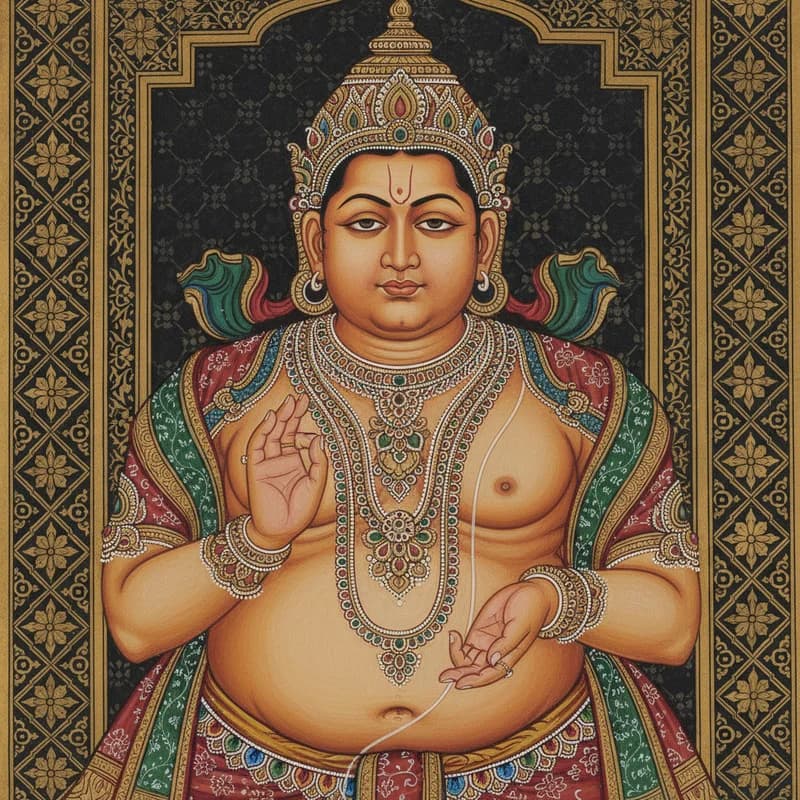
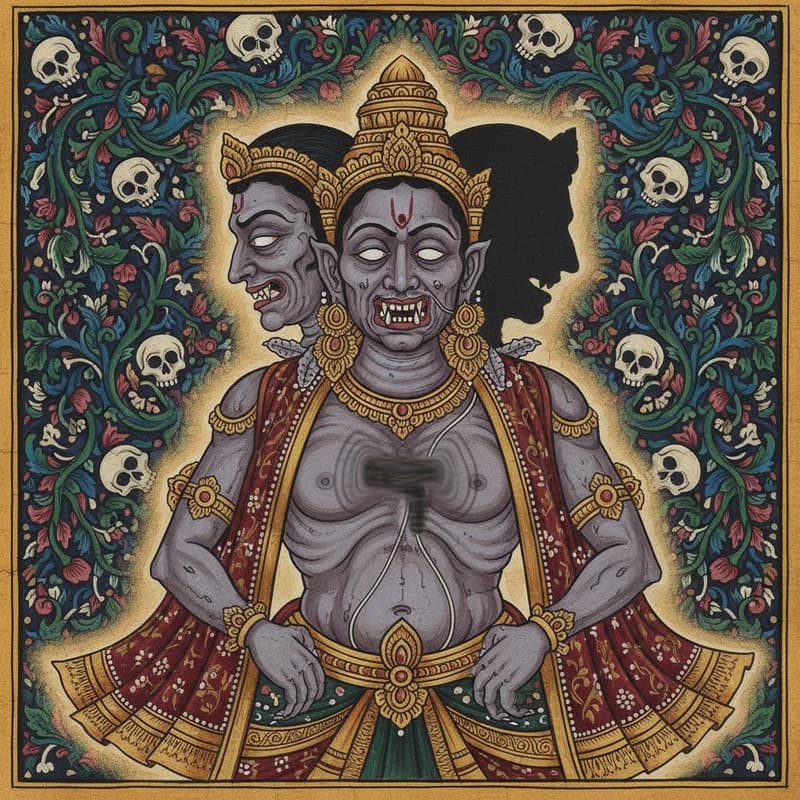
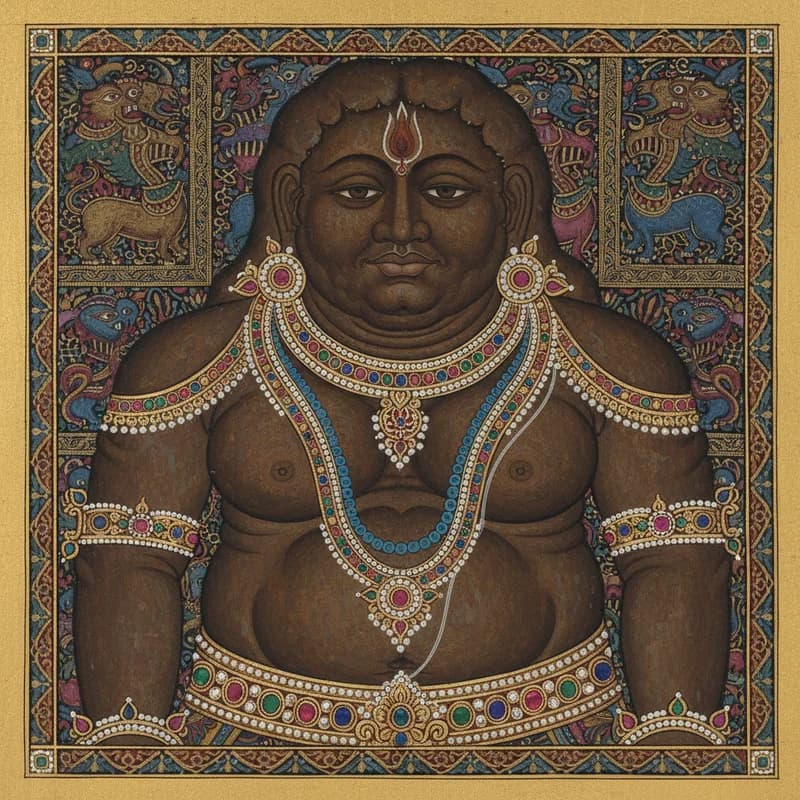
The Asura carries the look of something that was once worshipped before it was feared — a figure of considerable height and mass, the musculature not athletic but geological, like the basalt outcroppings along the Narmada gorge that have absorbed centuries of heat and pressure. The skin runs dark, the colour of monsoon-saturated earth in the Vindhya foothills, and the face holds a particular kind of stillness: not peaceful, but the stillness of a creature that has outlasted the need for expression. Accounts from the Deccan plateau describe an odour that arrives before the form does — iron and wet stone, the smell of a dry riverbed after the first rains break, something mineral and very old. The sound that accompanies the Asura is wrong in a specific way: not loud, but displaced, as if the voice is arriving from a position slightly behind the body that produces it. What marks every account, from the Shaiva texts of Kashmir to the oral traditions of Bastar's forest villages, is the eyes — not luminous, but light-consuming, the way a deep well looks up at you.
The Asura most commonly recorded in accounts from the Vindhya foothills and the banks of the Narmada appears as a wandering sadhu — ash-smeared, carrying a danda staff, moving between villages in the weeks before Navratri when the roads fill with genuine pilgrims and no one questions another saffron-clad figure on the path. The disguise is patient and well-chosen. What breaks it, for those who know to look, is the shadow: it falls in the wrong direction relative to the sun, as though cast by a light source only the Asura can see. The second tell is more visceral — dogs in the village will not bark at it. They go silent instead, pressing flat against the ground, which experienced herders along the Betwa river corridor recognize immediately as the worse sign of the two. Barking means a stranger. Silence means something the animal has no name for.
First Documented
The word *asura* appears as early as the Rigveda (c. 1500–1200 BCE), where it initially carries the meaning of "lord" or "powerful being" and is applied even to Varuna and Indra before its meaning inverted, over subsequent centuries, into a designation for cosmic adversaries opposed to the devas. This semantic reversal is traceable across the Atharvaveda and the Shatapatha Brahmana, where the asuras are already firmly cast as the enemies defeated in the churning of
Last Recorded
Accounts of Asuras persist without interruption from the Rigvedic hymns through to present-day oral traditions collected in the Chota Nagpur Plateau and the forested margins of Odisha, where village elders still invoke their names during the Sarhul festival to explain crop failures and sudden illness. Field recordings made as recently as 2019 in Jharkhand's Kolhan region document communities attributing unexplained deaths near the Koel River to Asura interference, suggesting these accounts show no sign of fading.
Source Language
Mundari
Origin
The Asura enters the written record in the Rigveda, where the term carries no settled moral valence — in the oldest hymns, both Varuna and Indra are addressed as asura, meaning "lord of vital force," and the gradual semantic inversion that turned the word toward malevolence is one of the most debated philological shifts in Vedic scholarship. The textual tradition, consolidated in the Shatapatha Brahmana and later in the Puranas, frames the Asuras as cosmological antagonists, the elder sons of Prajapati who chose the principle of untruth when offered a choice at the beginning of time. Folk traditions of the Vindhya belt and among the Asur tribal communities of Jharkhand, however, carry a sharply different account: the Asuras were the first metalworkers, the ones who understood fire before the gods did, and their defeat was not a moral event but a political one. Where the Puranas record a cosmic triumph, the oral tradition preserved near the Koel and Sankh river valleys remembers a dispossession — and that divergence marks exactly
Frequently Asked
In the Rigveda's oldest hymns, 'asura' meant 'one possessed of vital force' — the same root that described the potency of Vedic gods like Varuna and Indra. The semantic shift toward malevolence happened gradually across centuries of theological revision, documented most clearly in the Shatapatha Brahmana, and remains incomplete in the oral traditions of the Vindhya foothills, where certain Asuras are still propitiated as rain-bringers and ancestral lords of the soil.
The Puranic tradition frames Asuras as cosmic antagonists — elder sons of Prajapati who chose untruth at the beginning of time — but this reading is not universal. Among the Oraon and Munda communities of the Jharkhand plateau, and in the oral accounts preserved near the Koel and Sankh river valleys, the Asura's defeat is remembered not as a moral event but as a political dispossession, the erasure of the original lords of the earth.
Asuras are primarily cosmic opponents whose power derives from austerity and prior claim — figures like Vritra, Bali, and Mahishasura each carry a specific geography and a specific grievance against the divine order. Rakshasas, by contrast, are more consistently predatory in the textual tradition, associated with disrupting sacrifice and consuming human flesh; the Asura's threat is contested sovereignty, not appetite.
The Asur tribal communities of Jharkhand, concentrated near the Koel and Sankh river corridors, preserve oral traditions that honour Asuras as the first metalworkers — beings who understood fire before the gods did. Sarhul, observed by Oraon and Munda communities each spring, carries within it an acknowledgment that the earth belongs to older claimants, a ritual memory of Asura sovereignty over the land before the Aryan settlement pushed them underground.
Regional accounts, particularly from the Vindhya foothills and the Narmada gorge corridor, describe an Asura that swells in size during the moonless fortnight, turns well-water brackish before a village quarrel breaks out, and draws iron weapons toward rust overnight. Spoken in the cadence of Vedic recitation, its voice arrives displaced — as though from a position slightly behind the body that produces it — and its presence weakens along the underground course where the Saraswati once ran.
Accounts from the Betwa river corridor describe the Asura moving through villages in the weeks before Navratri as a wandering sadhu — ash-smeared, carrying a danda staff, indistinguishable from the genuine pilgrims who crowd the roads in that season. Two signs betray it: the shadow falls in the wrong direction relative to the sun, and dogs in the village go completely silent rather than barking, pressing flat against the ground — a response experienced herders recognize as the more serious warning of the two.
Neem branches tied across the doorframe at Navratri and sindoor applied to the threshold on Amavasya nights are the most widely recorded protections across the Deccan and Vindhya belt. The Asura cannot cross a line of unbroken rock salt, cannot pass beneath a threshold hung with neem, and is weakened by recitation of the Purusha Sukta at dusk or the Hanuman Chalisa chanted at the edge of the Shipra river.
Mahishasura is among the most prominent named Asuras in the Puranic tradition, the buffalo-demon whose defeat by the goddess Durga is commemorated during Navratri and Dussehra. In parts of Karnataka and among certain Dalit and tribal communities, however, Mahishasura is remembered as a just king dispossessed by an invading deity, and his worship persists as a counter-narrative to the Brahmanical textual account — the same pattern of contested sovereignty that defines Asura mythology across the Vindhya foothills and the Jharkhand plateau.
संबंधित लोकगाथाएं
Related Lore
Algorithmic Inference
आपको यह भी पसंद आ सकता है
You May Also Like
Community Discussion
Comments are reviewed by AI before appearing publicly. Unsafe, unrelated, or uncertain comments go to human review.
Sign in to join the discussion.
0 comments
No public comments yet.