प्रतीक्षा करें
Awakening the Churel dossier…
प्रतीक्षा करें
Awakening the Churel dossier…

Daitya
They are older than the gods who defeated them, and they remember. The Daityas appear across Sanskrit cosmological texts — the Vishnu Purana, the Bhagavata, the Mahabharata — as the sons of the sage Kashyapa by his wife Diti, half-brothers to the Devas and estranged from them by a quarrel that preceded the churning of the Kshir Sagar. That churning is the wound they carry. What rose from those cosmic waters — Lakshmi, Dhanvantari, the nectar of immortality itself — went to the Devas. The Daityas received nothing but the memory of having been excluded.
In village accounts from the Narmada basin to the ghats at Haridwar, the Daitya is not a demon in the crude sense but something more unsettling — a being of immense power operating outside the moral order that the gods maintain, not because it is evil by nature but because it has been placed outside the compact that makes goodness legible. Oral traditions recorded in the Vindhya foothills describe encounters with presences that overturn ritual, sour milk in sealed vessels, cause the Kartik lamps to gutter without wind. These are attributed not to malice but to proximity — the Daitya passing through, indifferent, the way a flood is indifferent. The danger is real but impersonal. Priests in the Narmada corridor advise no direct invocation, no naming aloud after dusk, and particular care during Amavasya nights when the boundary between sanctioned and unsanctioned power grows thin enough to feel.
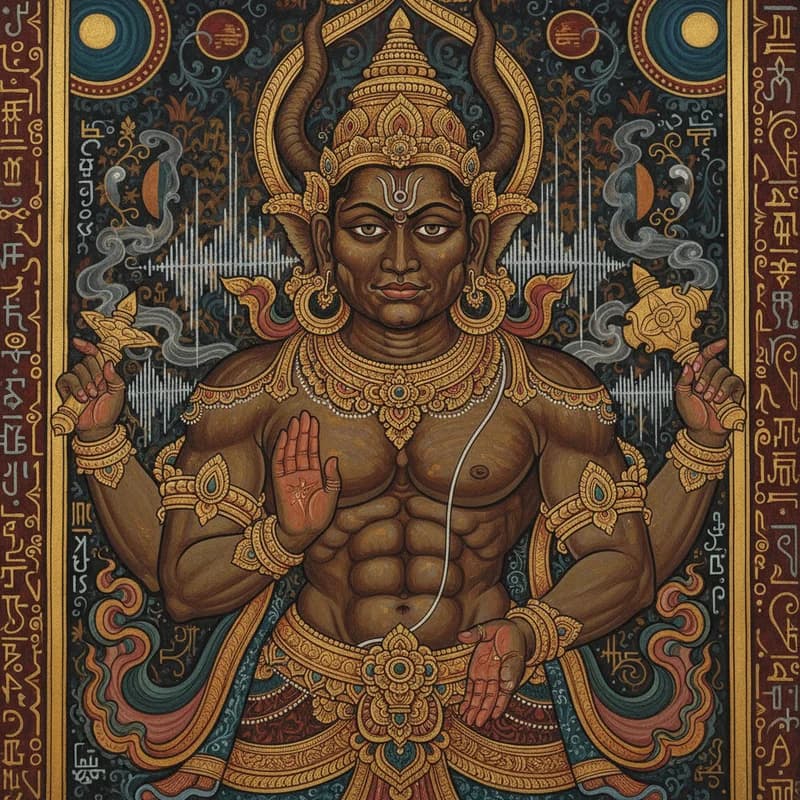
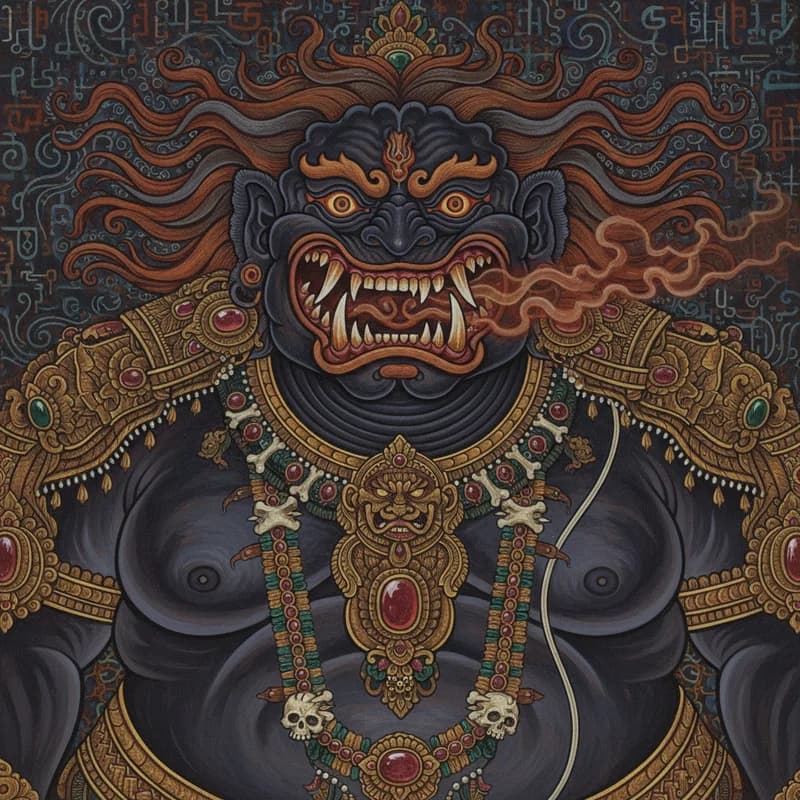
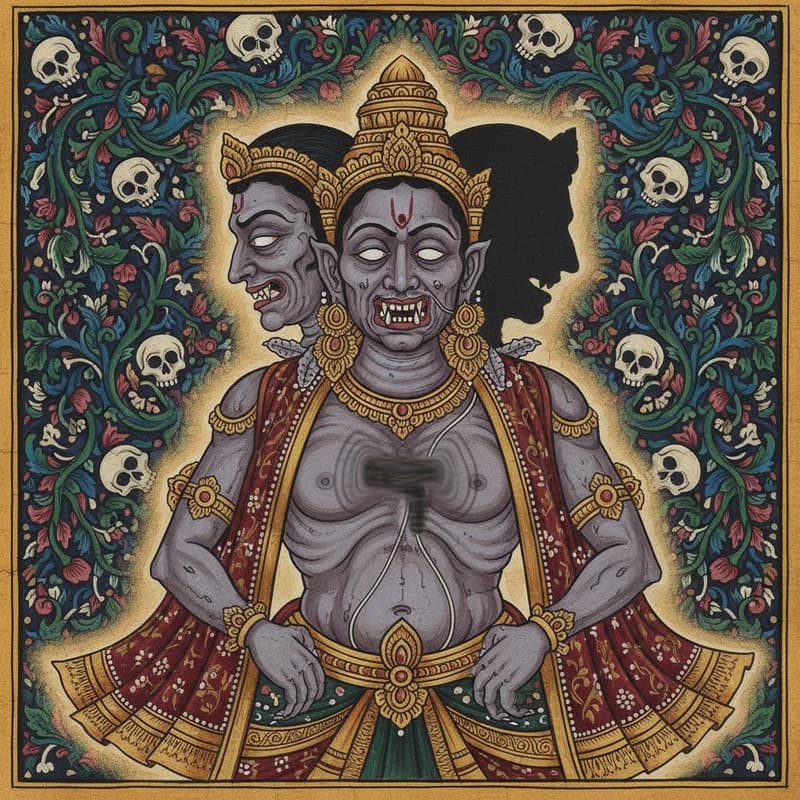
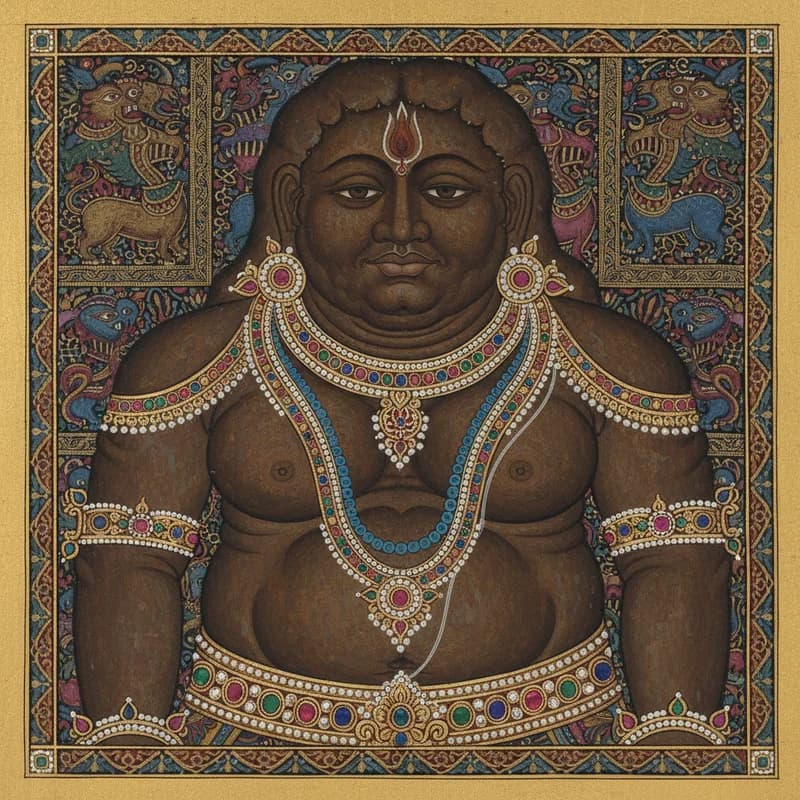
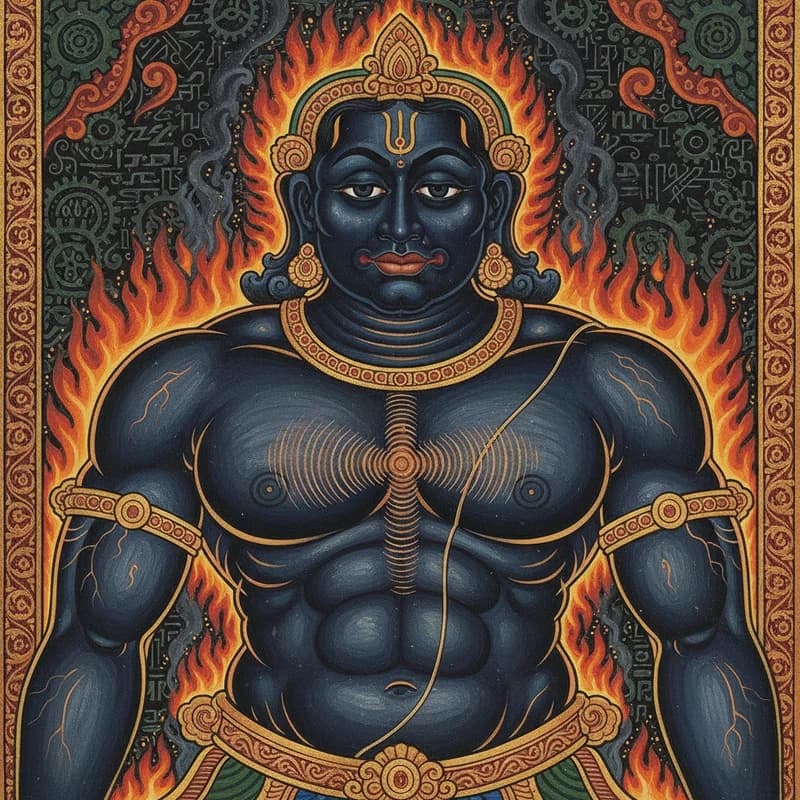
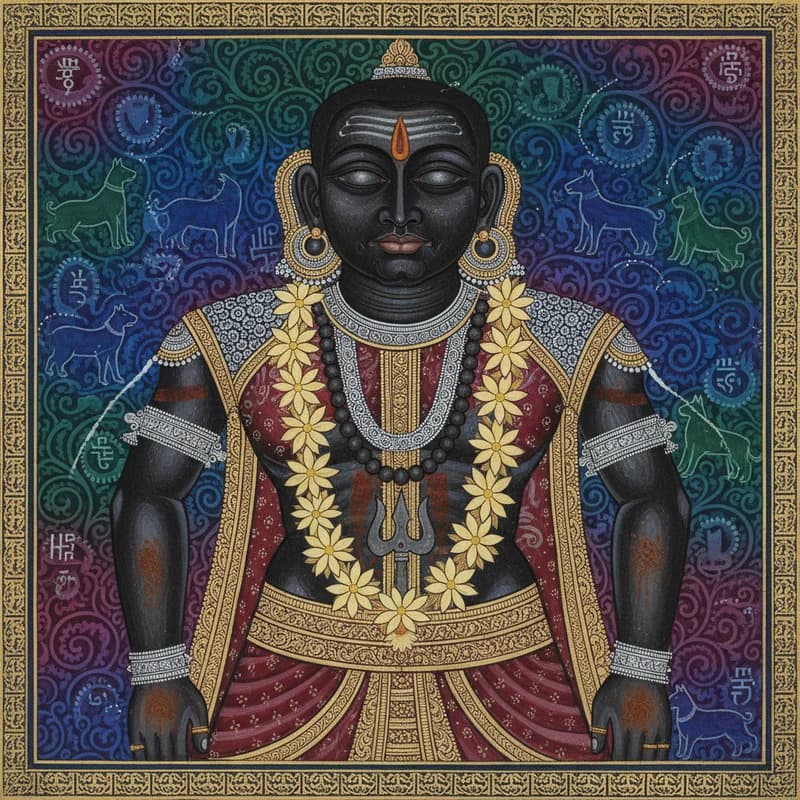
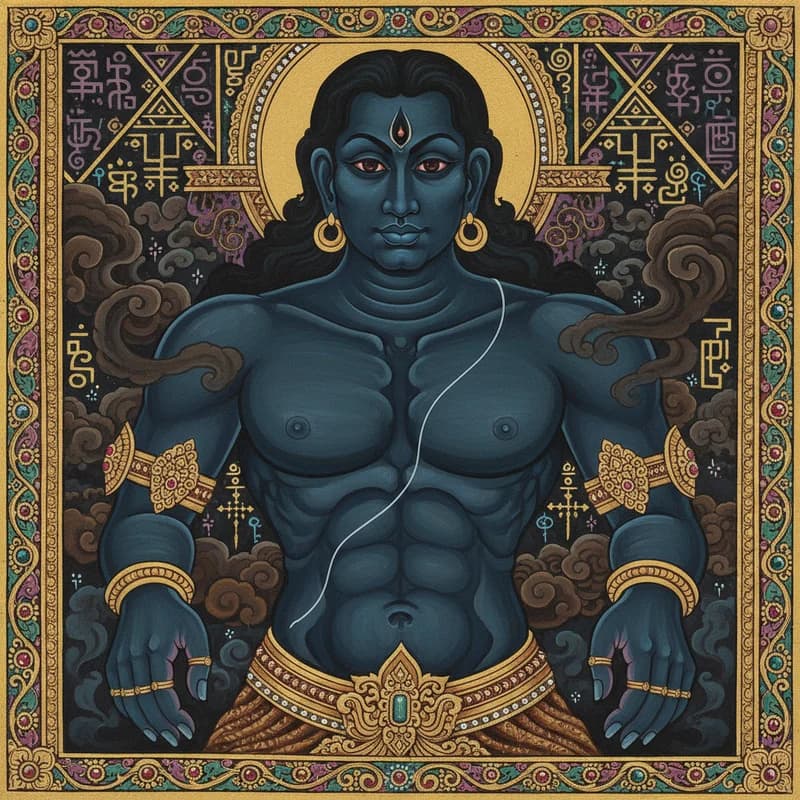
The Daitya arrives large — not in the exaggerated way of theatrical demons, but with the particular largeness of something that has never learned to make itself smaller for a room. Accounts from the Narmada valley and the older Puranic commentaries both describe a body built like a man who has been scaled up by someone working from memory: the proportions almost right, the joints slightly wrong, the hands too long at the knuckle. The skin runs dark, the colour of the Yamuna at monsoon-flood, and carries the texture witnesses describe as river-stone — not rough, but smooth in a way that suggests long exposure to pressure. The smell is consistent across regions: wet iron and deep earth, the smell of a well that has not seen light in many seasons. What marks these accounts as something other than encounters with the merely large is this — the shadow the Daitya casts does not correspond to any available light source
In the Marwar districts and along the dry river beds east of Jodhpur, the Daitya has been recorded appearing as an itinerant water-carrier — a bhisthi, dark-skinned and broad, moving between villages with the unhurried pace of a man who has made this route for years. The disguise is plausible: such men are common enough in the arid belt, and a stranger carrying water is welcomed without suspicion, especially in the weeks before the monsoon breaks over the Aravalli. The first tell is the water itself. Those who accepted the water and poured it out reported it ran brackish even from a freshly filled mussak — not salt, exactly, but tasting of something deep and lightless, the way water from an old stepwell tastes when the monsoon has not yet reached it. The second is the weight. A man carrying full water-skins moves with effort
First Documented
The Daityas appear among the oldest strata of Vedic cosmological thinking, with their first substantial literary presence in the Rigveda, where they are invoked as adversaries of the devas in hymns concerning cosmic order. By the time the Shatapatha Brahmana was composed, their genealogy
Last Recorded
The Daityas appear with remarkable persistence across Sanskrit sources — from the Rigveda's early hymns through the Puranic literature compiled well into the first millennium CE — and oral accounts collected along the Narmada valley and in the hill villages of Chhattisgarh as recently as the 1980s and
Source Language
Sanskrit
Origin
The Daitya enters formal record in the Shatapatha Brahmana and receives its most systematic treatment in the Vishnu Purana, where the term designates the offspring of the sage Kashyapa and his wife Diti — cosmological opponents of the Devas, locked into an eternal contest that the texts frame as theological necessity rather than mere enmity. The Puranic account is genealogical and hierarchical, concerned with ranking adversaries within a cosmic order. Folk tradition along the Narmada basin, particularly among the Bhil communities of Madhya Pradesh, carries an older account that the texts do not preserve: here, the Daityas were not defeated and banished but went underground willingly, retreating into the earth at Ashadha's end when the rains came, and they return each dry season in the creak of drought-split riverbeds and the particular silence before a
Frequently Asked
A Daitya is a primordial cosmic being born of the sage Kashyapa and his wife Diti, making them half-brothers to the Devas in Puranic cosmology. They appear across the Vishnu Purana, the Bhagavata, and the Mahabharata as adversaries of the gods — not demons in a simple moral sense, but beings of immense power who exist outside the compact that sustains divine order. Their opposition to the Devas is framed in these texts as theological necessity, not mere wickedness.
Daityas are dangerous in the way a monsoon flood is dangerous — the harm is real but impersonal, untouched by malice. Oral traditions from the Vindhya foothills describe their presence as something that overturns ritual and sours sealed vessels not out of intent but out of sheer proximity to unsanctioned power. The distinction matters: priests along the Narmada corridor do not treat the Daitya as a moral enemy but as a force that operates beyond the boundaries where goodness becomes legible.
The Daitya enters formal record in the Shatapatha Brahmana and receives its most systematic treatment in the Vishnu Purana, where the term is given a precise genealogical definition within the cosmic hierarchy. The Mahabharata and the Bhagavata Purana extend the tradition, each placing the Daityas at the centre of the great contest between order and its opposition. Folk accounts from Bhil communities along the Narmada basin preserve an older, unwritten layer that the Sanskrit texts do not contain.
Accounts from the Narmada valley describe a figure built like a man scaled up by someone working from memory — the proportions almost right, the joints slightly wrong, the hands too long at the knuckle. The skin runs dark, the colour of the Yamuna at monsoon-flood, smooth in the way of river-stone worn by long pressure, and carries a smell of wet iron and deep earth. The detail that separates these accounts from encounters with the merely large is consistent: the shadow the Daitya casts does not correspond to any available light source.
Both Daityas and Asuras oppose the Devas, but their origins differ in the Puranic genealogies — Daityas are specifically the children of Kashyapa by Diti, while Asuras is a broader category that encompasses several lineages and carries a more general meaning of beings opposed to divine light. Daityas are a subset within the larger Asura classification, distinguished by their specific cosmic grievance: exclusion from the gifts that rose from the churning of the Kshir Sagar. The Vishnu Purana treats this distinction with care, even as popular usage often collapses the two.
In the Marwar districts and along the dry riverbeds east of Jodhpur, the Daitya has been recorded taking the form of an itinerant water-carrier — a bhisthi moving between villages in the weeks before the monsoon breaks over the Aravalli. The disguise holds until the water is poured: witnesses report it runs brackish from a freshly filled mussak, tasting of something deep and lightless, like water drawn from an old stepwell in drought. Rajasthani accounts also note that the Daitya swells in size during the dark fortnight and that cattle refuse to cross ground where it has rested.
Recitation of the Vishnu Sahasranama is the most consistently cited protection across regional traditions, and a Sudarshana Chakra yantra drawn in red ochre at the threshold is considered effective in Rajasthani practice. A tulsi garland hung at the main doorpost, a conch shell blown facing west at dusk, and the smoke of dried neem leaves burning are all recorded as deterrents in accounts from the Narmada corridor. Priests advise particular vigilance on Amavasya nights, when the boundary between sanctioned and unsanctioned power grows thin enough to feel.
The wound at the centre of Daitya mythology is the churning of the Kshir Sagar — from those cosmic waters rose Lakshmi, Dhanvantari, and the nectar of immortality, and all of it went to the Devas. The Daityas received nothing but the memory of exclusion, and that memory is older than most of what the gods have built since. Bhil oral tradition along the Narmada basin adds a layer the Puranas do not: here, the Daityas were not defeated and banished but retreated underground willingly, returning each dry season in the creak of drought-split riverbeds.
संबंधित लोकगाथाएं
Related Lore
Algorithmic Inference
आपको यह भी पसंद आ सकता है
You May Also Like
Community Discussion
Comments are reviewed by AI before appearing publicly. Unsafe, unrelated, or uncertain comments go to human review.
Sign in to join the discussion.
0 comments
No public comments yet.