प्रतीक्षा करें
Retrieving sighting coordinates from the Map…
प्रतीक्षा करें
Retrieving sighting coordinates from the Map…
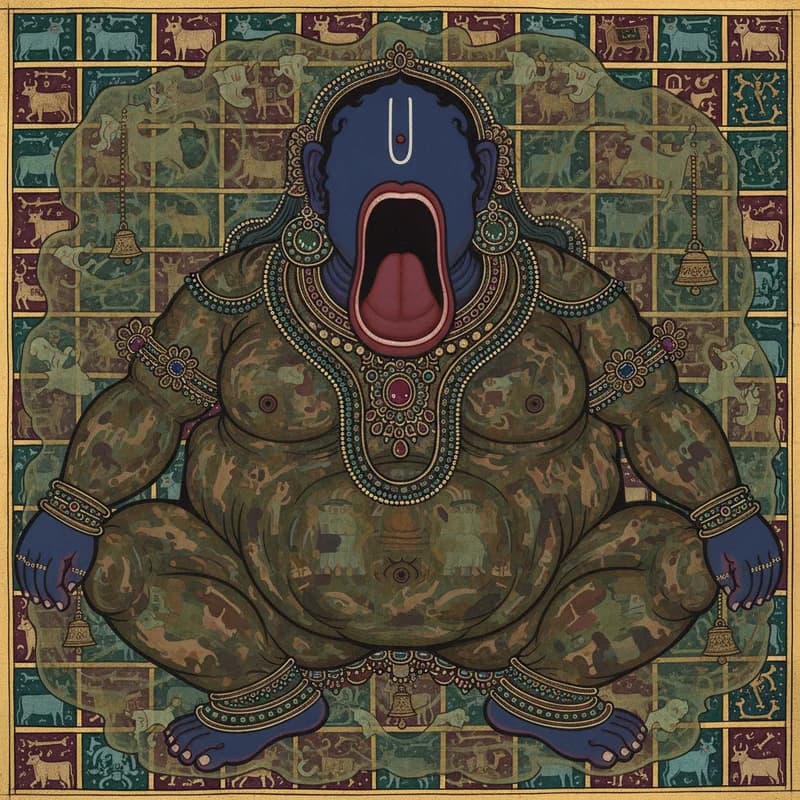

Hadappa
Drought calls it. When the Godavari drops to cracked mud and the wells of the Marathwada plateau turn to echoing darkness, the Hadappa stirs — a devouring presence that the herding communities of Osmanabad and Latur have described in consistent terms across generations: vast, formless at the edges, with a hunger that is not metaphor but mechanism. It swallows cattle whole. Children who wander toward dry riverbeds at midday do not return. The accounts do not describe attack or violence in any conventional sense. They describe absence — a calf there, then not there; a child's footprints ending at the lip of an empty well as though the ground itself swallowed the next step.
What makes the Hadappa distinct from ordinary spirit-predators in the regional folklore record is its relationship to water, or rather to water's failure. It does not inhabit the river — it inhabits the river's negation, the cracked bed of the Manjra in a bad June, the dry throat of a kund that should have filled with the monsoon and did not. Protective measures documented from villages near Solapur focus on the well-mouth itself: stones arranged in a specific pattern before nightfall, no child sent to fetch water alone between the last week of Jyeshtha and the first rains of Ashadha. Herders in the Beed district report hanging dried neem branches at the entrance to cattle enclosures during drought months, though whether this deters the Hadappa or simply marks an awareness of its season is something the accounts themselves cannot settle.
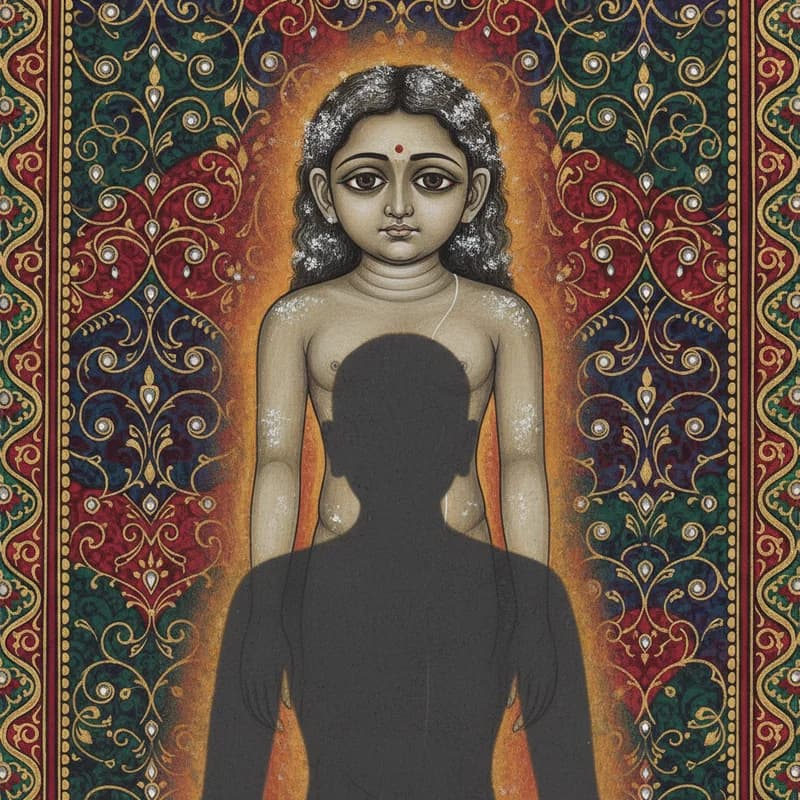
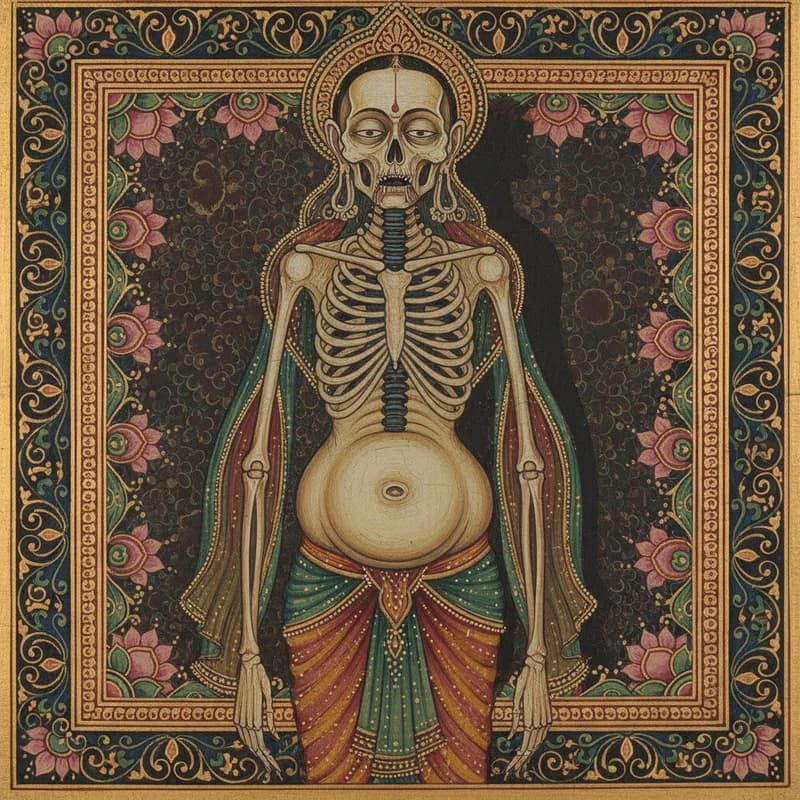
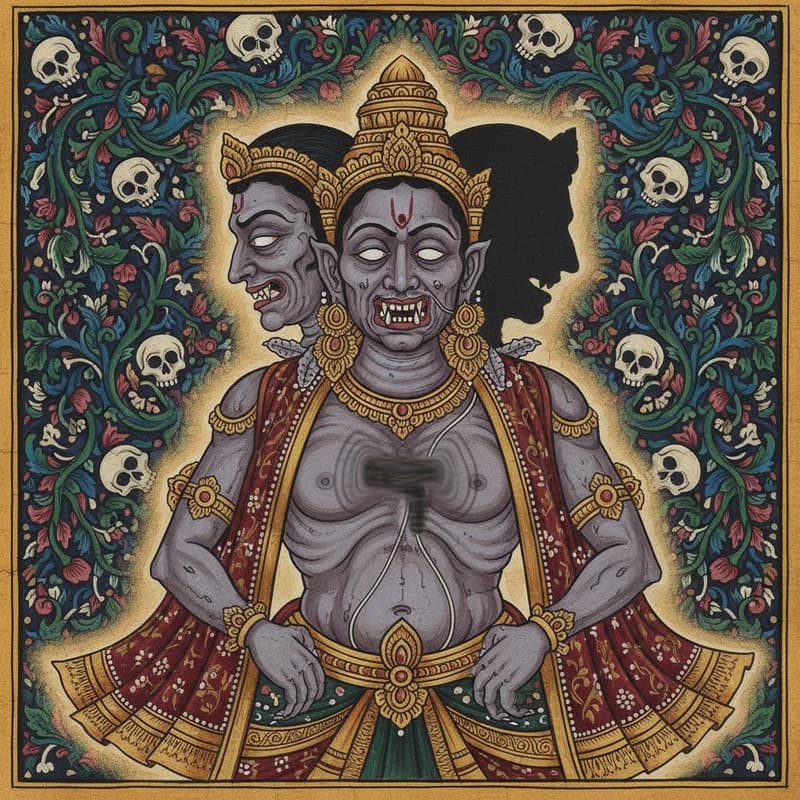
Hadappa is wide rather than tall — the body suggests something that has consumed without ever being satisfied, a bulk that does not read as fat but as accumulation, as if the outline of every swallowed thing has pressed outward against the skin and been absorbed into the silhouette. The face, in accounts collected near the Godavari's cracked summer bed between Nashik and Nanded, is flat and featureless except for the mouth, which witnesses describe as occupying too much of the face — not grotesquely large in isolation, but wrong in proportion, like a vessel designed entirely around its opening. The smell arrives before the form does: stagnant well-water carrying something organic beneath it, the particular rot of a calf that has drowned in a dry season cistern. What marks it as something other than human is the sound it does not make — cattle brought within its proximity go silent before they disappear, the bells around their necks ceasing mid-movement, as if the air itself has been swallowed first.
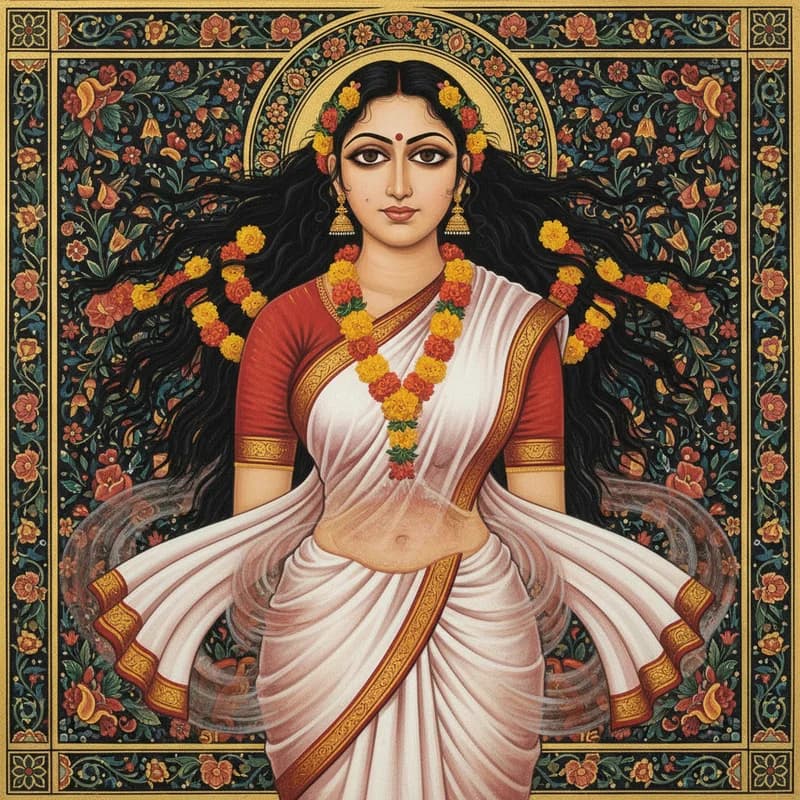
Hadappa moves through drought-stricken villages of the Marathwada plateau as an old woman carrying an empty clay pot on her hip — the posture of someone returning from a well that still has water, which during the Jyeshtha heat is enough to make any desperate family open their door without question. She wears the nine-yard nauvari sari of the region, wound correctly, the cotton appropriately faded. The first tell is the pot: however long she carries it, the clay remains dry on the outside, no condensation, no cool shadow of moisture on the rim. The second is her gait — she walks toward the well, never away from it, regardless of which direction she appears to have come from, as though the well is pulling her rather than she approaching it.
First Documented
Hadappa surfaces in the oral warning traditions of the Vidarbha and Marathwada regions, passed between herding communities during the punishing summers when the Wardha and Penganga rivers shrink to cracked mud — no single founding text claims her, only the repeated testimony of those who lost livestock to drought and needed a name for that loss.
Last Recorded
Accounts of Hadappa persist into the present, with the most recent field testimonies collected from villages along the dried margins of the Godavari near Paithan during the drought years of 2012 and 2018, where well-keepers reported hearing swallowing sounds rising from empty shafts before livestock disappeared overnight.
Source Language
Marathi
Origin
The name Hadappa does not appear in the Puranic catalogues or the standard Marathi demonological texts, but oral accounts collected from the Marathwada villages along the dried channels of the Manjra River place the spirit in a tradition that feels considerably older than any written reference. The folk account is consistent across the Osmanabad and Latur districts: Hadappa rises from wells that have gone dead — not cursed, simply empty — and from the cracked beds of rivers that have failed in the Jyeshtha heat, as though drought itself generates the entity rather than any individual transgression. What distinguishes the oral tradition from the fragmentary written references in the Charitra Katha manuscripts of the Peshwa period is the direction of causality. Those texts treat Hadappa as a cause of drought, a consuming presence that drinks the land dry. The village accounts invert this entirely — drought is the womb, not the wound. That reversal is worth sitting with: it shifts moral weight from the spirit to the conditions that produce it, and in a region where crop failures have historically carried political weight, the distinction is not accidental.
Frequently Asked
Hadappa (हडप्पा) is a devouring spirit from Maharashtrian folklore, believed to swallow cattle and young children whole. It belongs to a class of malevolent beings associated with scarcity and thirst, emerging specifically during periods of drought when the land cracks and water sources fail.
Hadappa is said to inhabit dry riverbeds and abandoned wells, particularly in the drought-prone interior of Maharashtra — the Marathwada plateau and the parched stretches along the Godavari's seasonal tributaries. Oral accounts collected from villages near Aurangabad describe the spirit as rising from cracked earth when the well-water drops below sight.
Drought is the primary condition for Hadappa's appearance — not merely dry weather, but the sustained, killing kind that empties wells and turns riverbeds to pale dust. Accounts from rural Maharashtra consistently place sightings in the months of Jyeshtha and Ashadha, when the monsoon is overdue and livestock begin to weaken.
Hadappa is considered dangerous to both, though children are regarded as especially vulnerable in the oral tradition. Cattle disappearances near dry wells are commonly attributed to it, but the more frightening accounts involve children sent to fetch water who do not return.
Unlike Pisachas or certain Rakshasas who are associated with cremation grounds and night, Hadappa is specifically a spirit of drought and thirst — its power is tied to the absence of water rather than darkness or death. This makes it unusual among devouring entities, which are more commonly linked to forests or burning grounds than to dry wells and failed monsoons.
Protective practices vary by village, but offerings of water and grain placed at the mouth of wells before the dry season are documented across several districts of Marathwada. Some communities in the Aurangabad region observe a prohibition on sending children to draw water alone once the Godavari's smaller feeders run dry.
Hadappa does not appear in canonical Sanskrit texts such as the Puranas or the Mahabharata, and belongs firmly to the oral tradition of rural Maharashtra. Its documentation comes primarily from village accounts and regional folklore collections rather than written scripture, which is characteristic of many localized spirits tied to specific ecological conditions.
Physical descriptions of Hadappa are inconsistent across accounts, as is common with spirits encountered in states of fear or heat-exhaustion. The most repeated detail is an enormous, hollow mouth — some accounts describe a figure the color of dry earth, thin-limbed but with a distended belly, crouching at the rim of an empty well.
संबंधित लोकगाथाएं
Related Lore
Algorithmic Inference
आपको यह भी पसंद आ सकता है
You May Also Like
Community Discussion
Comments are reviewed by AI before appearing publicly. Unsafe, unrelated, or uncertain comments go to human review.
Sign in to join the discussion.
0 comments
No public comments yet.