प्रतीक्षा करें
Awakening the Churel dossier…
प्रतीक्षा करें
Awakening the Churel dossier…

Ghantu Devta
The peaks above Spiti and the Kinnaur valleys hold their own calendar, and in late October, when the passes close and the last mule caravans descend to lower ground, something is left behind. Ghantu Devta occupies the glaciers above the tree line — not the forested slopes where the deodar grows, but the bare, wind-scoured ice fields where the air thins and the light turns a particular shade of white that experienced shepherds refuse to look at directly. He does not wander. He waits where the stone meets the permanent snow, and the accounts collected across Kalpa, Nako, and the upper Pin valley agree on this with unusual consistency: the spirit does not pursue, it responds. Trespass is the trigger.
What follows trespass is documented in two forms. The first is meteorological — storms that arrive without the usual signs, without the shift in wind or the particular bruising of clouds over Kinnaur Kailash that locals read as warning. The snow comes sideways and without announcement, sealing routes that were clear an hour before. The second is interior, and the accounts struggle harder to describe it: a confusion that settles on the trespasser like cold entering wet wool, a certainty that the path behind is the path ahead, that the valley floor lies upward. Older residents of Reckong Peo call this condition by a phrase that translates roughly as "the mountain thinking through you. " Those who return from it describe a period of hours they cannot account for, found sitting in the snow without memory of sitting down. The boundary Ghantu Devta enforces is not marked by any shrine — it is understood, passed down through the men who graze yaks at altitude each summer, and respected accordingly.
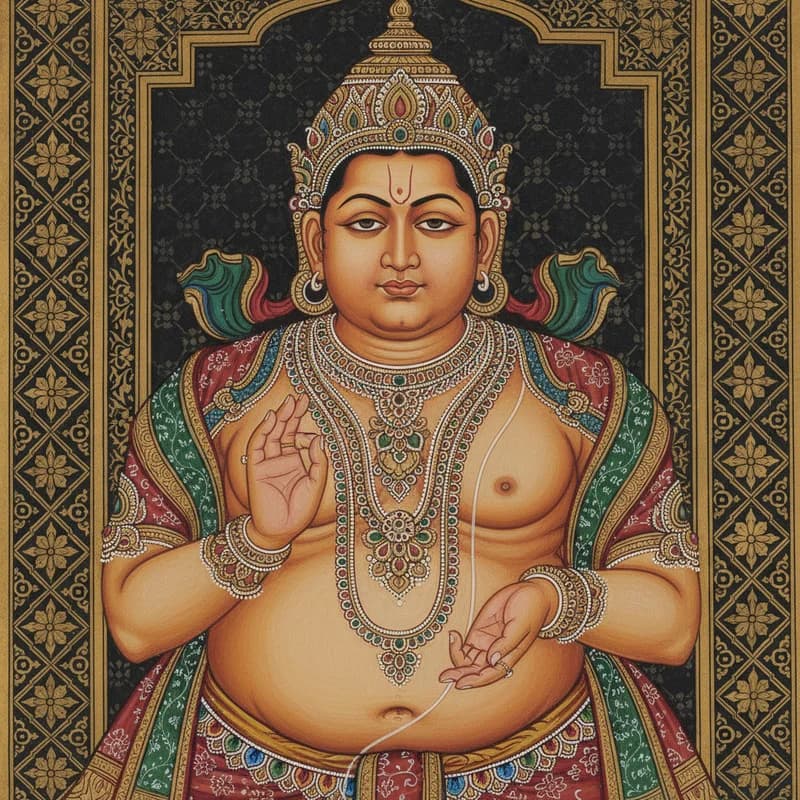
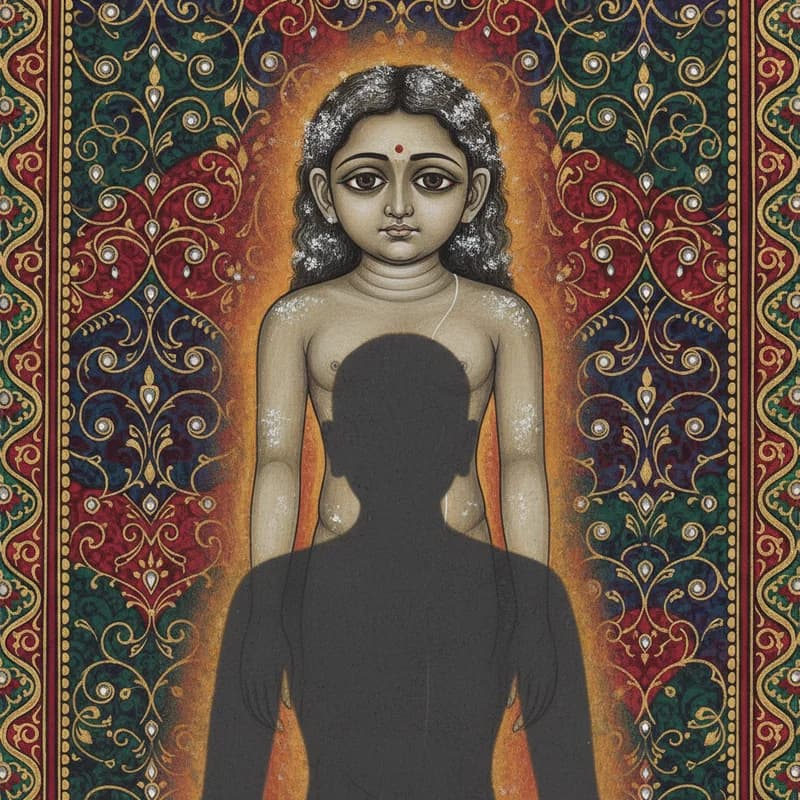
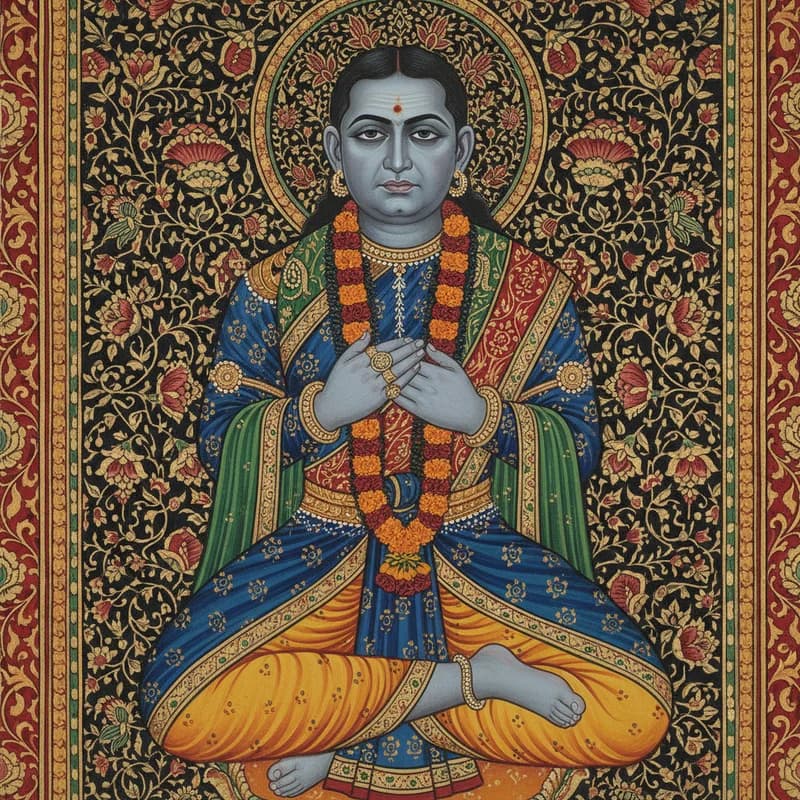
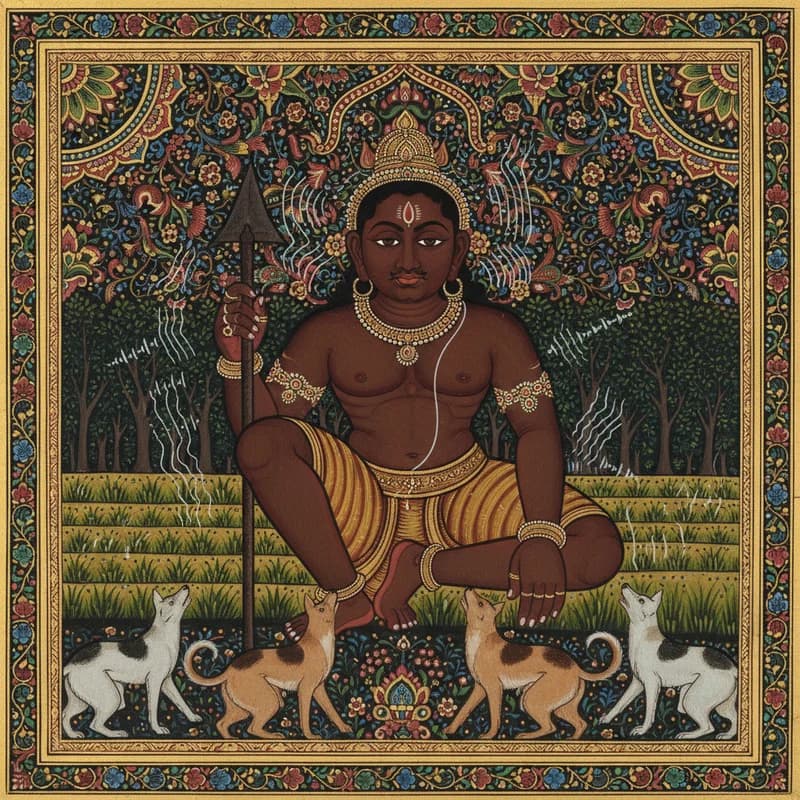
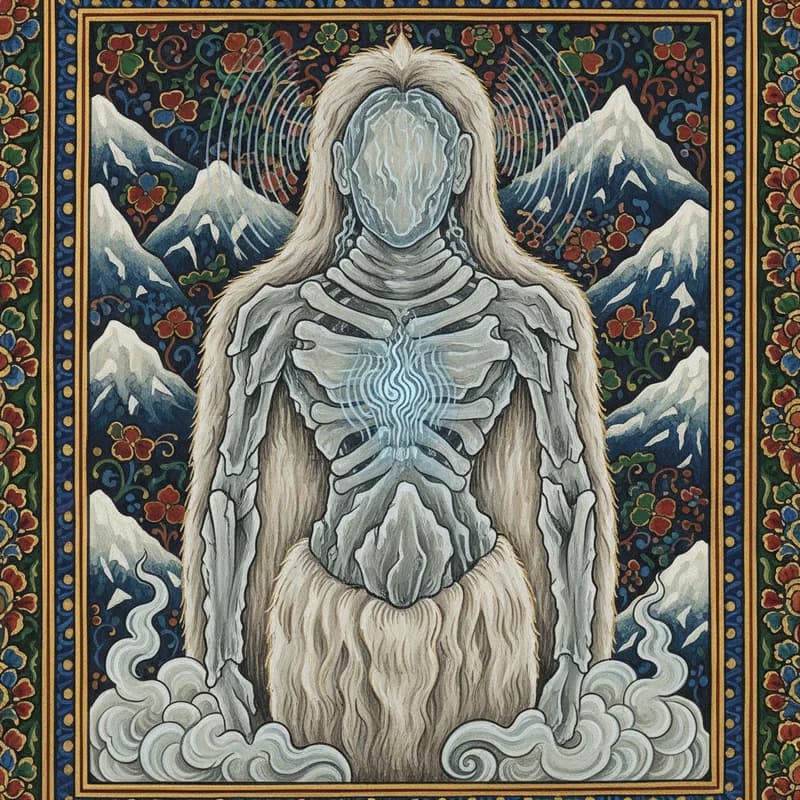
Ghantu Devta appears as a figure assembled from the mountain itself — the body tall and loosely articulated, the limbs suggesting bone rather than confirming it, wrapped in something between mist and matted wool that does not move with any wind present at the time. The skin, where witnesses from the Kullu and Lahaul valleys have described it closely, is the grey-white of névé ice: not pale, but genuinely colourless, as though pigment was something it shed long ago above the treeline. What strikes most accounts is the cold that precedes it — not the ambient cold of a Rohtang crossing in November, but a localized, sudden cold at the sternum, the kind that arrives before the blizzard does. The face is reported as approximate: features present but unresolved, like a face seen through the ice of a frozen stream. The single consistent supernatural marker is the sound — a low, rhythmic percussion like a glacier calving, heard inside the skull rather than through the ears, growing louder the higher one climbs.
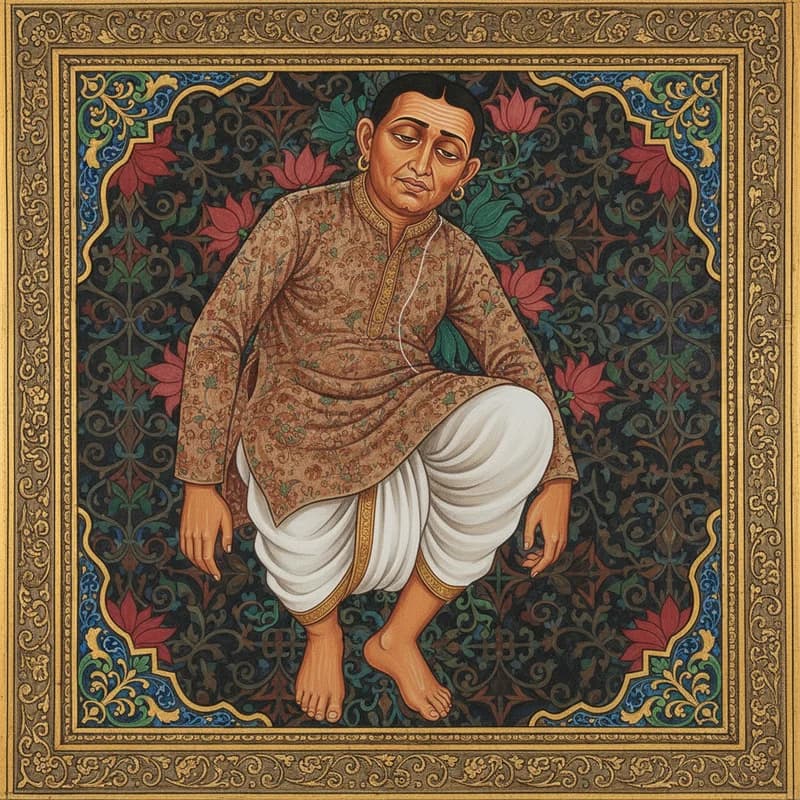
In the high pastures above Spiti valley, where the Pin river thins to a thread and shepherds graze their flocks through the brief window of June and July, Ghantu Devta has been reported moving among the herds as an old Gaddi shepherd — staff in hand, wearing the rough-woven chola of the hills, his face weathered in a way that reads as familiar even to men who cannot place him. He speaks in the right dialect. He knows the names of passes. The tells are these: his breath produces no visible cloud in the cold, where every living thing's exhalation hangs white in that altitude's thin air. And the sheep will not move toward him — not shying, not bolting, simply standing still with their heads turned away, as animals do before weather they have already decided to outlast.
First Documented
Ghantu Devta surfaces most clearly in the oral traditions of Kinnaur and Spiti districts, carried by shepherd communities who have grazed flocks on the high pastures above Chitkul and the Baspa Valley for centuries. No Sanskrit text claims him — he belongs entirely to the spoken word.
Last Recorded
Accounts of Ghantu Devta persist into the present, collected most recently from shepherds wintering near the Spiti Valley settlements of Kaza and Tabo, who describe sudden whiteouts and inexplicable disorientation on the Kunzum Pass as the spirit's unmistakable signature.
Source Language
Pahari
Origin
Ghantu Devta does not appear in the Puranic catalogues or the Shaiva Agamas that document Himachal's better-known mountain deities; the earliest traceable record is in the oral tradition streams of the Spiti and Lahaul valleys, where shepherds crossing the Rohtang Pass in the months before the first snowfall speak of him as a guardian whose patience is finite. The textual tradition — such as it is, confined to local temple records maintained at Trilokinath and a few Tibetan-influenced monastic documents along the Chandra River — frames Ghantu Devta as a protector bound to specific glacial boundaries, a deity who sanctions passage when ritual acknowledgment is made. The oral accounts diverge sharply here: in the high pasture communities above Keylong, he is not a protector but a presence disturbed, something old inside the ice that does not recognize the category of permission. Where the written record describes a spirit that can be appeased, the oral tradition insists on a spirit that has simply been woken — and cannot be asked to sleep again. That divergence matters, because
Frequently Asked
Ghantu Devta is a mountain spirit from the folklore of Himachal Pradesh, believed to inhabit high-altitude glaciers above the treeline in ranges like the Kullu and Spiti valleys. Oral accounts collected from shepherds and traders describe the spirit as a guardian presence — neither wholly benevolent nor malicious — that remains dormant until human trespass disturbs its glacial domain. When provoked, Ghantu Devta is said to unleash sudden blizzards and a creeping disorientation that locals call 'pahar ka pagalpan,' the madness of the mountain.
Ghantu Devta is credited with command over high-altitude weather, particularly the ability to summon whiteout blizzards with little warning on otherwise clear days. Beyond meteorological force, the spirit is associated with altitude madness — a specific cognitive unraveling that affects trespassers, causing them to lose direction, hear voices in the wind, and make fatal decisions on exposed ridgelines. Villagers in the Pin Valley distinguish this spirit-induced madness from ordinary altitude sickness by its sudden onset and the absence of physical symptoms.
Ghantu Devta is said to reside within glaciers at elevations above 4,000 meters in the high ranges of Himachal Pradesh, particularly in the cold deserts beyond the Rohtang Pass and along the upper reaches of the Spiti River. The spirit is not associated with temples or consecrated shrines in the conventional sense; its home is the ice itself — the blue-green depths of glacial crevasses that local herders refuse to approach after the first snowfall of Kartik. Some accounts from the Lahaul district place the spirit specifically near the Bara Shigri glacier.
The clearest sign of Ghantu Devta's displeasure is a blizzard that arrives without the usual atmospheric warnings — no drop in temperature, no darkening of the Deo Tibba peaks, no restlessness among the yaks. Survivors of such encounters, interviewed in villages near Kaza and Manali, consistently describe a second symptom: an inexplicable certainty that they are walking downhill when they are climbing, or that the trail they know well has rearranged itself. This spatial confusion is treated by local healers as a spiritual affliction requiring propitiation, not medical intervention.
Ghantu Devta does not receive formal puja in the manner of village deities like Hadimba at Manali or the Shikari Devi of Mandi district, but the spirit commands a practical reverence among those who work the high passes. Shepherds moving their flocks through the Hampta Pass or the Kunzum La leave small offerings — a pinch of salt, a strip of cloth tied to a cairn — not as worship but as acknowledgment, a way of announcing their presence and their intention to pass without harm. The relationship is less devotional than contractual.
Unlike the Nag devtas of the lower Kullu Valley, who are serpent spirits associated with water sources and agricultural fertility, Ghantu Devta is specifically a creature of altitude and ice, with no benevolent agricultural function. The spirit also differs from the protective gram devtas enshrined in village temples, which can be petitioned and appeased through formal ritual; Ghantu Devta is encountered rather than invoked, and its domain begins precisely where the village's ritual authority ends. This makes it a liminal entity in the truest sense — a spirit of the threshold between the human world and the uninhabitable high mountain.
Oral accounts from Lahaul and Spiti attribute several unexplained deaths on high passes to Ghantu Devta's influence, though the mechanism is always indirect — the spirit disorients rather than strikes. A traveler seized by the spirit's madness might walk off a cornice, lie down in the snow convinced they are resting in a meadow, or simply lose the will to descend before nightfall. The spirit is classified in LokKatha's threat taxonomy under 'caution' rather than 'lethal' because its danger is contingent on the victim's response to the disorientation it induces.
Ghantu Devta does not appear in the Puranas or in Sanskrit textual traditions, which tend to locate their mountain spirits — the Yakshas, the Gandharvas — in a more generalized Himalayan geography rather than the specific glacial terrain of Himachal. The spirit belongs to the oral archive: the accounts of gaddis, the nomadic shepherds of the Dhauladhar range, and the traders who once worked the salt routes through Spiti into Tibet. These accounts, preserved in the vernacular Pahari dialects, are the primary source material for any serious study of Ghantu Devta.
संबंधित लोकगाथाएं
Related Lore
Algorithmic Inference
आपको यह भी पसंद आ सकता है
You May Also Like
Community Discussion
Comments are reviewed by AI before appearing publicly. Unsafe, unrelated, or uncertain comments go to human review.
Sign in to join the discussion.
0 comments
No public comments yet.