प्रतीक्षा करें
Decoding the Pishacha encounter logs…
प्रतीक्षा करें
Decoding the Pishacha encounter logs…

Mandeha
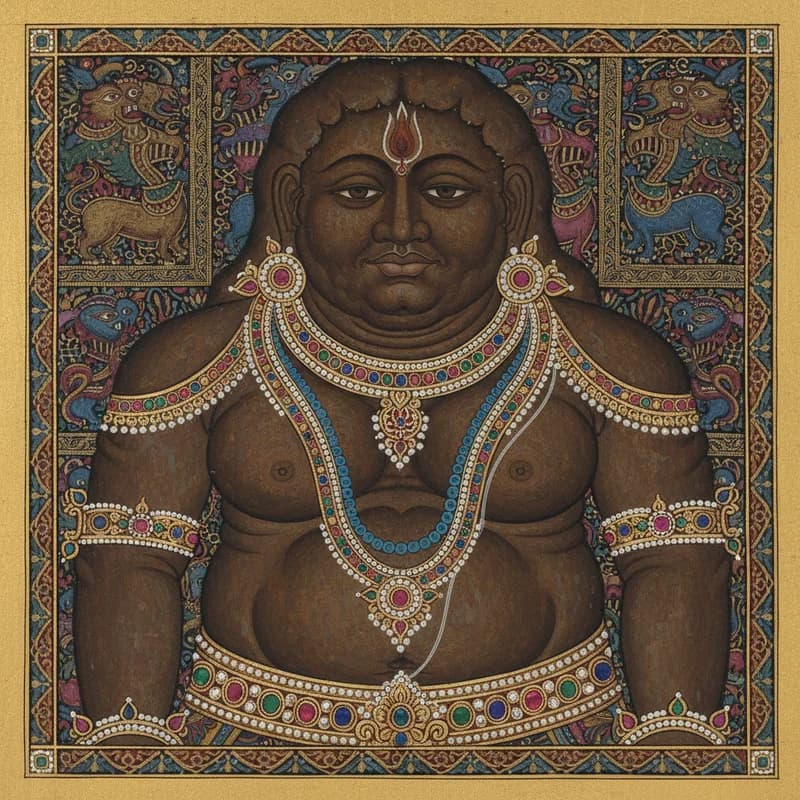
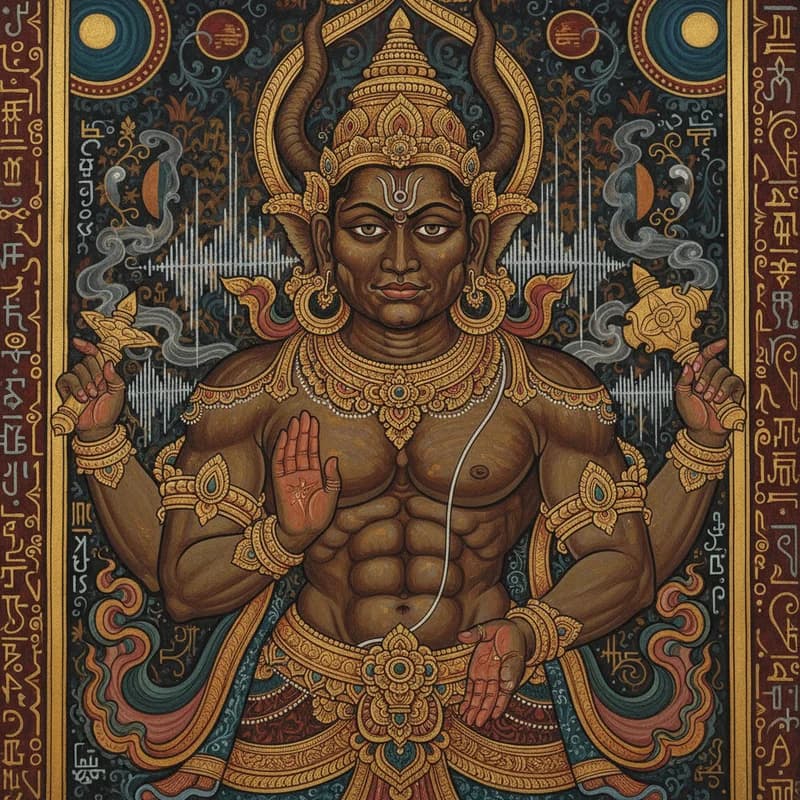
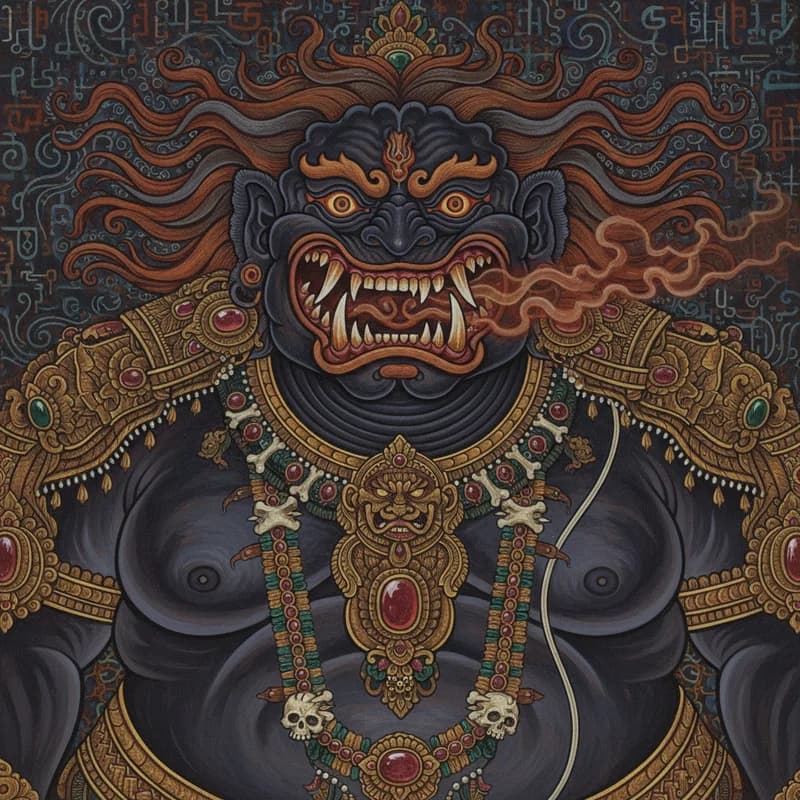
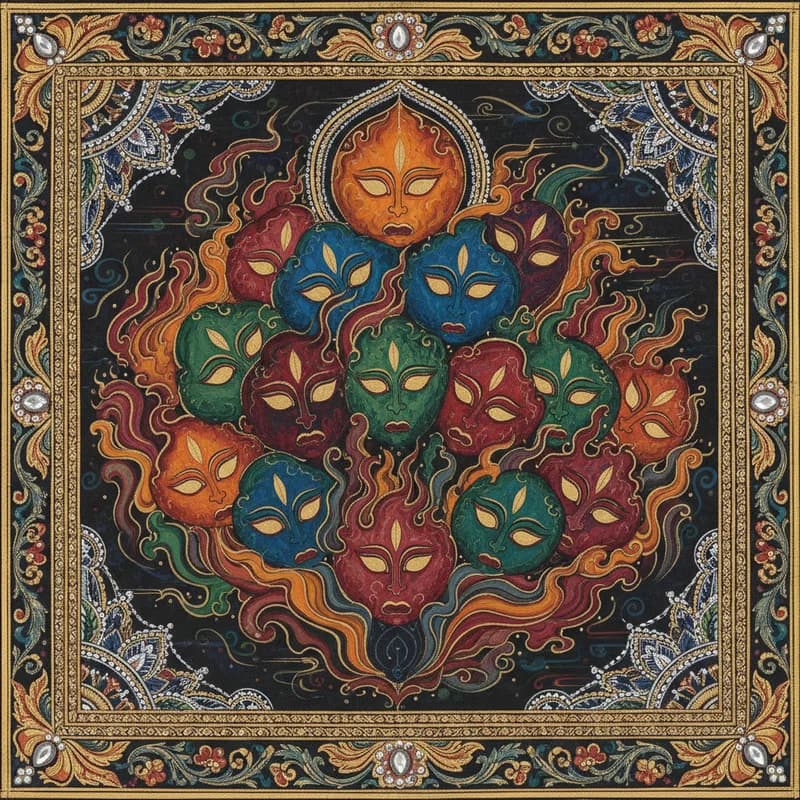
Every morning, before the sun clears the horizon over the Ganga at Haridwar or the eastern ghats of Varanasi, something is already moving against it. The Mandeha are demonic beings who attack the rising sun at the precise moment of its greatest vulnerability — that thin, uncertain interval between night's end and the first full light, when the sky is neither one thing nor the other. Ancient Vedic cosmology names them explicitly: the Vishnu Purana and the Mahabharata both record their assault as a daily event, not a myth of some distant age but a recurring crisis, repeated without pause since the beginning of ordered time. They are not metaphors. They are presences, enormous and purposeful, hurling themselves at the solar disc each dawn with the single intention of extinguishing it.
What holds them back is specific and conditional. The Brahmin's recitation of the Gayatri mantra at sunrise — performed correctly, at the right hour, facing east — generates something the Mandeha cannot withstand. The accounts describe it as water made sacred by the mantra's power, sprinkled toward the sun during the sandhyavandanam ritual, which strikes the demons like burning rain and drives them back. Without this daily act, the texts suggest, the assault would eventually succeed. The sun does not defeat the Mandeha alone. It requires human cooperation, performed every morning along the riverbanks of the Narmada and the Godavari, on the ghats of Prayagraj when the mist still sits on the water, in courtyards and temple precincts from Kanyakumari to Kedarnath. The Mandeha are never destroyed — only repelled, retreating until the next dawn returns them to the attack.
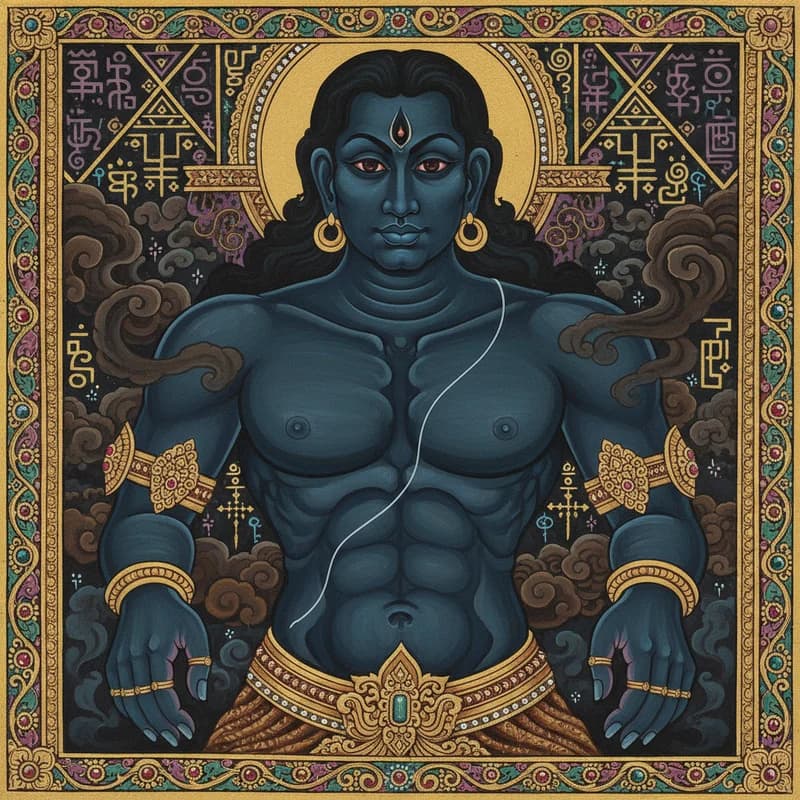
The Mandeha appear in clusters, never alone — accounts from the Ganga plain describe them as figures of compressed smoke given approximate weight, bodies that suggest mass without confirming it, their outlines sharpest at the edges and indistinct at the centre, as though they are always in the process of arriving or dispersing. At close range, witnesses near the Prayagraj sangam report a sensation of pressure against the chest, not pain but resistance, the feeling of walking into still water that has not yet decided to part. Their most striking quality is directional: they move only westward in darkness, drawn toward something they cannot quite reach, and when dawn breaks over the Vindhya ridge and the first Gayatri syllables rise from the ghats, those who have watched describe the figures thinning at the edges first — the periphery dissolving before the centre surrenders — like ink bleeding out of wet cloth.
At dawn on the ghats of Haridwar, when the Ganga runs grey before the first light touches it, the Mandeha sometimes appear as Brahmin men already deep in their sandhya vandanam — seated at the water's edge, lips moving, the sacred thread visible at the shoulder, posture correct and composed. Nothing about the figure announces itself as wrong. The tell is in the thread: it catches no light, even when the first horizontal rays of sunrise strike the river and illuminate everything else on the bank. The second tell, noted by older priests at Kashi's Dashashwamedh Ghat, is that their lips move against the rhythm of the Gayatri — the syllables slightly inverted, the cadence running backward, as though the mantra is being unmade rather than spoken.
First Documented
The Mandehas appear in the *Vishnu Purana* and *Vayu Purana*, where they are described as demons born from Brahma's exhalation during sleep, condemned to assault Surya at each dawn — a cosmic siege renewed without rest, broken only by the Brahmin's recitation of the Gayatri at the precise moment of sunrise.
Last Recorded
Accounts of the Mandeha persist in living practice rather than discrete sightings — Brahmin households along the Ganga from Haridwar to Prayagraj still cite their dawn Gayatri recitation as active cosmic defense, not mere ritual, a belief documented by folklorists as recently as the 1990s and quietly upheld to this day.
Source Language
Sanskrit
Origin
The Mandeha appear in the Vishnu Purana and the Valmiki Ramayana's Ayodhya Kanda, where Valmiki places their assault on the sun within the framework of cosmic necessity — the battle is eternal, fixed, and resolved only through the Brahminical act of sandhyavandana at dawn. In the textual account, the Mandeha are ten thousand strong, born of Brahma's breath during a moment of inattention, condemned to attack Surya's chariot each morning only to be dispersed by the water oblations and Gayatri recitation of observant Brahmins along the Ganga's banks. The oral tradition of the Gangetic plain, particularly among the Maithil Brahmin communities of northern Bihar, diverges on a significant point: in village accounts collected along the Bagmati and Kamla rivers, the Mandeha are not dispersed but temporarily wounded, returning the following dawn unchanged, their assault never conclusively lost. Where the Puranic text frames the ritual as triumphant and sufficient, the oral tradition frames it as holding
Frequently Asked
Mandeha are a class of demonic spirits described in Hindu sacred texts as beings who assault the sun at the moment of its rising each dawn. They are repelled not by divine weapons but by the collective recitation of the Gayatri mantra performed by Brahmins during the sandhya ritual at sunrise. Without this daily act of prayer, the texts suggest, the Mandeha would overwhelm Surya and plunge the world into darkness.
The Mandeha appear most prominently in the Vishnu Purana, where their assault on the sun is cited as the cosmological reason why the morning sandhya must never be neglected. The text frames the Gayatri recitation not as mere devotional practice but as a literal act of cosmic defense, repeated without fail at every sunrise across the subcontinent.
According to Puranic tradition, the Mandeha are cursed beings condemned to attack Surya at each dawn, driven by an enmity that is both ancient and compulsive rather than strategic. Their assault is cyclical and inevitable — they cannot choose otherwise — which is precisely why the Brahmin's obligation to recite the Gayatri at sunrise is considered equally non-negotiable.
The Vishnu Purana is explicit: the Mandeha are destroyed each morning by the water offerings and Gayatri recitation of Brahmins performing sandhyavandanam at dawn. This water, charged with the power of the mantra, falls upon the demons like burning arrows. By the time the sun clears the horizon, the Mandeha are vanquished — only to reconstitute themselves and return the following dawn.
The Mandeha occupy their own distinct category in Puranic demonology, though they share the broad characteristic of hostility toward divine order that defines both Rakshasas and Asuras. Unlike Rakshasas, who are often individualized with names and personalities in texts like the Ramayana, the Mandeha function as an anonymous collective — a force rather than characters. Their purpose is cosmological, not narrative.
The Vishnu Purana warns that a Brahmin who neglects the morning sandhya becomes complicit in the Mandeha's assault on the sun, accumulating grave spiritual demerit. The implication is that the sun's daily victory is not guaranteed by divine power alone but depends on human ritual participation. This frames the Mandeha not merely as mythological monsters but as a theological argument for the indispensability of daily practice.
The Mandeha are largely confined to the Sanskritic Puranic tradition and do not appear with the same specificity in the oral folk traditions collected along the Ganga plains or in the tribal narratives of central India. Village accounts of dawn-time dangers tend to invoke more localized spirits — the churel, the preta — rather than cosmic demon hordes. The Mandeha remain, in this sense, a learned mythology rather than a living one.
The Mandeha myth encodes a striking theological claim: that the physical universe requires human ritual maintenance to function. Brahmins reciting the Gayatri on the ghats of Varanasi or the banks of the Godavari at first light are not merely praying — they are, according to this cosmology, actively holding back chaos. The story elevates the sandhya ritual from personal piety to a duty with consequences for all creation.
संबंधित लोकगाथाएं
Related Lore
Algorithmic Inference
आपको यह भी पसंद आ सकता है
You May Also Like
Community Discussion
Comments are reviewed by AI before appearing publicly. Unsafe, unrelated, or uncertain comments go to human review.
Sign in to join the discussion.
0 comments
No public comments yet.