प्रतीक्षा करें
Parsing the Naga lineage records…
प्रतीक्षा करें
Parsing the Naga lineage records…
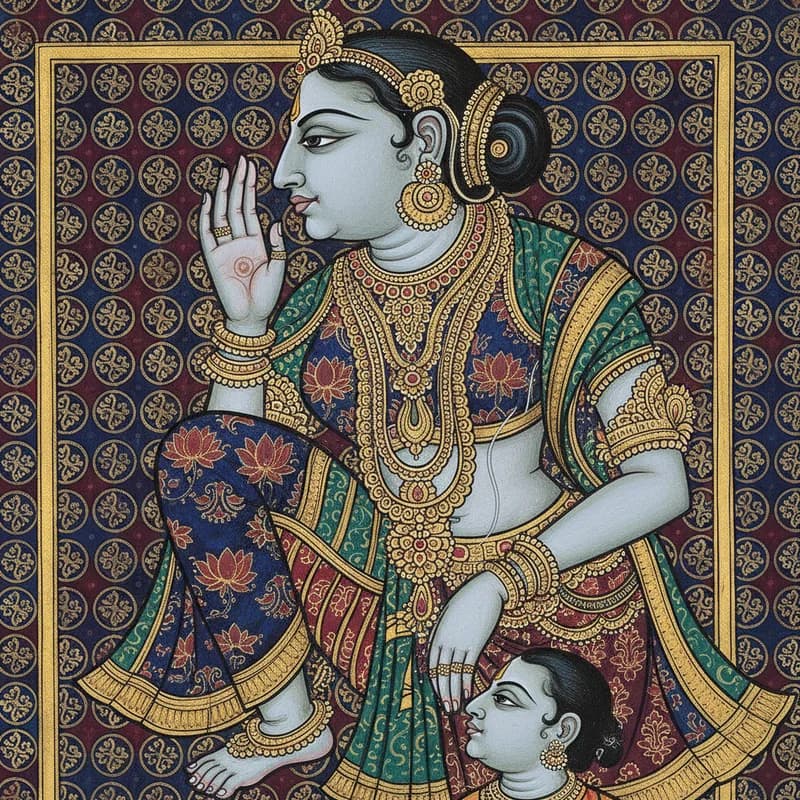

Brahmi
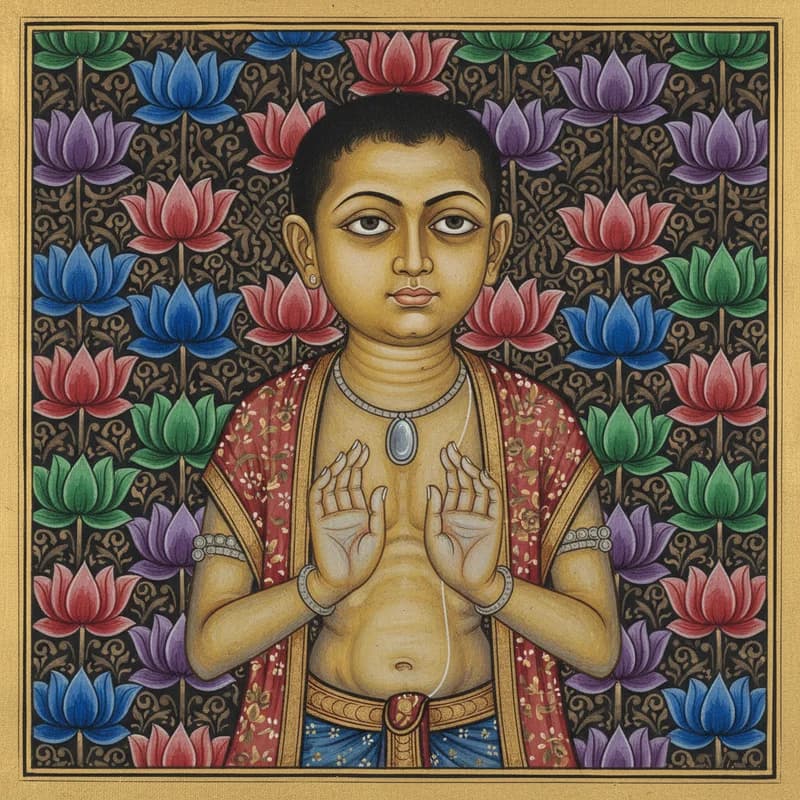
She comes for children who are learning to speak. Across the Gangetic plains — in the villages between Prayagraj and Varanasi, in the mud-walled schoolrooms near Mirzapur where boys first trace the Devanagari alphabet onto slate — mothers know her by the sudden silence that replaces a child's voice. One morning the child speaks; the next, the words stop arriving. The tongue moves but finds nothing. The eyes hold a confusion that looks, to those who do not know, like ordinary illness.
The Sanskrit medical tradition names her directly. The Kashyapa Samhita, a pediatric text composed for the ailments of children, lists Brahmi among the graha — possessing spirits that enter the young. What makes her particular is the nature of her damage: she does not take life, she takes language. Possessed children lose words first, then sequence, then the ability to hold a thought to its end. Accounts from Ayurvedic practitioners in the old districts of Kashi describe a child who could recite verses at four and could not remember his mother's name at five. The name carries its own bitter irony — Brahmi is also the name of the herb Bacopa monnieri, prescribed for centuries across the subcontinent to sharpen a child's memory and quicken speech. That the spirit and the cure share a name is not considered coincidental in the folk record. Recognition of her is the first requirement of treatment. She cannot be expelled from a child the healer refuses to acknowledge.
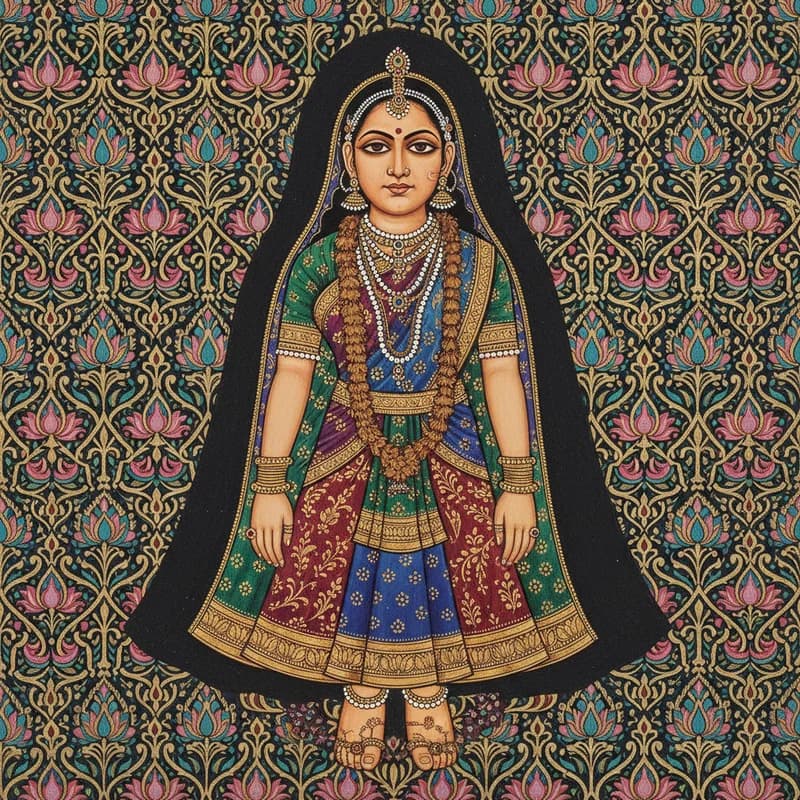
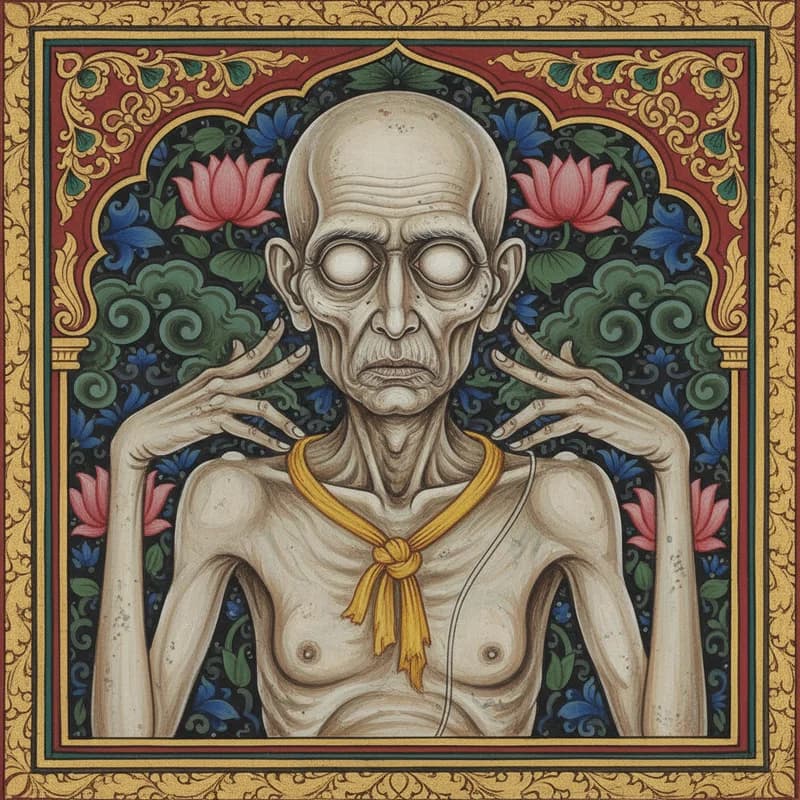
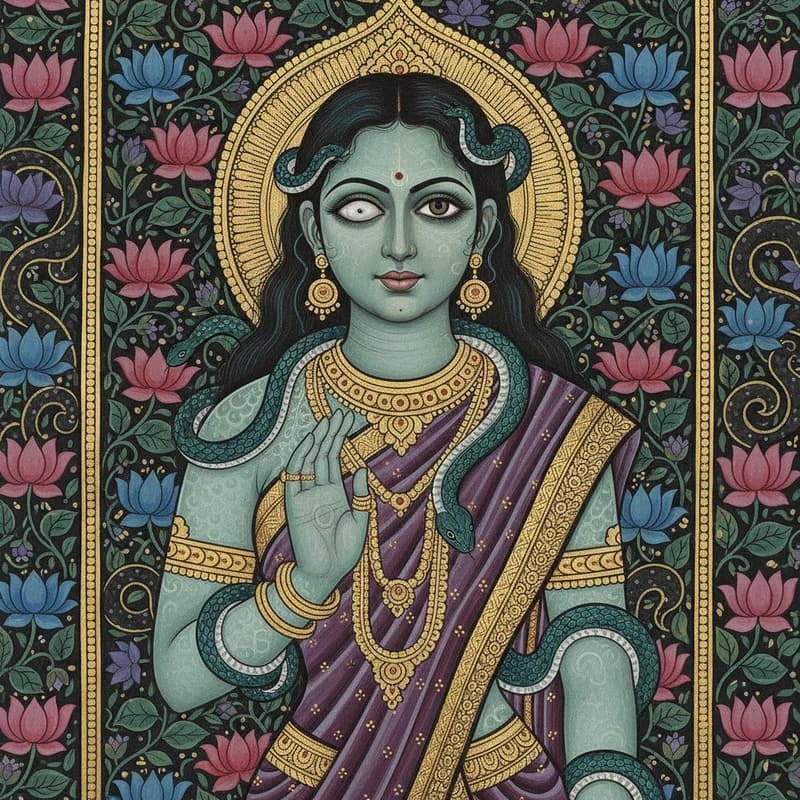
Brahmi appears as a woman of indeterminate age — not old, not young, but suspended somewhere between the two, the way a word sits in the mouth before it is spoken. Her skin carries the faint blue-grey tint of wet ink on palm-leaf manuscript, and her fingers are disproportionately long, the tips perpetually stained as though she has been pressing them into something that does not dry. She is always found near children, crouching at the level of their ears. The sound witnesses describe is not a voice but its opposite — a soft erasure, like a name being slowly rubbed from a page. What marks her as something other than a woman is the silence that follows her: not the absence of sound, but the absence of the child's sound, the specific quiet of a small mouth that has forgotten how to begin.
Brahmi moves through villages near the old Ayurvedic teaching settlements — the kind that once clustered along the Narmada's upper reaches — wearing the form of a widowed grandmother who has come to help with a difficult birth or a child's fever. She carries a small cloth bundle, the kind that healers use for dried herbs, and she asks to be left alone with the sick child for only a moment. The first tell is the bundle itself: it produces no smell, none of the sharp bitterness of vacha root or the dusty warmth of brahmi leaf that any woman who had actually carried herbs would carry on her hands and clothes. The second is subtler — she does not ask the child's name before she enters the room, and any true healer always asks the name first.
First Documented
Brahmi appears among the Ashtamātṛkās — the eight divine mothers — in early Puranic literature, with her pathological aspect as a child-afflicting spirit documented in Suśruta's *Suśruta Saṃhitā* and Caraka's *Caraka Saṃhitā*, where she is named among the *grahas*, supernatural entities held responsible for seizures, speech loss,
Last Recorded
Accounts of Brahmi's possession of children appear in Ayurvedic commentaries as late as the eighteenth century, with oral reports from village healers in the Gangetic plains persisting into the mid-twentieth century. Scattered accounts from Bihar and eastern Uttar Pradesh suggest the belief has not entirely faded.
Source Language
Sanskrit
Origin
Brahmi enters the medical literature as a possessing spirit in the Kashyapa Samhita, one of the foundational Ayurvedic texts concerned with pediatric afflictions — the Kaumarabhritya tradition — where she is listed among the graha spirits that seize children in their first years and manifest as disruptions to speech, cognition, and memory. The textual account is diagnostic: she is classified, symptomized, and treated, her presence inferred from the child's condition rather than described independently. Folk tradition from the Ganga-Yamuna doab, particularly in communities near the Dasaswamedh Ghat at Varanasi and in the vaidya lineages of Mithila, carries a different account entirely — here Brahmi is not a malevolent force but a spirit of unfinished learning, a presence that attaches itself to children whose minds are open in ways that adult cognition has foreclosed. The divergence is telling: the Kashyapa Samhita must explain what is pathological and prescribe a cure, so Brahmi becomes illness; the oral tradition, unburdened
Frequently Asked
Brahmi is a possessing spirit described in classical Sanskrit medical literature, particularly in texts like the Kashyapa Samhita, believed to afflict young children with speech disorders, intellectual disability, and loss of memory. Unlike the benevolent herb that shares her name, this Brahmi is a figure of caution — a supernatural force that disrupts the mind's development from within. Her presence was recognized not through dramatic signs but through the slow, quiet erosion of a child's speech and cognition.
A child possessed by Brahmi may lose the ability to speak clearly, suffer impaired memory, or show signs of intellectual regression that Ayurvedic physicians distinguished from ordinary illness. The Kashyapa Samhita, a foundational text of Indian pediatric medicine, catalogues her among the Balagrahas — a class of spirits specifically targeting infants and young children. Possession was understood as a disruption of the child's prana and mental faculties rather than a physical disease.
No — the two share a name but are entirely distinct. Bacopa monnieri, the herb called Brahmi, is prescribed along the banks of the Ganga and in wetland regions across India precisely to strengthen memory and speech, the very faculties the spirit Brahmi is said to destroy. This inversion is not accidental; Ayurvedic tradition often named remedies in deliberate opposition to the afflictions they countered.
The Kashyapa Samhita, one of the oldest surviving Sanskrit texts on pediatric medicine, is the primary source that identifies Brahmi among the Balagrahas — spirits associated with childhood illness and possession. Sushruta's compendium and later commentaries on Charaka also reference this class of spirits in the context of unexplained neurological and developmental conditions in children. These texts were likely compiled between the 6th century BCE and the early centuries CE, drawing on older oral medical traditions.
The Balagrahas are a group of spirits in Sanskrit medical literature, each associated with distinct symptoms in afflicted children — some cause fever, others convulsions or wasting. Brahmi is specifically linked to cognitive and linguistic impairment, making her unusual among this group for targeting the mind rather than the body. Where spirits like Skanda-graha were associated with seizures and physical distress, Brahmi's damage was subtler and, in the understanding of ancient physicians, harder to reverse.
Physicians trained in the Kashyapa tradition looked for a cluster of signs: a child who had begun to speak falling silent, a dulling of recognition in the eyes, and a gradual withdrawal from responsiveness that could not be explained by fever or physical injury. Diagnosis required ruling out other Balagrahas and natural causes before attributing the condition to Brahmi's influence. Ritual intervention, medicinal preparations, and recitation of protective mantras were typically prescribed in combination.
Brahmi does not appear in temple worship or devotional practice the way major spirits and deities do — she belongs to the medical-ritual literature rather than the devotional mainstream. In rural communities across the Gangetic plain, where Ayurvedic and folk healing traditions overlap, she is treated as a threat to be warded off rather than propitiated. Protective amulets, neem-based preparations, and recitations from the Atharva Veda were historically used to keep such spirits from approaching newborns.
The textual tradition of Brahmi as a Balagraha is rooted in the Sanskrit medical schools of northern India, particularly those associated with the Kashyapa lineage near the forests of the Himalayan foothills and the Ganga basin. In southern India, comparable spirits causing childhood speech and cognitive disorders exist under different names within Tamil Siddha and folk healing traditions, though direct identification with Brahmi is not established. The convergence of symptoms across these regional traditions suggests a shared, ancient anxiety about the vulnerability of the developing child's mind.
संबंधित लोकगाथाएं
Related Lore
Algorithmic Inference
आपको यह भी पसंद आ सकता है
You May Also Like
Community Discussion
Comments are reviewed by AI before appearing publicly. Unsafe, unrelated, or uncertain comments go to human review.
Sign in to join the discussion.
0 comments
No public comments yet.