प्रतीक्षा करें
Awakening the Churel dossier…
प्रतीक्षा करें
Awakening the Churel dossier…
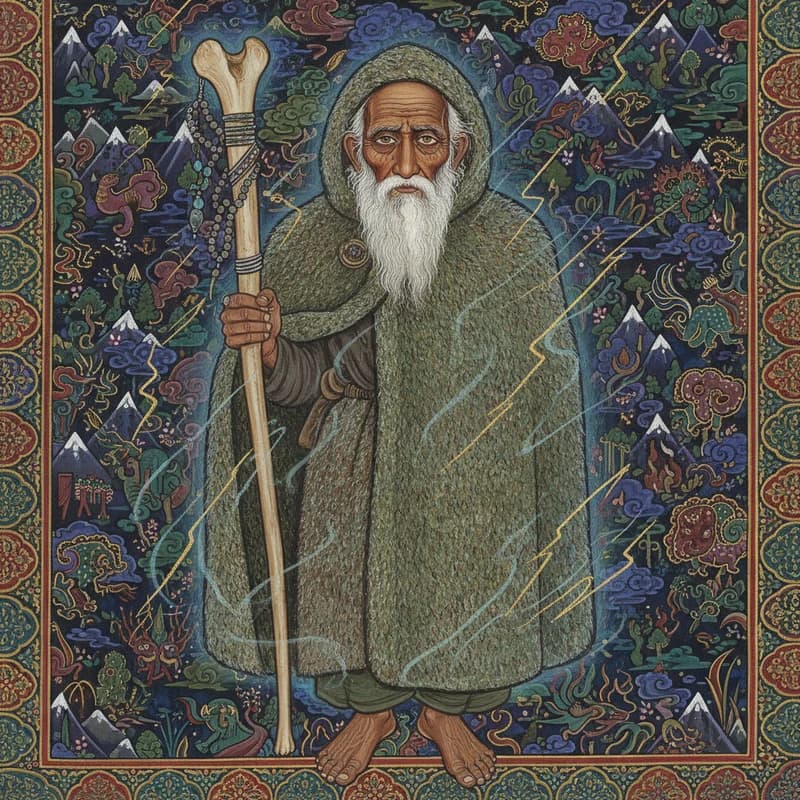

Jakhya
In the high bugyals above Kedarnath, where the treeline breaks and the ground stays wet with snowmelt even in June, the shepherds of Garhwal know to leave before the grass runs out. The Jakhya does not announce himself. He arrives as a sudden lameness in the lead animal, as a fog that drops without weather-reason, as the inexplicable scattering of a flock that had been calm moments before. Older herders from the villages above Ukhimath describe him as a tall figure seen at dusk on the far ridge — never closer, never moving toward you, simply watching. That watching is the warning.
Transgression has a precise shape in the accounts: staying too long on a single stretch of meadow, returning before the grass has recovered, grazing more animals than the ground can carry. The Jakhya does not distinguish between ignorance and greed. Punishment falls on the herd first — unexplained deaths, animals wandering off cliff edges in clear weather — and on the shepherd second, through illness that the vaidyas of the Mandakini valley say no herb can touch until the man has left the meadow and made his offering. No text records him, only the oral knowledge passed at lower camps before the summer ascent, specific and practical as any weather warning: count your animals, read the grass, move on before he moves against you.
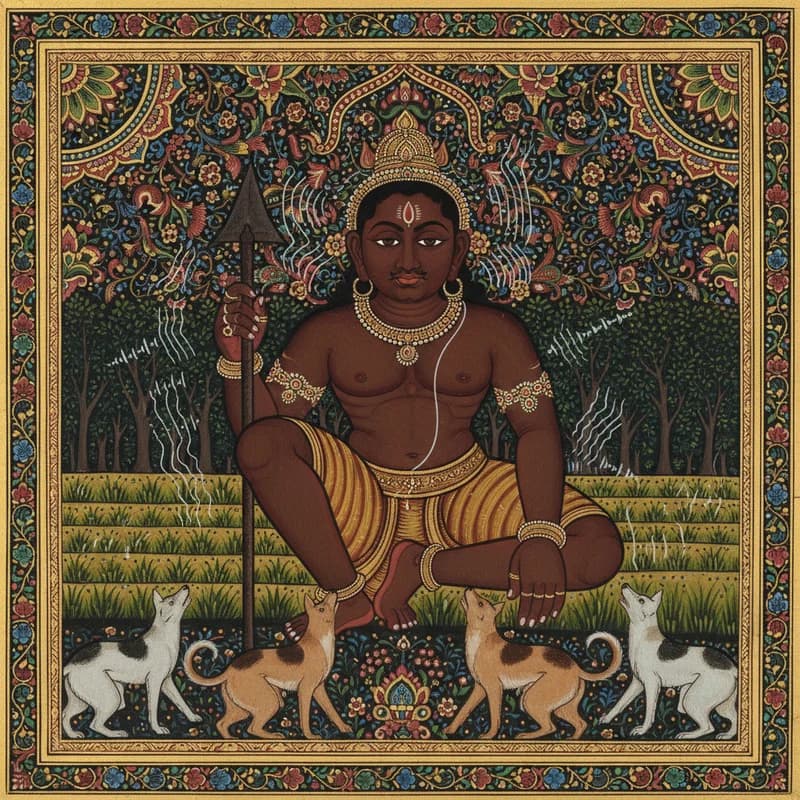
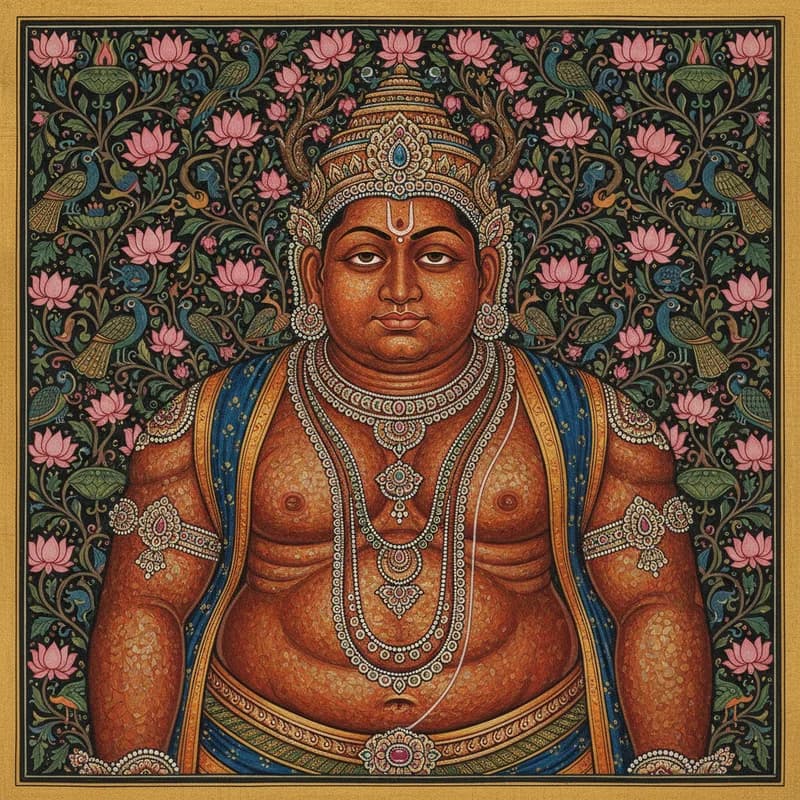
The Jakhya appears as a shepherd himself — an old man of the high pastures, sun-darkened and lean, wearing a coarse woollen cloak the colour of lichen on granite. His feet are bare regardless of season, and where other men leave boot-prints in the snow above Tungnath or along the Mandakini's upper reaches, he leaves none. The staff he carries is not wood but the bleached femur of something large, smoothed by long use. His smell arrives before he does: cold stone, wet wool, and beneath that a sharper note like the air before lightning strikes a ridge. Shepherds in the Kedarnath bugyals describe the sound of his approach as wind moving against the wind's direction — a pressure that comes from no valley, no pass, no identifiable source.
In the high bugyals above Kedarnath, when the summer grazing season opens and shepherds push their flocks past the unspoken boundaries, Jakhya takes the form of an older shepherd — a man in his sixties, wearing the rough-woven woolen chaddar common to Garhwali herders, carrying a lathi worn smooth with apparent use. He approaches from upslope, which no living man does; the mountain paths run down to the meadows, not above them. The first tell is his flock: he appears always to have one, grazing just at the edge of visibility, but the animals make no sound — no bell-clank, no tearing of grass, nothing. The second is subtler and more damning. Experienced shepherds from the villages around Ukhimath note that he casts no breath-mist in the cold air above three thousand meters, where every exhale should be visible from twenty paces.
First Documented
Jakhya surfaces most clearly in the oral devotional traditions of Garhwal's shepherd communities, passed down through seasonal songs sung at the Bugyals — the high-altitude meadows above Kedarnath and Tungnath — where herders have invoked and feared him for at least several centuries, though no single datable text fixes his first appearance.
Last Recorded
Accounts of Jakhya persist into the present, collected as recently as the early 2000s from shepherds grazing flocks on the bugyals above Kedarnath and Tungnath, who still report sudden livestock illness and disorientation in fog as his punishment for overstaying the summer pastures.
Source Language
Garhwali
Origin
The Jakhya appears in the oral tradition of Garhwal's upper valleys — most densely recorded among the shepherd communities of Chamoli and Uttarkashi districts — before any written Pahari text acknowledges him by name. His presence is felt most sharply in the bugyals, the high alpine meadows above the treeline, where flocks graze between the thaw and the first snowfall of Kartik. The Kedarkhand section of the Skanda Purana catalogues mountain Yakshas as guardians of natural abundance, and scholarly consensus has generally folded the Jakhya into that Yaksha lineage, treating him as a regional variant of the classical figure. The shepherds of the Mandakini and Pindar headwaters do not accept this equivalence. In their accounts, the Jakhya is not a Yaksha at all but a being specific to altitude — he does not guard treasure or wealth, he guards carrying capacity, the exact number of animals a meadow can sustain without tearing. The divergence matters: the classical Yaksha protects accumulation, while the Jakhya punishes
Frequently Asked
Jakhya is a male guardian spirit from the Garhwal Himalayas, believed to preside over alpine meadows and high-altitude pastures known as bugyals. Shepherds and herders of Uttarakhand have long regarded him as the unseen custodian of these grasslands, capable of punishing those who violate the unspoken laws of the mountain commons.
Oral accounts collected across Chamoli and Rudraprayag districts describe Jakhya afflicting offending shepherds with sudden illness, disorientation in familiar terrain, or the mysterious death of livestock. The punishment is rarely immediate — it arrives like the first frost, quiet and without warning, days after the transgression.
Jakhya occupies the space between deity and spirit that Garhwali folk religion navigates with great precision. He is not worshipped in temples the way Nanda Devi or Kedarnath's presiding forces are, but propitiated through offerings left at the edges of bugyals before the summer grazing season begins.
The name Jakhya is almost certainly a regional corruption of Yaksha, the class of nature spirits catalogued in texts from the Atharva Veda through the Mahabharata. Where classical Yakshas guard buried treasure and forest wealth, Jakhya's domain is specifically the high meadows above the treeline in the Garhwal ranges — a localization shaped by centuries of pastoral life in the upper Alaknanda valley.
Jakhya belongs to the Garhwal division of Uttarakhand, particularly the high-altitude zones above villages like Mandal, Ukhimath, and the meadows approaching Tungnath and Bedni Bugyal. His presence is felt most acutely during the summer months when Gaddi and Bhotiya herders drive their flocks up from the valley floors.
Experienced shepherds observe strict limits on how long their flocks graze a single patch of meadow, rotating pastures in a pattern that older herders say was taught by the spirit himself through dream-visitations. Small offerings of grain, milk, or incense left at cairns on the bugyal's edge are considered essential before the first night's camp is made.
Jakhya is neither malevolent by nature nor unconditionally protective — his disposition mirrors the behavior of those who enter his territory. Shepherds who respect the carrying capacity of the land report his presence as a kind of watchful calm; those who overgraze or camp carelessly near sacred springs describe unease, lost animals, and sudden storms that spare neighboring pastures.
Jakhya does not appear in Sanskrit canonical literature by this name, living instead in the oral tradition of Garhwali villages — in the songs sung during the Pandav Lila performances and in the warnings passed from elder shepherds to young ones before the first ascent of the season. His closest textual ancestors are the Yaksha guardians of the Mahabharata, particularly those described as dwelling in mountain forests and punishing those who disturb natural order.
Algorithmic Inference
आपको यह भी पसंद आ सकता है
You May Also Like
Community Discussion
Comments are reviewed by AI before appearing publicly. Unsafe, unrelated, or uncertain comments go to human review.
Sign in to join the discussion.
0 comments
No public comments yet.