प्रतीक्षा करें
Consulting the Shastra archives…
प्रतीक्षा करें
Consulting the Shastra archives…

Yakkha
They gather at the roots of great trees — the old ficus groves along the Narmada's upper banks, the ancient banyans behind the rock-cut caves at Ajanta — and the earliest Pali texts treat them neither as demons to be exorcised nor as gods to be worshipped, but as something requiring persuasion. The Yakkha is a being of appetite and territory, guardian of a particular place with a particular hunger, and the Buddhist suttas record the Buddha himself meeting them on forest roads at night and speaking with them as one speaks to a suspicious stranger at a threshold. Some were converted. Most of those accounts survive in the Sutta-Nipāta and scattered Jātaka verses, where the Yakkha who threatened a traveller on the road to Rajagaha is remembered not for the harm it nearly caused but for the moment it stepped aside.
What makes the Yakkha distinct in the folk record is this conditional quality — the possibility of turning. Accounts from the hill communities of Chhattisgarh and the forest margins near the Vindhya range describe encounters that begin with dread and end with something closer to an uneasy compact. Offer the right respect, acknowledge the Yakkha's sovereignty over its ground, and it becomes a fierce protector rather than an obstacle. Ignore the protocol and the consequences are real: illness, disorientation, livestock that refuse to enter a particular grove. The boundary between the threatening Yakkha and the protective one is not fixed by the being's nature — it is fixed by the quality of the approach.
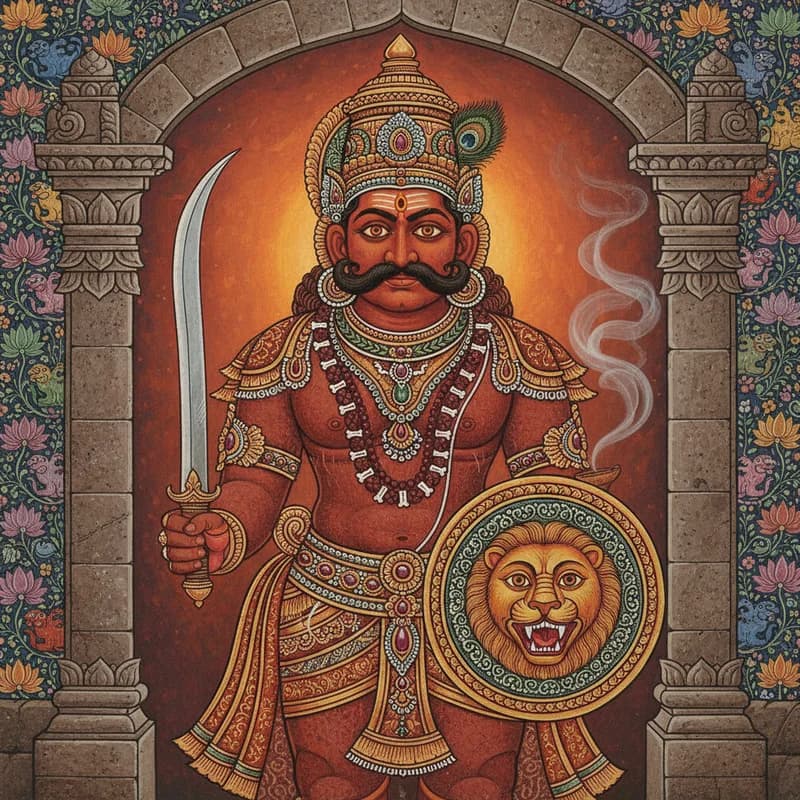
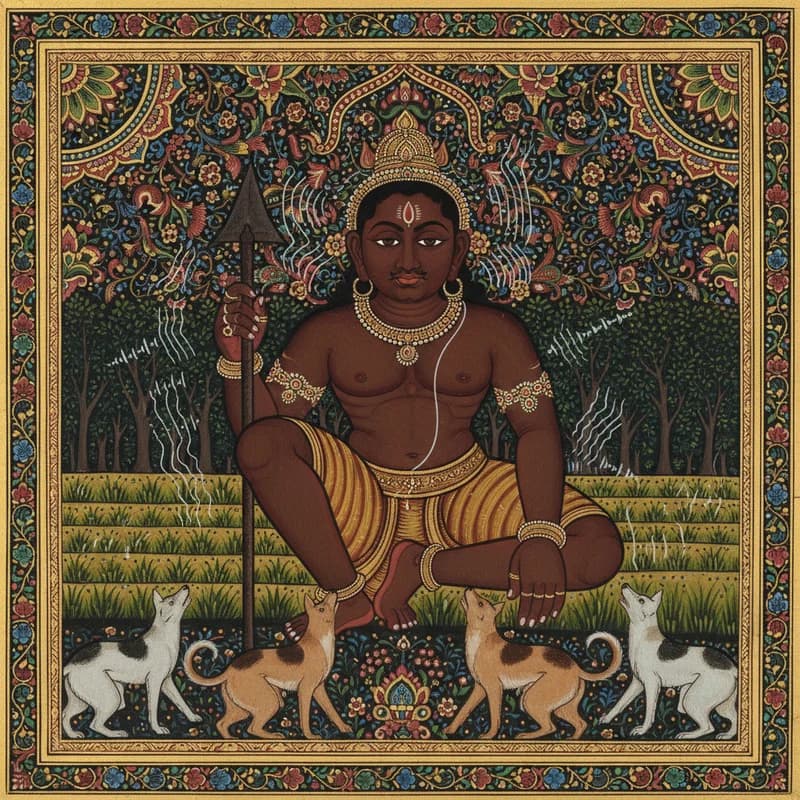
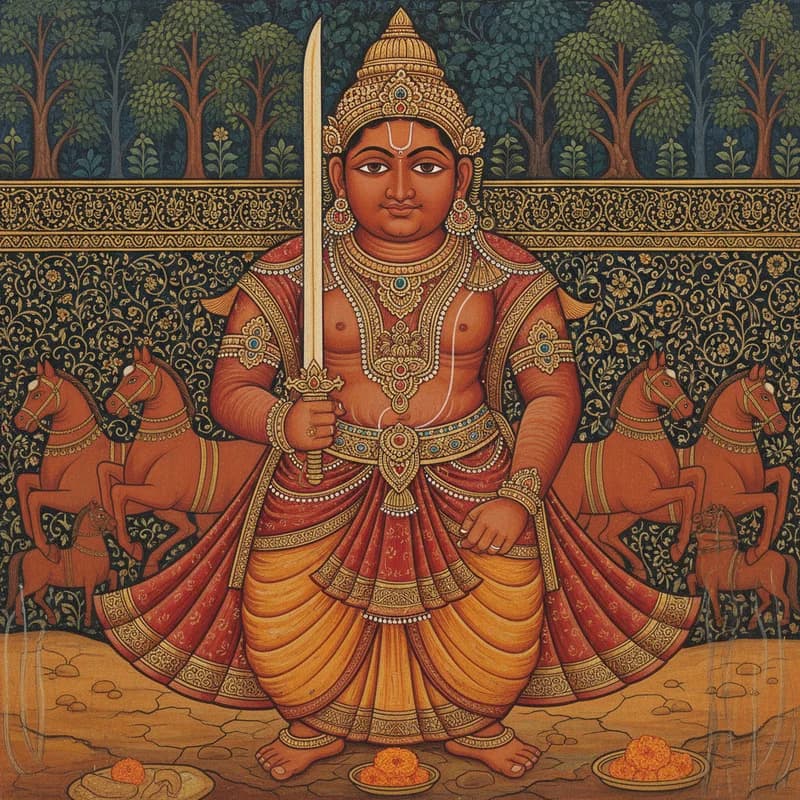
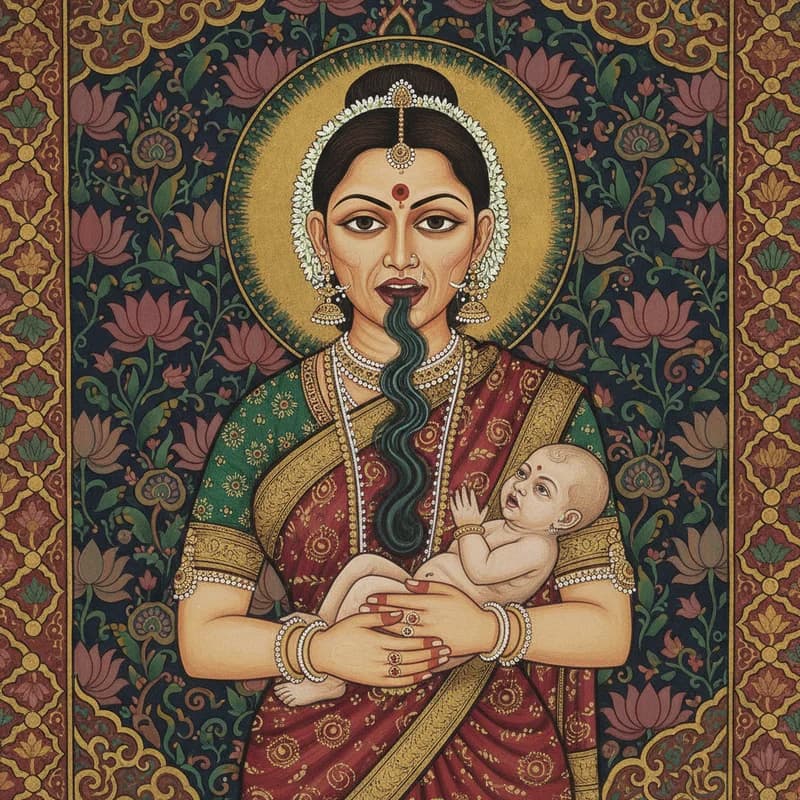
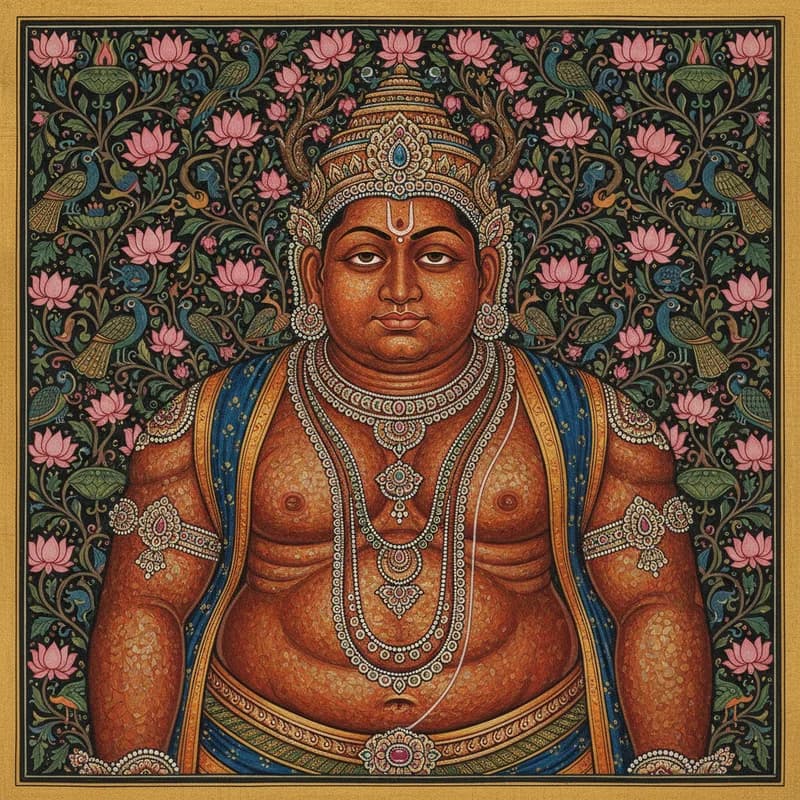
The Yakkha arrives looking like a man who has been fed too well and too long — the body massive, not with the softness of prosperity but with a denser, older weight, as though the flesh has compacted over centuries into something closer to stone than tissue. The skin holds a colour that shifts between accounts: dark as the heartwood of a teak tree in the Terai accounts, burnished copper in stories collected near the Mahavihara ruins of Nalanda. What does not shift is the texture witnesses describe on contact — cold and faintly granular, like touching a temple wall that has stood through many monsoons. The smell is specific and consistent: wet soil from a riverbank, the Gandak or the Kosi, overlaid with the faint sweetness of rotting marigold offerings. The single feature that marks it apart from any living man is the stillness — not the stillness of patience, but the stillness of something that has genuinely stopped requiring breath.
Along the forest margins of the Vindhya range, where the sal trees thin out before the first village fields begin, the Yakkha appears as a wandering monk — saffron-robed, shaved-headed, carrying an alms bowl and a bamboo staff, moving at the slow deliberate pace of one who has walked since before dawn. The disguise is precise enough to invite respect: villagers in the Bagelkhand accounts describe instinctively pressing their palms together before something in the air made them stop. The first tell is the alms bowl, which is always full — rice, fruit, coin — though no house has been passed and no offering made, the bowl neither emptying nor shifting its contents regardless of how the figure moves. The second is the shadow, which falls in the wrong direction relative to the sun, as though cast by a light source standing somewhere behind the observer.
First Documented
The Yakkha appears among the earliest strata of Pali canonical literature, most prominently in the *Sutta Nipāta* and the *Saṃyutta Nikāya*, where the Buddha encounters these beings directly — some hostile, some curious — and draws them toward the Dhamma through discourse rather than force.
Last Recorded
Accounts of Yakkha encounters persist into the present, with monks at Bodh Gaya and forest monasteries along the Narmada's upper reaches still reporting visitations during the rains retreat; the most recent documented oral testimony was collected in 2019 from a Theravada community in Odisha.
Source Language
Pali
Origin
The Yakkha enters the Pali record in the Petavatthu and the Vimanavatthu of the Khuddaka Nikaya, where these beings appear as morally ambiguous inhabitants of the middle distance between gods and hungry ghosts — capable of cruelty, capable of devotion, and, crucially, capable of conversion. The Atanata Sutta of the Digha Nikaya records the Yakkha king Vessavana formally taking refuge in the Buddha, pledging his retinue as protectors of the Dhamma in territories the sangha was entering, including the forests north of the Gangetic plain where fever and ambush were equally likely. What the Pali Canon emphasizes is doctrinal receptivity — the Yakkha's violence is a condition that precedes right teaching, not an essence. The oral tradition of the Sinhalese low country and the forest monasteries of the Terai diverges sharply here: in those accounts, the Yakkha is not converted so much as negotiated with, its protection purchased through specific offerings at the base of old rain trees before the mons
Frequently Asked
A Yakkha (यक्ख) is the Pali Buddhist rendering of the Sanskrit Yaksha — a class of supernatural beings that appear across Hindu, Jain, and Buddhist traditions as guardians, tricksters, and occasionally malevolent spirits. In the Pali Canon, Yakkhas are neither purely demonic nor divine; they inhabit forests, crossroads, and ancient trees, and their moral character shifts depending on the choices they make. The Atanata Sutta of the Digha Nikaya names specific Yakkha chieftains as protectors of the faithful.
Yakkhas occupy a morally unstable middle ground — capable of devouring travelers who wander into the sal forests of the Gangetic plain after dusk, yet equally capable of profound devotion once brought into contact with the Dharma. The Pali texts record numerous Yakkhas who, upon hearing the Buddha's teaching, renounced harm and became fierce protectors of monks and laypeople. Their threat level is best understood as conditional: they respond to respect, ritual, and righteousness.
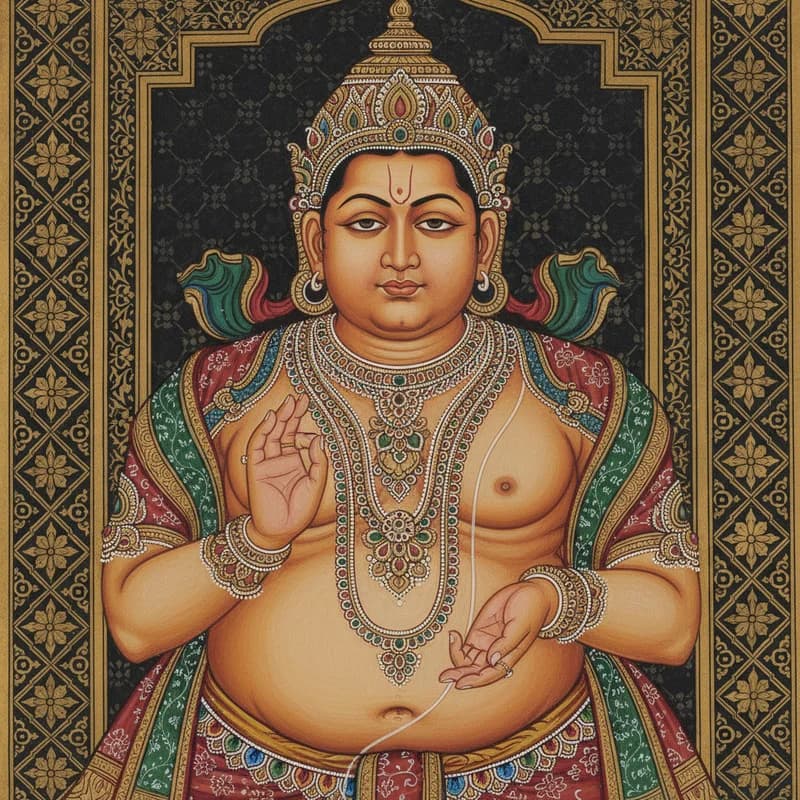
Yakkha is the Pali form of the Sanskrit Yaksha — the same class of being rendered through two different linguistic and doctrinal traditions. In Sanskrit Hindu texts like the Mahabharata and the Ramayana, Yakshas are often associated with Kubera, lord of wealth, and guard treasure hoards in the Himalayan foothills. The Pali Buddhist tradition, by contrast, emphasizes the Yakkha's convertibility — their capacity to be tamed by the Dharma and reoriented toward protection rather than predation.
The Pali Canon contains substantial material on Yakkhas, most notably the Yakkha-samyutta section of the Samyutta Nikaya, where the Buddha engages directly with named Yakkha beings. The Atanata Sutta in the Digha Nikaya presents a protective chant invoking the great Yakkha kings — Dhatarattha, Virulha, Virupakkha, and Kuvera — to shield practitioners from hostile spirits. Older strata of the Sutta Nipata also preserve encounters suggesting these beings were deeply embedded in the pre-Buddhist spirit cults of the Gangetic plain.
Conversion is central to how Buddhism understands the Yakkha. Across the Pali texts, Yakkhas who encounter the Buddha or his disciples are frequently moved by the power of the Dharma to abandon violence and pledge protection to the Sangha. This pattern — the fierce spirit subdued and redirected — mirrors similar accounts from Sri Lanka, where Yakkhas were said to inhabit the island before the arrival of Buddhism, and were subsequently brought under the authority of the faith.
Yakkhas are associated with liminal, untamed spaces — the deep forests along the Yamuna and Gandak rivers, ancient pipal and banyan trees, cremation grounds, and the thresholds of villages at the edge of cultivated land. In the Sanskrit tradition, the Yaksha's home is Alaka, Kubera's city in the Himalayas, immortalized in Kalidasa's Meghaduta. Buddhist accounts locate them more broadly across the subcontinent, from the forests of the Deccan to the island of Lanka.
Oral accounts collected across Bihar and eastern Uttar Pradesh describe Yakkhas as beings of unusual size and luminosity, sometimes appearing as handsome strangers at crossroads after the monsoon rains, sometimes as terrifying figures with backward-facing feet. A consistent marker in folk tradition is their association with specific trees — particularly the old pipal at the edge of a village — and the sudden illness or misfortune that follows when those trees are disturbed. Propitiation with rice, flowers, and incense at such sites remains common practice in many rural communities.
Yakkhas are credited with the ability to cause disease, madness, and sudden death, but also with the power to grant wealth, fertility, and protection when properly honored. In the Pali texts, certain Yakkhas possess the ability to fly, to change form, and to move between the human world and their own unseen domains without restriction. Their strength is described as immense — the Yakkha Alavaka, one of the most feared in the Canon, is said to have shaken the earth itself before being stilled by the Buddha's words.
संबंधित लोकगाथाएं
Related Lore
Yaksha
Kinnara
Gandharva
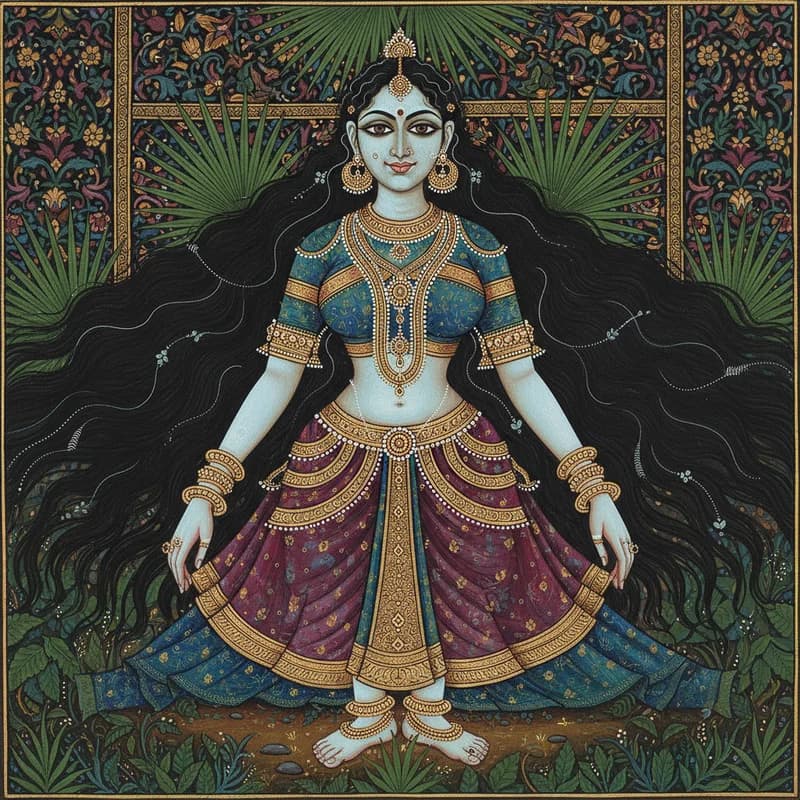
Yakshi
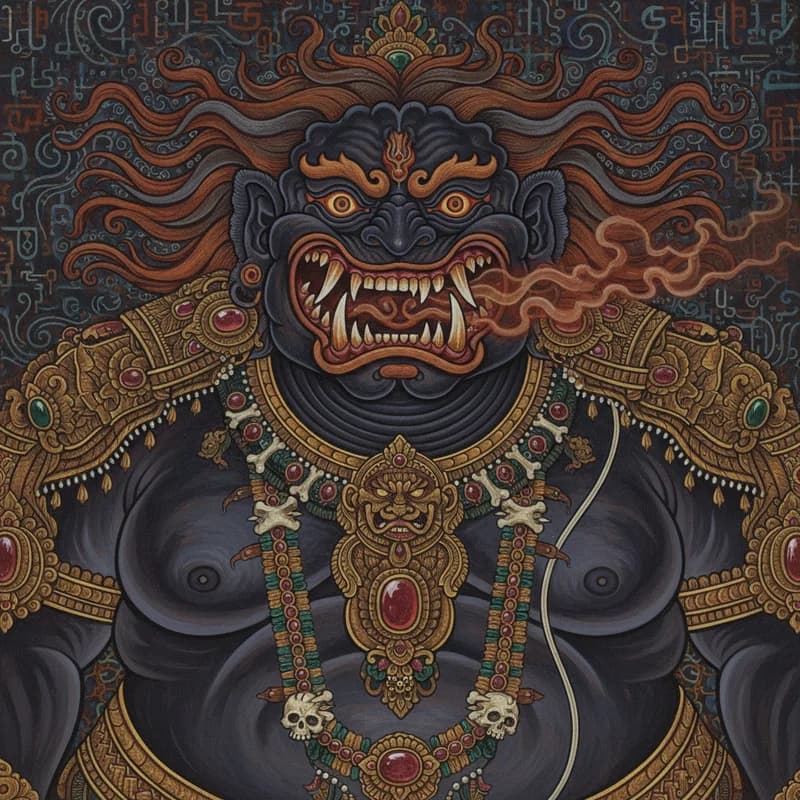
Rakshasa

Preta
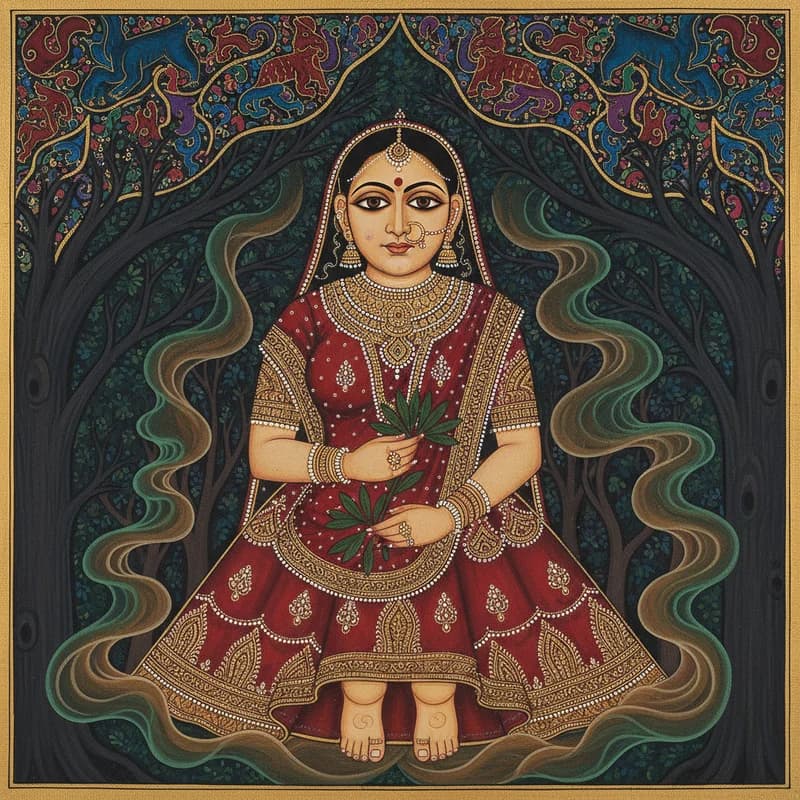
Jakhini
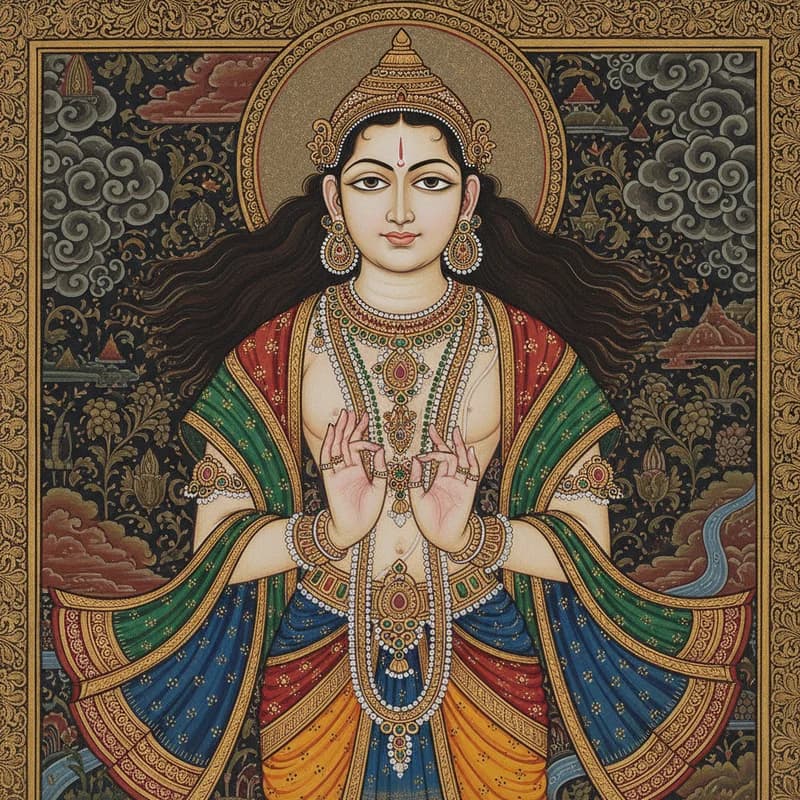
Vidyadhara
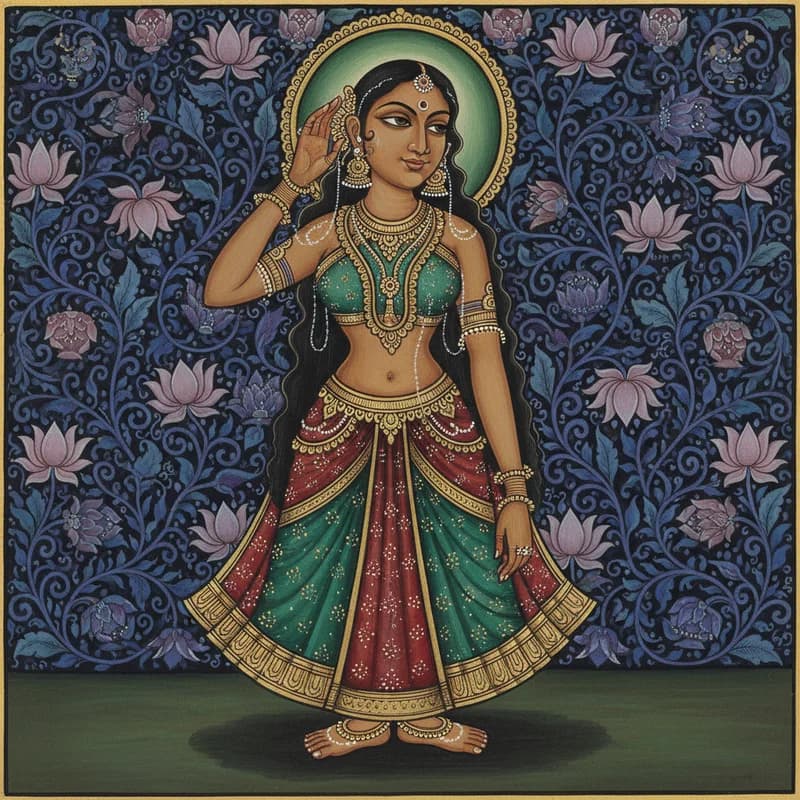
Yakshini
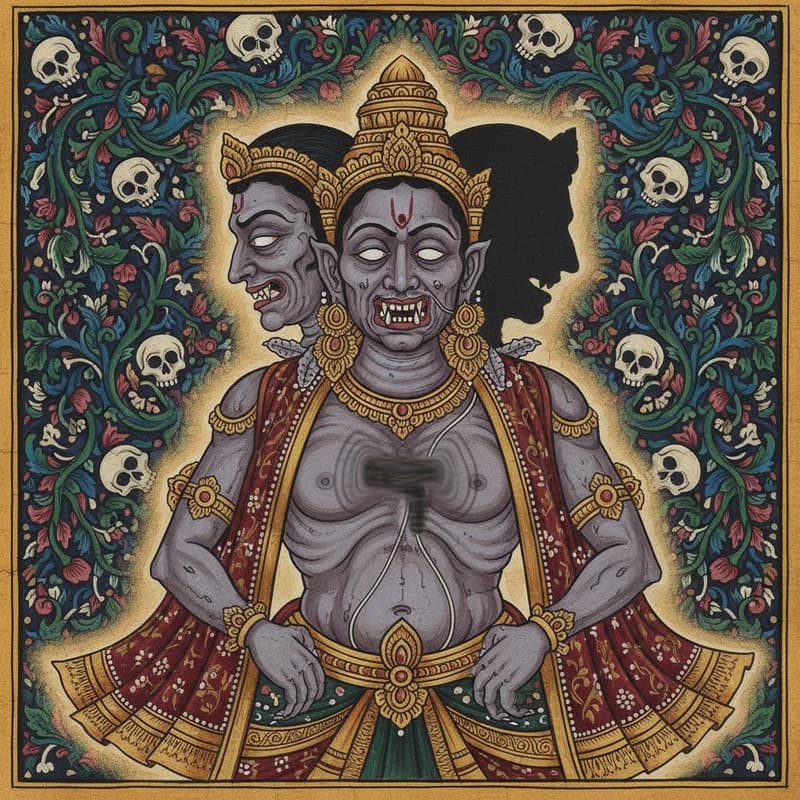
Pishacha
Algorithmic Inference
आपको यह भी पसंद आ सकता है
You May Also Like
Community Discussion
Comments are reviewed by AI before appearing publicly. Unsafe, unrelated, or uncertain comments go to human review.
Sign in to join the discussion.
0 comments
No public comments yet.