प्रतीक्षा करें
Parsing the Naga lineage records…
प्रतीक्षा करें
Parsing the Naga lineage records…
Junjhunwala Pret
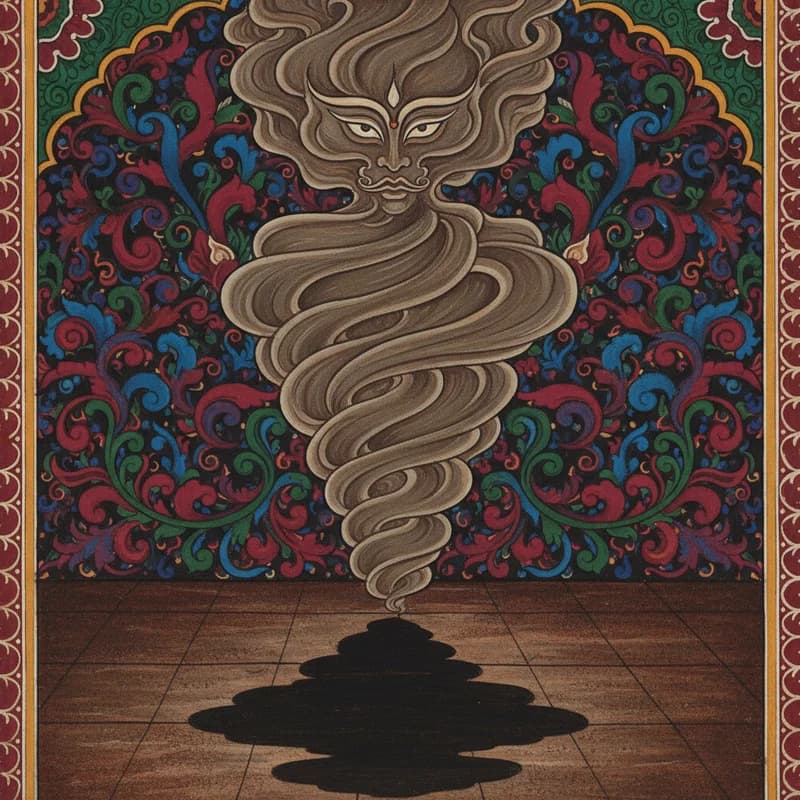
The pret of a merchant who died mid-transaction is a specific category of unquiet dead that the villages around Jhunjhunu and the old havelis of the Shekhawati trade corridor know by feel rather than by name. When a moneylender dies with his ledger still open — a loan uncollected, a partnership dissolved in anger, a deal struck on a handshake and never honoured — he does not move on. He stays in the shop, in the godown, in the room where the accounts were kept, and he makes his displeasure felt in the language of commerce: weights that tip wrong on honest scales, ink that bleeds through contracts before they dry, cash boxes found empty at morning that were counted full at night.
These disruptions are rarely violent. Travellers passing through the weekly haats of eastern Rajasthan, the cloth merchants of Pilani, the grain traders who work the dusty stretch between Fatehpur and Chirawa — all carry inherited knowledge of what an unsettled merchant-pret looks like in practice. Customers turn away for no reason. Partnerships collapse over misunderstandings that no one can quite reconstruct afterward. The smell of old sandalwood and stale accounts fills a room that has been aired. The prescribed response is not exorcism but settlement: completing the transaction the dead man left hanging, paying what is owed to his surviving family, sometimes commissioning a recitation of the Garuda Purana in the affected premises at the cold end of the winter season, when the Aravalli nights press down hard and the boundary between the counting house and whatever lies beyond it grows thin.
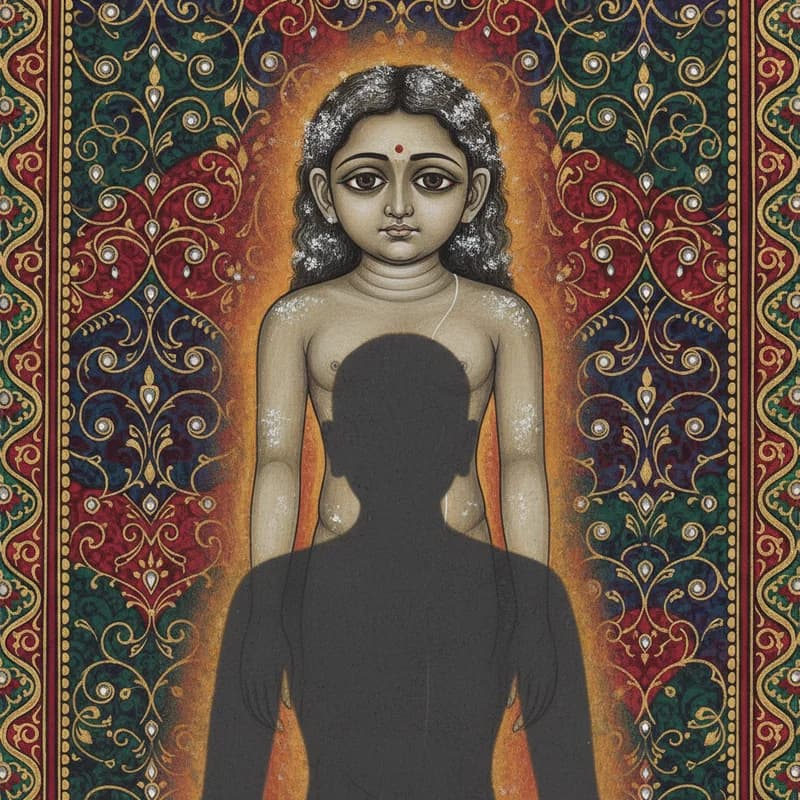
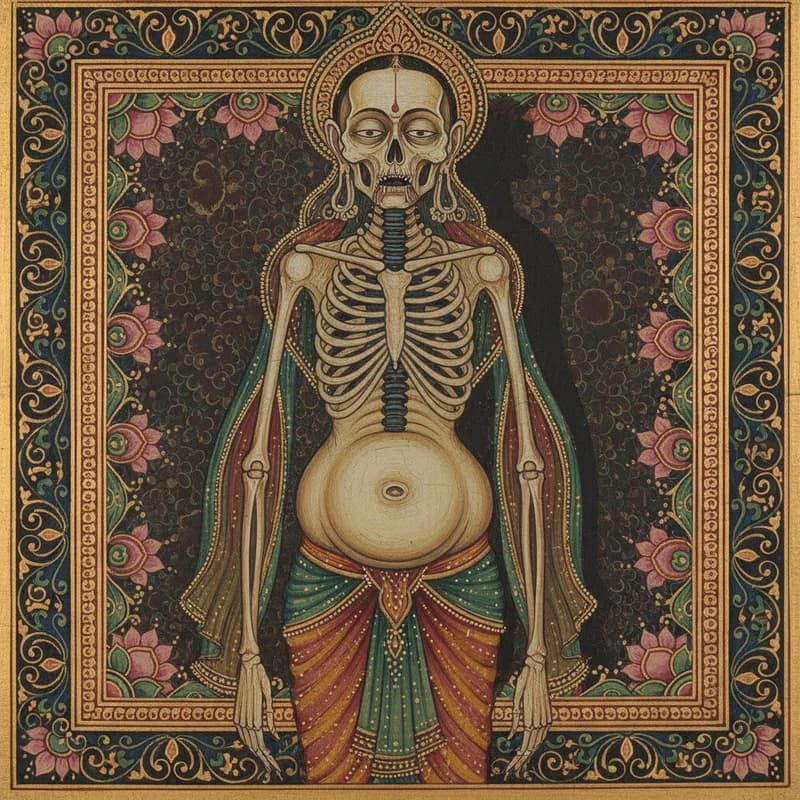
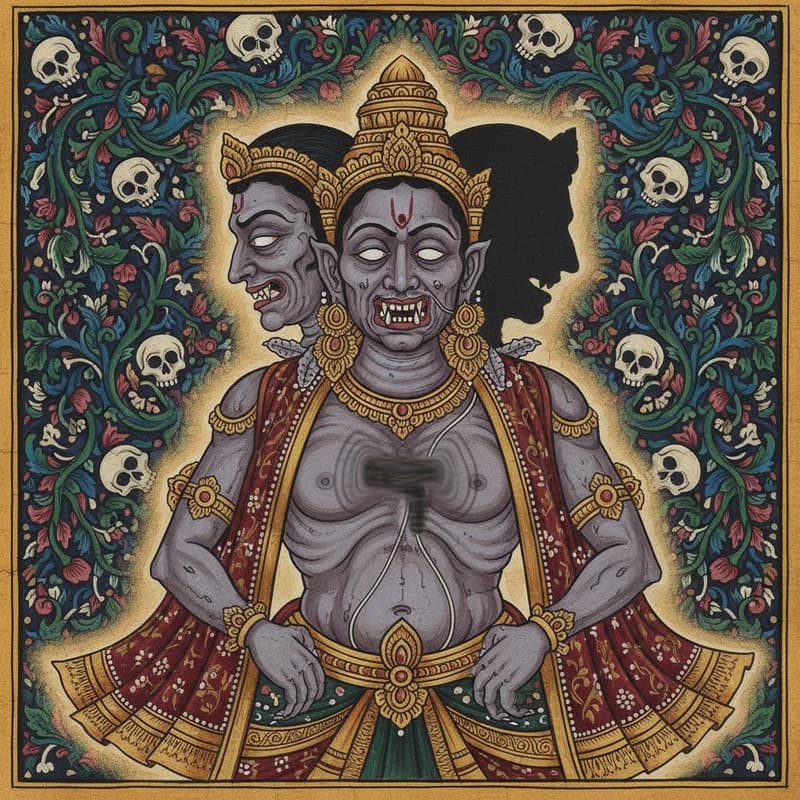
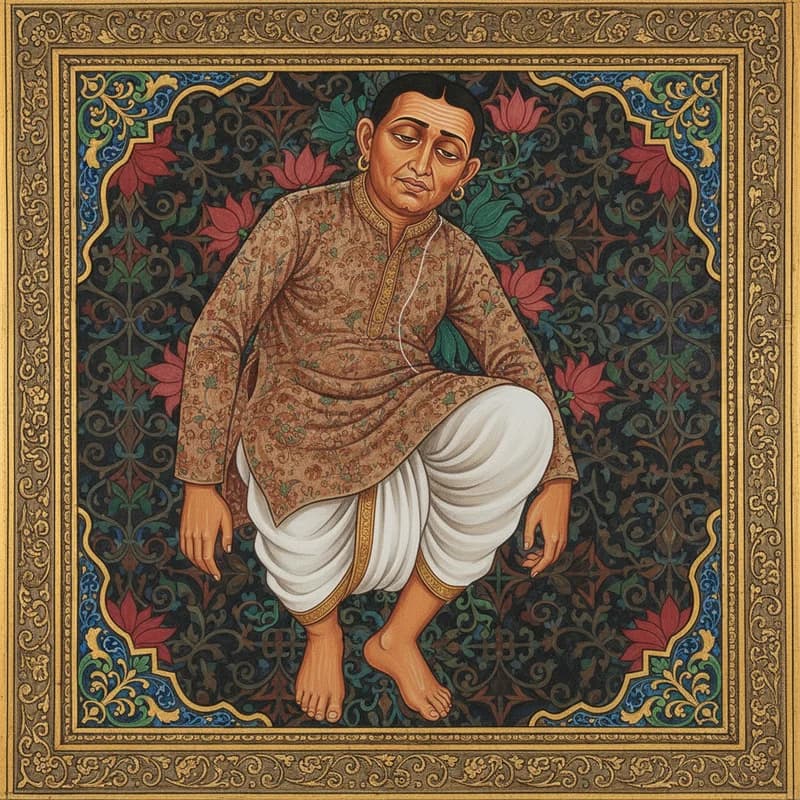
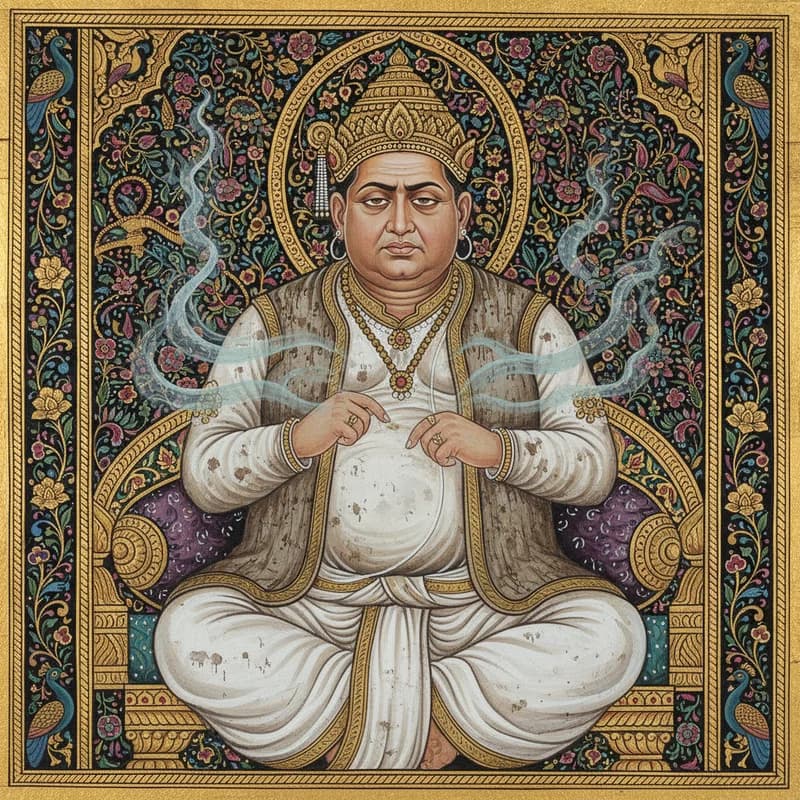
The Junjhunwala Pret appears as a man of late middle age, heavyset in the way of prosperous merchants, wearing a dhoti and bandi that were once fine but now carry the grey-brown discolouration of fabric left in a closed room through many monsoons. The face holds an expression of permanent calculation — not malice, but the look of someone still adding columns that will never balance. What witnesses in the bazaars of Jhunjhunu and Fatehpur consistently report is the smell: old ledger paper, ink ground with rancid oil, and beneath that the sharp mineral odour of coins handled by anxious hands across too many years. A cold follows him that is specific to enclosed spaces, the chill of a godown sealed against summer heat. The single unnatural detail is the hands — the fingers move constantly, as though counting currency that is not there, and leave no impression on anything they touch.
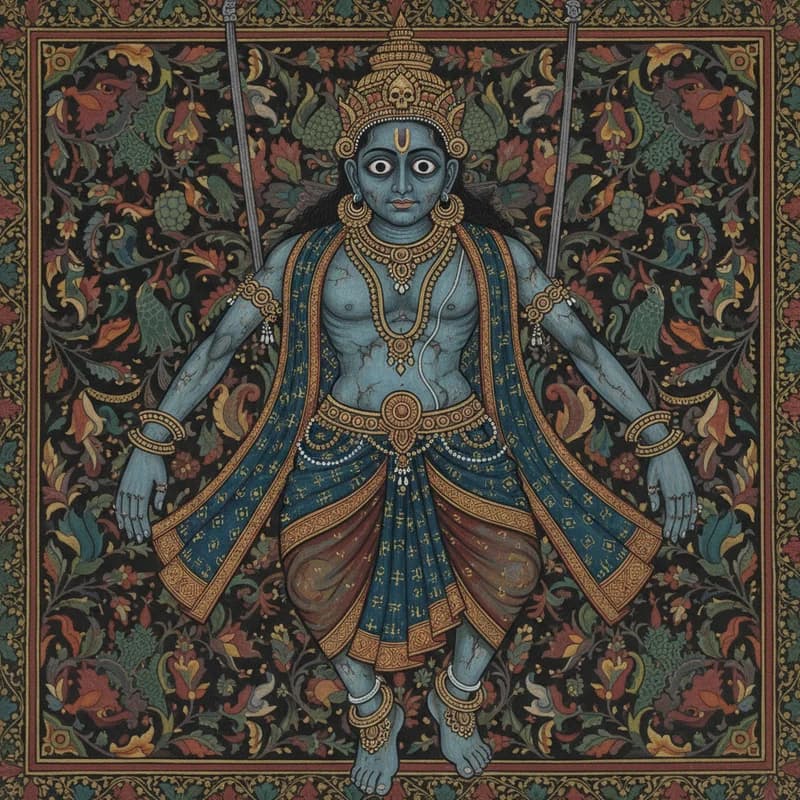
The Junjhunwala Pret appears most reliably as an elderly seth — a prosperous trader, slightly overdressed for the heat, carrying a cloth ledger-bag of the kind common in the old havelis of Jhunjhunu and Fatehpur. He approaches during the slow afternoon hours when the market is half-asleep, the kind of man you would not question, asking to inspect goods or settle an old account. Two tells separate him from the living. His ledger, if glimpsed open, shows columns of figures in a script no one can quite read — not quite Mahajani, not quite anything — and the sums never resolve to a final total, the page always turning before the eye reaches the bottom. The second is subtler: the brass rings on his fingers leave no sweat-mark on anything he touches, though the Shekhawati summer makes such contact unavoidable for any man with living skin.
First Documented
Oral accounts of the Junjhunwala Pret circulate primarily through the trading communities of Shekhawati — Jhunjhunu, Fatehpur, Nawalgarh — where haveli-keepers and grain merchants have passed down cautionary narratives for at least two centuries, though no single founding text exists; the tradition lives in the spoken word, not the written page.
Last Recorded
Accounts of the Junjhunwala Pret persist into the present, with shopkeepers in Jhunjhunu and Pilani still reporting unexplained ledger discrepancies, spoiled goods, and sudden collapses of business partnerships they attribute to an unsettled merchant spirit. The most recent oral testimonies were collected from the Shekhawati bazaars as recently as the early 2020s.
Source Language
Rajasthani
Origin
The Junjhunwala Pret does not appear in the Puranic catalogues of ghost-types with any specificity — the Garuda Purana's taxonomy of pretas addresses mercantile souls only in the broadest karmic terms, linking commercial sin to spectral restlessness without naming a distinct form. The oral tradition of the Shekhawati region, particularly among the trading communities of Jhunjhunu and Nawalgarh whose painted havelis still carry records of old disputes, is far more precise: the Pret arises not from moral failure but from structural incompletion — a ledger unclosed, a debt neither collected nor forgiven, a partnership dissolved by death before the final accounting. Where the Garuda Purana frames mercantile haunting as punishment, Shekhawati traders describe the Junjhunwala Pret as essentially bureaucratic, a soul trapped inside its own unfinished paperwork. The divergence matters because it shifts the entity's logic entirely — this is not a sinner being corrected but a professional being denied closure, which is why the propitiation practices recorded in
Frequently Asked
A Junjhunwala Pret is a ghost specific to North Rajasthan, believed to arise from the unresolved death of a merchant — one who died mid-transaction, in debt, or before settling accounts. Unlike generalized prets, this spirit is bound not to a cremation ground but to the commercial premises where the deceased once conducted trade.
Oral accounts collected across the trading towns of Shekhawati and Jhunjhunu consistently point to the same origin: a merchant's death that left financial matters unresolved — unpaid dues, disputed ledgers, or a business betrayal left unanswered. The spirit cannot move on while earthly accounts remain open.
Shopkeepers and havelis near Fatehpur and Nawalgarh describe spoiled goods, missing weights, and customers driven away by inexplicable unease. Some accounts speak of ledger books found open to the wrong page, or scales that tip without cause — the spirit's interference is methodical, not random.
It is classified at the caution level rather than outright dangerous — it rarely harms bodies, but it can ruin livelihoods. The threat is economic and psychological: prolonged haunting has been known to collapse family businesses across generations, particularly in the old cloth and grain markets of the Shekhawati belt.
Most prets in Hindu tradition, as described in texts like the Garuda Purana, are restless spirits tied to violent or untimely death in general. The Junjhunwala Pret is a regional specialization — its identity is inseparable from commerce, and its grievances are financial rather than personal or familial.
The signs are specific to mercantile life: unexplained inventory shortfalls, a persistent smell of old ink or mustard oil in empty rooms, and a cold that settles in the counting room even in the Rajasthani summer. Elders in Jhunjhunu district say the spirit often makes itself known at the close of the trading day, when accounts are being tallied.
Local practice, documented in the villages east of the Kantli river, involves settling the deceased merchant's outstanding debts symbolically — paying into a temple fund in the spirit's name and having a priest perform pret-moksha rites drawn from Garuda Purana prescriptions. Some families also commission a reading of the original disputed accounts before a witness, treating the ritual as a final audit.
In the havelis of Mandawa, the spirit is spoken of almost with professional respect — a ghost who simply wants his books balanced. Further south toward Sikar, accounts grow darker, describing a more aggressive presence that attaches to the new owner of a business rather than the premises alone.
संबंधित लोकगाथाएं
Related Lore
Algorithmic Inference
आपको यह भी पसंद आ सकता है
You May Also Like
Community Discussion
Comments are reviewed by AI before appearing publicly. Unsafe, unrelated, or uncertain comments go to human review.
Sign in to join the discussion.
0 comments
No public comments yet.