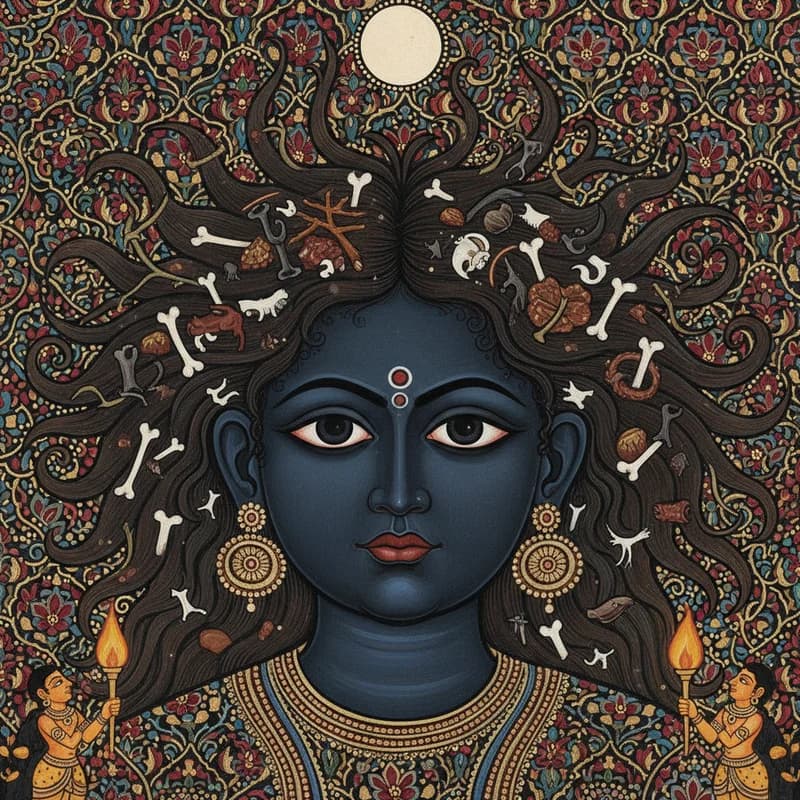
प्रतीक्षा करें
Unfolding the scroll…
प्रतीक्षा करें
Unfolding the scroll…
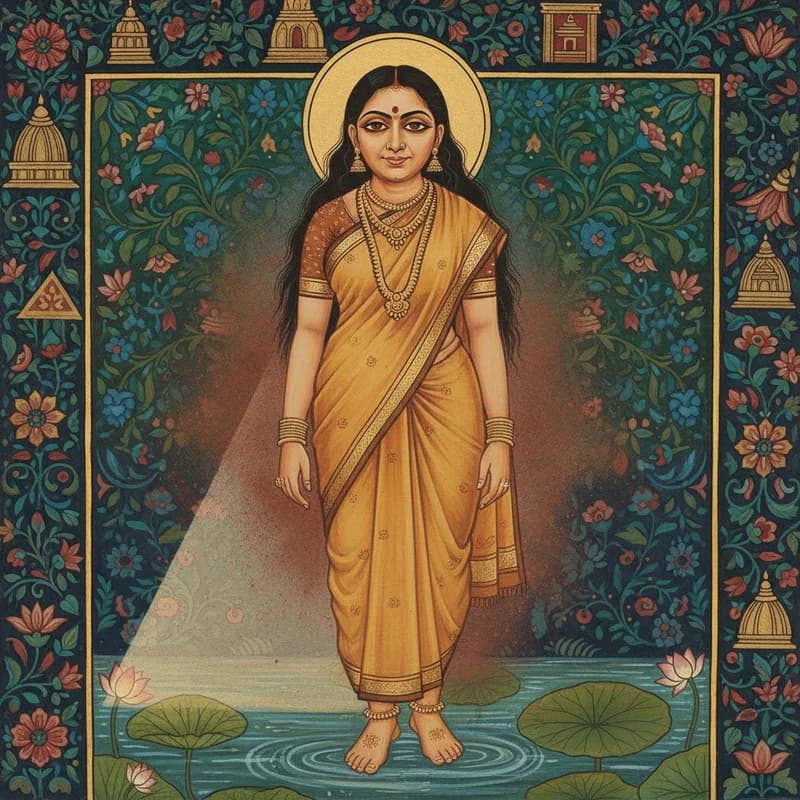

Maayi
She inhabits the threshold between protection and destruction, and the villages along the Godavari's upper reaches know better than to assume which side of her they are meeting. Maayi is not one being — she is a category, a mood, a relationship that shifts with the season and the manner of approach. Farmers in the black-soil districts of Vidarbha leave small offerings at the base of old neem trees before the first ploughing, not out of devotion exactly, but out of caution. Ignore her and the milk sours, the infant runs a fever that no vaidya can explain, the well drops without reason in the wet month of Shravan.
What makes her difficult, and what separates the Maayi accounts from simpler ghost lore, is that her benevolence and her danger wear the same face. She appears most often as an older woman at the edge of a field or just outside a village boundary — calm, unhurried, watching. Women who have encountered her near the Wardha river describe feeling simultaneously watched over and warned. Cross her through neglect or disrespect and the accounts shift register entirely: a devouring presence, the sound of grinding teeth beneath the soil, children who wander at dusk and return speaking of a grandmother they do not have. The Gondi communities of the Satpura foothills treat her as a force to be negotiated rather than propitiated — not a goddess you pray to, but a neighbour whose boundaries you learn, carefully, over generations.
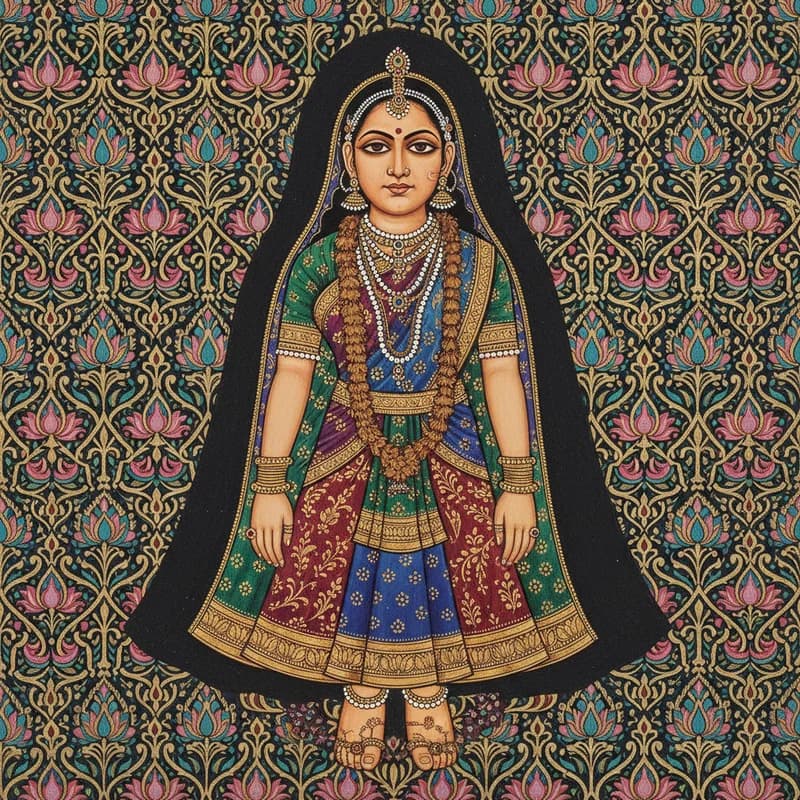
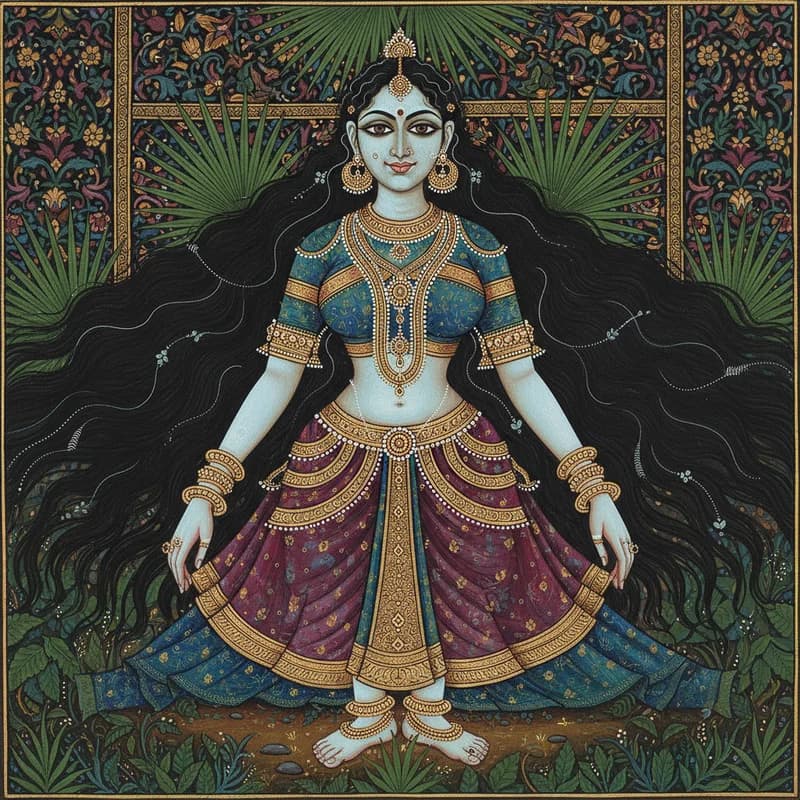
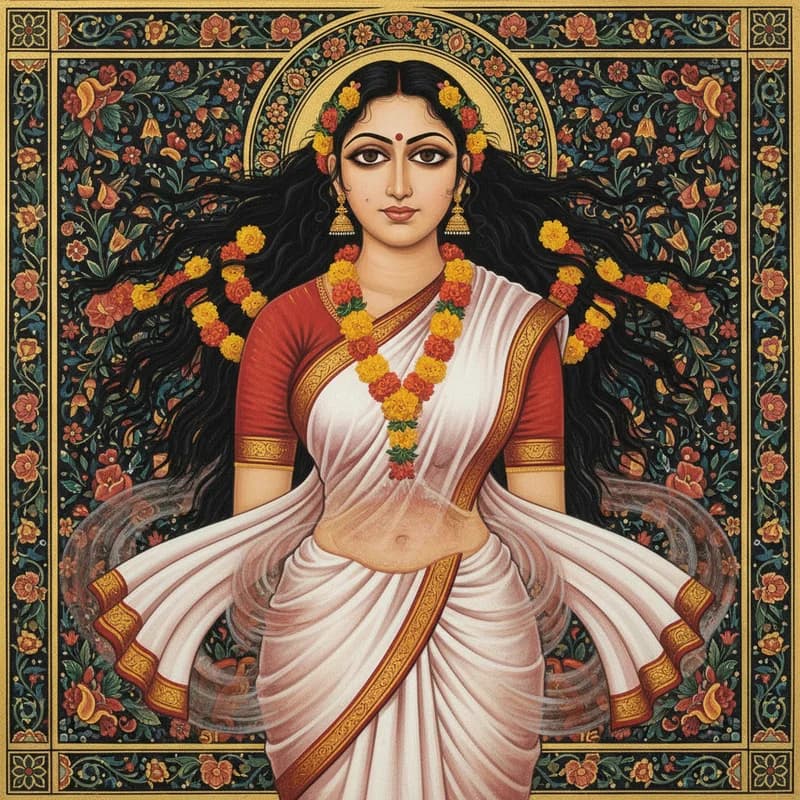
The Maayi is most often perceived as a woman past middle age, her sari the faded ochre of marigolds left three days on a temple step — not dirty, precisely, but spent. Her hair is loose in the way that marks neither mourning nor celebration but something outside those categories entirely, and her feet, when visible, are always bare and always dry, even when she is seen crossing the flooded fields between Nashik and the Godavari's eastern bank in the monsoon months. The single feature that refuses to settle into the ordinary is her shadow, which falls at the wrong angle to any available light, sometimes pooling toward the source rather than away from it. Witnesses near the Trimbakeshwar ghats consistently report a smell of wet soil and crushed hibiscus — pleasant at first, then cloying, then wrong in a way they cannot specify.
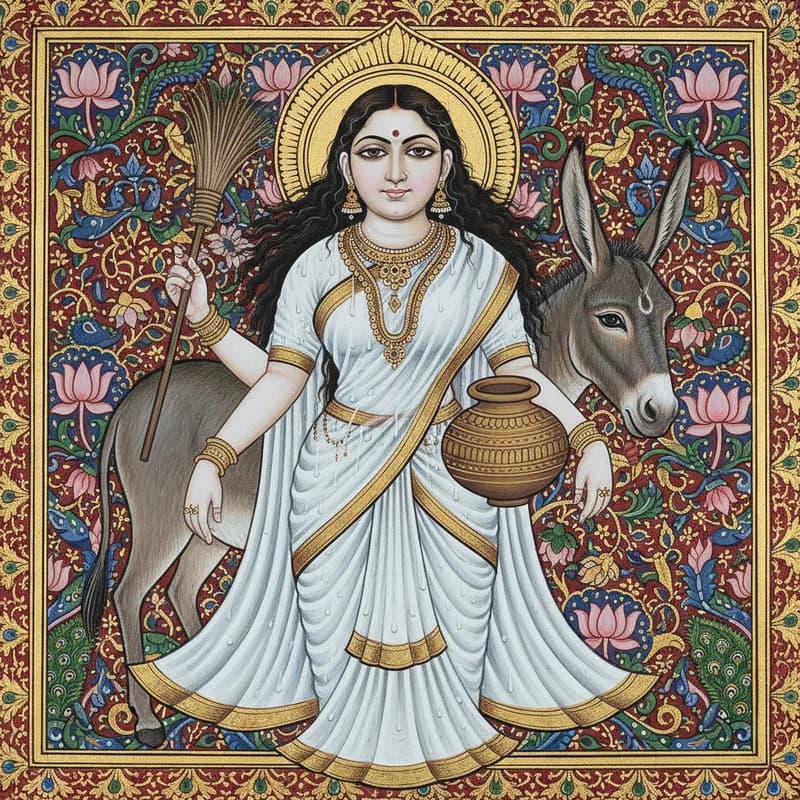
In the villages along the Godavari's upper stretch, between Nashik and Trimbakeshwar where the forest presses close to the ghats, Maayi most commonly appears as an older woman grinding grain alone before dawn — a figure so ordinary that labourers walking to the fields look through her rather than at her. She wears the faded nine-yard sari of the region's older women, and she carries herself with the unhurried authority of someone who has lived in the same house for fifty years. The first tell is the grinding: the stone moves in silence, no scrape, no rhythm, no sound at all. The second is reported consistently across accounts from Igatpuri to Sinnar — the grain beneath the stone does not diminish, however long she has been working.
First Documented
Maayi surfaces most visibly in the Marathi *powada* tradition and in the *ovi* songs sung by women grinding grain, oral forms that ethnographers like Irawati Karve documented across the Deccan plateau in the mid-twentieth century, though the spirit's presence in village shrines along the Godavari suggests roots far older than any written record.
Last Recorded
Accounts of Maayi persist without interruption — fieldworkers in the Vidarbha region and along the Wardha River basin collected fresh testimonies as recently as the 2010s, and village women near Nagpur's outskirts still leave turmeric and red cloth at her stones before the monsoon breaks.
Source Language
Marathi
Origin
The Maayi enters the recorded tradition through colonial-era district gazetteers — the Bombay Presidency surveys of the 1880s document her as a tutelary figure attached to specific locations: the margins of tank-fed fields, the shade of old pipal trees at the edge of Vidarbha villages, the confluence points where seasonal nullahs meet the Wardha or Wainganga. These records describe her uniformly as protective, a kind of genius loci invoked before harvest and during difficult childbirths. The oral tradition of the Gondi-speaking communities of eastern Maharashtra contradicts this settled benevolence sharply: in accounts collected from the Chandrapur and Yavatmal regions, Maayi has no fixed temperament at all — she is not a goddess with a character but a condition of a place, and the place decides her mood. Where the gazetteer writers saw a domesticated protective spirit, the oral record preserves something older and less manageable: a power that must be continuously appeased precisely because it cannot be predicted. That divergence is itself the point — the colonial administrative record needed spirits that behaved, and M
Frequently Asked
Maayi (माई) is a female spirit of place rooted in Marathi folk belief, understood as a presiding feminine force tied to a specific location — a crossroads, a well, a banyan grove, or the edge of a village field. She is neither purely goddess nor ghost, but something older than both categories: a mood, a presence, a threshold guardian. Oral accounts collected across the Deccan plateau describe her as the land itself made conscious and female.
The distinction collapses with Maayi — she can receive worship at a stone daubed with sindoor near the Godavari's banks one season and be spoken of in hushed, fearful tones the next. When propitiated with turmeric, coconut, and the first grain of harvest, she is the protective mother; when neglected or crossed, she becomes something far more dangerous. Village elders in Vidarbha will tell you she is both, depending entirely on whether you have kept your obligations to her.
Maayi is said to control the health of children, the fertility of fields, and the safety of women traveling alone after dusk — particularly on the unpaved paths between villages in the Sahyadri foothills. She can afflict with fever, cause cattle to go dry, or bring a household to ruin through a slow, invisible erosion of luck. Conversely, her blessing is considered among the most potent forms of local protection a family can hold.
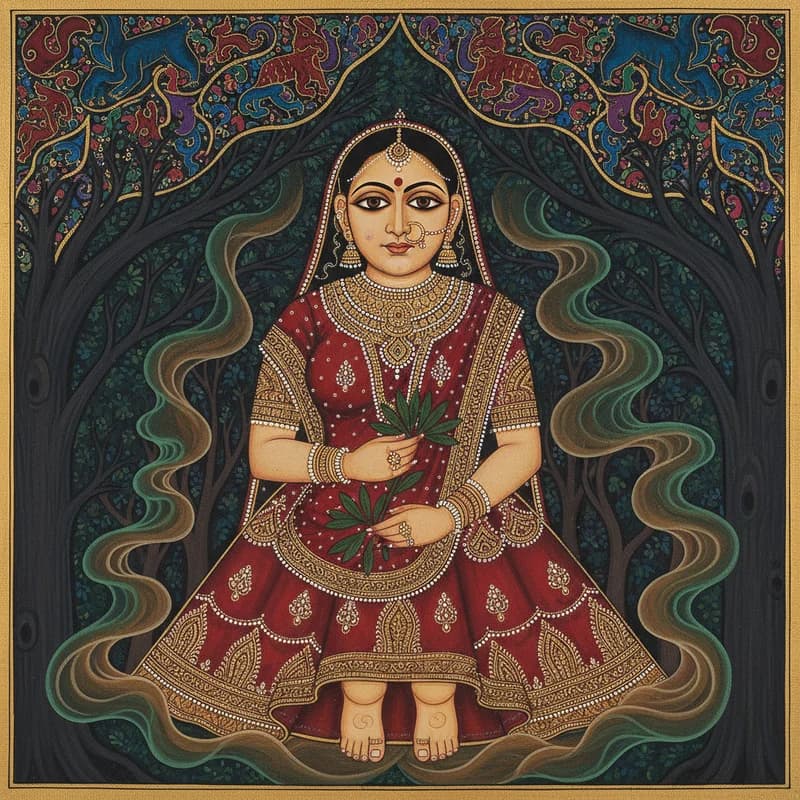
Her presence is typically marked by a small, unadorned stone or a cluster of stones at the base of a peepal or banyan tree, often smeared with red kumkum and circled by small oil lamps left by women of the village. A sudden stillness in the air at midday, an inexplicable dread near a particular well or field boundary — these are the signs that oral tradition consistently associates with her proximity. In some accounts from the Marathwada region, she announces herself through the sound of anklets heard where no woman walks.
A Devi belongs to the Sanskritic, pan-Hindu framework — she has iconography, temple architecture, textual authority in the Devi Mahatmya or the Markandeya Purana, and a mythology that travels across regions. Maayi is hyper-local, her identity inseparable from a single grove, a particular bend in a seasonal river, a specific village's memory. She rarely enters written texts; she lives entirely in the spoken word, in the warnings mothers give daughters, in the vows made quietly at her stone before a difficult journey.
She is classified as a spirit requiring caution rather than outright fear — the danger lies in carelessness, not in her nature being inherently malevolent. Crossing her territory after sunset without acknowledgment, urinating near her marker stone, or failing to fulfill a vow made in her name are the specific transgressions that oral accounts cite as triggers for her wrath. Women in their postpartum period and young children are considered especially vulnerable to her attention, for reasons that vary by district but consistently appear across Maharashtra's folk medical tradition.
The term Maayi is most densely documented in Maharashtra, but cognate figures appear under different names across the subcontinent — the Mata spirits of Rajasthan, the Aiyyanar-adjacent female guardians of Tamil Nadu's field boundaries, the Bon Bibi of the Sundarbans delta. What unites them is the same structural logic: a female spirit whose power is place-bound, whose temperament is conditional, and whose worship belongs to women and agricultural communities rather than to Brahminic ritual specialists. Each is a distinct entity with her own local history, not a variant of a single archetype.
Her worship is almost entirely in the hands of women and falls outside the formal temple system — offerings are left at her stone during the month of Shravan, at the onset of the kharif sowing season, and at moments of household crisis such as a child's illness or an unexplained run of misfortune. The offerings are simple: coconut, turmeric paste, a length of green or red cloth, sometimes a small clay lamp. No priest is required; the relationship between a family and their local Maayi is direct, inherited, and maintained across generations through the memory of women.
संबंधित लोकगाथाएं
Related Lore
Algorithmic Inference
आपको यह भी पसंद आ सकता है
You May Also Like
Community Discussion
Comments are reviewed by AI before appearing publicly. Unsafe, unrelated, or uncertain comments go to human review.
Sign in to join the discussion.
0 comments
No public comments yet.