
Kumar Saksham
24 Jul 2026
i like the story
प्रतीक्षा करें
Illuminating the manuscript…

Mara
He came first as an army. The accounts in the Pali canon — and in the murals that line the vihara corridors of Bodh Gaya and the cave temples at Ajanta — show Mara arriving at the banks of the Niranjana river on the night Siddhartha sat beneath the pipal tree, marshalling forces that were not soldiers but states of mind: lust, restlessness, cowardice, the specific despair that comes just before dawn. He did not succeed. What the texts record with unusual care is that he tried every approach available to him, and that the seated figure answered none of them, touching only the earth as witness.
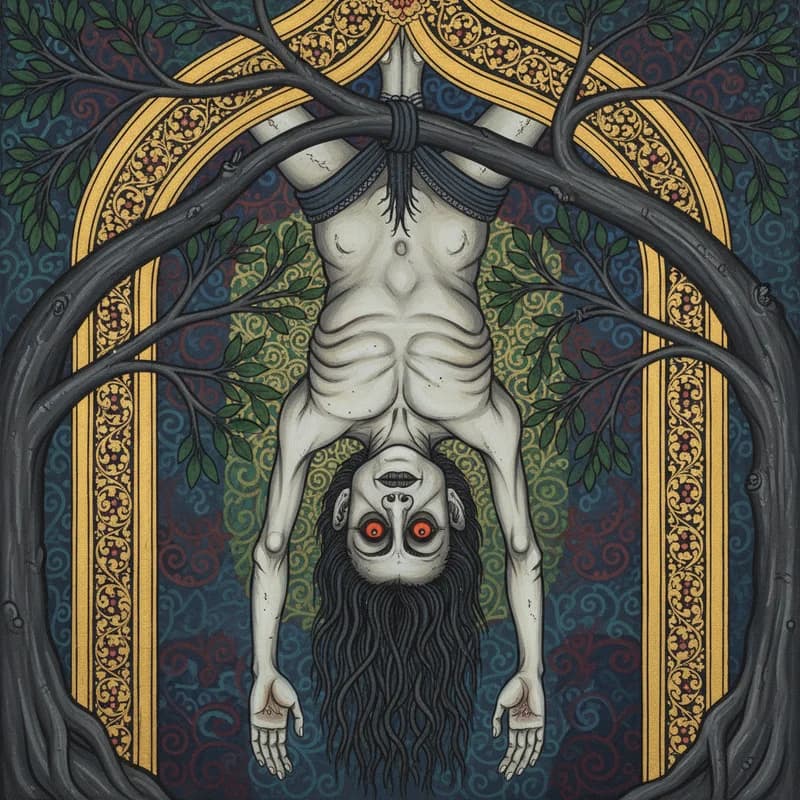
Mara is not a demon in the straightforward sense. He rules Kāmaloka, the plane of sensory attachment, and his jurisdiction is not death exactly but the refusal to move past it — the pull back toward the familiar, the beloved, the unfinished. Folk traditions along the Ganga plain describe him as the voice that speaks most reasonably, the one who arrives not with threats but with perfectly sensible arguments for why this is not the right moment, why the conditions are not yet right, why one should wait. The danger he poses is not violence. Accounts from the monasteries of Sarnath and the lay communities of Bihar frame him as the part of the mind that sounds most like wisdom and is least like it — patient, persuasive, and almost impossible to distinguish from one's own good judgment until the moment has already passed.
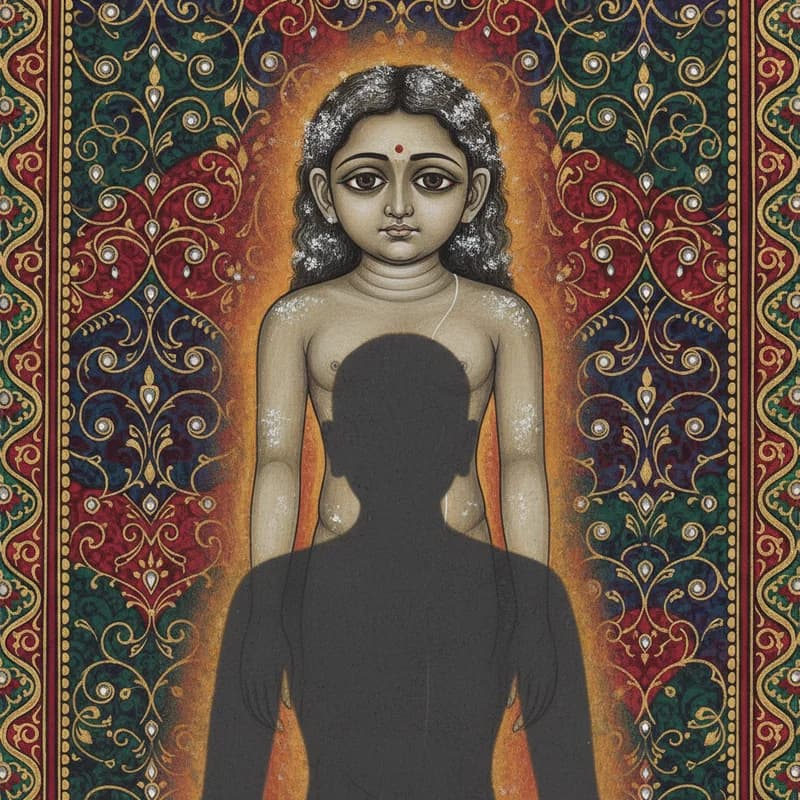
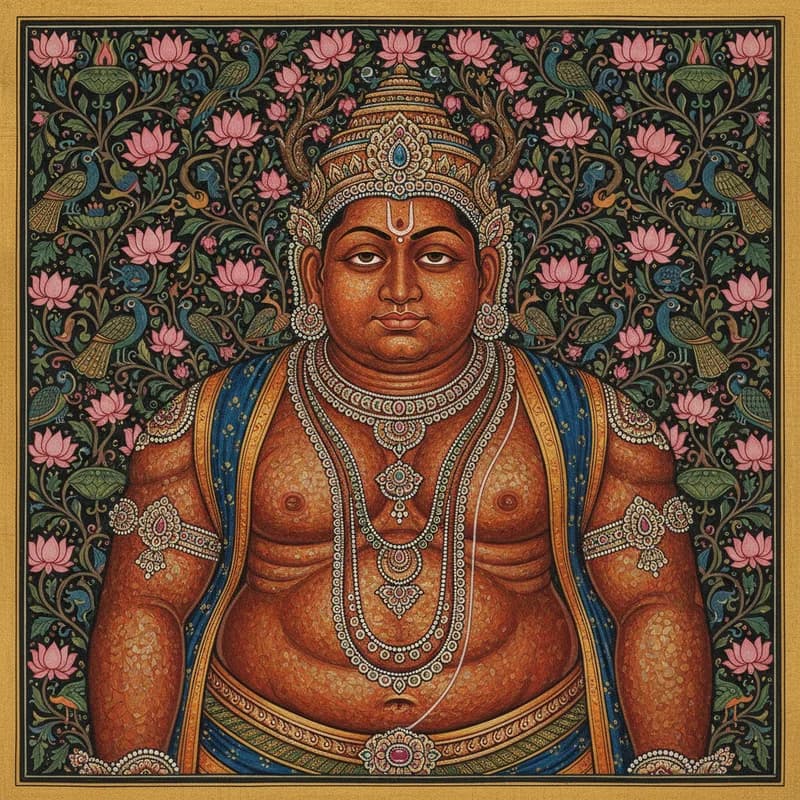
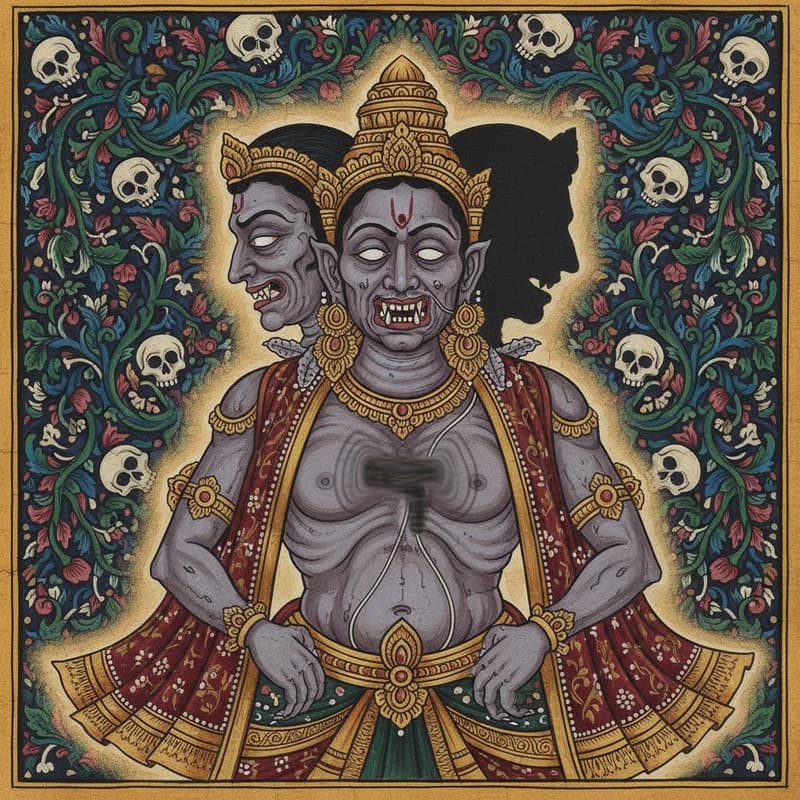
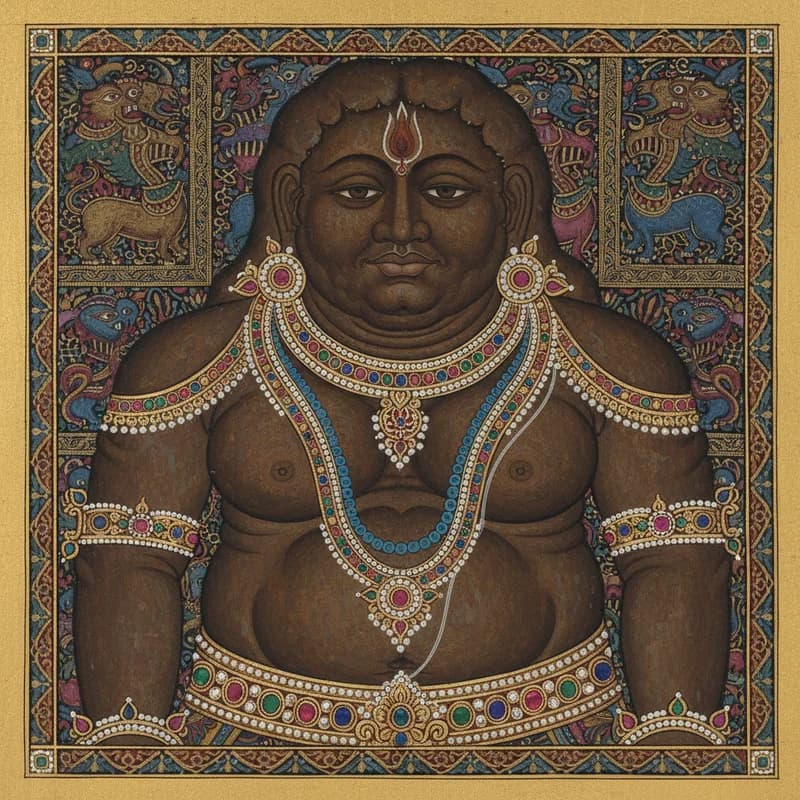
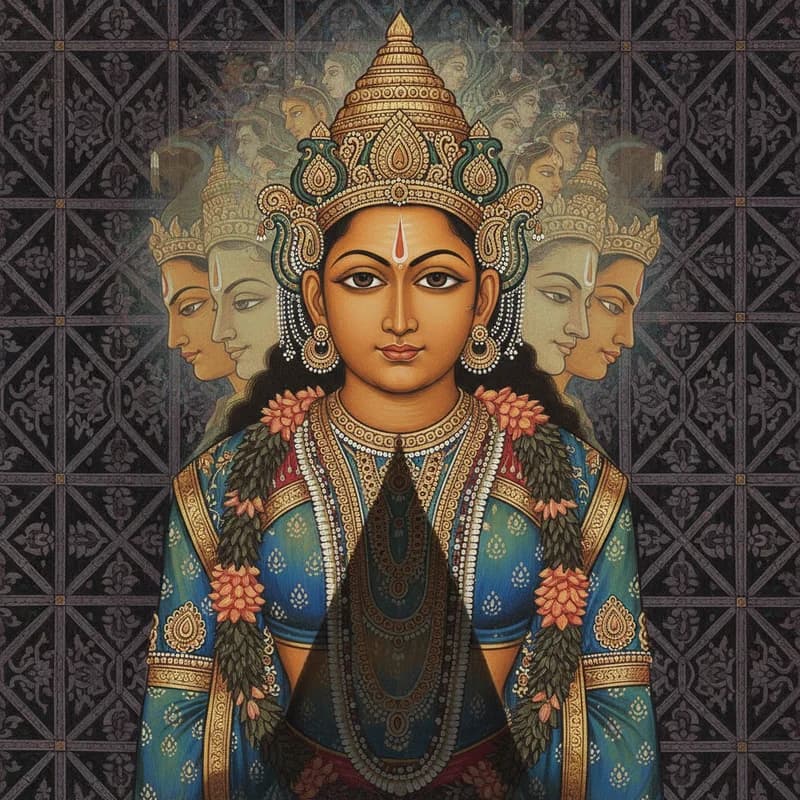
Mara appears as a figure of considerable physical beauty — this is the detail that unsettles witnesses most, the expectation of monstrousness met instead with symmetry, with a face that holds the eye too long. The skin carries the warm tone of ripe tamarind, and the body is heavy with ornamentation: crowns that shift design when you look away, garlands that smell of mahua flowers left three days in standing water. Beneath the sweetness is something older — the smell of river silt from the Niranjana at flood-season, when the current runs too fast and the banks give way. Accounts from the Bodh Gaya tradition describe his armies as projections of the viewer's own wanting, his daughters as reflections in disturbed water — present, recognizable, never quite solid. The single consistent supernatural marker: his shadow falls in the wrong direction, always angled toward the observer regardless of the light.
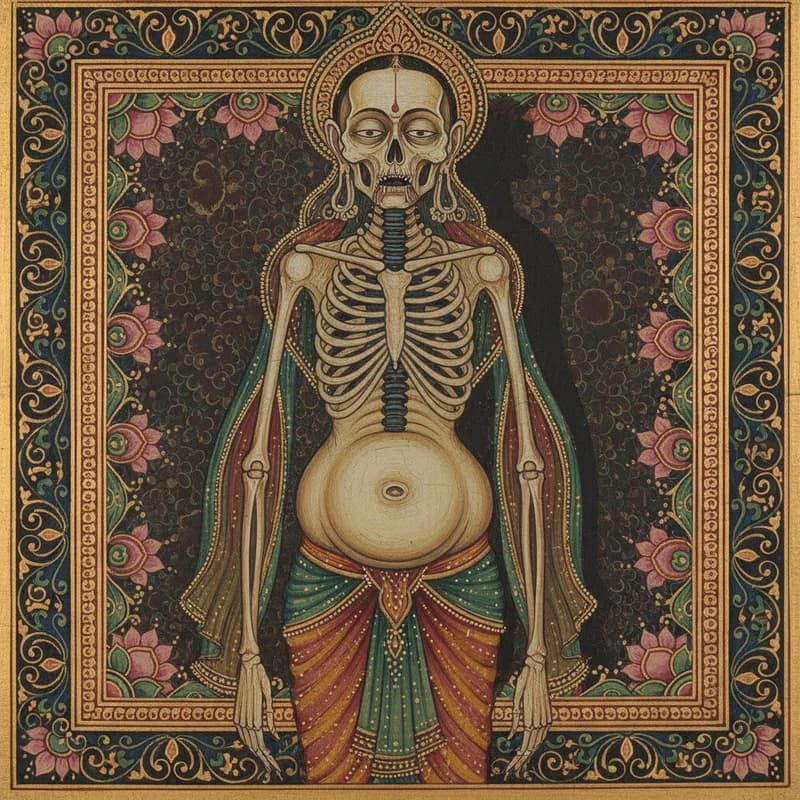
Mara appears most commonly on the roads between villages as an elderly monk traveling toward a monastery — saffron-robed, head shaved close, carrying an alms bowl worn smooth with apparent age. In the hill country around Bodh Gaya and along the Phalgu River, where pilgrims move in steady streams toward the Mahabodhi Temple, such a figure draws no suspicion. The first tell is the alms bowl: it is always empty, regardless of how far the monk appears to have walked or how long the day has been, as if nothing given to it ever accumulates. The second is the shadow — under the pipal trees that line the old pilgrimage tracks, where every other shadow pools and shifts with the canopy, his falls perfectly still, indifferent to the moving light above.
First Documented
Mara appears in the Pali Canon's *Majjhima Nikāya* and *Saṃyutta Nikāya*, texts compiled in Sri Lanka around the first century BCE, though the oral traditions they preserve are considerably older — the assault on the Bodhi tree at Bodh Gaya, where Mara unleashed his daughters and demon armies against the meditating Siddhartha, is among Buddhism's earliest narrative
Last Recorded
Accounts of Mara's influence persist into the present, surfacing in the testimonies of Theravada monks at Bodh Gaya and in the oral traditions of Buddhist communities along the Nairanjana River, where practitioners still describe states of profound temptation during meditation as Mara's visitation rather than psychological disturbance.
Source Language
Pali
Origin
Mara enters the written record in the Pali Canon's Sutta Nipata and is elaborated at length in the Buddhacarita of Ashvaghosha, where he commands three daughters — Tanha, Arati, and Raga — and fields an army of demons against the meditating Siddhartha beneath the Bodhi tree at Bodh Gaya. The textual account is theological and adversarial: Mara is the lord of the Kamadhatu, the sensory world, and his assault on the Buddha is a cosmic event with cosmological stakes. The oral tradition of the Bodhi Gaya district, however, carried through generations of Theravada pilgrims and local Bihari villagers alike, does not present Mara as defeated. In those accounts, Mara withdrew — he was not vanquished but simply refused, and he remains present in the world, patient, moving through the desires of ordinary lives. That divergence matters: the Pali text requires a decisive victory to establish the Buddha's authority, while the folk tradition preserves something the canonical narrative cannot afford —
Frequently Asked
Mara (मार) is the Buddhist lord of death and temptation, a powerful spirit-deity who commands armies of desire, fear, and illusion. He is best known for his assault on the meditating Siddhartha Gautama beneath the Bodhi tree at Bodh Gaya, attempting to break the future Buddha's resolve before his enlightenment. Across Pali texts like the Sutta Nipata and the Jataka tales, Mara appears not as a simple demon but as a cosmic force representing the pull of conditioned existence.
Mara wields dominion over the three forces that bind beings to samsara — desire (kama), aversion, and delusion — and can marshal vast supernatural armies drawn from these qualities. He is said to project visions, stir doubt, and send his daughters Tanha, Arati, and Raga to seduce the meditating Siddhartha on the banks of the Niranjana River. Some texts also identify him with Mrityu, the lord of death, giving him authority over the moment of dying itself.
On the night of Siddhartha's enlightenment at Bodh Gaya, Mara launched a sustained assault combining terrifying armies, storms of weapons, and the seductive appearance of his three daughters. Siddhartha remained unmoved, and in the pivotal moment called the bhumisparsha — the earth-touching gesture — he called the earth itself to witness his right to liberation. Mara's forces dissolved, and the defeat is commemorated in countless temple carvings from the Ajanta caves to the stone reliefs of Sanchi.
Mara and Yama share overlapping jurisdiction over death but are distinct figures with different functions. Yama, rooted in Vedic and Puranic tradition, is a judge who weighs karma and governs the dead in his court; Mara operates specifically within Buddhist cosmology as the tempter who prevents liberation while beings still live. Where Yama is a dharmic administrator, Mara is an adversary — closer in spirit to an obstructor of awakening than a ruler of the underworld.
Mara is primarily a Buddhist figure, appearing extensively in Pali canon texts such as the Samyutta Nikaya, where he repeatedly confronts the Buddha and his disciples across multiple encounters. The name itself — from the Sanskrit root mri, to die — does appear in Vedic contexts, but the fully developed personality of Mara as tempter and death-lord is a distinctly Buddhist construction. Hindu traditions tend to assign his functions to separate deities: Kama for desire, Yama for death.
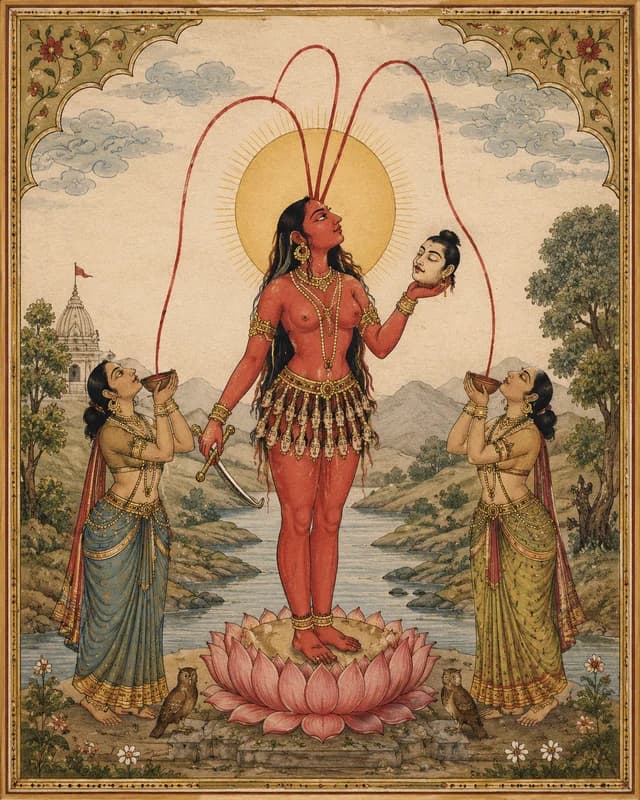
Mara's three daughters are named Tanha (craving), Arati (aversion or discontent), and Raga (passion), and they were sent to seduce the meditating Siddhartha after his armies had failed. According to the Sutta Nipata, they appeared in alluring forms but found the future Buddha utterly unmoved, his mind settled like the still surface of a tank in the dry season at Rajgir. Their failure is read as proof that desire itself loses its grip when met with complete awareness.
In the sculptural programs of Sanchi, Amaravati, and the Ajanta cave murals, Mara is shown commanding a chaotic army of grotesque beings — misshapen soldiers, animals, and elemental forces — arrayed against the serene, seated figure of the Bodhisattva. He is rarely given a fixed iconographic form of his own; his presence is defined by the disorder surrounding him and the contrast with the Buddha's stillness. This compositional choice is deliberate — Mara's power is relational, existing only in opposition to the possibility of liberation.
Mara functions as an antagonist, but Buddhist philosophy treats him less as an embodiment of absolute evil and more as a personification of the forces that keep beings trapped in conditioned existence. Some later Mahayana texts even suggest that Mara plays a necessary role — the resistance he offers sharpens the resolve of those seeking liberation. Along the pilgrimage routes between Bodh Gaya and Sarnath, village storytellers sometimes describe Mara with a kind of grudging respect, as one who tests rather than simply destroys.
संबंधित लोकगाथाएं
Related Lore
Algorithmic Inference
आपको यह भी पसंद आ सकता है
You May Also Like
Community Discussion
Comments are reviewed by AI before appearing publicly. Unsafe, unrelated, or uncertain comments go to human review.
Sign in to join the discussion.
1 comment
Kumar Saksham
24 Jul 2026
i like the story