प्रतीक्षा करें
Parsing the Naga lineage records…
प्रतीक्षा करें
Parsing the Naga lineage records…
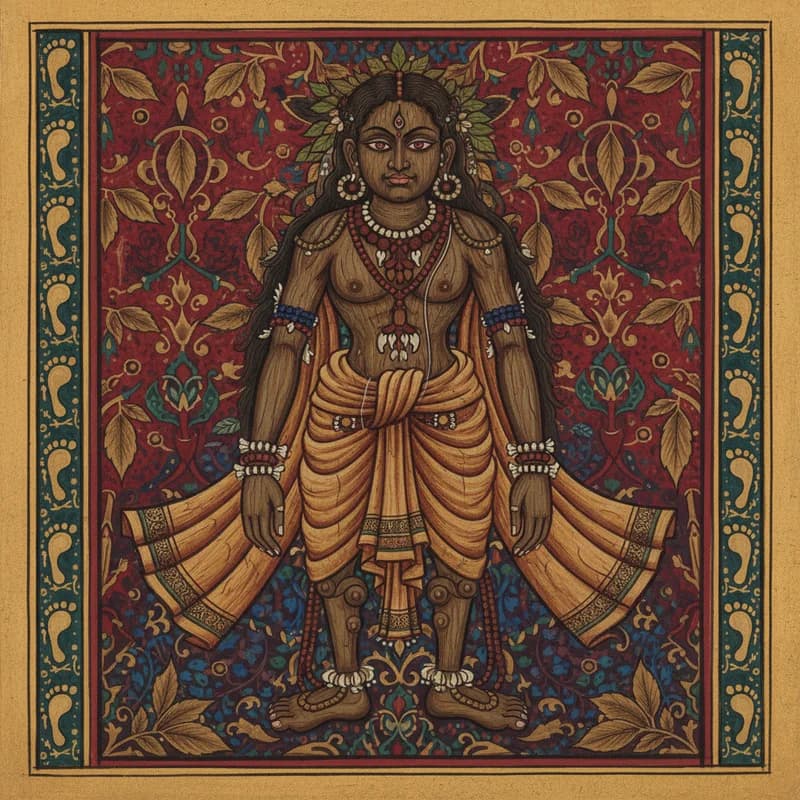

Odala
In the hill forests above the Periyar basin, where the cardamom estates thin out and the paths stop having names, people speak of a condition before they speak of a cause. A man leaves his house at dusk with no explanation. He walks. He does not stop to eat or drink or sleep, and when family members catch up to him he looks through them the way a person looks through glass. His feet bleed. He keeps walking. The Odala has him.
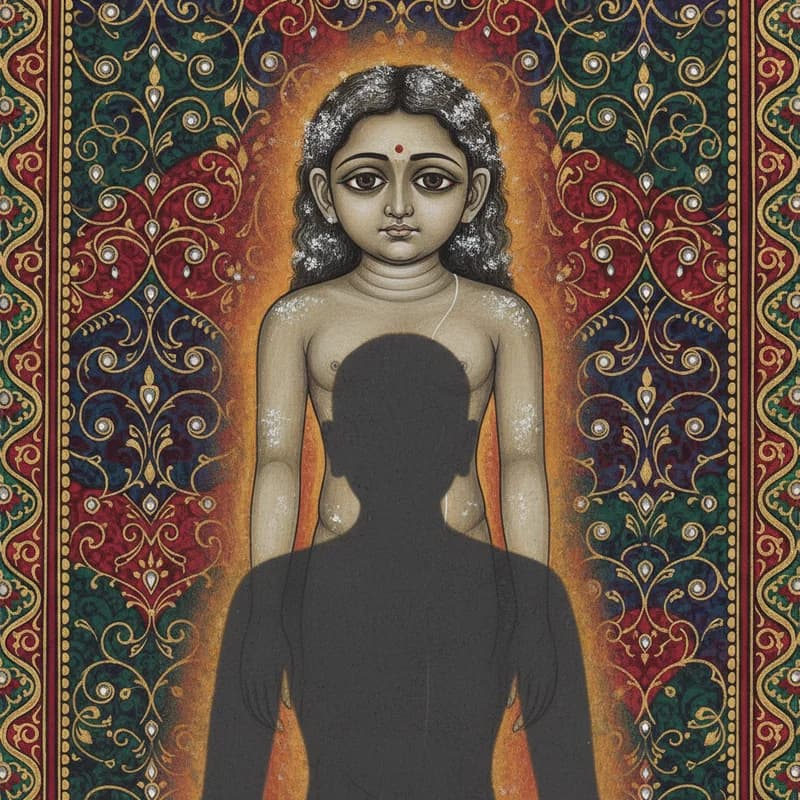
What compels the walking is not understood to be the spirit's voice or its touch but something closer to a substitution — as though the person's own will has been quietly removed and replaced with a single instruction. Accounts collected from the Wayanad plateau and the forest-edge settlements near Munnar describe victims who walked for two and three days before collapsing, always deeper into the trees, always away from water and firelight. The Kani and Mannan communities who have lived alongside these forests the longest treat the condition as a form of abduction rather than possession — the person is not mad, they say, but absent. Absent people cannot be called back by name. Tying a thread of red cotton around the left wrist before nightfall is one preventive measure spoken of, though those who have lost someone to the walking rarely speak of preventives at all.
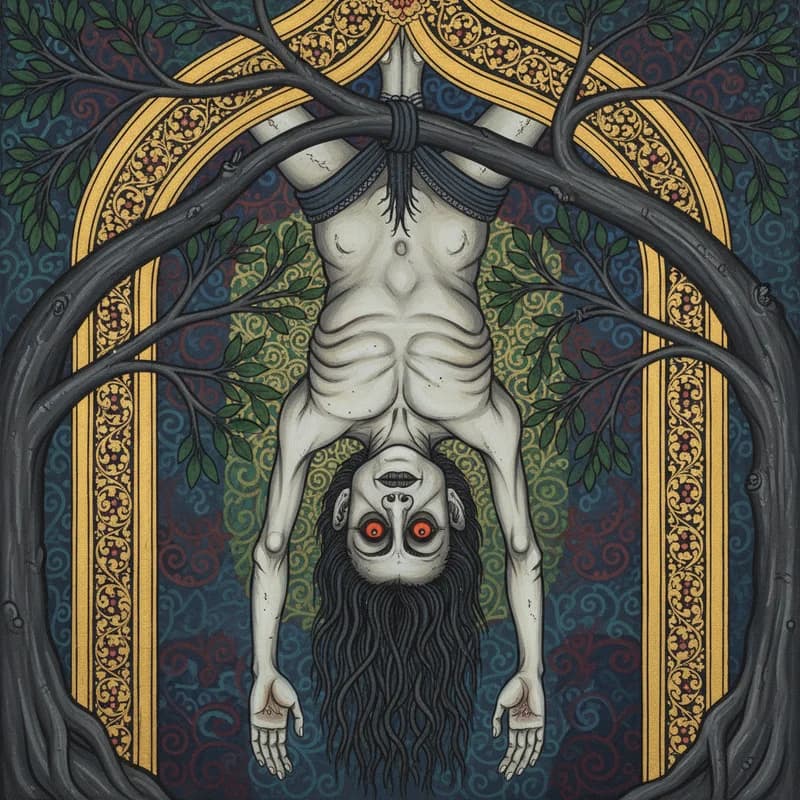
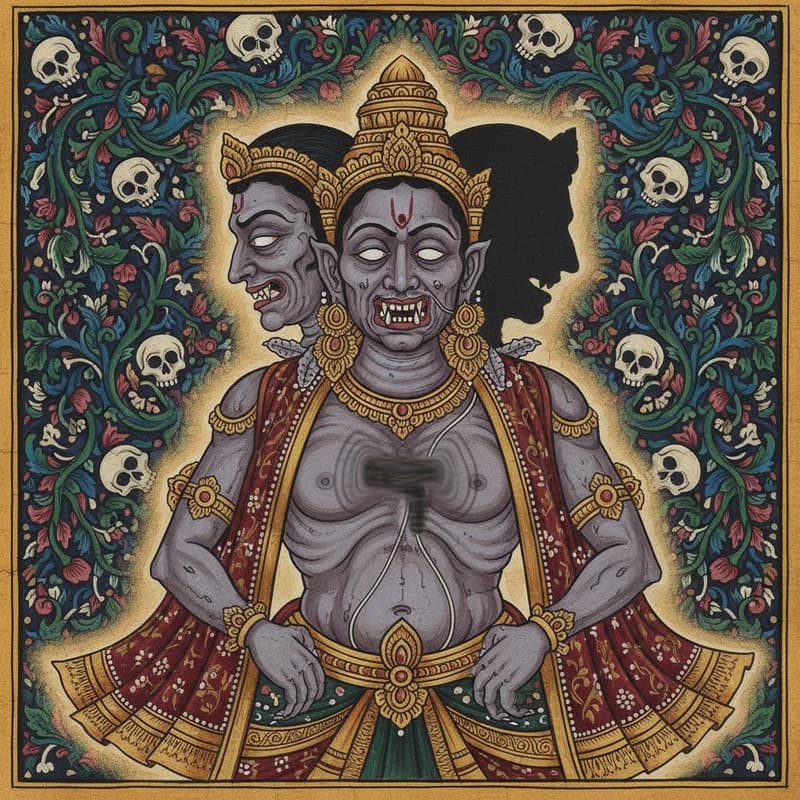
The Odala moves upright but wrong — the joints of the knees and ankles reversed, so that what appears to be a man walking toward you is in fact walking away, and what appears to be retreat is approach. Witnesses from the forest villages east of Thrissur describe a figure of ordinary height, dark-complexioned, wearing a cloth the colour of old coconut husk, its feet leaving prints that point in the direction opposite to its travel. The sound it carries is the sound of someone walking a path just out of sight — the crack of dry teak leaves underfoot, always one step ahead or behind, never locatable. What marks it as other is the absence of sweat: in the Periyar forest heat of April, the figure is dry as cured wood.
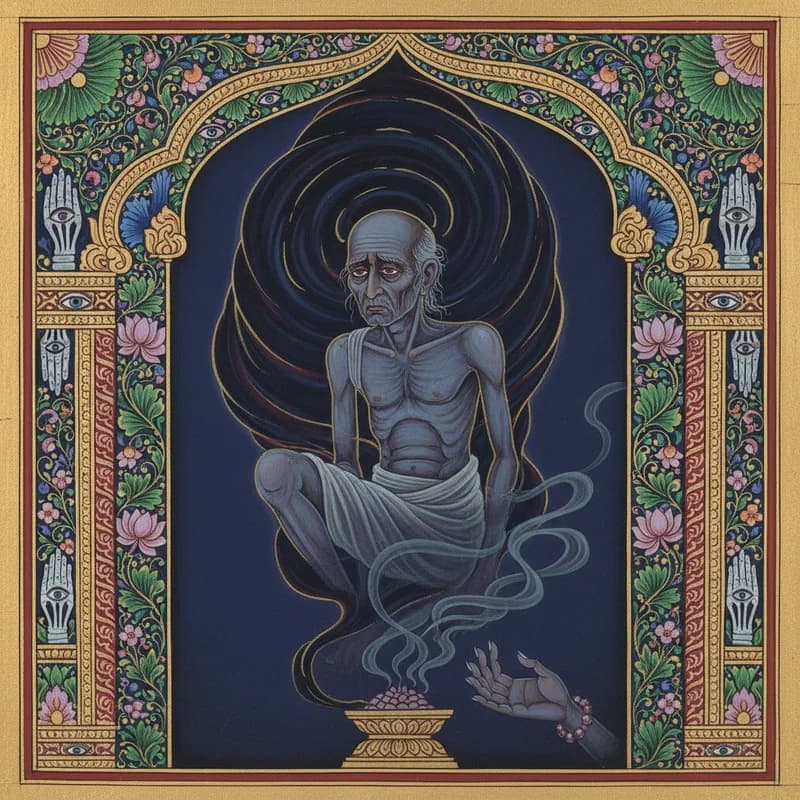
Odala moves through the rubber plantation villages of Thrissur and Palakkad as an old man walking a familiar route — a toddy-tapper, perhaps, or a retired government worker heading home before the rains break, unhurried, carrying nothing suspicious. The disguise is ordinary to the point of invisibility. The first tell is his gait: he walks with the steady, mechanical rhythm of someone who cannot stop, not someone who has chosen to walk, and experienced tappers who have watched him pass the same stretch of the Nila's eastern bank twice in one evening understand the distinction immediately. The second is subtler — the red laterite dust of the forest paths does not settle on his feet the way it settles on everyone else's, because his feet, observed closely, never fully land.
First Documented
Odala surfaces most clearly in the oral traditions of the Malabar and Wayanad hill communities, where katha-practitioners and kolam performers have named it for generations in protective recitations tied to the forest margins of the Western Ghats. No Sanskrit or Malayalam manuscript has yet been identified that records it by name.
Last Recorded
Accounts of Odala persist in the hill villages bordering the Silent Valley forests of Palakkad, where families still report cases of kin wandering into the undergrowth at dusk and returning hollow-eyed or not at all; the most recent documented oral testimony was gathered in 2019 by a folklore researcher near Attappady.
Source Language
Malayalam
Origin
The Odala appears in the kāvukal oral tradition of central Kerala's tāravāḍ households, particularly among Nair communities settled along the forest margins of the Periyar and Chalakudy river basins, where accounts were still being collected by folklore researchers in the 1970s. The earliest written references surface in colonial-era surveys of Malabar spirit-worship, notably in Fawcett's 1901 notes on nālu-kettu rituals, though these treat the Odala as a category of vana-bhūta rather than a distinct entity with its own logic. The oral accounts insist on the distinction: the Odala does not possess its victim so much as replace their destination — the afflicted person continues to walk purposefully, as though they know exactly where they are going, which is what makes the condition so difficult to recognize from the outside. Textual sources frame the affliction as punishment for trespass into prohibited forest groves; the kāvukal tradition counters that the Odala acts without moral calculus, striking travelers on the Munnar-facing forest paths in
Frequently Asked
Odala (ഒടലൻ) is a malevolent spirit from Kerala folklore believed to afflict victims with a compulsive wandering madness, driving them onto forest paths from which they do not return. Oral accounts collected across the Western Ghats describe it as an entity that seizes the will, not the body — the afflicted walk with purpose, as though summoned. Death comes not from violence but from exhaustion and exposure deep within the forest.
Odala induces a condition known locally as a walking madness — victims abandon their homes, often at dusk or in the early hours before dawn, and follow forest trails with no apparent destination. Those who have recovered from early-stage affliction describe hearing a sound like distant footsteps ahead of them, always just out of sight. Most who wander deep enough into the forest are found dead days later, their feet worn raw.
Odala belongs specifically to the oral tradition of Kerala, with the densest concentration of accounts coming from communities living near the forested interior of the Western Ghats — particularly around the Periyar basin and the older village settlements bordering the Silent Valley. The spirit is named in Malayalam as ഒടലൻ, a word rooted in the concept of running or fleeing. Its presence is rarely reported in coastal Kerala, where the forest recedes.
Odala is classified at a caution level — it does not attack or possess in the conventional sense, but its influence is considered fatal if the affliction progresses unchecked. Village healers in the Thrissur and Palakkad districts historically treated early wandering behavior as a medical emergency, performing rituals at the threshold of the home before the victim could re-enter the forest. The danger lies in its subtlety: the afflicted rarely appear distressed.
Unlike the Yakshi, who is a seductive and visually present entity tied to pala trees and moonlit roads, Odala operates through compulsion rather than encounter — its victims never report seeing it. Kuttichathan is a trickster spirit invoked through ritual and bound to specific families, while Odala is described as wild and unbound, attached to no shrine or lineage. The distinction matters in practice: the protective rituals used against Yakshi or Kuttichathan offer no reliable defense against Odala.
Accounts consistently place Odala's activity in the months following the southwest monsoon, when the forest paths of the Western Ghats are overgrown and the undergrowth closes in around older trails. The period between Karkidakam and early Chingam — roughly July to August — is cited most often by oral sources as the season when wandering cases were reported. Some accounts suggest the spirit is drawn to the sound of rain still dripping from the canopy after the storm has passed.
Traditional practice in affected communities involved tying a specific knot in a strip of cloth around the wrist of anyone who had been found wandering and brought back — the knot was said to anchor the person to their home. Certain kolam practitioners in the Palakkad region reportedly knew counter-rituals involving rice flour drawn at the doorstep and the recitation of protective verses before nightfall. These practices are now largely undocumented, surviving only in fragments of oral testimony.
Odala does not appear in the major Sanskrit or Malayalam literary canon — no reference surfaces in the Keralolpathi, the Manipravalam texts, or the temple records of the great Kerala shrines. Its existence is preserved entirely through oral transmission, passed between communities living at the forest edge, and it belongs to a category of local spirits that predate and exist outside the organized ritual hierarchies of Kerala's temple tradition. This absence from written record is itself significant: Odala was never domesticated into worship.
संबंधित लोकगाथाएं
Related Lore
Algorithmic Inference
आपको यह भी पसंद आ सकता है
You May Also Like
Community Discussion
Comments are reviewed by AI before appearing publicly. Unsafe, unrelated, or uncertain comments go to human review.
Sign in to join the discussion.
0 comments
No public comments yet.