प्रतीक्षा करें
Transcribing the Sutradhaar’s field report…
प्रतीक्षा करें
Transcribing the Sutradhaar’s field report…
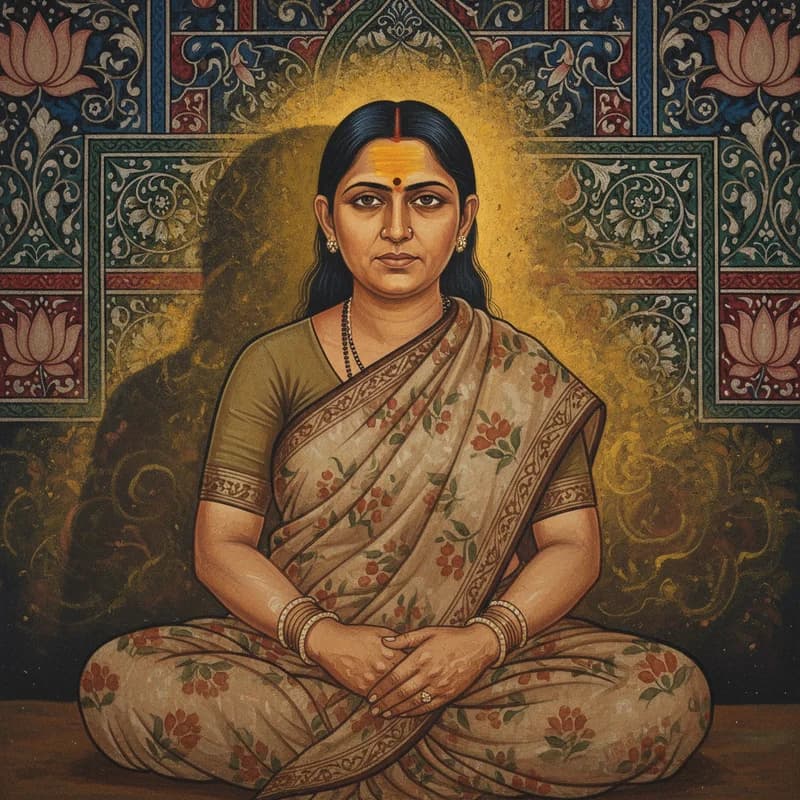

Shabar Mantra entitie
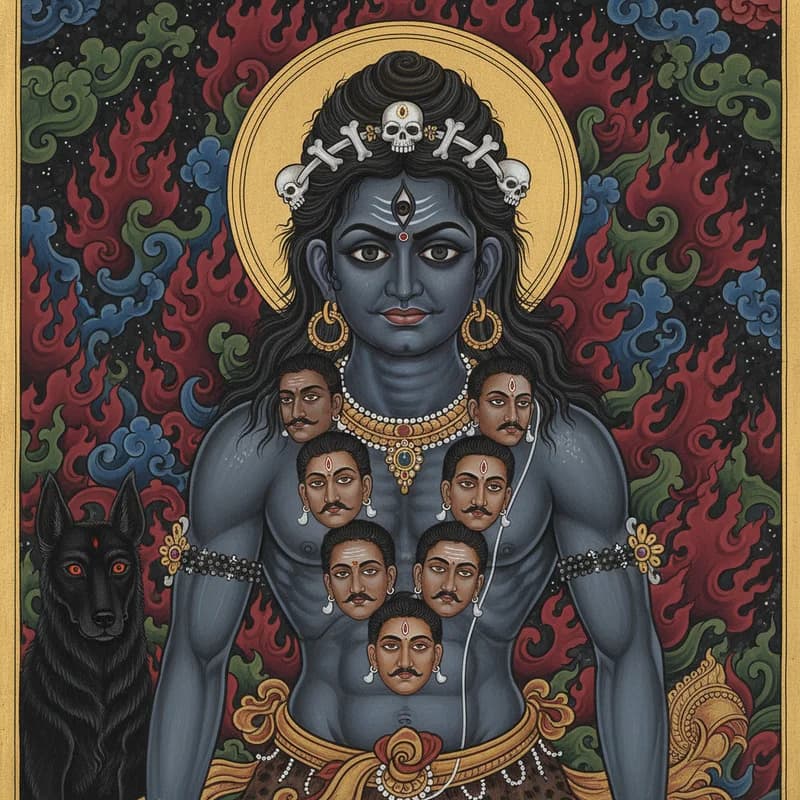
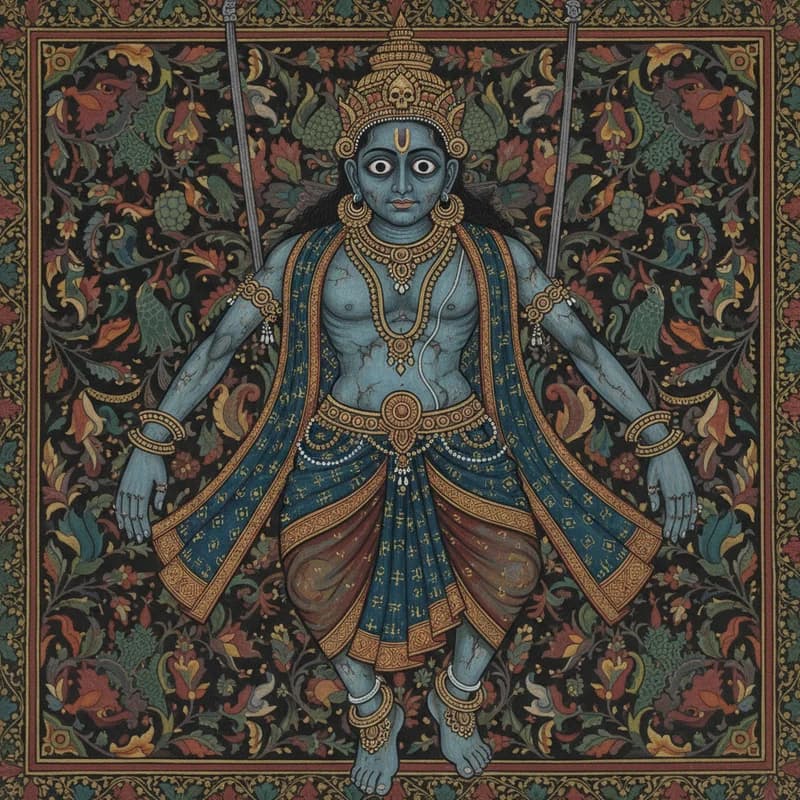
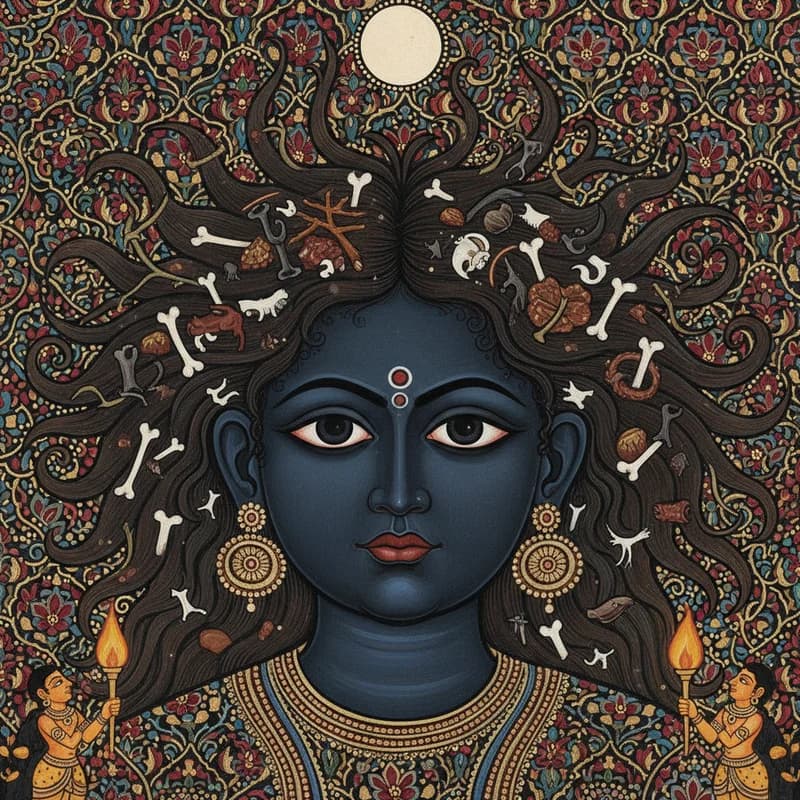
These spirits do not arrive uninvited. Someone calls them — a woman in the Gondwana forests who has tried every other remedy, a fisherman on the Chilika shore whose nets have come up empty for forty days, a father in the Chota Nagpur plateau who cannot afford a temple priest and will not wait for one. The Shabar Mantra tradition is old and stubbornly oral, passing through lineages of low-caste healers and wandering sadhus who operate outside the Brahminical rites entirely, and the entities it summons carry that same quality of the margin — powerful, accessible, and bound by agreements rather than by scripture.
What makes this class of spirit distinct is the contract at its center. Invoke correctly, and the entity performs — cures a fever, locates a lost child, turns aside a rival's ill-will. The invocations themselves are striking documents: they address Shiva and Shakti, yes, but also Gorakh, Machindra, local Devis with no Sanskrit name, and figures whose origins no scholar has satisfactorily traced. Collectors working through Rajasthan's eastern villages and the tribal belts of Jharkhand report that practitioners speak of these entities with neither reverence nor fear, but with the careful respect one shows a creditor. The danger is not in the summoning. It is in the negligence afterward — an offering skipped, a promised ritual delayed, a mantra recited sloppily by someone who learned it secondhand. The accounts agree on this: these spirits do not punish maliciously. They simply collect what was promised, and they are not gentle about the collection.
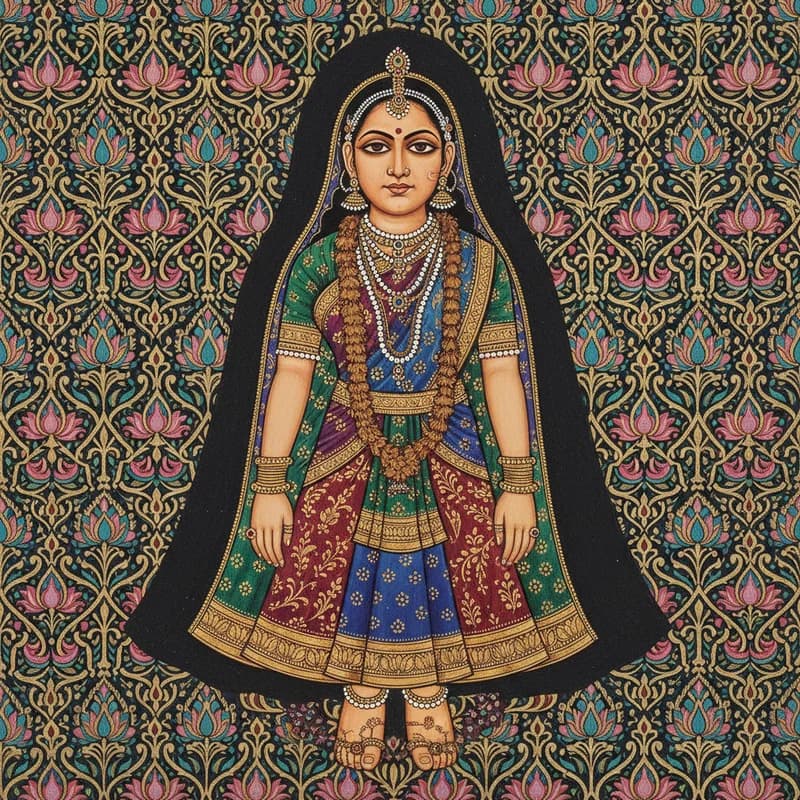
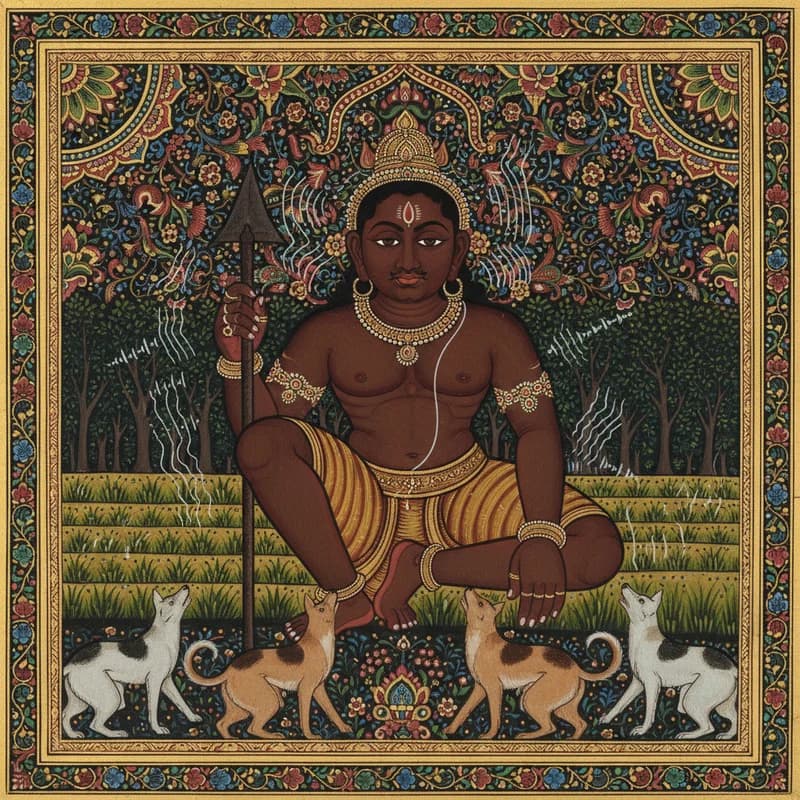
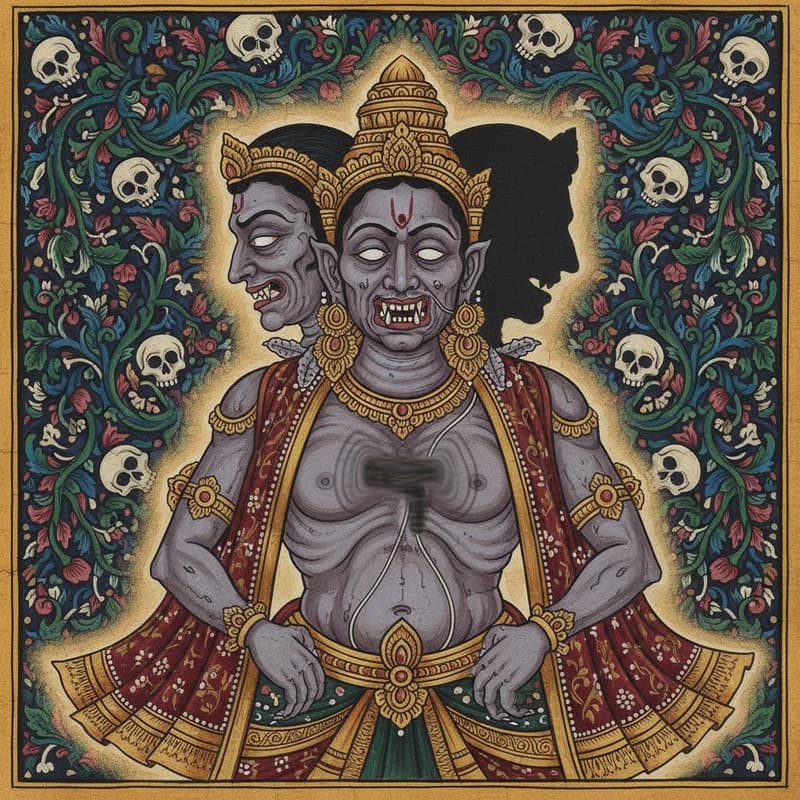
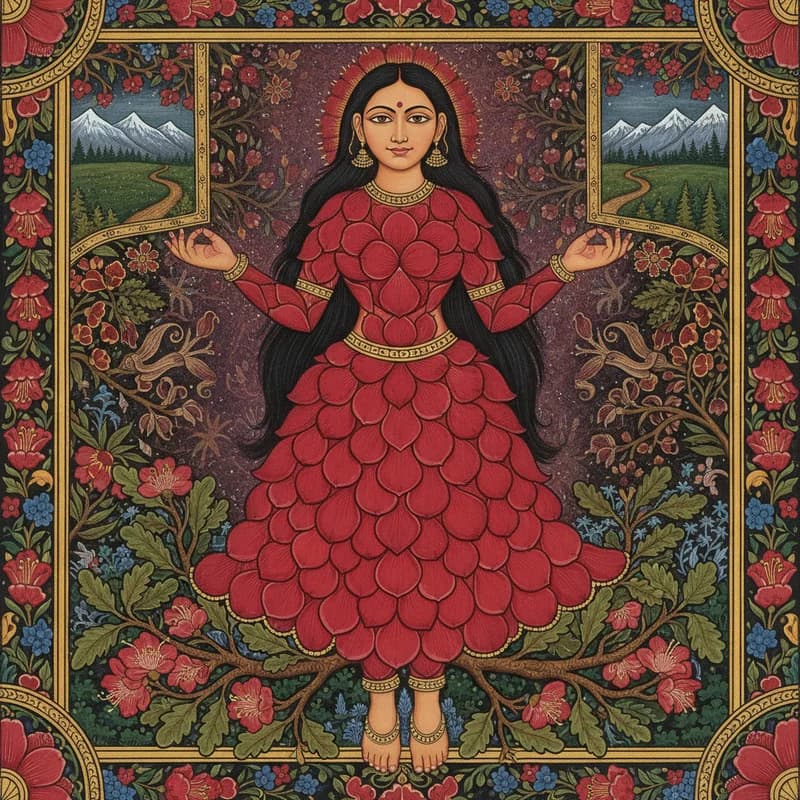
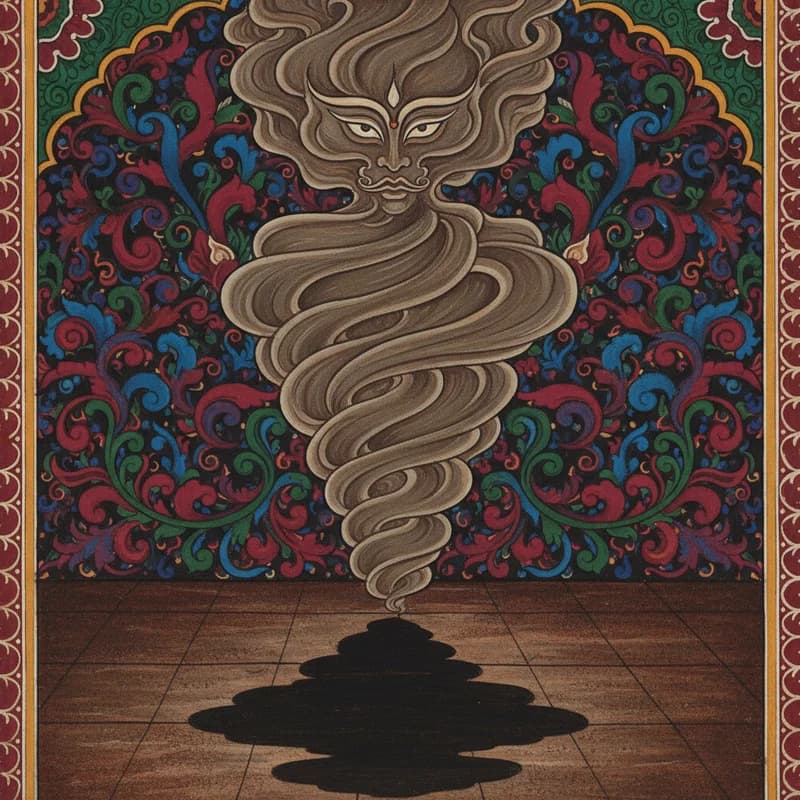
The beings summoned through Shabar Mantra do not arrive looking like what they are. Accounts from the Vindhya foothills and the forested margins of Jharkhand describe figures that appear almost ordinary — a seated man with calloused hands, a woman with sindoor in her hair, someone who looks as though they have just walked in from the fields of the last harvest. What marks them is the stillness: they do not shift weight, do not blink at the rate the living blink, and the air around them carries the smell of mustard oil and raw turmeric crushed together with something older beneath it — wet earth from a riverbank that has not seen sun. The single feature that cannot be explained away is the shadow, which falls at the wrong angle regardless of where the light source stands.
The spirits bound to Shabar Mantras most commonly appear as wandering sadhus — barefoot, ash-smeared, carrying a short staff and a cloth bundle, the kind of figure no one along the Narmada ghats or the forest paths outside Amarkantak would look at twice. The disguise is impeccable in its broad strokes, the kind of holy mendicant seen at every mela from Ujjain to Deoghar. Two details, however, do not hold. The ash on the skin does not shift or smear regardless of heat or sweat — it sits on the body as if painted onto stone, undisturbed even when the figure bends or gestures. Older women in the villages near the Vindhya foothills also note that such figures never accept water, deflecting the offer with a blessing and moving on quickly — a sadhu who refuses water in the dry months after Chaitra is a sadhu who cannot swallow it.
First Documented
Shabar Mantra traditions surface in recognizable form by the medieval period, with early textual traces appearing in the Nath Sampradaya literature attributed to Gorakhnath — roughly the 11th to 13th centuries CE — though the oral lineages running through the forests of Jharkhand and the Vindhya foothills almost certainly predate any written record.
Last Recorded
Accounts of spirits bound to Shabar Mantras persist without interruption — collectors working in the Chota Nagpur plateau and along the Narmada's upper tributaries as recently as the 2010s have documented practitioners invoking these entities, and rural healers in Jharkhand continue to report their responses today.
Source Language
Awadhi
Origin
The spirits bound within Shabar Mantras do not appear in any canonical Puranic catalogue — their first traceable record surfaces in the Nath Sampraday's oral lineages of eastern Uttar Pradesh and Bengal, where practitioners along the Gandak River corridor transmitted invocations attributed to Gorakshanath himself, though the textual collections that survive, such as the *Shabar Tantra* manuscripts held in Varanasi's Sarasvati Bhavan library, date no earlier than the seventeenth century. These are not gods diminished nor demons contained but a separate order entirely: spirits of forests, cremation grounds, river confluences, and the thresholds between cultivated and uncultivated land, recruited into service through vernacular syllables — Hindi, Maithili, Bhojpuri — that the Brahminical system never sanctified. Where the manuscript tradition frames these spirits as subordinate to the mantra's grammatical structure, the oral accounts collected from ojhas in the Champaran district describe a reciprocal arrangement: the spirit chooses whether to answer, and an ojha who invokes without sufficient personal
Frequently Asked
Shabar Mantra entities are a class of spirits invoked through the folk magical tradition of Shabar Mantras — oral incantations passed down through tribal and low-caste lineages, operating entirely outside the Brahminical Sanskrit ritual system. These beings respond not to Vedic hymns or temple rites but to the raw, vernacular power of words spoken in Awadhi, Bhojpuri, or older forest dialects. Collectors working in the Vindhya foothills and along the Narmada basin have documented dozens of distinct entities within this tradition, each bound to specific practitioners by oath rather than scripture.
Shabar Mantra entities carry a threat level of caution — they are neither uniformly malevolent nor reliably benevolent, and their disposition depends almost entirely on the competence and intent of the practitioner who summons them. A mantra recited incorrectly, or at the wrong hour, can invert the spirit's purpose entirely, turning a healing invocation into an affliction. Village healers in Chhattisgarh and eastern Rajasthan have long warned that these entities demand strict reciprocity and punish carelessness without mercy.
Where Vedic ritual addresses deities through Sanskrit stotras, fire offerings, and priestly intermediaries, Shabar Mantra entities are approached directly through vernacular speech, often at liminal sites — crossroads, cremation grounds, or the banks of the Betwa and Son rivers at dusk. These spirits belong to a parallel cosmological order, one rooted in the Nath and Siddha traditions rather than in the Brahminical hierarchy. The distinction is not merely procedural; it reflects a fundamentally different understanding of where sacred power resides.
Shabar Mantras are attributed in many oral lineages to Gorakshanath, the medieval Nath Siddha whose influence stretched from the Gorakhpur monasteries to the tribal belts of Jharkhand and Odisha. Written compilations exist in manuscript form — some held in private collections in Varanasi, others in the archives of the Asiatic Society in Kolkata — but the living tradition is overwhelmingly oral, transmitted from guru to disciple in conditions of secrecy. No single canonical text governs which entities belong to this class; the corpus shifts by region and lineage.
Bhutas and Pretas are generally understood as the restless dead — spirits of specific deceased persons, tied to grief, unfinished business, or violent ends. Shabar Mantra entities are a different order of being: they are not human in origin but are autonomous spirits, often ancient, who have entered into contractual relationships with human practitioners over generations. Think of the distinction as the difference between a ghost haunting a particular mango grove near Bodh Gaya and a spirit that has been bound to a lineage of healers in the Bastar forests for three hundred years.
Recognition typically comes through the physical and psychological signs that accompany an invocation — a sudden drop in temperature, the smell of specific flowers or burning wood with no visible source, or an involuntary trembling in the practitioner's hands. Experienced ojhas and gunias in the Chhota Nagpur plateau describe each entity as having a signature sensation, the way a particular raga announces itself before the first full note is played. Misidentification is considered one of the gravest errors in the tradition, capable of drawing the wrong spirit into a ritual space entirely.
Yes, significantly. The same class of spirit invoked in the Terai forests of Uttar Pradesh may carry a different name, temperament, and set of offerings than its counterpart recognized by practitioners in coastal Odisha or the Deccan plateau. In the Malwa region, certain Shabar entities are associated with specific trees — the khejri, the palash — while in Bengal's Rarh region, the same functional category of spirit is linked to monsoon-swollen rivers and the smell of wet earth in Ashadh. This regional variation is not corruption of a single original form but evidence of how deeply these spirits are rooted in local ecology.
Initiation is considered essential in virtually every lineage that preserves this tradition. The mantra alone, without the diksha passed from a qualified guru, is widely held to be inert at best and catastrophically dangerous at worst — like holding a live wire without insulation. Accounts gathered from practitioners in the Vindhya region consistently describe a period of probation, dietary restriction, and ritual testing before any entity is formally introduced to a new practitioner. The spirit, in many accounts, must also consent to the relationship.
संबंधित लोकगाथाएं
Related Lore
Algorithmic Inference
आपको यह भी पसंद आ सकता है
You May Also Like
Community Discussion
Comments are reviewed by AI before appearing publicly. Unsafe, unrelated, or uncertain comments go to human review.
Sign in to join the discussion.
0 comments
No public comments yet.