प्रतीक्षा करें
Illuminating the manuscript…
प्रतीक्षा करें
Illuminating the manuscript…


Soras
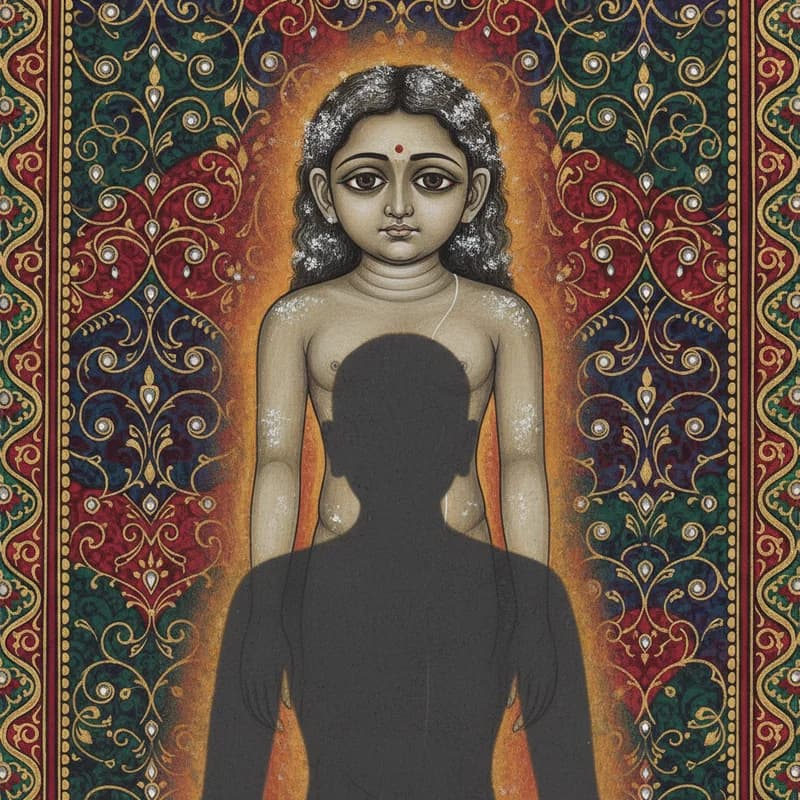
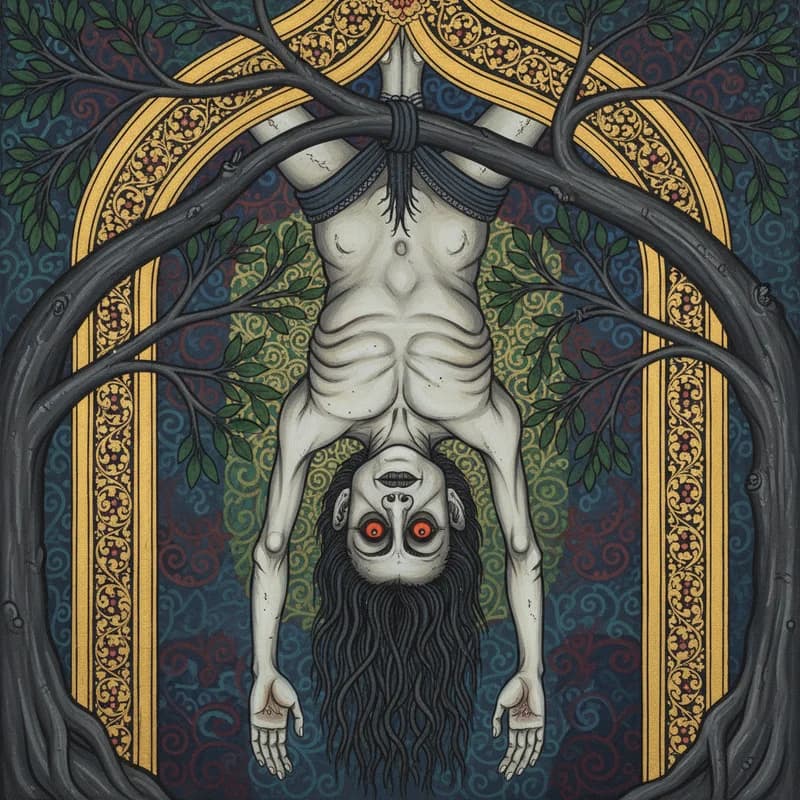
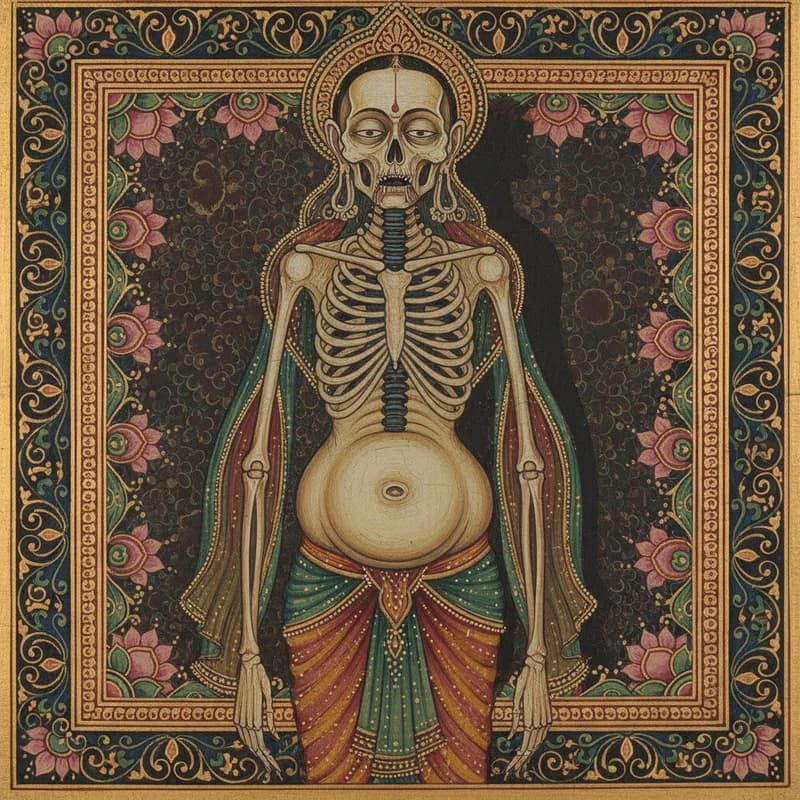
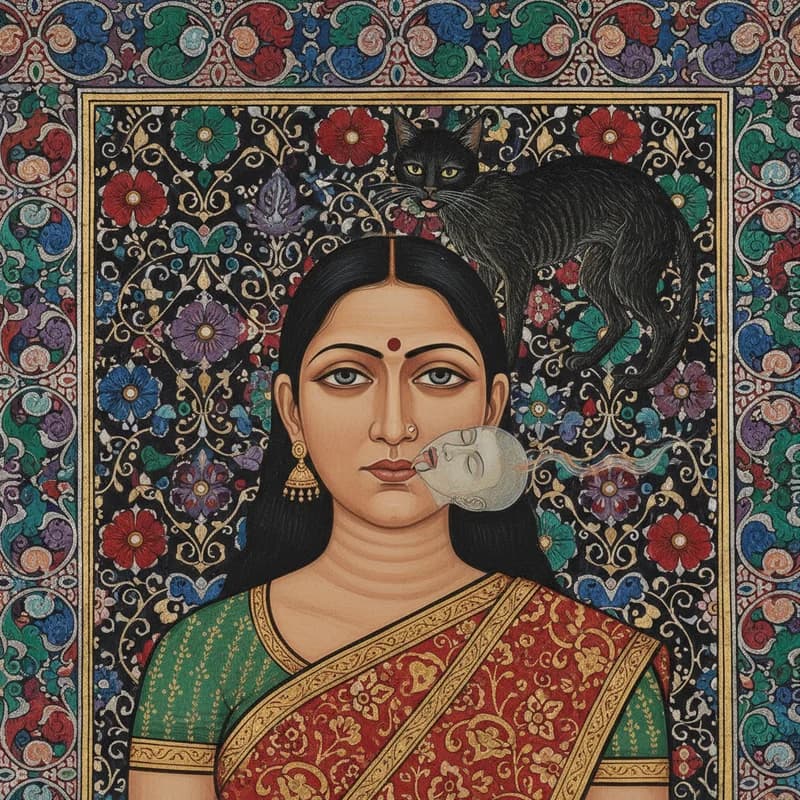
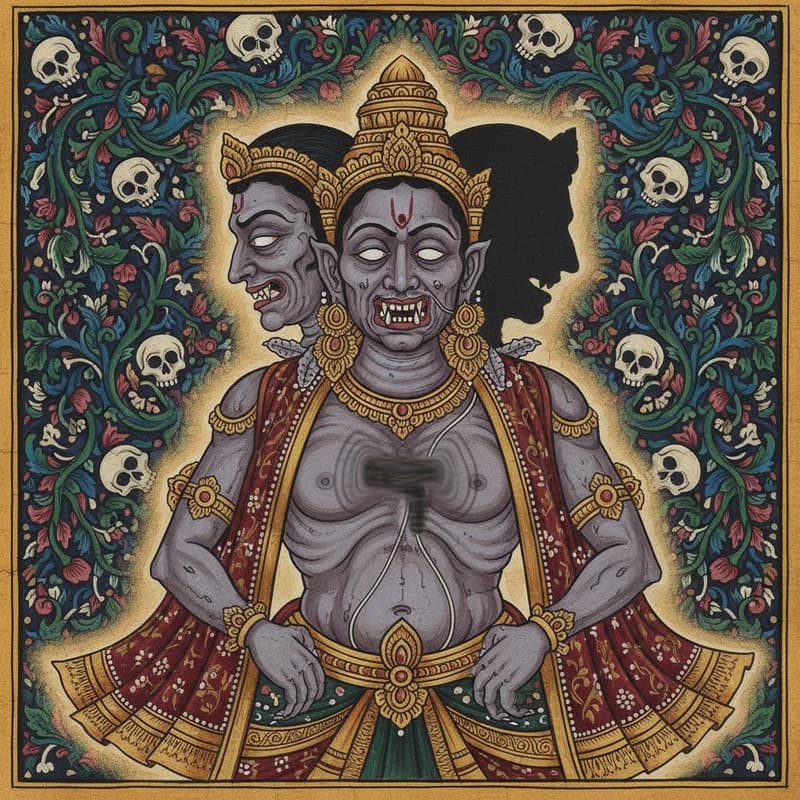
Among the Kondh and Saura communities of the Koraput highlands, certain women begin to speak in voices that are not their own. The shift comes without warning — during the harvest months, most often, when the sal forests along the upper Machkund are thick with new growth and the dead feel close. A woman mid-sentence will pause, her eyes losing their particular focus, and then something older will speak through her mouth: an ancestor naming grievances, delivering instructions, correcting errors in ritual that the living have let slide. The Soras does not possess at random. It selects women who have crossed into their reproductive years and not yet left them, as though the body in that particular season of life offers the right kind of passage.
What the Soras wants is attention to continuity. The accounts collected across Rayagada district are consistent on this point — it does not come to harm, but to correct. Families who ignore the transmissions describe a slow accumulation of misfortune: failed crops, animals that sicken without cause, children who cry through nights when the air is still. The woman through whom it speaks often remembers nothing afterward, or remembers only a sensation of great weight lifted briefly from somewhere she cannot locate. Local ritual specialists, the dissari, treat the possession not as intrusion but as correspondence — the dead insisting, through the most available channel, that the living have not forgotten how to listen.
The Soras enters a woman the way fever does — gradually, then completely. Witnesses from the villages along the Mahanadi's upper tributaries describe the possessed woman's posture shifting first: shoulders drawn inward, spine lengthening, the head tilting at an angle that suggests listening to something just behind the left ear. The face does not distort. This is what unsettles people most — the face remains recognizably hers, but the expressions crossing it belong to someone older, someone who has already finished grieving. What marks the Soras unmistakably is the voice: the woman's own throat produces a register she cannot reach unassisted, a low, unhurried cadence that older villagers identify as the speech-pattern of the dead ancestor named. The air around her during possession carries the smell of wet earth and crushed mahua flowers — the specific smell of the forest floor in the weeks after the first monsoon rains break over the Simlipal hills.
In the villages along the Mahanadi's upper tributaries, between the Hirakud backwaters and the sal forests of Sambalpur, the Soras spirit arrives in the body of a woman who appears to have just returned from the weekly haat — dusty sandals, a cloth bundle, the ordinary exhaustion of someone who has walked several miles in the pre-monsoon heat. She sits at the threshold, not inside, and speaks to the household in the cadences of a dead elder. The first tell is positional: she will not cross into the cooking area, even when invited, and her eyes do not track movement the way a tired woman's eyes do — they settle and hold, fixed with the still attention of someone listening to a sound no one else can hear. The second is her knowledge of the dead, which runs precisely one generation too deep for any living woman her age to carry.
First Documented
The Soras spirit belongs to the oral ceremonial traditions of the Saura people of southern Odisha, documented most rigorously by Verrier Elwin in his mid-twentieth-century fieldwork along the Machkund River valley, though the possession rites themselves predate any written record, rooted in pre-Vedic animist practice among the hill tribes of the Eastern Ghats.
Last Recorded
Accounts of Soras possession were still being documented among Kondh and Saura communities in the Koraput and Rayagada districts of Odisha as recently as the early 2000s, with ethnographers noting active cases near the Machkund river valley. The tradition has not died — village healers in the Eastern Ghats foothills continue to report women speaking in ancestral voices during the harvest months of Kartik and Agrah
Source Language
Odia
Origin
The Soras appear in the ethnographic record through Verrier Elwin's field documentation among the Saura people of the Eastern Ghats, particularly in the hill tracts between the Vamsadhara and Nagavali rivers, where his notebooks from the 1940s describe possession events during the rice-sowing and harvest seasons. The written account frames the Soras as ancestral intermediaries — spirits that enter women between menarche and menopause to deliver messages from the recently dead, a function Elwin categorized as ritual and broadly communicative. The oral tradition among Saura women of Rayagada district holds something the field notes flatten: the Soras does not merely visit, it chooses — it selects a woman because of a specific unresolved obligation between her lineage and the ancestor, a debt that cannot be settled through the living men of the family, only through her voice. This divergence matters because it locates agency with the spirit and the woman together, not with the male ritual specialists Elwin more readily interviewed, suggesting his account recovered the ceremony while missing its internal logic entirely.
Frequently Asked
A Soras (सोरस) is a possessing spirit from the tribal traditions of Odisha, known specifically for entering the bodies of women during their reproductive years. It does not merely inhabit — it speaks, delivering messages in the voice of a deceased ancestor, making the possessed woman a living conduit between the dead and the living.
The Soras spirit belongs to the oral and ritual traditions of Odisha, particularly among tribal communities in the forested interior regions near the Mahanadi basin and the hill districts of Koraput and Rayagada. Accounts of Soras possession have been documented most consistently among communities who maintain ancestral propitiation rites tied to the agricultural calendar.
According to collected oral accounts, the Soras targets women specifically during their reproductive years — a period understood in many Odishan tribal cosmologies as one of heightened spiritual permeability. The body capable of carrying new life is also considered capable of carrying ancestral presence, making such women natural thresholds between generations.
The Soras does not cause harm in the conventional sense — its primary act is speech. It commandeers the possessed woman's voice and speaks as a specific dead ancestor, often delivering warnings, grievances, or instructions to the living family. Villagers treat these utterances with the same weight they would give a direct message from the deceased.
The Soras carries a threat level of caution rather than outright malevolence — it is not a predatory spirit seeking destruction, but possession itself is considered disruptive and physically taxing on the woman involved. Left unaddressed through proper ritual, repeated Soras possession can weaken the host and destabilize the household it speaks into.
Recognition typically comes through the sudden shift in voice and manner — the possessed woman may speak in an older register, use names and references unknown to her waking self, or address family members by kinship terms only a specific ancestor would use. Local ritual specialists, sometimes called disari or ojha depending on the community, are called to confirm the identity of the speaking ancestor.
Appeasement rather than expulsion is the more common approach — the ancestor speaking through the Soras is heard out, its demands acknowledged, and offerings made accordingly, often at a household shrine or beneath a specific tree associated with the family's dead. Only when the ancestor's grievance is considered resolved does the spirit withdraw from the woman's body.
The Soras shares structural similarities with possession traditions documented across eastern and central India — the Bhuta of coastal Odisha and Karnataka, or the Preta traditions described in texts like the Garuda Purana — but its specificity to women of reproductive age and its function as an ancestral mouthpiece gives it a distinct character. Where many possessing spirits are considered hostile intrusions, the Soras is understood as a dead relative insisting on being heard.
संबंधित लोकगाथाएं
Related Lore
Algorithmic Inference
आपको यह भी पसंद आ सकता है
You May Also Like
Community Discussion
Comments are reviewed by AI before appearing publicly. Unsafe, unrelated, or uncertain comments go to human review.
Sign in to join the discussion.
0 comments
No public comments yet.